Frequently Asked Questions about the 1936 Summer Olympics held in Nazi Germany
The 1936 Summer Olympics were significant not only for their athletic achievements but also for their impact on global politics, diplomacy, and the Olympic movement. They remain a symbol of the complex intersection of sports, politics, and ideology, and they continue to be studied and remembered for their historical importance.

The 1936 Olympic Games, held in Berlin from August 1 to August 16, are one of the most historically significant and politically charged events in Olympic history. Image: Emblem of the 1936 Summer Olympics
Below, World History Edu presents some of the most frequently asked questions about the Berlin 1936 Summer Olympics:
Did any African country participate in the Games?
At the 1936 Summer Olympics in Berlin, a limited number of African countries participated, reflecting the colonial status of many nations on the continent at that time.
Egypt had been participating in the Olympics since the early 20th century and was one of the African nations to compete in the 1936 Berlin Games.
South Africa sent a team to Berlin, but it’s essential to note that this was during the period of institutionalized racial segregation in the country, which affected the composition and experiences of the team.
No other independent African nation competed in the 1936 Olympics. Several African athletes did participate as part of colonial teams representing European powers, but their nations were not recognized as separate entities in the Games.

Forty-nine nations participated in the Berlin Olympics, an increase from 37 in 1932. Afghanistan, Bermuda, Bolivia, Costa Rica, and Liechtenstein debuted.
What was the medal table like at the end of the Games?
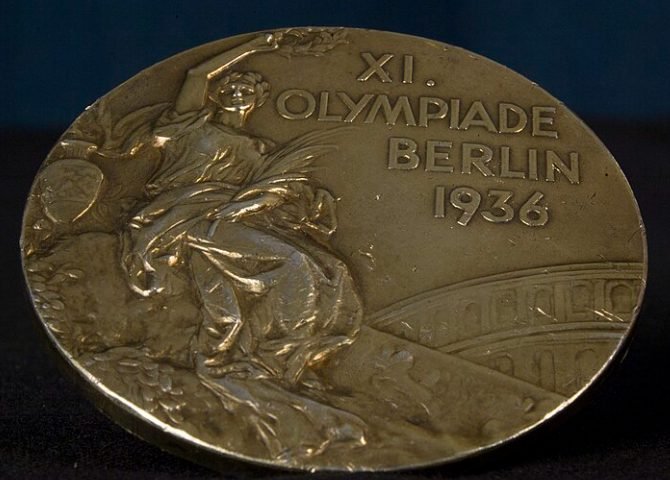
Gold medal at the 1936 Summer Olympic Games
At the end of the Games, Germany found itself atop the medal table with 101 medals, including 38 gold medals. The United States, Italy, Sweden, and Finland took up the remaining spots, pulling 57, 27, 21 and 20 medals in total, respectively. Germany’s 38 gold medals also meant that it was the country with the most gold medals at the Games.
Egypt and South Africa were the only two African countries that won medals at the Games. Egypt took home a total of 5 medals, including two gold medals, while South Africa won just a silver medal.

Reverse side of the Gold medal at the 1936 Summer Olympic Games
The Olympiastadion

Olympiastadion in 1936
The Olympiastadion was constructed for the 1936 Summer Olympics. It was built on the foundation of the Deutsches Stadion, which was designed by Otto March for the 1916 Olympics, which were canceled due to World War I.
Under the directive of Adolf Hitler and the Third Reich, the stadium was intended as a grand showcase of Nazi ideals and the supposed superiority of the Aryan race. The chief architect was Werner March, son of Otto March.
After World War II, the stadium served various purposes. It was used by British military forces and later returned to its sports function. For many years, it was the home stadium for Hertha BSC, a Bundesliga football club.
The stadium underwent significant renovations to modernize its facilities while retaining its historical character. One of the major renovations was for the 2006 FIFA World Cup.
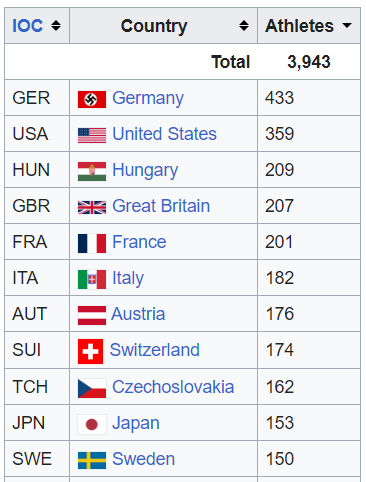
Number of athletes and participating countries at the 1936 Summer Olympics
When were the 1936 Summer Olympics held?
The 1936 Summer Olympics, officially known as the Games of the XI Olympiad, were held from August 1 to August 16, 1936.
Why were the 1936 Olympics held in Berlin?
The 1936 Olympics were awarded to Berlin, Germany, in 1931, prior to the rise of Adolf Hitler and the Nazi Party to power. The decision to host the Games in Berlin was made through the standard bidding process.
What were the key sports events at the 1936 Olympics?
The 1936 Olympics featured a wide range of sports, including track and field, swimming, gymnastics, boxing, wrestling, basketball, and more. Notably, Jesse Owens’ achievements in track and field garnered significant attention.
Who was Jesse Owens, and what did he accomplish at the 1936 Olympics?
Jesse Owens was an African American track and field athlete from the United States. He won four gold medals at the 1936 Olympics, in the 100 meters, 200 meters, long jump, and 4×100 meters relay. His victories defied Hitler’s Aryan supremacy theories and became a symbol of racial equality.
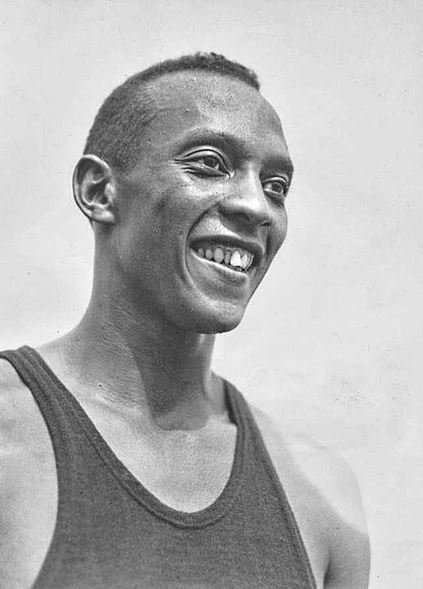
Image: Owens during the 1936 Olympic games.
Did any country boycott the 1936 Olympics due to Nazi Germany’s policies?
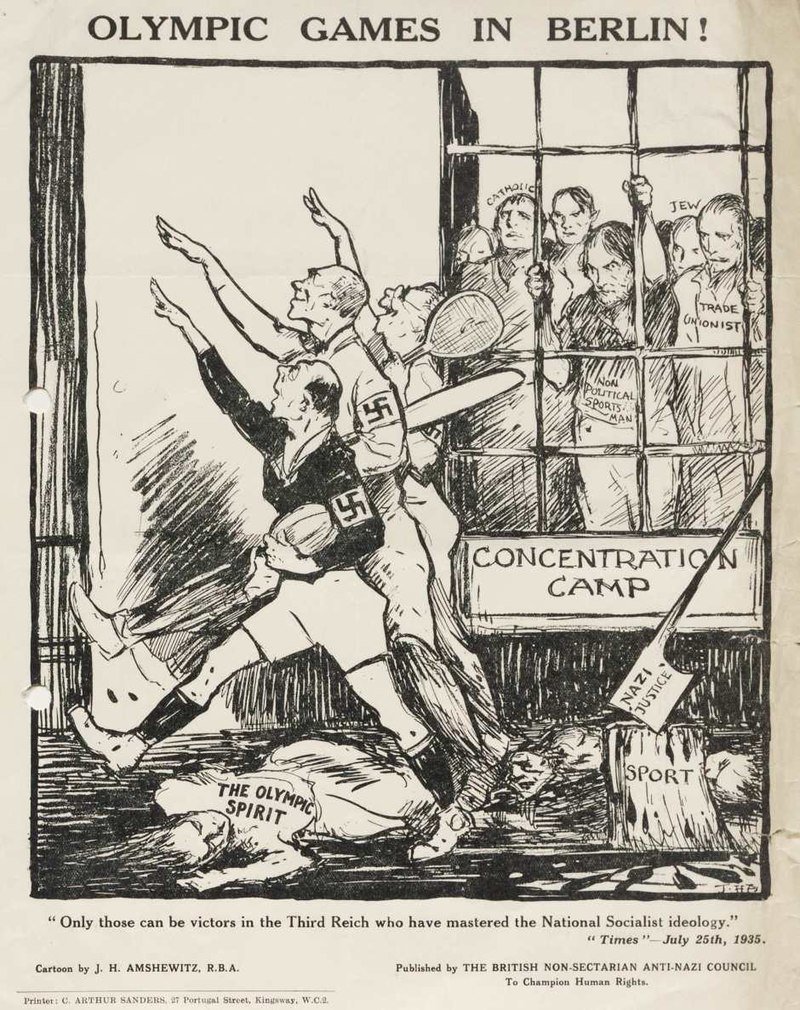
While there were discussions about boycotting the Games in protest of Nazi policies, most countries chose to participate. Only a few nations, such as Spain and the Soviet Union, boycotted the event for various reasons.
What was the significance of the Olympic Torch Relay introduced in 1936?
The 1936 Olympics introduced the Olympic Torch Relay, a tradition that continues in modern Olympic Games. The relay involves the lighting of the Olympic flame in Olympia, Greece, and its journey to the host city, symbolizing the unity and continuity of the Olympic Games.
How did the Nazis use the 1936 Olympics for propaganda purposes?
The Nazis used the Olympics to promote their ideology and present Germany as a powerful and orderly nation under Nazi rule. The Games were a showcase of Nazi propaganda, featuring elaborate opening ceremonies and displays of military precision.
What was the overall impact of the 1936 Olympics on sports and politics?
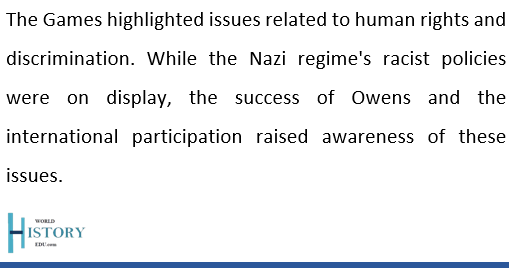
The 1936 Olympics left a lasting impact on the Olympic movement and raised questions about the role of politics in sports. It highlighted issues of human rights and discrimination while also providing a platform for diplomatic engagement.
Where are the venues from the 1936 Olympics located in Berlin, and can they still be visited today?
Several venues from the 1936 Olympics, including the Olympic Stadium and the Olympic Bell Tower, are located in Berlin. Many of these venues are still in use today and can be visited by tourists.
What is the historical legacy of the 1936 Olympics in Berlin?

The 1936 Summer Olympics in Berlin, Germany, were of significant importance for several reasons, both in the context of sports and in the broader historical and political context. Image: Runners carrying the Olympic Flame in the lead up to the 1936 Summer Olympics
The 1936 Olympics are remembered for their complex historical legacy, encompassing both athletic achievements and the broader context of Nazi Germany. They continue to be studied and remembered as a significant moment in sports and world history.
How did Nazi Germany use the Games as a propaganda tool?
The 1936 Olympics served as a major propaganda tool for Adolf Hitler’s Nazi regime. The Nazis aimed to showcase Germany as a powerful and orderly nation under Nazi rule. They used the Games to promote Aryan supremacy and Nazi ideals, attempting to portray themselves as a model for the world.

The 1936 Olympics were a propaganda tool for Hitler’s Nazi regime, promoting Aryan superiority and showcasing Nazi Germany’s strength through impressive infrastructure and facilities.
Who were the countries that boycotted the games?
The Berlin Olympics faced boycott calls due to the Nazi regime’s racial policies and militaristic ambitions, with many viewing participation as support for Hitler. While some countries, like Spain, chose to boycott, most major nations, including the United States, decided to compete, despite the ethical concerns. The debate highlighted the tension between promoting athletic competition and addressing the moral implications of participating in an event hosted by a regime promoting discrimination and aggression.
Read More: Why did Spain and the Soviet Union refuse participating in the 1936 Berlin Olympics?
How many gold medals did Jesse Owens win at the games?
One of the most iconic figures from these games is Jesse Owens, an African-American athlete. Owens won four gold medals in track and field, defying the Nazi narrative of Aryan superiority. His victories are still remembered as a powerful counter-narrative to Nazi propaganda.
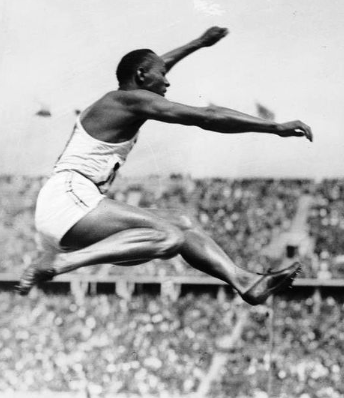
Jesse Owens – the four-time gold medal-winning hero of the 1936 Berlin Olympic Games and the one-time multiple sprint and long jump world record holder
What were some of the innovations introduced at Berlin 1936?
These Olympics introduced several innovations. For instance:
- The Olympic torch relay debuted, with the flame being carried from Olympia in Greece to Berlin. Fritz Schilgen (1906–2005) was a German athlete who served as the final torchbearer at the Games.
- Television broadcasts of the games were made available to local audiences, marking the first time that the Olympics were televised.
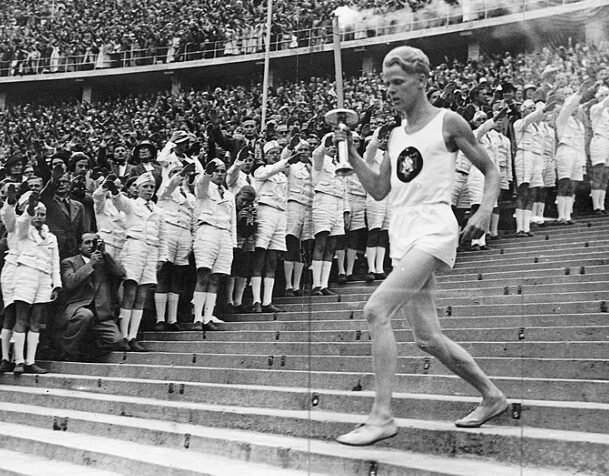
Fritz Schilgen, while not a competitor in those particular Games, was chosen for his ideal Aryan appearance, in line with the Nazi regime’s propaganda and ideologies.
Key Stats of the 1936 Summer Olympics
- Duration: 1 August to 16 August, 1936
- Athletes: A total of 3,963 athletes participated, representing a diverse group of nations and disciplines. Of that number, 331 were women.
- Countries: 49 countries participated, showcasing the global nature of the event despite the overshadowing political tensions.
- Events: There were 129 events spanning 19 sports and 25 disciplines. This was an expansive roster, encompassing track and field, aquatic events, team sports, and more.
- Games opened by: Führer und Reichskanzler Adolf Hitler
- Stadium: Olympiastadion
- Motto: I Call the Youth of the World! (German: Ich rufe die Jugend der Welt!)
Aftermath of the Games
Although the Berlin Olympics were largely successful from a logistical and performance perspective, they remain controversial due to their association with the Nazi regime. Just three years after the games, World War II would begin, and many of the ideologies promoted by the Nazis during the Olympics would lead to untold suffering and death.
What was Adolf Hitler’s intention for the Games?
The Berlin Olympics in 1936 were intended by Adolf Hitler to showcase the supposed dominance and superiority of the Aryan race.
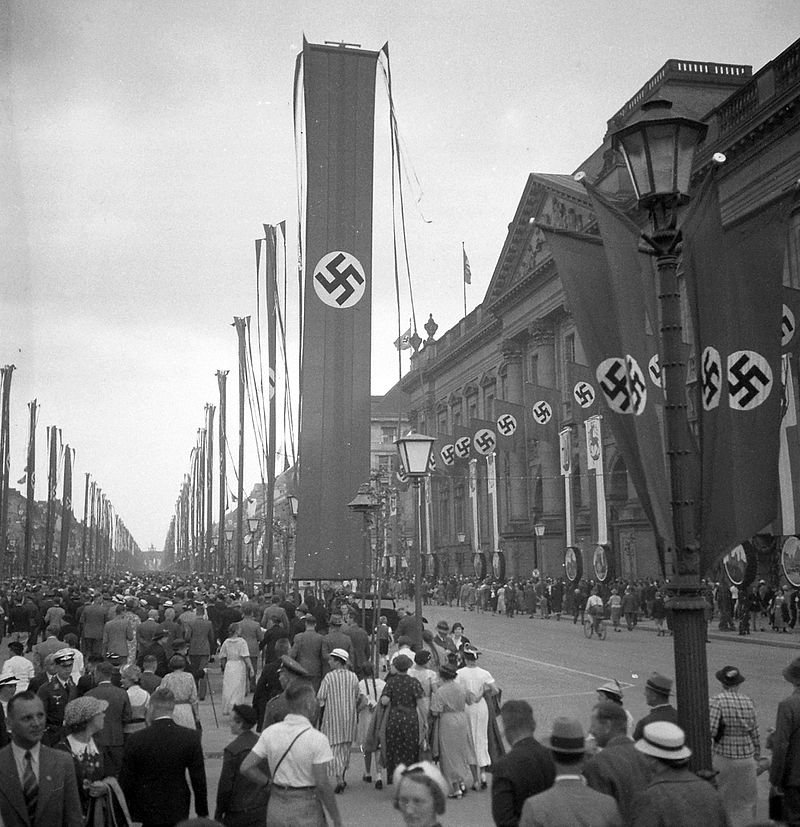
Display of Nazi symbols and swastika during the 1936 Summer Olympic Games held in Berlin
How did Jesse Owens’ performance at the Games counter the Nazi propaganda?
Adolf Hitler’s well-orchestrated propaganda effort was notably countered by the outstanding performance of Jesse Owens, an African-American athlete. Owens became the star of the Games by clinching four gold medals in the 100m, 200m, 4x100m relay, and long jump events. His achievements directly contradicted Hitler’s racial theories and made Owens an enduring symbol of excellence and defiance against racial prejudice.
Major facts about the 1936 Olympics in Berlin

Medals table at Berlin 1936
The 1936 Olympics in Berlin took place amid political tensions due to the rise of the Nazi Party. Despite international calls for a boycott due to the Nazis’ racist policies, the International Olympic Committee secured promises from Germany about the inclusion of Jewish athletes and non-promotion of Nazi ideology. However, Germany largely did not honor these commitments, with only one athlete of Jewish descent on their team and widespread Nazi propaganda at the event. Despite the political climate, the allure of the Games drew 49 countries to participate.
The 1936 Berlin Olympics showcased significant media innovations. For the first time, telex was used to send results, zeppelins delivered newsreel footage across Europe, and the Games were televised via closed circuit to select Berlin theaters. Additionally, the event marked the introduction of the Olympic torch relay from Greece.

Olympic Torch Relay Route for the 1936 Berlin Olympics
American athlete Jesse Owens dominated the track-and-field events at the 1936 Olympics, securing three individual gold medals and a fourth with the U.S. 4 × 100-metre relay team. The victory of Owens and other African American athletes, labeled as “black auxiliaries” by the Nazi media, was seen as a direct challenge to Hitler’s Aryan supremacist beliefs.
In the 1936 Olympics, Germany secured the most medals, particularly in gymnastics, rowing, and equestrian events. Dutch swimmer Hendrika (“Rie”) Mastenbroek achieved three golds and a silver. The U.S. team claimed the gold in basketball, which made its Olympic debut, as did canoeing. The Olympics scheduled for 1940 in Helsinki (initially planned for Tokyo) and 1944 in London were canceled due to World War II.
For the 1936 Berlin Olympics, Adolf Hitler aimed to surpass the grandeur of the 1932 Los Angeles Games. To achieve this, he commissioned the construction of a massive track and field stadium with a seating capacity of 100,000, in addition to six gymnasiums and various other sports facilities. The Berlin Games were groundbreaking in the realm of media as they became the first Olympics to be televised.
Additionally, radio broadcasts of the Games reached an audience in 41 different countries. Further amplifying the significance of the Games, the German Olympic Committee entrusted filmmaker Leni Riefenstahl with a budget of $7 million to create a film about the event. Her resulting work, “Olympia,” was notable not only for its portrayal of the Games but also for introducing several innovative techniques that would later become standard practices in sports filming.
The 1936 Olympic Games in Berlin were deeply intertwined with the politics of the time, especially the ideologies and ambitions of Adolf Hitler’s Nazi regime. Hitler viewed the Games as an ideal platform to showcase the supposed superiority of the German “Aryan” race and the power of his government to the world.
The Nazi Party’s official newspaper, the Völkischer Beobachter, strongly voiced that Jews should be excluded from participating in the Olympics. In line with this stance, Jewish athletes from Germany faced various obstacles and were largely barred or prevented from taking part in the Games. This discrimination extended beyond Germany’s borders. Some Jewish athletes from other countries were reportedly sidelined to appease the Nazis.
Moreover, the political landscape of Europe further influenced the Olympic proceedings. For instance, Lithuania faced expulsion from the Games. This action was believed to be a consequence of the Lithuanian government’s anti-Nazi stance, exemplified by events such as the trial of Nazis Neumann and Sass in Klaipėda during 1934-1935.
In essence, the 1936 Berlin Olympics were not just a sports event but a heavily politicized spectacle where Nazi propaganda and international politics played a significant role.
The 1936 Berlin Olympics was not just a showcase of athletic prowess but also a financial endeavor for Nazi Germany. The ticket sales for the event generated revenues amounting to 7.5 million Reichsmark (R.M.), which after covering the expenses, led to a profit exceeding one million R.M.
However, this official figure did not encompass all the associated costs of hosting the event. The city of Berlin, for instance, had its own set of expenditures related to the Games, which amounted to 16.5 million R.M. This detailed report by the city highlighted the infrastructural and logistical costs undertaken to host such a grand event.
Furthermore, the German national government also had its share of expenses linked to the Olympics. While the exact figure was not publicly disclosed by the government, it’s estimated that they spent around US$30 million.
In summary, while the ticket sales for the Games were profitable, the broader costs associated with hosting the event were significantly higher, with both the city of Berlin and the German national government incurring substantial expenses.
Did you know…?
The 1936 Olympics in Berlin were the first to be televised. In the Greater Berlin area, 25 television viewing rooms were established, enabling locals to watch the Games without any cost.
The 1936 Olympics introduced the torch relay, an idea proposed by Dr. Carl Diem. The lit torch traveled over 3,000 km through seven countries—Greece, Bulgaria, Yugoslavia, Hungary, Czechoslovakia, Austria, and Germany—from Olympia to the Games’ venue.
“Olympia” is an innovative sports film directed by Leni Riefenstahl for the 1936 Olympics. Unlike prior sports films, Riefenstahl emphasized the beauty and aesthetics of the human body, capturing it from diverse angles. This groundbreaking approach introduced novel cinematographic techniques and perspectives, setting “Olympia” apart as a unique and unparalleled work in the realm of sports filmmaking.
What prizes did the victors at 1936 Berlin receive?
At the 1936 Berlin Olympics, victors were awarded more than just the traditional medals for their achievements. In addition to the medals:
- Winner’s Crown: The champions were presented with a crown, symbolizing their victory and supremacy in their respective events.
- Oak Tree in a Pot: Along with the medal and crown, winners were also given an oak tree sapling in a pot. This was symbolic and rooted in Germanic tradition, as the oak tree has historically been a representation of strength and endurance in German culture.
The combination of medals, crowns, and oak trees was intended to elevate the significance of victory at these Games and to align the achievements of the athletes with the cultural symbols of the host nation.
How many people attended the Games?
The number of tickets purchased by spectators, fans, and visitors was exceedingly high, with the total number reaching over four million. This indicates a significant interest and attendance in the event, suggesting that the Games were highly popular and widely attended by people from various parts of the world, as well as the local population.
Why were the two Olympic Games after Berlin 1936 cancelled?
Due to the conflicts arising from World War II, starting with clashes between Japan and China and later spreading to Europe, the Olympic Games scheduled for 1940 and 1944 (the XII and XIII Olympiads) were canceled. The world would have to wait 12 years from the 1936 Games for the Olympics to resume. It was only in 1948 that the Olympic flame was relit, marking the continuation of the Games, this time in London.
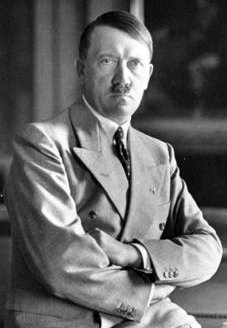
Adolf Hitler, who was the Chancellor of Germany at that time, was in attendance. This underscores the significance the Nazi regime placed on the event, using it as a platform for their propaganda and to showcase Germany under their leadership. Hitler’s presence at such a global event highlighted the importance and the political undertones of these particular Games.Adolf Hitler (1888-1945)- Führer und Reichskanzler (leader and chancellor of the Reich).
Basketball’s debut in the Olympics

During the 1936 Berlin Olympics, basketball, canoeing, and field handball were introduced and competed in for the first time in the history of the Olympic Games. This means that athletes had the opportunity to vie for Olympic medals in these sports on the global stage for the very first occasion. Image: The Olympic Fire during the 1936 Summer Olympics held in Nazi Germany
In 1936, basketball made its debut as an Olympic sport during the Berlin Games. The final, however, faced unforeseen challenges:
Unlike today’s indoor basketball arenas, the basketball games during the 1936 Berlin Olympics, including the final, were held outdoors. This meant that the games were susceptible to weather conditions.

In 1891, James Naismith, a PE teacher at Springfield College in Massachusetts, created basketball as an indoor game to engage his energetic students. He established 13 foundational rules for the sport, which quickly gained popularity across North America and later, globally. Image: Basketball at the 1936 Olympic Games in Berlin
The climactic match between the USA and Canada was plagued by heavy rain. This turned the clay court into a muddy mess, which significantly affected gameplay. Dribbling, for instance, was nearly impossible given the conditions.
Because of the muddy court, players had to adapt their playing style. Instead of the fast-paced action and dribbling typical of basketball, the game became more about passing and maintaining possession, which led to a low-scoring game.
Despite the adverse conditions, the USA team managed to adapt better than their Canadian counterparts. They emerged victorious with a score of 19-8, marking the beginning of a long-standing dominance of the USA in Olympic basketball. The USA basketball team in Berlin was captained by Bill Wheatley.
The US men’s basketball team has won 15 gold medals, with the latest at Rio 2016. Notable highlights include the “Dream Team” of Barcelona 1992, which scored over 100 points in every game, and memorable final victories against Spain in Beijing 2008 and London 2012. These achievements reflect the team’s dominance in Olympic basketball and underscore the historical significance of their resilience and adaptability in international competitions, setting a high standard for future Olympic tournaments.
Did you know…?
In 1936, James Naismith, the 74-year-old inventor of basketball, traveled to Berlin with the USA team. He initiated the opening match between France and Estonia by throwing the jump ball, with Estonia winning 34-29. Naismith also presented medals at the competition’s conclusion, which featured 22 participating teams.
Marjorie Gestring and Inge Sorensen
In the 1936 Berlin Olympics, two young athletes achieved remarkable feats:
- Marjorie Gestring: At just thirteen years old, Marjorie Gestring from the U.S. clinched the gold medal in springboard diving. This achievement marked her as the youngest female to ever win a gold medal in the history of the Summer Olympic Games.
- Inge Sorensen: Even younger, at twelve years old, Inge Sorensen from Denmark secured a bronze medal in the 200m breaststroke. Her accomplishment distinguished her as the youngest athlete to ever earn a medal in any individual Olympic event.
Both achievements underline the extraordinary talent and determination of these young athletes, making history at such a tender age on the world’s biggest sports stage.
Besides Jesse Owens, who were some of the standout performers at the Games?
Hendrika Mastenbroek, representing the Netherlands in swimming, was one of the standout athletes at the 1936 Berlin Olympics. She achieved remarkable success by winning three gold medals and one silver medal. Her victories came in the 100m freestyle, 400m freestyle, and the 4x100m freestyle relay, with her silver in the 100m backstroke. Given the political climate and the significance of these Olympics, her accomplishments were particularly notable. Mastenbroek’s achievements solidified her as one of the leading swimmers of her era and contributed to the rich history of Dutch success in aquatic sports.
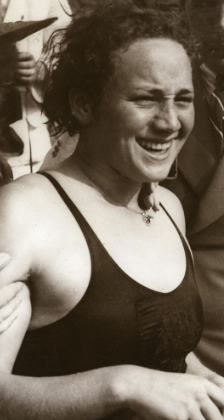
Hendrika (“Rie”) Mastenbroek was a Dutch swimmer who gained prominence during the 1936 Berlin Olympics. Image: Dutch swimmer and tripple Olympic champion Rie Mastenbroek
At the 1936 Berlin Olympics, Konrad Frey, representing Germany, was a dominant figure in artistic gymnastics. He secured six medals in total: three gold, two silver, and one bronze. His gold medals were won in the horizontal bar, parallel bars, and the individual all-around categories. With these achievements, Frey became one of the most decorated athletes of the Games. His successes contributed to Germany’s overall strong performance at their home Olympics, further cementing his legacy in the world of gymnastics.
Elizabeth Robinson, often referred to as “Betty,” made history at the young age of 16 during the 1928 Amsterdam Olympics when she won the gold medal in the 100m sprint. This was notable not only because of her age but also because it was the first time women were allowed to compete in track and field events in the Olympics, making her the first female Olympic champion in the 100m.
In a dramatic turn of events, Robinson was involved in a plane crash in 1931, which left her severely injured. Many believed she would never run again. However, she made a remarkable comeback.
By the 1936 Berlin Olympics, Robinson competed again and was part of the U.S. women’s 4x100m relay team that won the gold medal.
Robinson’s journey from a groundbreaking Olympic champion to surviving a near-fatal accident and returning to win another gold medal adds to her legacy as one of the sport’s most resilient and iconic figures.
Who designed the emblem of the Games?
The emblem for the 1936 Berlin Olympics was initially designed by artist Johannes Boehland, featuring the Olympic rings, an eagle, and the Brandenburg Gate.
However, the Games Organizing Committee’s President, Dr. Lewald, was unsatisfied and modified the design, unintentionally creating a bell shape. This accidental design resonated with its symbolism, bearing the inscription “Ich rufe die Jugend der Welt!” which means “I call the youth of the world.”
Boehland was then asked to refine this bell-themed emblem, resulting in the final design of an Olympic bell with the rings and a German eagle. This bell symbol, alongside the Olympic rings, flame, and oath, became a central and recurring motif of the Berlin Olympics.
Who designed the poster of the Games?
For the design of the 1936 Games poster, an initial competition was conducted but didn’t yield satisfactory results. The publicity committee then approached various artists directly, ultimately selecting Mr. Würbel’s design as the official poster. His design showcased the Quadriga from the Brandenburg Gate, an iconic Berlin landmark, with a background figure of a victorious athlete giving the Olympic salute, representing Olympic sport. The poster was widely circulated, with 243,000 copies produced in 19 languages and distributed across 34 countries.

Official poster of the 1936 Summer Olympic Games held in Berlin, Germany
Who designed the medals for the Games?
The obverse side of the medal for the 1936 Berlin Olympics featured the conventional goddess of victory holding a palm and a winner’s crown. This design, crafted by Giuseppe Cassioli, has been used since the 1928 Amsterdam Games and was selected from a 1921 International Olympic Committee competition. For the Berlin Games, the medal included the specific inscription: “XI. OLYMPIADE BERLIN 1936”.
The reverse showcased an Olympic champion being celebrated by the crowd with the Olympic stadium in the backdrop. Notably, from 1928 to 1968, Summer Games medals shared this identical design. However, the 1972 Munich Games introduced a unique reverse designed by Bauhaus artist Gerhard Marcks.
The Olympic Torch
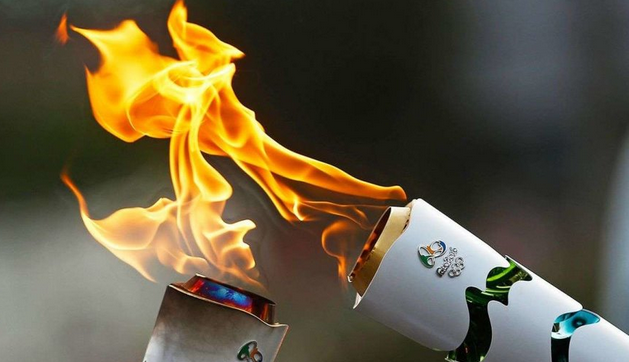
The act of lighting the Olympic flame is a significant ceremonial moment in any Olympic Games, symbolizing the spirit, continuity, and tradition of the event.
In 1934, the International Olympic Committee approved the idea, proposed by Carl Diem, to transport an Olympic flame from Greece to Berlin for the 1936 Olympics. This concept became the first Olympic torch relay.
On 20 July 1936, the flame was ignited in Olympia using a parabolic mirror concentrating sunlight. Baron Pierre de Coubertin conveyed a message to the torchbearers at this event, and concurrent celebrations were held in Berlin.
As the flame journeyed to Berlin, it was honored with ceremonies and events in various cities. Significant celebrations included a king-attended ceremony in Athens’ Panathenaic Stadium and a tribute at Budapest’s Heroes’ Square. The flame reached Berlin on 1 August and was used to ignite a cauldron in the Lustgarten, where it burned throughout the Games.
Separate relays then transported flames for specific events: one to Kiel for the sailing competitions, ignited on 2 August and arriving the following day after a 347km relay; and another to Grünau for rowing and canoeing on 7 August, involving 191 groups of runners covering 37km.
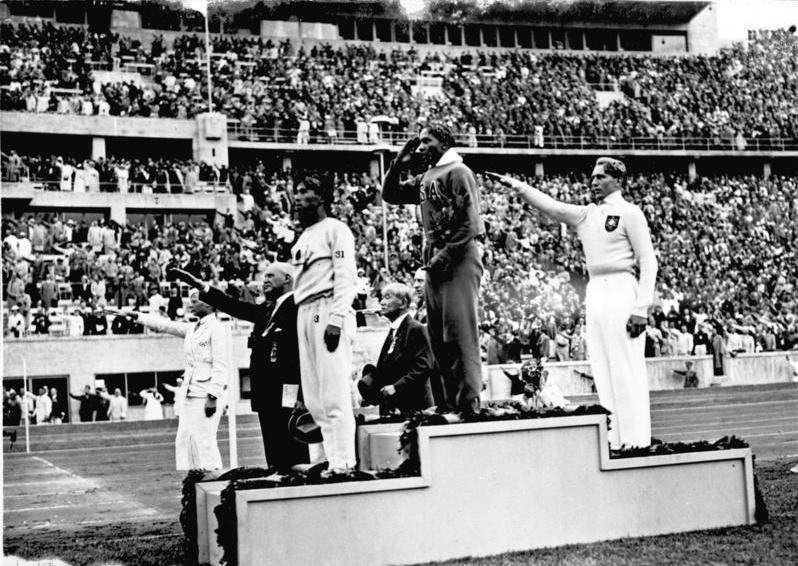
Olympische Spiele 1936 in Berlin, Siegerehrung im Weitsprung: Mitte Owens (USA) 1., links: Tajima (Japan) 3., rechts Long (Deutschland) 2.,
Zentralbild/Hoffmann





