Battle of the Thames
The Battle of the Thames, also known as the Battle of Moraviantown, was a significant event during the War of 1812. It took place on October 5, 1813, near present-day Chatham, Ontario, along the Thames River in Upper Canada. This battle was a decisive victory for the American forces, under the command of Major General William Henry Harrison, against British and Indigenous forces led by British General Henry Procter and Shawnee leader Tecumseh.
The battle had far-reaching consequences, including the death of Tecumseh, which effectively dissolved the Indigenous confederacy he had united. The British lost control over southwestern Ontario, and the American victory helped reassert U.S. dominance over the Detroit area.
Below, senior American historians at World History Edu provide a detailed history of the Battle of the Thames and the major facts surrounding it.
Background: The War of 1812 and the Detroit Campaign
The War of 1812 was a conflict between the United States and Great Britain, driven by multiple factors, including trade restrictions imposed by Britain, the impressment of American sailors, and the desire of the United States to expand its territory. The conflict included both land and naval battles across North America, particularly in the Great Lakes region, and had profound effects on Indigenous nations allied with both sides.
In the early stages of the war, the British, along with their Indigenous allies led by Tecumseh, successfully captured Detroit in August 1812. This victory was a significant blow to the Americans and gave the British control of much of the Michigan Territory. Tecumseh’s Confederacy was a critical ally to the British, as Tecumseh had united several Indigenous tribes with the goal of resisting American expansion into Indigenous lands.
The Situation Leading to the Battle of the Thames
By 1813, the tide of war began to turn in favor of the United States. The Americans knew they needed to regain control of the Detroit area and disrupt the British-Indigenous alliance. One of the key strategic points was Lake Erie, a critical supply route for the British forces in the region. The British, under General Procter, depended on supplies coming from the east along the lake.
The Battle of Lake Erie, which took place on September 10, 1813, was a pivotal moment. Under the command of Commodore Oliver Hazard Perry, the U.S. Navy defeated the British fleet, gaining control of Lake Erie. This victory was a game-changer, cutting off the British forces in the Detroit region from their supply lines. Procter and his troops, including Tecumseh and his warriors, were forced to retreat northward along the Thames River toward Moraviantown.
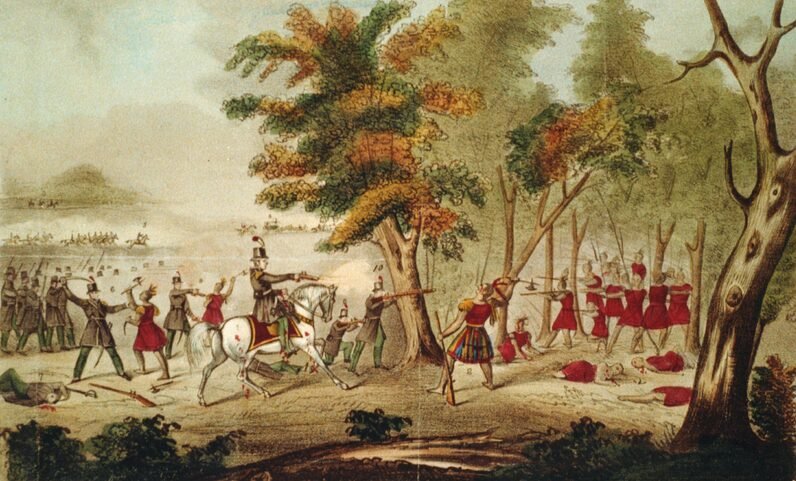
Image: An illustration depicting the battle.
Procter’s Retreat and Tecumseh’s Reluctance
General Procter had recognized the precariousness of his position following the loss of the British fleet on Lake Erie. Without naval support and with supplies running low, he ordered his troops to retreat from Detroit and Amherstburg, two important British outposts in the Michigan and Ontario regions. However, his decision to retreat was met with resistance from Tecumseh.
Tecumseh believed that the British should make a stand against the advancing Americans. He expressed frustration with Procter’s lack of commitment to a decisive defense, famously stating, “Our lives are in the hands of the Great Spirit. We are determined to defend our lands, and if it be His will, we wish to leave our bones upon them.” Tecumseh had long been a fierce opponent of American expansion, and he saw this moment as critical to the survival of his confederacy.
Despite Tecumseh’s urging, Procter continued to retreat, slowly making his way up the Thames River with his troops and Indigenous allies. The retreat was poorly organized, with British forces moving sluggishly due to the lack of discipline and transportation issues. Meanwhile, Tecumseh’s warriors became increasingly demoralized by the lack of a clear plan from the British leadership.
The American Pursuit
American forces under General William Henry Harrison were quick to capitalize on the British retreat. Harrison’s troops, a mix of regular soldiers and militia, pursued Procter’s forces, determined to deal a final blow to the British and their Indigenous allies. With control of Lake Erie firmly in U.S. hands, Harrison’s forces were able to advance quickly.
Harrison had a reputation as a skilled and aggressive leader, having previously fought against Tecumseh’s confederacy during the Battle of Tippecanoe in 1811. He knew that the capture of Procter’s forces and the defeat of Tecumseh would be a significant victory for the United States. Harrison’s cavalry, led by Colonel Richard Mentor Johnson, was particularly effective in closing the distance between the American and British-Indigenous forces.
By early October 1813, Harrison’s forces caught up with Procter’s troops near Moraviantown, a settlement of Christianized Indigenous people along the Thames River. Here, Procter decided to make a stand, though the decision came too late to organize a proper defense.
The Battle of the Thames: October 5, 1813
The Battle of the Thames took place on October 5, 1813. The British forces, numbering around 800 soldiers, were positioned along the riverbank, with Tecumseh’s 500-strong Indigenous forces stationed in the woods to the right. Procter, however, had not adequately prepared for the battle, and his troops were demoralized from the long retreat.
The American forces, totaling around 3,500 men, vastly outnumbered the British and Indigenous troops. Harrison’s infantry moved forward, while Colonel Johnson’s cavalry led a frontal assault on the British lines. The British troops, poorly positioned and lacking motivation, quickly broke ranks and retreated when the American cavalry charged.
Tecumseh’s warriors, on the other hand, fought fiercely. Tecumseh himself remained committed to resisting the American advance, leading his forces in a valiant defense of their position. However, the overwhelming numbers and firepower of the American troops were too much to overcome. During the battle, Tecumseh was killed, though the exact circumstances of his death remain unclear.
Some accounts suggest that Colonel Johnson may have been the one to kill Tecumseh, though this claim is disputed by historians. Regardless of who dealt the fatal blow, Tecumseh’s death was a devastating loss for his confederacy. Without his leadership, the Indigenous resistance began to crumble.
Aftermath and Consequences
The Battle of the Thames was a decisive American victory. The British forces, led by Procter, were thoroughly defeated, and Procter himself fled the battlefield, eventually facing a court-martial for his poor leadership. The loss of Tecumseh was even more significant, as it marked the end of organized Indigenous resistance in the region. Tecumseh had been a unifying figure, and with his death, the alliance of Indigenous tribes that he had built quickly fell apart.
The Americans reasserted control over the Detroit area, which had been under British and Indigenous control since the early stages of the war. This victory also helped solidify Harrison’s reputation as a successful military leader, contributing to his later rise in American politics. In fact, William Henry Harrison would go on to become the ninth president of the United States in 1841, largely on the strength of his military achievements, including the victory at the Battle of the Thames.
For the Indigenous peoples, the defeat at the Thames was catastrophic. Tecumseh had worked tirelessly to unite the tribes of the Ohio Valley and the Great Lakes region in a concerted effort to resist American encroachment. With his death, this alliance fell apart, and many of the tribes were forced to cede their lands to the United States in subsequent treaties.
The British, meanwhile, lost a valuable ally in Tecumseh and his confederacy. The defeat at the Battle of the Thames also signaled the end of British control over southwestern Ontario, weakening their position in the region. While the war would continue for another year, culminating in the Treaty of Ghent in 1814, the Battle of the Thames was a turning point in the war’s western theater.
Legacy of the Battle of the Thames
The Battle of the Thames is remembered as one of the most important battles of the War of 1812, particularly in the context of the western front. The victory helped solidify U.S. control over the Great Lakes region and ended the threat posed by Tecumseh’s confederacy to American expansion.
Tecumseh, in death, became a legendary figure. He is remembered as a heroic leader who fought to preserve his people’s lands and culture against overwhelming odds. His vision of a united Indigenous resistance to American expansion was never fully realized, but his legacy as a leader and warrior endures in both Indigenous and American history.
For William Henry Harrison, the victory at the Battle of the Thames was a key moment in his military career. It enhanced his national reputation and set the stage for his eventual election as president of the United States, though his presidency was short-lived due to his untimely death just a month after taking office.
The battle also underscored the importance of naval power in the War of 1812. The U.S. victory at the Battle of Lake Erie had been instrumental in cutting off British supplies and forcing Procter’s retreat, which led to the engagement at the Thames. Control of the Great Lakes was a decisive factor in the American success in the war’s western theater.
Conclusion
The Battle of the Thames was a pivotal moment in the War of 1812. It marked a decisive American victory over British and Indigenous forces, leading to the death of Tecumseh and the collapse of his confederacy. The battle helped the United States regain control of the Detroit region and diminished British influence in southwestern Ontario. While the War of 1812 would continue for another year, the Battle of the Thames was a key turning point, particularly in the western front of the conflict.
Questions and Answers on the Battle of the Thames
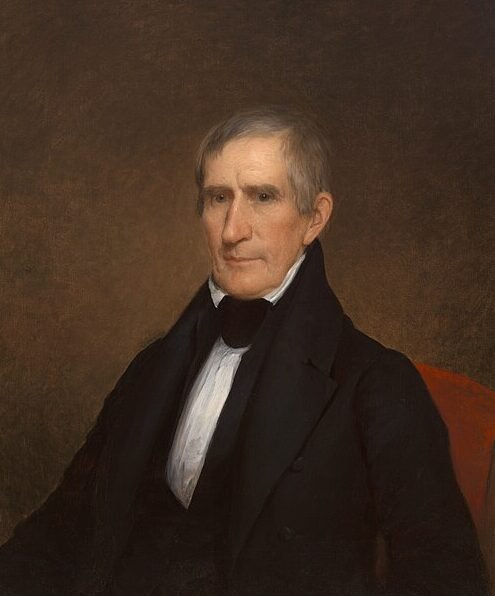
At the Battle of the Thames on October 5, 1813, American forces under the command of General William Henry Harrison defeated British and Native American forces led by Tecumseh near modern-day Chatham, Ontario. Image: An 1840 portrait of William Harrison.
When and where did the Battle of the Thames take place?
The Battle of the Thames, also known as the Battle of Moraviantown, took place on October 5, 1813, in Upper Canada, near Chatham during the War of 1812.
Who were the main opposing forces in the Battle of the Thames?
The main opposing forces were the American troops under Major General William Henry Harrison and the combined forces of Tecumseh’s Confederacy and their British allies, led by Major General Henry Procter.
What led to the British and Indigenous retreat before the battle?
After the United States Navy gained control of Lake Erie, British forces, led by Major General Henry Procter, were cut off from their supply lines, forcing them to retreat north along the Thames River to Moraviantown. Tecumseh and his tribal confederacy supported the British during this retreat.
What was the outcome of the battle for the British forces?
The American forces under Major General Harrison successfully drove off the British troops. Major General Henry Procter faced severe criticism for his leadership and was later court-martialed by the British military.
What happened to Tecumseh during the battle, and why was it significant?
Tecumseh, the Shawnee leader, was killed during the battle. His death significantly demoralized his followers, leading to the collapse of his confederacy, which had been a key resistance against American expansion into Indigenous lands.
How did the battle affect Indigenous resistance in the region?
The battle marked the end of organized Indigenous resistance in the region, as Tecumseh had been instrumental in uniting various tribes to resist U.S. encroachment. His death and the defeat at the Battle of the Thames were devastating blows to the Indigenous cause.
What was the broader impact of the American victory at the Battle of the Thames?
The American victory re-established control over the Detroit area and weakened British influence in Southwestern Ontario. It also marked a pivotal point in diminishing Indigenous resistance to U.S. territorial expansion in the region.
What consequences did Major General Henry Procter face after the battle?
Major General Henry Procter was criticized for his poor leadership during the battle and was court-martialed by the British military for his role in the defeat.
Why is the Battle of the Thames considered a decisive moment in the War of 1812?
The Battle of the Thames is considered decisive because it broke British and Indigenous control in Southwestern Ontario, led to the collapse of Tecumseh’s Confederacy, and solidified American control in the Detroit area.
What role did Tecumseh play in the War of 1812 prior to his death?
Tecumseh played a crucial role as the leader of a tribal confederacy that fought alongside the British against the United States, uniting various Indigenous tribes in an effort to resist U.S. expansion into Native lands.