Yale University: History, Establishment & Major Facts
Yale University, one of the world’s most prestigious and historic institutions, traces its origins back to 1701. It was initially founded as the “Collegiate School” in the colony of Connecticut by a group of ten Congregationalist ministers who aimed to establish a place for higher education that would train future leaders in both religious and civil matters. The school’s charter, granted by the colonial legislature on October 9, 1701, emphasized the institution’s goal to educate young men for public service in the Church and State.
The early years of the Collegiate School were modest. Classes were first held in the home of its first rector, Abraham Pierson, in the small town of Killingworth (modern-day Clinton). The location shifted to Saybrook (modern-day Old Saybrook) in 1707, but it wasn’t until 1716 that the institution moved to its current home in New Haven, Connecticut. The relocation was driven by the support of local townspeople and donors who contributed significantly to building a new campus.
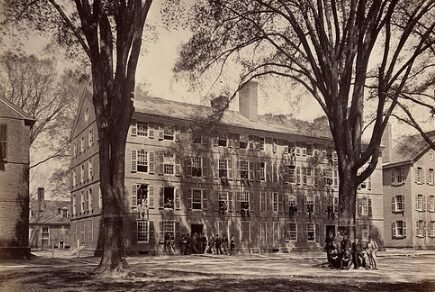
On October 9, 1701, Connecticut’s colonial legislature chartered the Collegiate School in Saybrook to educate students for “Publick employment both in Church & Civil State.” Image: Connecticut Hall – Yale University
Renaming to Yale College
In 1718, the Collegiate School was renamed “Yale College” in recognition of a substantial donation from Elihu Yale, a wealthy merchant, philanthropist, and former governor of the British East India Company. Yale, who had never visited the school, contributed goods valued at £800 (a significant sum at the time) and 417 books to the fledgling institution. His gift was instrumental in helping the college expand its operations and build a new campus in New Haven.

Initially based in the house of its first rector in Killingworth, the school relocated to New Haven in 1716 and was renamed Yale College in 1718, in honor of merchant benefactor Elihu Yale. Image: Connecticut Hall, oldest building on the Yale campus, built between 1750 and 1753. Image: Elihu Yale and his London home, possibly by Swedish portrait painter Michael Dahl
Elihu Yale’s name would become synonymous with one of the most prestigious institutions in the world, even though his connection to the school was somewhat distant. Nevertheless, his philanthropy came at a critical time for the institution and helped establish the foundations for its future growth.

Image: First diploma awarded by Yale College, granted to Nathaniel Chauncey in 1702
Yale’s Role in the American Revolution
During the 18th century, Yale College played a critical role in the intellectual and political climate leading up to the American Revolution. Many of its graduates were influential figures in the revolution and the formation of the new United States.
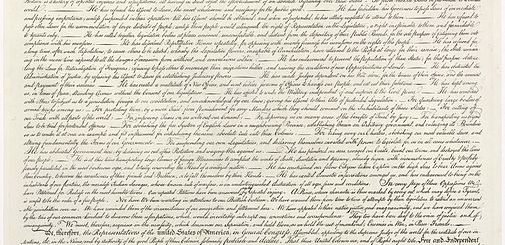
Four Yale alumni — Lyman Hall, Philip Livingston, Lewis Morris, and Oliver Wolcott — signed the Declaration of Independence. Additionally, Nathan Hale, a Yale graduate and revolutionary hero, became a symbol of patriotism with his famous last words, “I only regret that I have but one life to lose for my country.”
Beyond individuals, the institution itself became a hub for revolutionary ideas, contributing significantly to the intellectual and political development of the early American republic. Yale’s prominence in these areas helped cement its reputation as a leading institution of higher learning in the new nation.
Yale’s Transformation in the 19th Century
The 19th century saw significant transformations for Yale College, including its evolution into a modern research university. By this time, the curriculum had expanded beyond its original religious and theological focus to include humanities, natural sciences, and the social sciences. This change was part of a broader trend in American higher education toward a more comprehensive and secular curriculum.
Yale played a pivotal role in the development of graduate education in the United States. In 1861, Yale became the first university in the U.S. to award a Ph.D., setting the standard for doctoral education in the country. This marked an important milestone not just for Yale, but for American academia as a whole.
In 1887, Yale College officially reorganized as Yale University, reflecting its expansion into a wide array of graduate and professional education programs. This period also saw the establishment of many of Yale’s most prestigious schools, including the Yale Law School, Yale Divinity School, and Yale School of Medicine.

Yale Law School
Expansion and Growth in the 20th Century
The 20th century was a time of significant expansion and growth for Yale University. This era saw Yale’s rise to global prominence as one of the leading centers of research, intellectual thought, and higher education. Yale attracted students and faculty from around the world and became a leader in many academic fields, including law, business, the arts, and sciences.
Yale also continued to build on its physical campus, with the construction of iconic buildings such as Sterling Memorial Library, Woolsey Hall, and the Beinecke Rare Book & Manuscript Library. The university expanded its reach with additional facilities in West Haven, athletic complexes in western New Haven, and nature preserves throughout New England.
Yale’s commitment to diversity and inclusivity also took major strides during the 20th century. In 1969, Yale began admitting women as undergraduates, and over time, it increasingly welcomed students from diverse racial, ethnic, and socio-economic backgrounds. This shift helped Yale strengthen its role as a leader in education for all, regardless of background.

Image: Woolsey Hall c. 1905
Yale’s Academic Structure
Yale University is organized into fourteen constituent schools, each responsible for its own curriculum and degree programs. These schools include the original undergraduate college (Yale College), the Yale Graduate School of Arts and Sciences, and various professional schools such as the Yale Law School, Yale School of Medicine, Yale School of Management, and Yale Divinity School.
Each school operates somewhat independently, but the university is governed overall by the Yale Corporation, which serves as its board of trustees. The Corporation makes key decisions regarding the university’s policies, finances, and future direction.
Yale’s academic offerings are expansive and interdisciplinary, with strengths in nearly every field of study. The university is known for its unique residential college system, which divides undergraduate students into smaller communities that provide a supportive, close-knit environment within the larger university structure.
Yale’s Global Impact and Notable Alumni
Yale’s influence on the world extends far beyond its campus. The university has produced a remarkable array of leaders and influential figures in nearly every sector of society. Its alumni include five U.S. presidents (William Howard Taft, Gerald Ford, George H. W. Bush, George W. Bush, and Bill Clinton), 19 U.S. Supreme Court justices, 10 Founding Fathers, and numerous foreign heads of state.
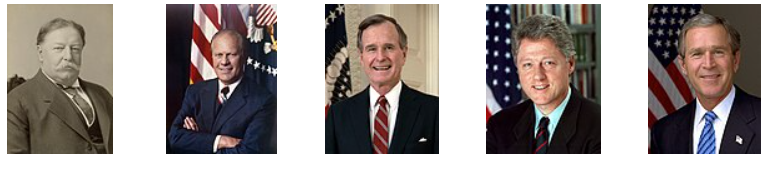
Notable Yale graduates span diverse fields, including U.S. presidents William Howard Taft and George H.W. Bush, Samuel F.B. Morse, Angela Bassett, and Supreme Court Justice Sonia Sotomayor. In 1781, Yale awarded an honorary Doctor of Laws degree to George Washington. Image (L-R): William Taft, Gerald Ford, George H.W. Bush, Bill Clinton, and George W. Bush.
In addition to its political influence, Yale has left a lasting mark on the arts, business, and academia. Notable alumni include Nobel laureates such as Paul Krugman and George Akerlof, actors like Meryl Streep and Paul Newman, entrepreneurs such as Indra Nooyi, and authors like Thornton Wilder.
Yale also has a long history of producing scholars, with an impressive number of Rhodes, Marshall, and MacArthur scholars emerging from its ranks. Its faculty members are equally distinguished, including numerous members of prestigious academies such as the National Academy of Sciences, the National Academy of Medicine, and the American Academy of Arts and Sciences.
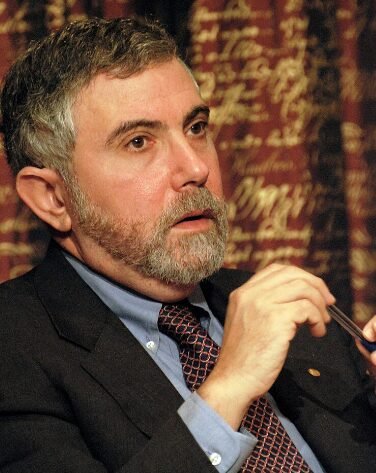
Yale affiliates include over 65 Nobel laureates, 5 Fields Medalists, 4 Abel Prize winners, and 3 Turing Award recipients. Image: Economist and Nobel Prize laureate Paul Krugman
Yale’s Endowment and Financial Strength
Yale University’s endowment is one of the largest in the world, valued at approximately $40.7 billion as of 2023. This immense financial resource supports the university’s operations, including its academic programs, financial aid initiatives, and research endeavors. Yale’s endowment is managed by the Yale Investments Office, which has earned a reputation for its innovative investment strategies and long-term financial planning.
The endowment allows Yale to offer generous financial aid to students from diverse socio-economic backgrounds. Yale is committed to need-blind admissions, meaning that students are admitted regardless of their financial circumstances, and the university meets 100% of demonstrated financial need for all admitted students. This ensures that a Yale education is accessible to the brightest students from around the world, regardless of their financial situation.
Yale University Library and Cultural Institutions
Yale is home to one of the largest and most renowned academic libraries in the United States. The Yale University Library holds over 15 million volumes, making it the third-largest university library in the country. The library’s collections are diverse and include rare books, manuscripts, and archives that span centuries and geographic regions.
Among Yale’s most famous cultural institutions is the Yale University Art Gallery, founded in 1832 as the first college art museum in the United States. The gallery’s collection includes works from ancient civilizations to contemporary art, with significant holdings in American, European, and Asian art.
Yale is also home to the Yale Center for British Art, the Peabody Museum of Natural History, and the Beinecke Rare Book & Manuscript Library, which houses one of the world’s largest collections of rare books and manuscripts.
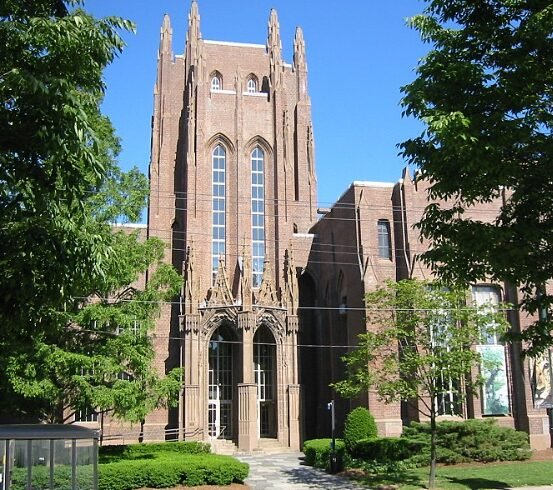
The Peabody Museum of Natural History at Yale University
Yale’s Legacy and Influence
Yale University’s legacy is one of intellectual rigor, global influence, and social responsibility. Over the centuries, Yale has consistently produced leaders who have shaped the world in profound ways, from the founders of the United States to modern-day innovators in science, politics, and the arts.
Yale’s impact on society is evident in its role in producing influential leaders and advancing knowledge across a wide range of fields. The university’s commitment to research, education, and public service continues to inspire new generations of scholars and leaders who carry on its tradition of excellence.
Today, Yale remains at the forefront of higher education, with its faculty and students engaging in groundbreaking research and addressing some of the world’s most pressing challenges. Its influence on both national and international affairs ensures that it will continue to play a vital role in shaping the future of society and scholarship for generations to come.
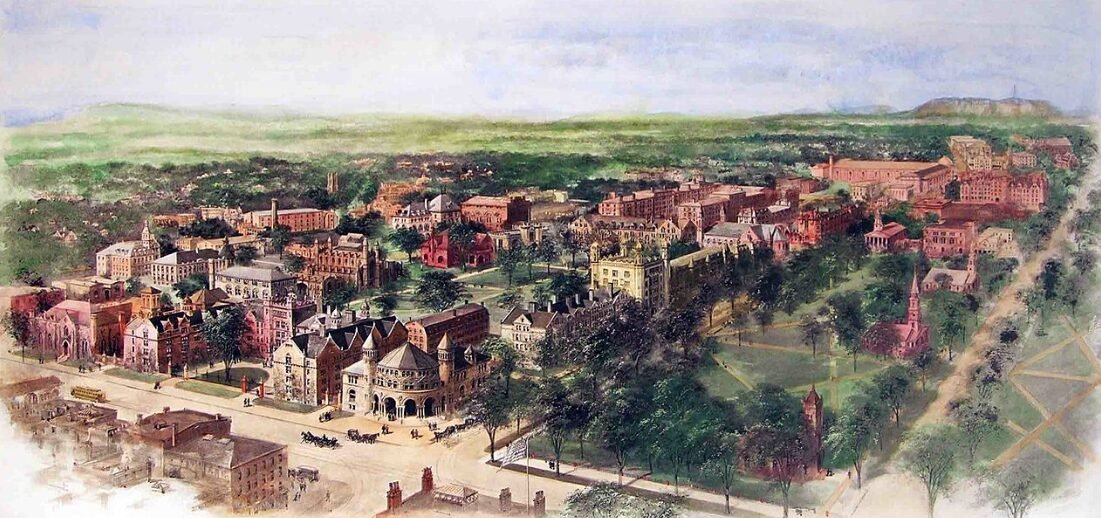
Image: Richard Rummell’s 1906 watercolor of the Yale campus facing north
Conclusion
Yale University’s rich history, academic excellence, and global influence have made it one of the most respected and prestigious institutions of higher learning in the world.
From its founding in 1701 as the Collegiate School to its evolution into a world-class research university, Yale has been a leader in education, producing some of the most prominent figures in history. With its impressive financial resources, extensive library collections, and distinguished alumni, Yale continues to be a beacon of intellectual achievement and a driver of innovation in research and education.
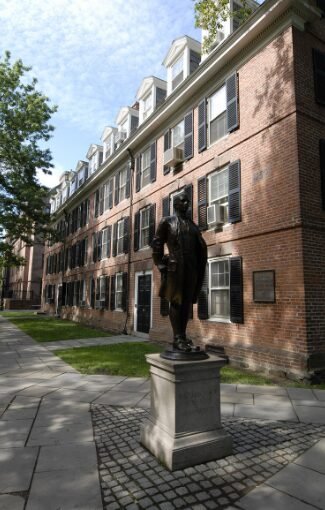
Yale graduates played a significant role in the American Revolution. Notable alumni like Lyman Hall, Philip Livingston, Lewis Morris, and Oliver Wolcott were signers of the Declaration of Independence. Twenty-five Yale men served in the Continental Congress, including patriots Nathan Hale and Noah Webster. Image: Statue of Nathan Hale in front of Connecticut Hall.
Questions and Answers

Yale University was founded in 1701 and is located in New Haven, Connecticut. Image: Front view of “Yale-College” and the chapel, printed by Daniel Bowen in 1786
When was Yale University originally chartered, and what was its original name?
Yale University was originally chartered on October 9, 1701, by the Connecticut colonial legislature as the Collegiate School in Saybrook.
Why was Yale College renamed in 1718?
Yale College was renamed in 1718 in honor of merchant Elihu Yale, who was an early benefactor of the school.

Elihu Yale
What role did Yale alumni play in the American Revolution?
Yale alumni played significant roles in the American Revolution. Signers of the Declaration of Independence, such as Lyman Hall, Philip Livingston, Lewis Morris, and Oliver Wolcott, were Yale graduates. Additionally, 25 Yale men served in the Continental Congress, including patriots Nathan Hale and Noah Webster.

During the late 1700s and mid-1800s, Yale expanded its original liberal arts curriculum to include graduate and professional education, evolving into a full university. Yale awarded the first doctoral degrees in the U.S. in 1861. Image: The Yale University Art Gallery, established in 1832, was the first college art museum in America.
What other cultural and academic institutions are associated with Yale?
Yale is home to several prestigious institutions, including the Yale Center for British Art, the Peabody Museum of Natural History, and Yale University Press, one of the nation’s most distinguished university presses.
What was Yale originally called, and what was its initial purpose?
Yale was originally called the Collegiate School, and it was founded by Congregationalist clergy to educate ministers in theology and sacred languages.

Yale also pioneered American higher education with cultural contributions. The Yale University Art Gallery, founded in 1832, was the first college art museum in the U.S., funded by the Connecticut legislature and featuring Revolutionary War paintings by John Trumbull. The university also established the Yale Center for British Art, Peabody Museum of Natural History, and Yale University Press.
How did Yale’s curriculum evolve over time?
Yale’s curriculum expanded to include the humanities and sciences, particularly around the time of the American Revolution. By the 19th century, it broadened further to include graduate and professional education.
When did Yale award the first Ph.D. in the United States?
Yale awarded the first Ph.D. in the United States in 1861.

In 1861, Yale’s Graduate School of Arts and Sciences awarded the first PhDs in the U.S. Image: Coat of arms of Yale University
How is Yale University organized today?
Yale is organized into fourteen constituent schools, including its undergraduate college, the Yale Graduate School of Arts and Sciences, and Yale Law School. Each school oversees its own curriculum and degree programs.
How extensive is the Yale University Library, and what does it contain?
The Yale University Library holds over 15 million volumes, making it one of the largest academic libraries in the United States.
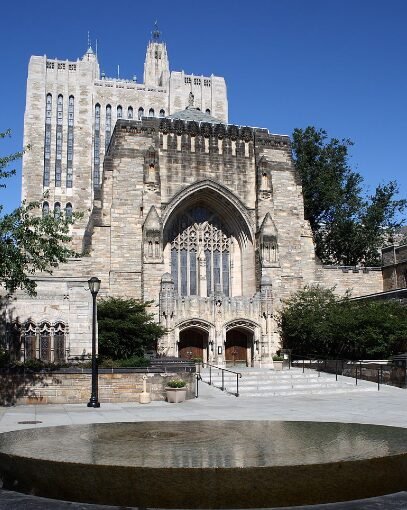
As of 2023, Yale’s endowment was valued at over $40 billion, making it the third largest of any U.S. educational institution. Image: Yale University’s Sterling Memorial Library
Which athletic conference do Yale’s sports teams compete in?
Yale’s sports teams, the Bulldogs, compete in the NCAA Division I Ivy League conference.
Which prominent individuals have graduated from or been affiliated with Yale?
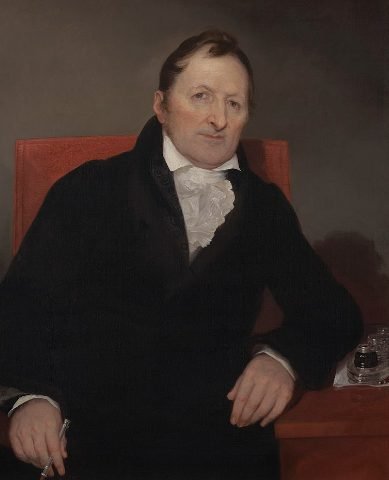
American inventor Eli Whitney.
Yale has produced five U.S. presidents, 19 U.S. Supreme Court Justices, 10 Founding Fathers, and numerous influential figures in politics, business, and academia.
For example, notable Yale alumni include U.S. presidents William Howard Taft and Gerald Ford, Supreme Court Justice Sonia Sotomayor, actress Angela Bassett, and inventor Eli Whitney.

Justice Sonia Sotomayor
Women Justices of the U.S. Supreme Court and their achievements
What notable academic honors have Yale alumni and faculty achieved?
Yale affiliates include many Rhodes, Marshall, and MacArthur scholars, as well as members of prestigious organizations like the National Academy of Sciences, National Academy of Medicine, and American Academy of Arts and Sciences.
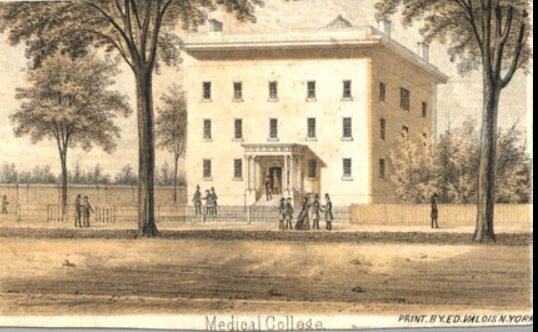
Yale transformed into a university between the late 1700s and mid-1800s as it expanded its curriculum to include graduate and professional education. Prestigious schools within Yale include divinity, medicine, law, and art. Image: Original building of Yale School of Medicine
How has Yale’s influence been felt on both national and global affairs?
Yale’s strong academic reputation, distinguished faculty, and notable alumni have ensured its lasting influence on both national and global affairs, making it a leader in education and research.