
Shiva Nataraja portrays Lord Shiva dancing within a circle of fire, symbolizing the eternal cycles of creation, preservation, and destruction.
Shiva Nataraja, often referred to as the “Lord of the Dance,” is one of the most iconic and profound representations of Lord Shiva, a principal deity in Hinduism. This depiction, deeply symbolic and rich in cultural significance, portrays Shiva performing the Tandava—a cosmic dance that embodies creation, preservation, and destruction. The image of Nataraja is both a theological metaphor and an artistic masterpiece, intertwining religion, science, and art.
READ MORE: How does Shiva destroy and recreate the universe?
Historical Context and Origins
The concept of Shiva as Nataraja likely originated during the Chola dynasty (9th to 13th century CE) in South India. The Chola rulers were great patrons of the arts and temple architecture, and they played a significant role in popularizing the Nataraja icon. The bronze sculptures of Shiva Nataraja from this era, particularly those from Tamil Nadu, are considered masterpieces of Indian art.
Nataraja’s dance was described as early as the ancient texts like the Natya Shastra by Bharata and the Tirumandiram by Tamil saint Tirumular. These works elucidated the theological and symbolic significance of Shiva’s cosmic dance. The figure of Nataraja has since been an enduring symbol of Hindu philosophy and spirituality.
Symbolism of the Iconography

An 1820 painting of Nataraja in a temple chariot
The image of Shiva Nataraja is laden with intricate symbolism, each element conveying profound meanings:
Dancing Pose (Ananda Tandava)
Shiva is depicted performing the Ananda Tandava (Dance of Bliss), which represents the cosmic cycles of creation and destruction. It signifies the rhythm of the universe and the continuous process of birth, growth, and dissolution.
Flaming Halo (Prabha Mandala)
The circular halo surrounding Shiva symbolizes the universe and the eternal cycle of time. The flames represent destruction and transformation, emphasizing that destruction is a precursor to creation.
Four Arms
Each of Shiva’s four arms conveys a specific meaning:
- Upper Right Hand: Holds a drum (damaru), symbolizing creation through sound. The rhythmic beats of the drum represent the heartbeat of the cosmos.
- Upper Left Hand: Holds a flame (agni), symbolizing destruction and the transformative power of fire.
- Lower Right Hand: In the abhaya mudra (gesture of protection), it reassures devotees to remain fearless in the face of life’s trials.
- Lower Left Hand: Points towards the raised foot, symbolizing liberation (moksha).
Raised Right Foot
The raised foot signifies upliftment and salvation. It invites devotees to transcend worldly attachments and seek spiritual enlightenment.
Demon Underfoot (Apasmara)
Shiva is shown trampling a dwarf demon, Apasmara, who represents ignorance, ego, and illusion. This act signifies the triumph of knowledge and enlightenment over ignorance.
Serpent Around the Neck
The snake coiled around Shiva’s neck represents the Kundalini energy—a latent spiritual force within every being that can be awakened through meditation and devotion.
Expression and Gaze
Shiva’s serene expression amidst the vigorous dance reflects the profound calmness and balance at the heart of dynamic cosmic activity.
Philosophical Interpretation
Shiva Nataraja is not merely an artistic representation; it encapsulates core Hindu philosophies.
The dance symbolizes the dual nature of reality—creation and destruction are not opposing forces but complementary aspects of existence. This cyclical process is seen as essential for renewal and evolution.
The cosmic dance represents time (kala) and eternity (akshaya). The continuous movement of the dance embodies the passage of time, while Shiva’s tranquil face symbolizes the timeless and unchanging reality.
Shiva’s act of trampling Apasmara highlights the spiritual journey of overcoming ignorance and ego. Liberation is achieved when one transcends the illusions of the material world.
The damaru and the flame symbolize the dynamic interplay of creation and destruction, which sustains the cosmos. This resonates with the concept of Shakti, or divine energy, which is integral to Shiva’s existence.
Scientific and Metaphysical Connections
The Nataraja icon has fascinated not only theologians and artists but also scientists and philosophers. Its profound symbolism has been interpreted as a representation of cosmic principles:
The dance of Shiva Nataraja resonates with the concept of the dynamic universe in modern physics. Physicist Fritjof Capra famously likened Shiva’s dance to the dance of subatomic particles, where matter is in constant motion and transformation.
Shiva Nataraja, the “Lord of the Dance,” is a timeless symbol that bridges the realms of spirituality, philosophy, art, and science.
The image of Shiva Nataraja illustrates the equilibrium of forces in the universe. The harmony between creation, preservation, and destruction parallels the principles of thermodynamics.
Artistic and Cultural Legacy
The artistic depiction of Shiva Nataraja is a testament to the sophistication of Indian art and aesthetics. The Chola bronze sculptures of Nataraja are celebrated for their intricate detailing and expressive dynamism. These sculptures are not only religious icons but also masterpieces of sculpture, admired globally for their artistic brilliance.
Nataraja has also inspired various forms of Indian classical dance, particularly Bharatanatyam, where the dancer often mimics the postures and gestures of Shiva’s dance.
Global Influence

By embodying the cosmic cycles of creation and destruction, Shiva Nataraja reminds his devotees of the dynamic and interconnected nature of existence, inviting us to seek harmony within the eternal dance of life.
The Nataraja figure transcends its religious origins and has become a universal symbol of cosmic harmony and the interconnectedness of all life. Today, replicas of the Nataraja statue are displayed in museums and cultural institutions worldwide.
One notable example is the 2-meter-tall Nataraja statue at the European Organization for Nuclear Research (CERN) in Geneva. This statue serves as a reminder of the connection between ancient Indian wisdom and modern scientific inquiry.
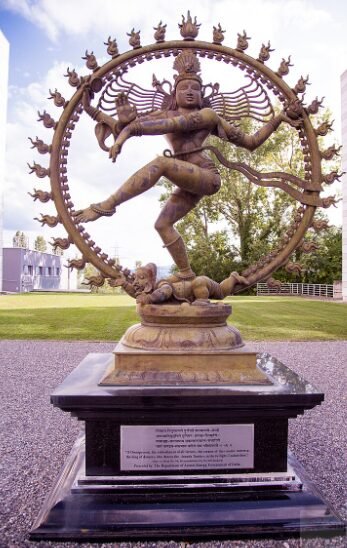
Modern statue of Shiva Nataraja gifted by India at CERN in Geneva, Switzerland
Devotional Significance
For devotees, Shiva Nataraja is not merely an abstract symbol but a living deity. The image is revered as a representation of Shiva’s presence in the universe. Temples dedicated to Nataraja, such as the famous Nataraja Temple in Chidambaram, Tamil Nadu, are centers of pilgrimage and spiritual inspiration.
READ MORE: Why did Lord Shiva carry the Ganges River on his head?
Frequently asked questions

Shiva Nataraja, the “Lord of the Dance,” is one of the most iconic depictions of the Hindu god Shiva.
Where can the image of Shiva Nataraja be seen?
The image is commonly found in temples, museums, and cultural spaces. It is also present in everyday places such as restaurants and esoteric shops, showcasing its global cultural and artistic appeal.
What roles does Shiva embody as Nataraja?
As Nataraja, Shiva embodies the triple role of Creator, Preserver, and Destroyer, illustrating his multifaceted nature and the interconnectedness of these cosmic functions.
When did depictions of Shiva as a dancer first appear?
Depictions of Shiva as a dancer appeared in Indian stone temple sculptures during the 5th and 6th centuries CE. The freestanding bronze sculptures of Nataraja, as commonly seen today, became prevalent by the 10th century CE.
What does the flaming halo around Shiva represent?
The flaming halo, known as the prabha mandala, symbolizes Time and the cyclical, eternal nature of the universe. The circle emphasizes the Hindu belief in the unending and interconnected flow of cosmic events.
What does Shiva’s dance, the Tandava, signify?
The Tandava represents both the creation and destruction of the universe. This cosmic dance symbolizes the dynamic energy of life and the universe’s constant cycle of transformation.
What elements are depicted in Shiva’s hair, and what do they represent?
Shiva’s flowing hair contains a skull (symbolizing death and renewal), a datura blossom (representing spirituality), and a crescent moon (indicating his eternal presence). It also prominently includes Ganga, the river goddess, signifying Shiva’s role in bringing the Ganges to earth.
What is the significance of the damaru and agni in Shiva’s hands?
The damaru (hourglass-shaped drum) in Shiva’s upper right hand symbolizes the rhythm of creation and the cosmic heartbeat, while the agni (divine fire) in his upper left hand represents destruction and transformation. Together, they illustrate the balance of creation and destruction.
What do Shiva’s lower hands symbolize?
Shiva’s lower right hand makes the abhaya mudra, offering protection and dispelling fear. His lower left hand points to his raised left foot, symbolizing liberation (moksha) and spiritual salvation.
What is the significance of Shiva’s foot on Apasmara Purusha?
Shiva’s right foot stamps on the dwarf figure Apasmara Purusha, who represents ignorance and illusion. This act signifies Shiva’s triumph over delusion, guiding humanity toward truth and enlightenment.
What features define Shiva’s attire and adornments?
Shiva wears a short dhoti tied at the waist, with a flowing sash often blending into the ring of fire. He is adorned with necklaces, armlets, and anklets, enhancing his divine and majestic presence.
Why did the image of Shiva Nataraja gain prominence during the Chola period?
The Chola dynasty (9th–13th centuries CE) produced numerous bronze Nataraja sculptures, often over a meter tall, for use in religious processions and festivals. These sculptures showcased intricate artistry and became widely popular symbols of Shiva’s cosmic dance.
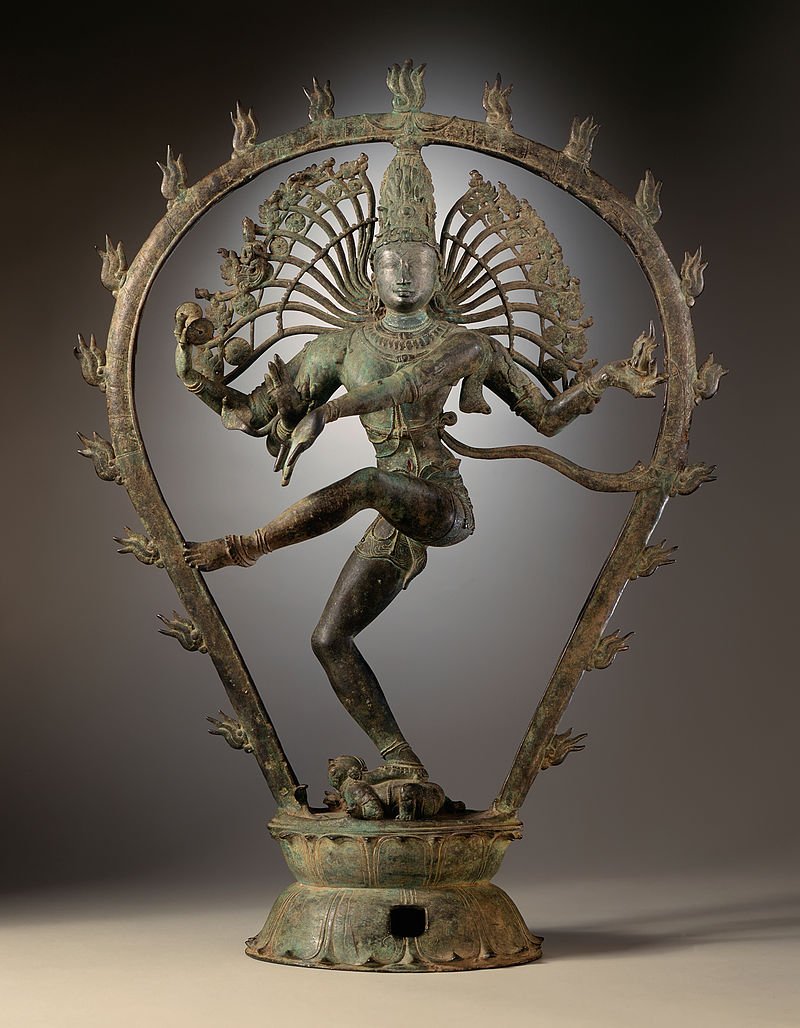
The tradition continues in southern India, particularly around Chidambaram, a region steeped in legend as the site where Shiva performed his cosmic dance of creation and destruction.
READ MORE: What are the Principal Deities in Hinduism?





