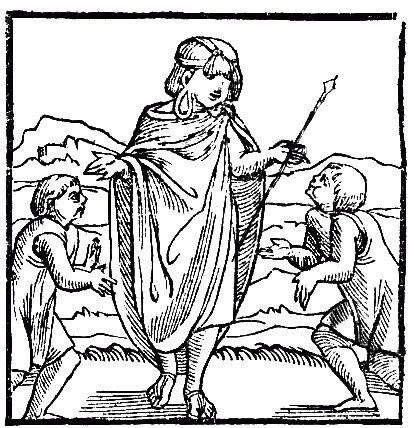
The first depiction of the Inca in Europe in 1553 by Pedro Cieza de León.
The fall of the Inca Empire is a seminal event in the history of the Americas, marked by the arrival of Spanish conquistadors in the early 16th century. Francisco Pizarro, a Spanish soldier and adventurer, played a pivotal role in this dramatic and tragic episode of conquest. The Inca Empire, at its zenith, was the largest empire in pre-Columbian America, encompassing vast territories in present-day Peru, Ecuador, Bolivia, Chile, and parts of Colombia and Argentina. Despite its immense wealth, organization, and military prowess, the empire succumbed to a relatively small group of Spaniards led by Pizarro.
Background
The Inca Empire, known as Tawantinsuyu, was founded in the early 15th century. It was centered in the Andes Mountains, with Cusco as its capital. The Incas were master builders, creating advanced agricultural systems, road networks, and monumental architecture like Machu Picchu. They had a sophisticated administration and a system of record-keeping using quipus (knotted strings).
The empire expanded under a series of powerful rulers, reaching its peak under Huayna Capac. However, after his death in 1527, a civil war erupted between his sons, Huáscar and Atahualpa, for control of the throne. This internal strife weakened the empire, leaving it vulnerable to external threats.
Francisco Pizarro was born around 1475 in Trujillo, Spain. Coming from a humble background, he sought his fortune in the New World, joining various expeditions in the early 1500s. Pizarro was part of Vasco Núñez de Balboa’s expedition that discovered the Pacific Ocean in 1513. Hearing rumors of a wealthy kingdom to the south, Pizarro became determined to conquer it.
Early Expeditions to Peru
Pizarro embarked on three expeditions to Peru between 1524 and 1532. The first two were exploratory, plagued by hardships and resistance from local populations. However, they confirmed the existence of a rich empire. Pizarro’s persistence paid off when he secured the backing of King Charles V of Spain in 1529, receiving the title of Governor of Peru and the right to claim the lands he conquered.
The Conquest of the Inca Empire
In 1532, Pizarro set out with about 180 men, 27 horses, and several cannons. The Spaniards reached the northern part of the Inca Empire during a time of great turmoil. Atahualpa had recently emerged victorious in the civil war against his brother Huáscar but had yet to consolidate his power.
Pizarro and his men advanced to Cajamarca, where Atahualpa was camped with thousands of soldiers. Despite their small numbers, the Spaniards had superior weaponry, including steel swords, firearms, and cavalry, which were unknown to the Incas.
On November 16, 1532, Pizarro invited Atahualpa to a meeting in Cajamarca’s main square. The Inca emperor arrived with an unarmed retinue, confident in his position. The Spaniards, however, launched a surprise attack. Using their advanced weapons and exploiting the element of surprise, they captured Atahualpa and killed thousands of his followers in a single day.
The conquest of the Inca Empire by Francisco Pizarro is a story of ambition, betrayal, and cultural collision.
Atahualpa offered to fill a room with gold and silver as ransom for his release. Over the next months, the Incas amassed immense quantities of treasure, which the Spaniards melted down and divided among themselves. Despite fulfilling his promise, Atahualpa was accused of treason and plotting against the Spaniards. In July 1533, he was executed by garrote.
The Fall of Cusco
Following Atahualpa’s death, the Spaniards marched on Cusco, the heart of the Inca Empire. They faced resistance from local forces loyal to the Incas but were aided by indigenous groups who opposed Inca rule. In November 1533, Pizarro captured Cusco, effectively ending the Inca Empire as a unified entity.
Establishment of Spanish Rule
To legitimize their rule, the Spaniards installed Manco Inca, a member of the royal family, as a puppet emperor. However, Manco Inca soon rebelled against the Spaniards, leading a major uprising in 1536. Despite initial successes, the rebellion was ultimately crushed, and Manco Inca retreated to Vilcabamba, where he established a small Neo-Inca state.
In 1535, Pizarro founded the city of Lima, which became the administrative center of Spanish Peru. The city symbolized the consolidation of Spanish power in the region.
Factors Behind the Spanish Victory
The Spaniards’ steel weapons, firearms, and horses gave them a significant advantage over the Incas, whose weapons were primarily made of wood and stone.
Many indigenous groups resented Inca domination and saw the Spaniards as potential liberators. Their support was crucial to Pizarro’s success.
European diseases, particularly smallpox, devastated the Inca population, including Huayna Capac and his heir. This biological onslaught weakened the empire even before the Spaniards arrived.
The Spaniards’ unfamiliar technology and tactics, combined with their audacious capture of Atahualpa, demoralized the Incas and disrupted their chain of command.
The Curse of the Lost Inca Gold: Origin Story and Significance
Legacy of the Conquest
The conquest led to the destruction of much of Inca culture, including their religion, art, and societal structures. Spanish colonization imposed Christianity and European customs on the native population.
The Spaniards exploited the Inca Empire’s vast resources, particularly its gold and silver, which fueled Spain’s economy but impoverished the local population.
Despite the conquest, indigenous resistance persisted for decades. The Neo-Inca state in Vilcabamba lasted until 1572, when the Spaniards captured and executed its last ruler, Tupac Amaru. Indigenous cultures and traditions survived in various forms, blending with European influences.

Questions and Answers
What was the size and extent of the Inca Empire in 1533 CE?
In 1533 CE, the Inca Empire was the largest in the world, stretching from Quito in the north to Santiago in the south, encompassing modern-day Ecuador, Peru, northern Chile, Bolivia, Argentina, and southern Colombia.
Why was the Inca Empire vulnerable to conquest despite its size?
The empire was vulnerable due to its lack of integration among conquered peoples, a civil war over succession, and devastating epidemics of European diseases, all of which weakened its stability and unity.
What did the Incas call their empire, and what did it signify?
The Incas called their empire Tawantinsuyu, meaning “Land of the Four Quarters,” symbolizing the empire’s division into four regions radiating from Cuzco, the capital and center of their world.
How did the Incas justify their rule over conquered peoples?
The Incas believed they were the “Children of the Sun,” chosen by the sun god Inti, with the emperor serving as Inti’s earthly embodiment. They imposed their language, religion, and culture on conquered peoples to reinforce their divine right to rule.
What internal factors weakened the Inca Empire before the arrival of the Spanish?
The Inca Empire was politically fragile due to its reliance on military dominance, hostages, and forced cultural integration. A six-year civil war between Huáscar and Atahualpa further divided the empire, and European diseases like smallpox devastated the population.
Who was Francisco Pizarro, and what motivated his expeditions?
Francisco Pizarro was a Spanish adventurer and treasure-seeker who, inspired by tales of gold, led expeditions along the Pacific coast. He sought wealth and power, eventually receiving permission from the Spanish king to govern any new territories he conquered.
What advantages did Pizarro’s forces have over the Incas?
Pizarro’s forces had superior weaponry, including firearms, cannons, and cavalry. They also formed alliances with local groups hostile to the Incas, enabling them to exploit divisions within the empire.
How did Pizarro capture Atahualpa?
On November 16, 1532, Pizarro ambushed Atahualpa at Cajamarca. Using cannons and cavalry, the Spaniards killed over 7,000 Incas and captured Atahualpa alive without suffering any losses.
What was Atahualpa’s ransom, and what happened after it was paid?
Atahualpa offered to fill a room with gold and silver as his ransom, which the Incas fulfilled over eight months, amassing treasures worth over $300 million in today’s value. Despite this, Pizarro executed Atahualpa on July 26, 1533, to break Inca resistance.
How did the Spaniards take control of Cuzco?
Following Atahualpa’s death, the Spaniards defeated weakened Inca forces and captured Cuzco on November 15, 1533. They looted the city’s treasures and installed puppet rulers to maintain control.
What role did Manco Inca play in the resistance against the Spanish?
Manco Inca, initially a puppet ruler, eventually rebelled against the Spanish, leading a prolonged guerilla war. He retreated to Vilcabamba, where he and his successors resisted Spanish rule until 1572.
What led to the ultimate fall of the Inca Empire?
The Spaniards’ superior weaponry, alliances with rival indigenous groups, and the empire’s internal divisions led to the fall of the Inca Empire. The capture and execution of Túpac Amaru in 1572 marked the final collapse.
What was the impact of the Spanish conquest on the Andean population?
The conquest resulted in the deaths of over half the Andean population due to disease, war, and exploitation. The Spanish imposed their culture, religion, and governance, erasing much of the Inca heritage.
The Ball Game of Mesoamerica: Origin Story, Gameplay and Rules





