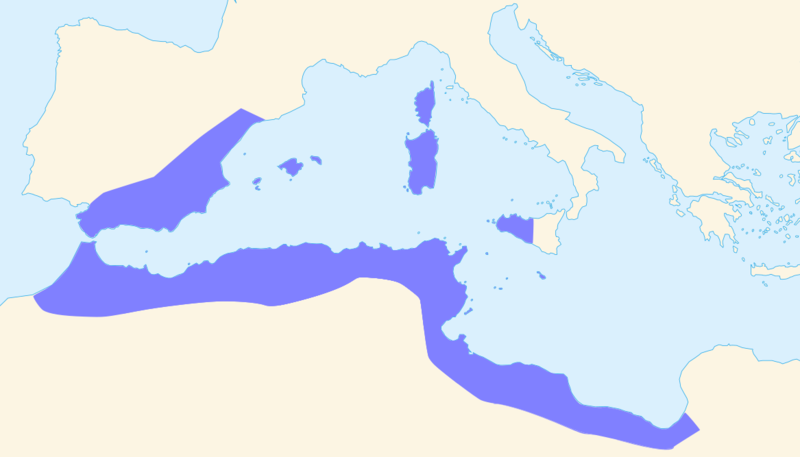
The Carthaginian domain as at 323 BC.
Carthaginian society was one of the most influential and complex cultures of the ancient Mediterranean world. Centered in the city of Carthage, located in modern-day Tunisia, this civilization flourished between the 9th and 2nd centuries BCE. Its society was shaped by its origins as a Phoenician colony, its maritime prowess, its vast trade networks, and its eventual conflicts with Rome.
Origins and Historical Background
Carthage was founded around 814 BCE by Phoenician settlers from Tyre, a powerful city-state in the Levant. According to legend, the city was established by Queen Dido (also known as Elissa), fleeing political strife in her homeland. Carthage began as a modest trading hub but quickly grew into a dominant power in the western Mediterranean, rivaling Greece and Rome.
The city’s prosperity was driven by its location on trade routes connecting the eastern and western Mediterranean, as well as its access to resources like precious metals, timber, and agricultural products. Over time, Carthage expanded its influence through colonization, trade, and military might, establishing a vast network of client states and colonies, especially in North Africa, Sicily, Sardinia, and Spain.
However, Carthage’s ambitions eventually brought it into conflict with Rome, leading to the Punic Wars. Despite moments of brilliance, such as Hannibal Barca’s campaigns during the Second Punic War, Carthage was ultimately defeated in 146 BCE. The city was destroyed, marking the end of an era.
Social Structure
Carthaginian society was hierarchical, with distinct classes based on wealth, heritage, and occupation.
At the top of Carthaginian society were wealthy aristocrats, primarily from merchant families. These elites controlled trade, politics, and land ownership, playing a dominant role in the governance of the city.
Below the aristocracy were ordinary Carthaginian citizens who enjoyed certain rights and privileges. This group included artisans, traders, and landowners who participated in civic and religious activities.
Carthaginian society was a dynamic blend of wealth-driven aristocracy, diversity, and ingenuity, leaving an enduring mark on the ancient Mediterranean despite its eventual destruction.
Carthage hosted a large population of foreigners, including Greek, Italian, and Egyptian traders, who contributed to its cosmopolitan culture. While these groups often lacked full citizenship, they were integral to the economy.
Slavery was a significant component of Carthaginian society. Enslaved people worked on farms, in mines, and as household servants. Many were war captives, while others were purchased through trade.
Economy
The Carthaginian economy was one of the most dynamic in the ancient world, driven by trade, agriculture, and industry.
Carthage’s dominance of the Mediterranean was rooted in its naval power and extensive trade networks. The city imported luxury goods, including ivory, gold, and silk, from Africa and the Near East, and exported products like textiles, pottery, and metalwork.
North Africa’s fertile plains allowed Carthage to produce vast quantities of grain, olives, and wine. The agricultural wealth of the region supported both the local population and trade.
Carthaginians were skilled manufacturers, particularly in the production of textiles, dyes, and glass. Their purple dye, derived from murex shellfish, was highly sought after.
Carthage minted its own coins, which facilitated trade and reflected its economic power. Coins often bore symbols of the city’s maritime heritage, such as ships or sea creatures.
Religion
Religion played a central role in Carthaginian life, blending Phoenician traditions with local and Hellenistic influences.
Carthaginian religion was polytheistic, with gods and goddesses closely linked to natural forces and human endeavors. Key deities included Baal Hammon, the chief god associated with fertility and prosperity, and Tanit, a goddess of love, war, and motherhood.
Religious rituals were elaborate, involving offerings of food, animals, and, controversially, human sacrifices. Archaeological evidence, such as the Tophet in Carthage, suggests that child sacrifices were performed as acts of devotion to Baal and Tanit, though some scholars debate the frequency and purpose of these practices.
Temples and altars were prominent in Carthaginian cities, serving as centers of worship and community gathering. Sacred precincts were often located on hills, symbolizing closeness to the heavens.
Governance
Carthage’s political system was advanced, blending elements of monarchy, oligarchy, and democracy.
The highest officials were the suffetes (judges), who acted as chief magistrates. Typically, two were elected annually, similar to Roman consuls.
An advisory body, the Council of Elders composed of aristocrats, influenced key decisions regarding war, diplomacy, and governance. It represented the oligarchic aspect of Carthaginian politics.
Also, citizens had a voice in public matters through assemblies, where major issues, such as declarations of war, were debated.
Generals like Hannibal and Hamilcar Barca wielded considerable influence, often rising to prominence through their successes on the battlefield.
Military
Carthage’s military was a formidable force, relying heavily on mercenaries and naval power.
The Carthaginian army was diverse, composed of soldiers from across its territories and beyond, including Libyans, Numidians, Iberians, and Gauls. This reliance on mercenaries was both a strength and a vulnerability, as their loyalty was often contingent on payment.
Carthage’s navy was the backbone of its power. Its ships, such as the quinquereme, were technologically advanced, allowing the city to dominate maritime trade and warfare.
One of the greatest military leaders in history, Hannibal is best known for his daring march across the Alps during the Second Punic War. His tactical genius cemented Carthage’s legacy in military history.
Art and Culture
Carthaginian culture reflected a blend of Phoenician, African, and Mediterranean influences.
Carthaginian art was functional yet intricate, emphasizing items like jewelry, pottery, and metalwork. Many artifacts depict motifs related to religion and seafaring.
The city of Carthage featured impressive public buildings, including temples, harbors, and fortifications. The double harbor complex, with one section for trade and another for military ships, was a marvel of engineering.
The Carthaginians spoke a Semitic language, Punic, derived from Phoenician. Education focused on practical skills, including commerce, navigation, and agriculture.
Frequently asked questions
What defined Carthaginian society’s structure?
Carthaginian society was dominated by a wealthy aristocratic trading class that controlled politics and religion. Beneath this elite were artisans, laborers, mercenaries, slaves, and foreigners, creating a cosmopolitan and diverse society.
What was the population of Carthage at its peak, and what was its reputation?
The population of Carthage peaked at around 400,000, and it was renowned as one of the richest cities in the ancient world.
What was the basis of Carthaginian aristocracy, and how did it differ from other ancient societies?
Carthaginian aristocracy was based on wealth rather than land ownership. Economic success, such as funding trading expeditions or managing manufacturing, allowed individuals to rise to prominence.
What criticism did Aristotle have about Carthage’s aristocracy?
Aristotle criticized Carthage’s aristocracy for being dominated by wealth, arguing that it led to a self-interested oligarchy.
Who could hold public office in Carthage?
Public offices were unpaid, meaning only individuals with substantial private incomes could afford to serve. Prominent families with ties to the city’s founders also held advantages in attaining power.
Who controlled religious offices in Carthage?
The elite controlled religious offices, with the head priest (rb khnm) serving as a member of the Senate and the Council of 104. A committee of ten senators oversaw state religious matters.
What roles did priests have in Carthage?
Priests performed rituals and sacrifices, including animal and human offerings, to honor Punic gods like Baal Hammon and Tanit. Their positions were often hereditary, and they likely managed temples and education.
Did women serve as priests in Carthage?
Yes, women served as priests, but their specific roles and duties remain unclear due to limited historical records.
Who qualified as citizens in Carthage?
Citizenship was reserved for native-born males, allowing them to participate in assemblies to discuss and approve Senate proposals.
How were Carthaginian citizens organized?
Citizens were organized into memberships (mizrehim), which were familial or professional associations often tied to shared religious devotion or military service.
Did Carthaginian citizens perform military service?
Most citizens did not perform military service. The elite Sacred Band, composed of 2,000 hoplites, represented the small citizen military, while mercenaries met most of the city’s military needs.
What roles did women play in Carthaginian society?
Women were excluded from citizenship and political life. They appear in inscriptions on religious dedications but were largely marginalized and subordinate to male relatives.

What were the primary occupations of Carthaginian artisans and laborers?
Artisans produced pottery, glassware, weapons, and textiles, while laborers worked as dockworkers, sailors, porters, and in various trades like carpentry and metalworking.
Where did artisans live in Carthage?
Artisans lived in multi-story adobe homes, some dating to the 7th century BCE, reflecting the city’s prosperity.
Who were the foreigners in Carthage, and what was their status?
Foreigners included Greeks, Italians, Sardinians, and North Africans. While they lacked political rights, they contributed to the city’s economy and culture.
What role did slaves play in Carthaginian society?
Slaves, acquired through conquest or trade, worked in various capacities, from domestic servants to skilled laborers. Some accumulated wealth and purchased their freedom.
Were there slave revolts in Carthage?
Yes, there were slave revolts in the 4th century BCE, but slaves generally remained loyal, particularly during military crises like the Punic Wars.





