The Schism of 1378

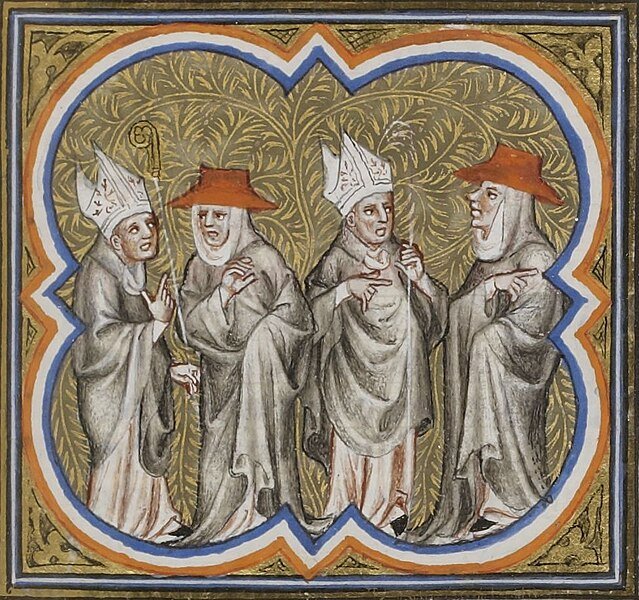
A miniature from the 14th-century representing the schism.

The Western Schism arose in 1378 when the papal election of Urban VI was disputed by French cardinals, who elected a rival pope, Clement VII. Political alliances and national rivalries sustained the division.

Origins of the Western Schism

The roots of the Western Schism trace back to the Avignon Papacy (1309–1377). From 1309, under pressure from Philip IV of France, the papacy resided in Avignon rather than Rome. This period, initiated by Pope Clement V, was marked by accusations of corruption and strong French influence. Many in Christendom criticized the papacy’s reliance on French monarchs and its financial mismanagement.

Pope Gregory XI returned to Rome in January 1377, intending to restore the papal seat to its original city. However, his death in March 1378 sparked immediate unrest. Tensions were high in Rome, as local factions demanded the election of a Roman or Italian pope to ensure the papacy remained in the city.

The Election of Urban VI and the Schism Begins

Bartolomeo Prignano, the Archbishop of Bari, was elected Pope Urban VI on April 8, 1378. His election was reportedly influenced by intimidation from Roman crowds, who sought to ensure the election of a pope favorable to their demands.

Urban VI’s harsh demeanor and reformist zeal alienated many of the cardinals who had supported him. In September 1378, 13 dissenting cardinals declared Urban’s election invalid, citing coercion during the conclave. They elected Robert of Geneva as Clement VII, marking the start of the schism.

Two Popes: Division and Chaos

Clement VII reestablished the papal court in Avignon, with the support of France, Scotland, Castile, Aragon, and several other European powers. His papacy symbolized the growing political and national rivalries that fueled the schism.

Urban VI retained control of Rome and garnered support from England, Hungary, Poland, and most of the Holy Roman Empire. The division of allegiances was largely determined by political alliances rather than theological differences.


The Escalation of the Schism

The rivalry between the Roman and Avignon papacies deepened, leading to excommunications and military conflicts. Cities and nations were split in their loyalties, sometimes resulting in violence and social unrest.

Various efforts to reconcile the two papal factions failed. Theologians began to advocate for a general council to address the crisis, but such a council could only be convened by a pope—a dilemma given the contested legitimacy of both claimants.

The Introduction of a Third Pope

In 1409, the Council of Pisa was convened by cardinals from both sides in an attempt to end the schism. The council declared both Pope Gregory XII (Roman) and Antipope Benedict XIII (Avignon) illegitimate, electing Alexander V as a new pope. However, this decision only worsened the situation, as it introduced a third claimant.

After Alexander V’s death in 1410, his successor John XXIII (Baldassare Cossa) continued the Pisan line. His leadership was characterized by limited support and mounting calls for a decisive resolution to the schism.

The Council of Constance and the Resolution

The Council of Constance (1414–1418) was convened by Antipope John XXIII and endorsed by Roman Pope Gregory XII, lending it greater legitimacy. The council aimed to restore unity within the church.

Key Actions

  • Gregory XII’s Resignation: Gregory XII formally resigned, an act that facilitated the council’s efforts.
  • Excommunication of Benedict XIII: Benedict XIII, the Avignon pope, refused to step down and was excommunicated.
  • Deposition of John XXIII: John XXIII was deposed by the council, ending the Pisan line.

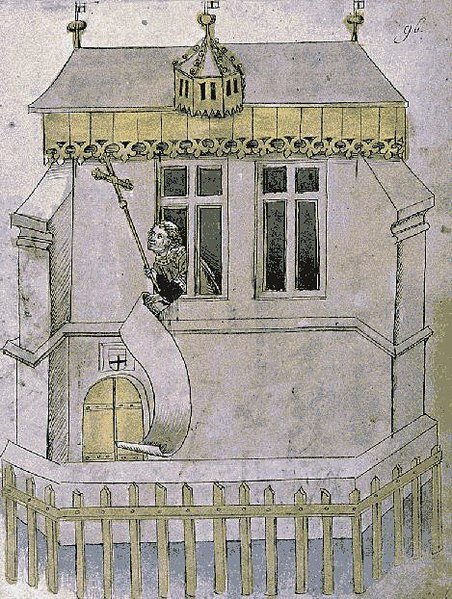
Habemus Papam, Council of Constance

In 1417, the council elected Martin V as the sole pope, effectively ending the Western Schism. His election restored unity to the Catholic Church and reestablished the papacy in Rome.

Aftermath and Long-Term Impacts

The schism had a lasting impact on the Catholic Church’s authority. The spectacle of competing popes weakened the church’s spiritual credibility and exposed its susceptibility to political manipulation.

The crisis bolstered the conciliarist movement, which held that a general council held supreme authority over the pope. Although the movement was later suppressed, it reflected growing demands for reform within the church.

The schism eroded the church’s unity and discipline, contributing to the conditions that eventually led to the Protestant Reformation in the 16th century.

Legacy of the Western Schism

The Catholic Church retroactively recognized the Roman line as the legitimate papacy during the schism. The Avignon and Pisan claimants were classified as antipopes, though debates over legitimacy persisted for centuries.

The schism emphasized the need for institutional reforms to prevent future crises. However, many of the underlying issues, such as clerical corruption and political interference, remained unresolved.

Timeline of the Western Schism

  • 1309: The Papacy relocates to Avignon under Pope Clement V, influenced by French politics.
  • 1377: Pope Gregory XI returns the Papacy to Rome, ending the Avignon Papacy.
  • 1378: After Gregory XI’s death, Urban VI is elected, but French cardinals declare the election invalid, electing Clement VII as the Avignon pope. The Schism begins.
  • 1409: The Council of Pisa attempts to resolve the schism but instead elects a third pope, Alexander V, adding to the division.
  • 1414–1418: The Council of Constance convenes, deposing or securing the abdication of all rival popes.
  • 1417: Martin V is elected, restoring unity to the Church and officially ending the schism.
  • 1460: Pope Pius II issues Execrabilis, limiting the authority of general councils over the Pope.

Frequently Asked Questions about the Schism of 1378

Why was the Avignon Papacy controversial?

The Avignon Papacy (1309–1377) was criticized for corruption and perceived dominance by the French monarchy, alienating much of Western Christendom.

How did the schism escalate to three popes?

The Council of Pisa in 1409 declared both existing popes illegitimate and elected a third, Alexander V, leading to three simultaneous claimants to the papacy.

What resolved the Western Schism?

The Council of Constance (1414–1418) deposed or secured the resignation of all three claimants and elected Pope Martin V, restoring papal unity.

What role did the Council of Constance play?

The council declared itself the Church’s highest authority, removed the rival popes, and ended the schism by electing a new pope, Martin V.

What was the impact of the schism on the Church’s authority?

The schism weakened the Church’s moral and institutional authority, contributing to internal reform movements and eventually the Protestant Reformation.

What is conciliarism, and how did it relate to the schism?

Conciliarism, which gained traction during the schism, held that a general church council could override papal authority to resolve crises.

How does the Catholic Church view the rival popes today?

The Church retroactively recognizes the Roman line of popes as legitimate, while the Avignon and Pisan claimants are classified as antipopes.

History of the Catholic Church: How and When Did Catholicism Begin?

Leave a Reply

Your email address will not be published. Required fields are marked *
