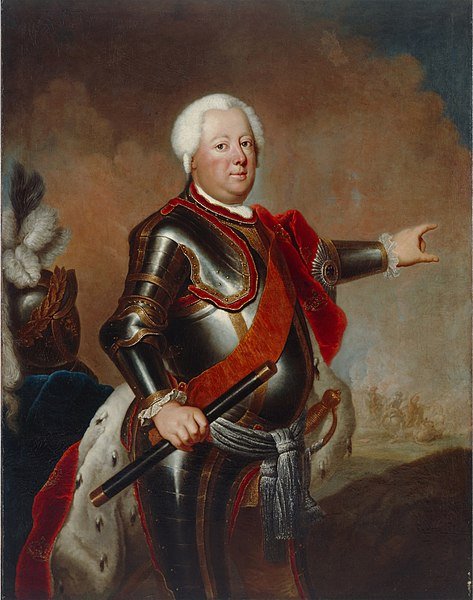
Frederick William I
Frederick William I was born on August 14, 1688, in Berlin, the son of Frederick I of Prussia and Princess Sophia Charlotte of Hanover. His upbringing was heavily influenced by his Huguenot governess, Marthe de Roucoulle. These formative years laid the foundation for his strict, disciplined personality. A pivotal moment in his early life occurred during the Great Northern War when a plague outbreak ravaged Prussia. The crisis exposed the inefficiency and corruption within the government, catalyzing Frederick William’s political engagement.
He became instrumental in the dismissal of Johann Kasimir Kolbe von Wartenberg, a minister involved in large-scale embezzlement. The experience deeply shaped his hatred for waste, corruption, and inefficiency, fostering his resolve to implement institutional reform. These events marked Frederick William’s first active participation in politics and set the tone for his future reign.
Ascension to the Throne and Initial Reforms
Frederick William I ascended the throne in 1713 following his father’s death. His father’s extravagant spending and poor financial management left Prussia in a precarious economic state. To address these issues, Frederick William immediately dismissed his father’s corrupt “Cabinet of Three Counts” and undertook rigorous financial and administrative reforms.
Frederick William I’s 27-year reign as King in Prussia was marked by a relentless pursuit of discipline, efficiency, and state-building.
One of his most notable achievements was his meticulous reorganization of the Prussian economy. He increased taxes, introduced excise duties, and subjected the nobility to land taxes, measures that significantly boosted state revenue. He also authored the Regulations for State Officials, a detailed guide specifying the responsibilities of public servants, ensuring accountability and efficiency within the bureaucracy.
Military Expansion: The Soldier King
Frederick William I earned the nickname “The Soldier King” due to his obsession with the military. Upon his ascension, he expanded the Prussian Army from 38,000 soldiers to an impressive 80,000 by 1740, making it one of the largest and most efficient armies in Europe. To achieve this, he introduced the Canton System, which conscripted peasants based on geographic regions, ensuring a steady supply of trained soldiers.
Frederick William I of Prussia’s military reforms, economic policies, and administrative reorganization transformed Prussia into a formidable regional power.
He also invested in military training and equipment, modernizing the Prussian infantry. Under his leadership, innovations such as the iron ramrod significantly increased the army’s rate of fire, enhancing its effectiveness in battle. This emphasis on military reform left his successor, Frederick the Great, with a formidable force that would later dominate European politics.
Administrative Reforms and Economic Development
Frederick William I’s reign was characterized by his hands-on governance and efforts to centralize authority. He focused on reducing crime, increasing efficiency, and imposing strict discipline on public servants. His financial policies included storing surplus grain to stabilize prices during shortages, encouraging farming, and reclaiming marshlands for agricultural use.
The king also introduced measures to enhance education and healthcare, establishing schools and hospitals across Prussia. Despite his authoritarian rule, these initiatives improved the quality of life for many citizens and contributed to Prussia’s emergence as a regional power.
Colonial Policies and Overseas Affairs
While Frederick William I was primarily focused on strengthening Prussia’s military and economy, he also played a role in colonial affairs. In 1717, he sold the Brandenburg Gold Coast, a West African colony, to the Dutch West India Company. This decision reflected his preference for investing in military expansion rather than overseas ventures, as he believed the latter to be a drain on state resources.
Despite his lack of enthusiasm for colonial expansion, he invited Salzburg Protestants to settle in East Prussia after they were expelled from their homeland. This resettlement not only bolstered Prussia’s population but also reinforced Frederick William’s image as a defender of Protestantism.
Relationship with Frederick II (Frederick the Great)
Frederick William’s relationship with his eldest son, Frederick II, was fraught with tension. The king’s authoritarian parenting style and emphasis on military discipline clashed with his son’s intellectual and artistic interests. Frederick William often resorted to physical punishment to enforce his expectations, causing a deep rift between father and son.
Frederick William’s ability to strengthen the state during a period of instability ensured that his son, Frederick the Great, inherited a powerful and cohesive kingdom.
Despite their strained relationship, Frederick II later acknowledged his father’s contributions to Prussia, particularly his military reforms, which laid the groundwork for Frederick’s own successes as a ruler.
Challenges and Health Issues
Frederick William’s reign was not without challenges. His short temper and authoritarian nature sometimes led to physical confrontations with servants and even family members. These tendencies were exacerbated by his health issues, including gout, obesity, and chronic stomach pain, attributed to his inherited porphyritic disease.
Additionally, his intense disdain for France and its culture occasionally influenced his policies, although he paradoxically welcomed French Huguenot refugees to Prussia, valuing their skills and contributions.
Diplomatic Achievements and Territorial Gains
Frederick William’s military policies extended beyond domestic reforms. He briefly participated in the Great Northern War, aligning with Russia to secure parts of Swedish Pomerania. This acquisition provided Prussia with new Baltic Sea ports, enhancing its strategic and economic position.
His close friendship with Leopold I, Prince of Anhalt-Dessau, also contributed to the modernization of the Prussian army, ensuring its dominance in Europe.
Death and Legacy
Frederick William I died on May 31, 1740, at the age of 51. He was initially buried at the Garrison Church in Potsdam. During World War II, his remains were hidden to protect them from advancing Allied forces. After several relocations, his coffin was finally interred at the Kaiser Friedrich Mausoleum in Sanssouci’s Church of Peace in 1991.
His legacy is marked by his transformative reforms in finance, administration, and military organization. Though often remembered for his harshness, Frederick William’s reign solidified Prussia’s foundation as a regional power, paving the way for its later emergence as a dominant European state.
Personal Life and Family
Frederick William married Sophia Dorothea of Hanover in 1706. The couple had 14 children, including Frederick II (Frederick the Great), who succeeded him. Despite their political and ideological differences, Frederick William’s relationship with his son improved slightly in his later years.
His wife, however, often resented his temper and lack of interest in her opinions. Nevertheless, the family remained central to his vision of a disciplined and orderly state, and he took pride in ensuring their security and future.
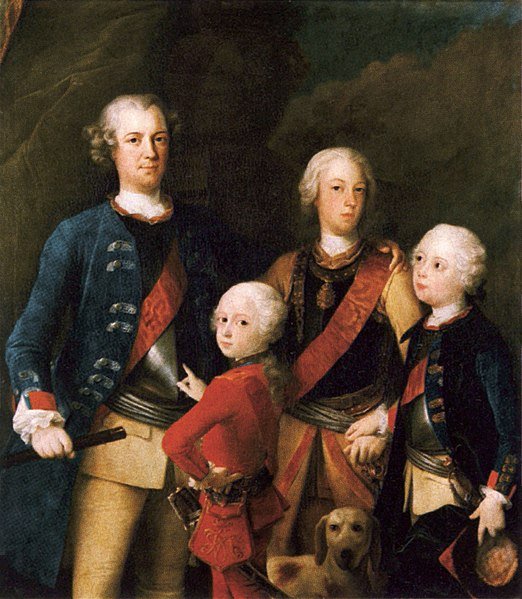
Frederick William I’s sons: Frederick, Ferdinand, Augustus William, and Henry, painted by Francesco Carlo Rusca, 1737.
Cultural and Historical Impact
Frederick William I’s impact extended beyond his lifetime. His focus on discipline, efficiency, and state-building influenced subsequent generations of Prussian rulers. His reforms in public administration and the military became models for other European states. Moreover, his invitation to Dutch craftsmen to settle in Potsdam and his promotion of religious tolerance for Protestants reflected his pragmatic approach to governance.
Today, his contributions are remembered as pivotal in shaping Prussia into a modern state, capable of influencing European politics and culture.
Frequently Asked Questions
How did Frederick William I improve state administration and finances?
He centralized authority, reduced corruption, imposed strict regulations on public servants, and increased taxes, including taxing the nobility. His “Regulations for State Officials” outlined precise duties for government employees.
Why was Frederick William I called the “Soldier King”?
His focus on military expansion, discipline, and reforms earned him the title. He prioritized military spending, often at the expense of colonial ventures.
What was Frederick William I’s stance on colonial affairs?
He sold Prussia’s overseas colonies, including the Brandenburg Gold Coast, to focus resources on strengthening the army and domestic state development.
How did Frederick William I handle religious and social issues?
He welcomed 20,000 Salzburg Protestants to Prussia after their expulsion, aiding in the resettlement of depopulated regions like East Prussia. He also encouraged the settlement of Dutch craftsmen in Potsdam.
What was Frederick William I’s relationship with his son, Frederick the Great?
Their relationship was fraught due to differing personalities. Frederick William’s strict, militaristic expectations clashed with Frederick’s interest in arts and culture, leading to frequent conflict.
How did Frederick William I’s health and temperament affect his rule?
His short temper and harsh nature, compounded by gout and other health issues, led to erratic behavior, including physical punishments of servants and family members.