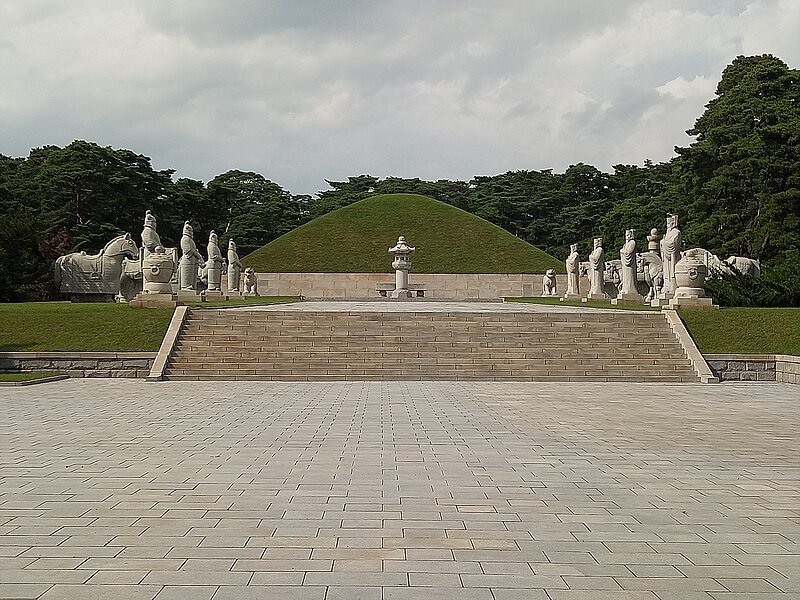
Tomb of King Tongmyong
The Tombs of Goguryeo are an important historical and cultural legacy of the ancient Goguryeo kingdom, one of the Three Kingdoms of Korea, which flourished from 37 BCE to 668 CE. These tombs, located mainly in present-day North Korea and northeastern China, are UNESCO World Heritage Sites recognized for their historical, cultural, and artistic significance.
Historical Background of Goguryeo
Goguryeo was a powerful and expansive kingdom that dominated the Korean Peninsula and parts of Manchuria. Known for its military prowess, cultural advancements, and rich spiritual traditions, Goguryeo was a key player in the cultural exchange between China, Korea, and Japan. Its legacy is reflected in various archaeological remains, including fortresses, palaces, and tombs.
The Goguryeo tombs are crucial in understanding the beliefs, societal structure, and artistic achievements of the kingdom. These tombs, numbering over 10,000, were built for royalty, aristocrats, and prominent figures. Many of them are adorned with murals that depict life during the Goguryeo period, as well as the spiritual beliefs of the time.
Location and Structure
The tombs are primarily located in two regions: Ji’an in present-day China and Pyongyang in modern-day North Korea. These areas were key centers of the Goguryeo kingdom during its peak.
Architecture and Design
The tombs are generally stone-chambered and built in pyramid-like shapes using stone and earth. The structure of these tombs reflects the engineering skills of the Goguryeo people. They were designed to preserve the remains of the deceased and to reflect the kingdom’s belief in the afterlife.
Most tombs consist of a main burial chamber and several smaller auxiliary chambers. The burial chambers are typically rectangular, with sloping or vaulted ceilings supported by large stone slabs. This architectural design was not only practical but also symbolic, representing stability and permanence.
Murals of the tombs
One of the most remarkable features of the Tombs of Goguryeo is their murals. These paintings offer a vivid glimpse into the life, culture, and spirituality of Goguryeo.
Themes and Motifs
The murals cover a variety of themes:
- Daily Life: Scenes of hunting, dancing, feasting, and other activities illustrate the lifestyles of Goguryeo’s elite.
- Mythology and Religion: Depictions of celestial beings, animals, and mythical creatures reflect Goguryeo’s spiritual beliefs. Shamanistic practices, Buddhism, and Daoism are all represented.
- Astronomy: Star maps and celestial charts found in some tombs indicate the advanced astronomical knowledge of the Goguryeo people.
Artistic Techniques
The murals were created using natural pigments, which have remarkably endured for over a millennium. The use of bold lines, vibrant colors, and dynamic compositions demonstrates the artistic sophistication of Goguryeo artisans.

Significance of the Tombs
The Tombs of Goguryeo are significant for several reasons.
The tombs provide invaluable insights into the cultural, social, and political life of the Goguryeo kingdom. They reveal the kingdom’s hierarchical structure, with elaborate tombs reserved for royalty and simpler ones for commoners.
The murals are a testament to the artistic and cultural achievements of Goguryeo. They highlight the kingdom’s unique aesthetic sensibilities and its interactions with neighboring cultures.
As UNESCO World Heritage Sites, the tombs of Goguryeo serve as a reminder of our shared human heritage and the importance of safeguarding it for future generations.
The tombs showcase advanced construction techniques, such as the use of stone chambers and vaulted ceilings. These innovations influenced subsequent burial practices in Korea and beyond.
The depictions of mythical creatures, celestial bodies, and ritualistic scenes reflect Goguryeo’s complex spiritual and philosophical beliefs. The tombs provide evidence of the coexistence of Shamanism, Buddhism, and Daoism.
UNESCO World Heritage Status
In 2004, a collection of Goguryeo tombs was inscribed as a UNESCO World Heritage Site under the name “Complex of Koguryo Tombs.” This recognition underscores the global significance of these cultural treasures.
Criteria for Inscription
The tombs were inscribed based on the following criteria:
- Criterion (i): The murals are masterpieces of human creative genius.
- Criterion (ii): The tombs demonstrate cultural exchanges between Goguryeo and neighboring regions.
- Criterion (iii): They provide exceptional testimony to the cultural traditions of Goguryeo.
Key Sites
Some of the most notable tombs included in the UNESCO listing are:
- Tomb of the General: Known for its pyramid-like structure, this tomb is one of the largest and most impressive Goguryeo tombs.
- Tomb of King Dongmyeong: Believed to be the burial site of Goguryeo’s founder, this tomb is significant for its historical and cultural value.
- Ohoe Tombs: These tombs are renowned for their elaborate murals depicting various aspects of Goguryeo life.
Challenges and Preservation Efforts
Despite their historical importance, the Tombs of Goguryeo face several challenges.
Exposure to moisture, temperature fluctuations, and other environmental factors has led to the gradual deterioration of the murals.
Urbanization, agriculture, and looting have posed significant threats to the tombs.
The division of the Korean Peninsula complicates efforts to conduct joint research and preservation initiatives.
To address these challenges, various measures have been taken:
- Conservation Programs: Both North Korea and China have implemented programs to conserve the tombs and murals.
- International Cooperation: UNESCO and other international organizations have supported research and preservation efforts.
- Awareness Campaigns: Efforts to raise public awareness about the importance of the tombs have been crucial in ensuring their protection.
Legacy of the Tombs
The Tombs of Goguryeo are not just relics of the past; they continue to inspire and inform contemporary culture and scholarship.
The tombs have been a focal point for historians and archaeologists seeking to understand the history and culture of Goguryeo. They provide critical evidence for reconstructing the kingdom’s political, social, and cultural landscape.
The Tombs of Goguryeo provide a window into the past, offering insights into the life, culture, and beliefs of the Goguryeo people.
The murals and architectural designs of the tombs have inspired modern artists and architects. They serve as a source of national pride and identity for Koreans.
The tombs have become important cultural tourism sites, attracting visitors from around the world. They offer a unique opportunity to experience the rich heritage of Goguryeo.

Questions and answers about the Tombs of Goguryeo
What period did Goguryeo rule northern Korea?
Goguryeo ruled northern Korea during the Three Kingdoms period, from the 1st century BCE to the 7th century CE.
What is the significance of Goguryeo’s surviving tombs?
The tombs are enduring evidence of Goguryeo’s prosperity and artistic achievements, offering insights into the kingdom’s ceremonies, warfare, architecture, and daily life.
Why are Goguryeo tombs recognized as a UNESCO World Heritage Site?
They are recognized for their cultural and historical importance, particularly for their murals, which vividly depict the cultural and spiritual life of Goguryeo.
What types of tomb structures were built in Goguryeo?
The tombs range from simple stone cairns made with river cobbles to more elaborate pyramidal structures built with cut-stone blocks, and later, earth-mound designs with rectangular bases.
How were the tomb interiors designed to preserve murals?
The interiors were waterproofed with layers of lime, clay, charcoal, and stones. Floors were cemented with a mix of soil, lime, and sand, and some chambers had drainage channels.
What architectural features were common in Goguryeo tombs?
Common features included corbelled roofs, stone cross-beams, niches, horizontal passageways, and stone doors. Larger tombs often included side chambers and stone columns.
What is the “General’s Tomb,” and why is it significant?
The “General’s Tomb,” attributed to King Gwanggaeto the Great, is a massive structure measuring 75 meters long and 11 meters high. It highlights Goguryeo’s architectural sophistication.

What is the “Tomb of the Dancers,” and what does it illustrate?
The “Tomb of the Dancers” features a mural of servants dancing to bid farewell to their master, symbolizing the transition into the afterlife.
What are the “Four Directional Animals,” and what do they symbolize?
The “Four Directional Animals” include the Blue Dragon (east), White Tiger (west), Red Phoenix (south), and Black Tortoise-Snake (north). They symbolize protection and cultural ties to China.
How did Goguryeo murals reflect astronomical knowledge?
The murals depict celestial bodies like the sun, represented by a three-legged crow, and the moon, shown with toads, rabbits, or trees, emphasizing connections between human life and the cosmos.
What artefacts have been discovered in Goguryeo tombs?
Surviving artefacts include gilt-bronze crowns, jewelry, bronze figurines of Buddha, and pottery, showcasing the craftsmanship of Goguryeo artisans.
How did Goguryeo tomb art influence other cultures?
The artistic techniques and styles of Goguryeo murals influenced both Korean and Japanese art, demonstrating the kingdom’s cultural reach.





