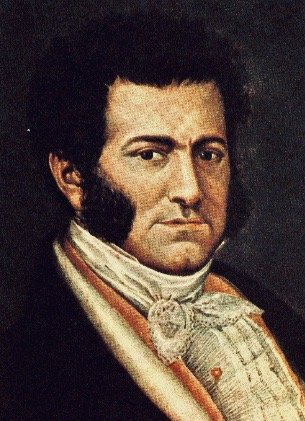
Early Life and Education
Vicente López y Planes was born on May 3, 1785, in Buenos Aires, during the time when the region was under Spanish colonial rule. Baptized as Alejandro Vicente, he chose to omit his first name throughout his life.
His early education took place at the San Francisco School, a notable institution in Buenos Aires at the time. Later, he continued his studies at the prestigious Real Colegio San Carlos, which is now known as the Colegio Nacional de Buenos Aires.
His intellectual pursuits led him to the University of Chuquisaca, where he earned a doctorate in law, a qualification that would shape his later career in politics and governance.
López y Planes also demonstrated a sense of national duty from an early age. During the British invasions of the Río de la Plata in 1806 and 1807, he served as a captain in the Patriotic Regiment, contributing to the defense of Buenos Aires against foreign aggression.
His participation in these conflicts inspired him to write El triunfo argentino (The Argentine Triumph), a patriotic poem celebrating the resilience and victory of the local forces. His early exposure to both legal and military affairs laid the foundation for his future role in shaping Argentina’s political landscape.
Political Career and Contributions
López y Planes emerged as an influential political figure in the early 19th century, playing a key role in Argentina’s struggle for independence and the establishment of its political institutions. In 1810, he took part in the Cabildo Abierto (Open Town Meeting) held on May 22, where he supported the formation of the Primera Junta, the first independent government of Argentina. This pivotal event marked the beginning of Argentina’s independence movement, and López aligned himself with prominent revolutionary leaders, including Manuel Belgrano.
In the years that followed, he was actively involved in the political transformations of Buenos Aires. After the expulsion of royalist officials from the city government, López was elected as the mayor of Buenos Aires, a position that granted him considerable influence over municipal affairs.
His tenure as mayor brought him into direct opposition with Cornelio Saavedra, the head of the Primera Junta. As a staunch opponent of Saavedra’s faction, López played a crucial role in the formation of the First Triumvirate in 1811, a governing body that replaced the Junta and sought to centralize power. Within this system, López served as Treasurer, overseeing financial matters during a turbulent period of Argentina’s early independence.
López was also a member of the 1813 Asamblea del Año XIII, a constituent assembly that aimed to draft a national constitution and further consolidate independence from Spain. As a representative of Buenos Aires, he was entrusted with the task of composing the lyrics for a patriotic song that would serve as Argentina’s national anthem. The result was a stirring military march, set to music by Catalan composer Blas Parera. The anthem was officially adopted on May 11, 1813, and became a powerful symbol of the revolutionary struggle. Its first public performance took place at a social gathering in the home of Mariquita Sánchez de Thompson, a prominent salonnière of the time.
During the political upheavals of the 1820s, López remained an active participant in government affairs. He supported the administration of Carlos María de Alvear, but following Alvear’s fall from power, López was imprisoned. Despite this setback, he continued to serve in public office in various capacities.
In 1825, he was appointed Secretary of the Constituent Congress, which sought to establish a unified legal framework for the country. He later became a minister in the administration of President Bernardino Rivadavia, one of Argentina’s most influential political figures of the era.
Interim Presidency and Exile
López y Planes’ brief tenure as Argentina’s interim president came at a moment of national crisis. In 1827, President Rivadavia was forced to resign due to political turmoil surrounding negotiations with the Brazilian Empire over control of the Banda Oriental (modern-day Uruguay). The negotiations, widely seen as a failure, had undermined public trust in Rivadavia’s leadership.
In the wake of Rivadavia’s resignation, López was appointed as caretaker president on July 7, 1827. His administration was largely transitional, focused on managing the immediate political fallout and preparing for new elections. One of his most significant acts during this short presidency was the dissolution of Congress, which had become ineffective in addressing the country’s mounting political conflicts. He also oversaw the electoral process that led to the appointment of Manuel Dorrego as governor of Buenos Aires.
However, Argentina’s political instability did not subside. Dorrego, a federalist leader, soon faced opposition from unitarians, who sought a more centralized government.
In 1828, General Juan Lavalle led a military coup against Dorrego, resulting in the latter’s execution by firing squad. The violent shift in power forced many political figures associated with Dorrego’s administration into exile. López y Planes was among them, seeking refuge in Uruguay.
His time in exile marked a temporary withdrawal from public life, but he would later return to Argentina and resume his involvement in judicial and political affairs.
Through both his own work and that of his descendants, Vicente López y Planes remains a key figure in Argentina’s national history.
Judicial Career and Later Years
Upon his return to Argentina in 1830, López y Planes was appointed to the Tribunal de Justicia (Court of Justice) under the administration of Governor Juan Manuel de Rosas. His tenure on the court was long and influential, as he presided over key legal proceedings, including the trial of those responsible for the assassination of Juan Facundo Quiroga, a prominent federalist leader.
His role in the judiciary reflected his continued engagement in the country’s political landscape, even as Rosas’ authoritarian rule divided Argentina between supporters and opponents of his regime.
In addition to his legal work, López also maintained a strong presence in Argentina’s literary and intellectual circles. He presided over a literary salon organized by Marcos Sastre, a prominent writer and educator. This salon became a hub for intellectual discourse in Buenos Aires, attracting members of the Generación del ’37, a group of young intellectuals advocating for political and social reform. Though López himself was not officially part of this group, his two sons, Vicente Fidel López and Lucio Vicente López, were active members and would go on to have significant literary and political careers of their own.
Throughout his later years, López remained respected as both a political veteran and a literary figure. His contributions to Argentina’s independence movement, his role in government, and his authorship of the national anthem cemented his place in the nation’s history. He passed away on October 10, 1856, leaving behind a legacy of political service and cultural influence.
Did you know…?
Vicente López y Planes’s legacy extends beyond his own achievements, as his family continued to influence Argentine politics and literature. His son, Vicente Fidel López, became a prominent historian and writer, contributing significantly to the study of Argentina’s past.
Legacy and Impact
Vicente López y Planes occupies a unique position in Argentine history as both a statesman and a poet. His authorship of the national anthem ensured his enduring presence in the country’s patriotic consciousness, while his role in government, particularly during the early years of independence, demonstrated his commitment to shaping Argentina’s political institutions. Though his presidency was brief, his broader contributions to law, governance, and national identity left a lasting imprint.
Timeline of Vicente López y Planes
- 1785 – Born on May 3 in Buenos Aires, Viceroyalty of the Río de la Plata (present-day Argentina).
- 1806-1807 – Participated in the British invasions of the Río de la Plata, helping to defend Buenos Aires.
- 1810 – Supported the May Revolution, which initiated Argentina’s independence movement.
- 1812 – Wrote the lyrics to the Argentine National Anthem (Himno Nacional Argentino), officially adopted in 1813.
- 1827 – Served as interim President of Argentina from July to August following the resignation of Bernardino Rivadavia.
- 1830s-1850s – Held various public offices under the governments of Juan Manuel de Rosas and others.
- 1856 – Died on October 10 in Buenos Aires, leaving behind a legacy as a poet, lawyer, and statesman.
Frequently Asked Questions
What was Vicente López y Planes’ most famous literary contribution?
He wrote the lyrics of the Argentine National Anthem, which was adopted on May 11, 1813.
How did López y Planes contribute to Argentina’s independence movement?
He supported the Primera Junta, participated in the Asamblea del Año XIII, and opposed royalist influences in Buenos Aires.
What role did he play in the British invasions of the Río de la Plata?
He served as a captain in the Patriotic Regiment and later wrote El triunfo argentino, a poem celebrating Argentina’s victory.
Why was he briefly the President of Argentina in 1827?
He was appointed as interim president after Bernardino Rivadavia resigned amid political turmoil, serving from July 7 to August 18, 1827.
What political faction did he align with during his career?
He opposed Cornelio Saavedra’s faction, supported the First Triumvirate, and later worked with Bernardino Rivadavia and Manuel Dorrego.
What happened to him after Juan Lavalle’s coup in 1828?
Following Dorrego’s execution, López y Planes was forced into exile in Uruguay before returning to Argentina in 1830.
What was his role under Juan Manuel de Rosas’ government?
He served as President of the Tribunal de Justicia, overseeing key legal cases, including the trial of Juan Facundo Quiroga’s assassins.





