The Byzantine Dark Ages resulted from territorial losses due to Muslim conquests, Slavic migrations, and internal structural transformations following the final Byzantine-Sassanid War.
Summary
The term Byzantine Dark Ages refers to a period in the history of the Eastern Roman (Byzantine) Empire from approximately 630 to 760 CE. It marks a transitional phase between the late antique early Byzantine period and the medieval middle Byzantine era. This period was characterized by military, political, and social turmoil, leading to a profound transformation of Byzantine state structures, culture, and economy. Historiographically, it is also notable for the scarcity of primary sources, making the study of this era particularly challenging.
The Collapse of the Late Antique Order
The 7th century was a defining moment for the Byzantine Empire. At the dawn of this period, the empire retained significant control over the Mediterranean region and still engaged in power struggles with its primary eastern adversary, the Sassanian Empire. However, despite Emperor Justinian I‘s earlier efforts to reconquer the western provinces, much of his territorial gains in Italy and Spain were short-lived. While the Mediterranean remained a crucial axis of power, Byzantine cities continued to function as the primary centers of governance, economy, and society.
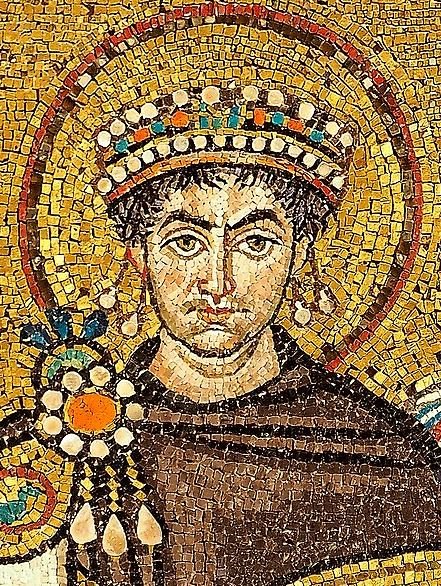
An artwork portraying Justinian I
READ MORE: 10 Notable Kings of the Sasanian Empire
The final Byzantine-Sassanid War (602–628) exhausted both empires, leaving them vulnerable. This vulnerability was dramatically exploited by the emergence of Islamic forces. The Arab conquests of the 7th century fundamentally reshaped the political landscape of the Mediterranean, permanently severing the unity of the Roman world. The loss of territories such as Syria, Palestine, Egypt, and North Africa forced Byzantium into a defensive posture, effectively reducing it from a Mediterranean hegemon to a more confined regional power, largely focused on Anatolia and parts of the Balkans.
Transformation of the Byzantine State
The crisis brought about by external invasions led to deep structural and administrative transformations within the Byzantine state. These changes culminated in the establishment of the theme system, which fundamentally altered the civil-military hierarchy.
Emergence of the Theme System
One of the most significant shifts in governance was the replacement of the old civilian administrative structures with the theme system. The themes (Greek: “themata”) were military-administrative districts, each governed by a strategos (general). This system integrated both civil and military authority within the same leadership, a radical departure from the Diocletian-era separation of power. The decentralization of command allowed for a more rapid and effective military response to external threats, particularly against Arab raids and Slavic incursions.
The Rise of a Centralized Court System
The drastic reduction of Byzantine territories also meant the collapse of the vast provincial bureaucracy that had existed since late antiquity. Administrative functions became more centralized in the imperial court, with bureaucratic offices evolving into smaller, specialized fiscal departments. This restructuring mirrored the military reorganization, streamlining governance and concentrating power within the emperor’s direct reach. The widespread use of Greek as the language of administration further distanced the Byzantine state from its Latin Roman roots.
Social and Economic Decline
The upheavals of the Byzantine Dark Ages were not limited to military and administrative shifts; they also had profound social and economic consequences.
The Decline of Urban Centers
The combined pressures of Arab invasions, Slavic migrations, and internal instability led to the decline of cities, which had long been the economic and social nuclei of the empire.
Many urban centers, especially in Asia Minor and the Balkans, either shrunk drastically or became fortified strongholds.
The loss of major economic hubs such as Alexandria, Carthage, and Antioch further diminished Byzantium’s commercial reach, shifting economic activity toward rural and self-sufficient estates.
Constantinople, however, remained the political, cultural, and economic heart of the empire. Despite suffering from population decline, the capital’s fortifications, administrative continuity, and access to resources ensured its survival as Byzantium’s last great urban center.
The Decline of the Aristocracy and the Rise of Military Elites
The old Roman aristocracy, which had traditionally maintained power through land ownership and administrative roles, saw its influence wane.
Repeated invasions and economic disruptions devastated large landholdings, and many aristocrats either abandoned urban life or adapted by assuming military roles within the theme system.
Over time, a new military aristocracy emerged, defined not by classical education or legal expertise but by martial skill and service to the empire.
Despite a number of major challenges, Byzantium survived and adapted, laying the foundation for the resurgence of the Byzantine state in the 9th century.
The Decline of Formal Education
Education, which had flourished in late antiquity, suffered dramatically during this period. The study of Roman law, once the foundation of elite education, diminished as legal institutions deteriorated. The absence of major educational centers, coupled with a decline in patronage for scholars, meant that intellectual life was severely restricted.
The disappearance of traditional philosophical and literary scholarship led to a marked reduction in the production of new intellectual works. The few private tutors and informal schools that remained were often accessible only to the wealthiest families. As a result, legal, philosophical, and literary traditions suffered a significant decline, with most surviving works focusing on theology and religious polemics.
Art, Architecture, and Cultural Change
Byzantine art and architecture also underwent significant transformations during this period. The destruction of cities and economic turmoil meant that grand public building projects became rare. The Iconoclast Controversy, which erupted in the 8th century, further impacted artistic production, as religious images became the subject of theological and political disputes.
The grand structures of late antiquity, including basilicas, theaters, and civic buildings, were largely abandoned or fell into disrepair. Instead, construction efforts focused on fortifications, rural churches, and monasteries, reflecting the empire’s defensive priorities and shifting religious culture.
The creation of the theme system, the centralization of administration, and the emergence of a new military aristocracy set the stage for the Byzantine Empire’s eventual recovery and expansion.
The Scarcity of Historical Sources
One of the key challenges in studying the Byzantine Dark Ages is the lack of contemporary sources. Unlike earlier periods, which had extensive historical documentation, this era is poorly recorded, with most available sources being written well after the events they describe.
The Absence of Contemporary Historians
No known Byzantine historian documented events between the end of the Byzantine-Sassanid War (c. 630) and the emergence of new historical writings in the late 8th century. The most significant sources from this later period include Nikephoros I’s “Brief History” and Theophanes the Confessor’s “Chronicle”, both written decades after the events they recount.
The Role of Foreign Accounts
Much of what is known about this period comes from non-Byzantine sources, including Arab, Armenian, and Syriac historians. These accounts, though valuable, often present external perspectives that may lack insights into Byzantine internal affairs.
Theological and Ecclesiastical Writings
Religious and theological texts were among the few forms of literature that continued to be produced. Figures such as Maximus the Confessor, Germanus I of Constantinople, and John of Damascus contributed significantly to theological discourse, though many of these works were composed outside the empire, particularly within Islamic-controlled territories.
Frequently Asked Questions
How did the Muslim conquests impact the Byzantine Empire?
They ended Byzantine control over the eastern Mediterranean, significantly reduced its territorial extent, and permanently shifted the balance of power in the region.
What administrative changes occurred during this period?
The civilian administrative structure was replaced by the themes, where military governors (strategoi) held both civil and military authority.
Why did Greek replace Latin as the administrative language?
With the loss of Latin-speaking provinces, Greek became the dominant language, reflecting the empire’s cultural and political transformation.
How did urban life change in the Byzantine Empire?
Many cities shrank into small fortified settlements, while Constantinople remained the only major urban center.
What happened to the aristocracy during this period?
The traditional provincial aristocracy declined, with surviving elites shifting to military roles within the themes.
How did education suffer during the Byzantine Dark Ages?
Formal education declined, legal studies almost disappeared, and intellectual activity became limited to small circles, mainly outside Byzantium.
What impact did the Dark Ages have on Byzantine art and architecture?
Apart from defensive structures, large-scale building projects ceased, and artistic production declined due to economic and social disruptions.
There are no surviving Byzantine historical texts from c. 630–760, with most available sources coming from later periods or non-Byzantine writers.
What theological contributions emerged during this period?
Despite the decline in general education, theologians like Maximus the Confessor and John of Damascus remained active, often outside the empire.
How did the empire survive despite these crises?
The adaptation to a militarized, decentralized system under the themes and the resilience of Constantinople allowed Byzantium to endure.
What marks the end of the Byzantine Dark Ages?
By the 9th century, Muslim pressure lessened, administrative reforms stabilized the empire, and economic and cultural recovery began.





