American Novelist and Journalist Theodore Dreiser
American author and journalist Theodore Dreiser (1871 – 1945) was a key figure in the naturalist school, portraying characters shaped by their environment and circumstances rather than free will.
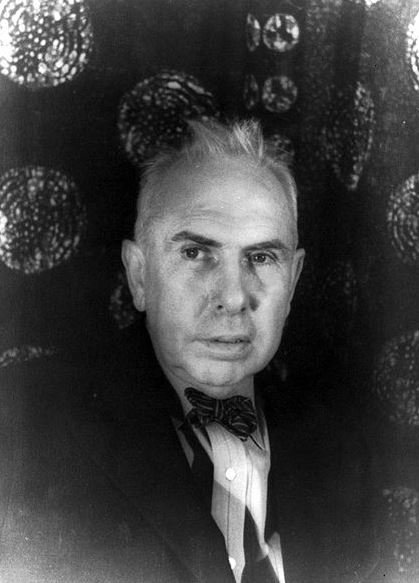
A photo of Theodore Dreiser by American photographer Carl Van Vechten.
Early Life and Influences
Theodore Herman Albert Dreiser was born on August 27, 1871, in Terre Haute, Indiana. His parents, John Paul Dreiser, a German immigrant from Mayen in the Rhine Province of Prussia, and Sarah Maria Schanab, a Mennonite from Ohio, played significant roles in shaping his early experiences. His mother, having converted to Roman Catholicism to marry John, was disowned by her family. Raised in a strict Catholic household, Theodore was the twelfth of thirteen children, nine of whom survived. His older brother, Paul Dresser, changed his surname and became a well-known songwriter.
Dreiser’s childhood was marked by extreme poverty. His father’s rigid religious beliefs and financial struggles created a harsh environment. These experiences profoundly influenced Dreiser’s later works, as he depicted individuals struggling against social and economic forces beyond their control. His writing style, deeply rooted in realism and naturalism, often reflected his own observations of hardship and ambition in a rapidly industrializing America.
After completing high school in Warsaw, Indiana, Dreiser briefly attended Indiana University from 1889 to 1890 but did not earn a degree. His exposure to literature and journalism during this period ignited his interest in writing, leading him to pursue a career in journalism.
Journalism Career
Dreiser began his professional career in journalism in 1892, working as a reporter and drama critic for newspapers in Chicago, St. Louis, Toledo, Pittsburgh, and New York. His early experiences in journalism honed his observational skills and exposed him to a wide range of social issues. In 1895, he contributed articles on prominent figures such as Nathaniel Hawthorne, William Dean Howells, and Thomas Edison.
That same year, he convinced his brother’s business associates to make him the editor of Ev’ry Month, a magazine where he published his first fictional story, Forgotten. His editorship of women’s magazines, including The Delineator, helped him achieve financial stability. These years of reporting and editing provided valuable material for his future literary endeavors.
Theodore Dreiser’s unflinching portrayal of ambition, poverty, and moral ambiguity challenged literary conventions and offered readers a realistic depiction of American life.
The Birth of a Novelist: Sister Carrie
In 1899, while staying at the House of Four Pillars in Maumee, Ohio, Dreiser began working on his first novel, Sister Carrie (1900). The book tells the story of a young woman, Carrie Meeber, who moves to Chicago, struggles with employment, and eventually rises to fame as an actress. The novel’s unflinching portrayal of ambition, sexuality, and societal pressures was controversial at the time, leading to poor initial sales. However, over time, Sister Carrie gained recognition as a groundbreaking work of American naturalism.
Dreiser’s approach in Sister Carrie rejected conventional moral judgments. Unlike traditional literary heroines, Carrie does not face punishment for her choices. Instead, she achieves success despite her moral ambiguities. This perspective, emphasizing determinism over free will, was a defining characteristic of Dreiser’s writing and distinguished him from many of his contemporaries.

Cover page of “Sister Carrie”
Further Literary Success and An American Tragedy
Following Sister Carrie, Dreiser continued to write novels that delved into themes of ambition, economic struggle, and the impact of environment on human behavior. His second novel, Jennie Gerhardt (1911), explored similar themes through the story of a working-class woman entangled in relationships with wealthy men. His subsequent works, The Financier (1912) and The Titan (1914), were part of his Trilogy of Desire, based on the life of streetcar tycoon Charles Tyson Yerkes.
Dreiser’s most famous work, An American Tragedy (1925), was inspired by the real-life 1906 murder of Grace Brown by Chester Gillette. The novel follows Clyde Griffiths, a young man driven by ambition and desire for wealth, who ultimately commits murder to remove an obstacle in his pursuit of a better life. The book was a commercial success and remains one of the most significant American novels of the 20th century. Its critique of the American Dream resonated deeply with readers, highlighting the darker side of ambition and societal expectations.
Short Stories, Poetry, and Nonfiction
Although best known for his novels, Dreiser also wrote short stories, poetry, and nonfiction. His short story collections, such as Free and Other Stories (1918), explored themes of struggle and ambition. His biography of his brother, My Brother Paul, served as the basis for the 1942 film My Gal Sal.
Dreiser’s poetry reflected his philosophical and political interests. His poem The Aspirant (1929) explored themes of poverty and ambition, mirroring the struggles of his fictional characters. Additionally, his Trilogy of Desire (completed posthumously with The Stoic in 1947) examined the life of a ruthless businessman.
His nonfiction works, including A Traveler at Forty (1913), Dreiser Looks at Russia (1928), and Tragic America (1931), showcased his social and political concerns. His travels to the Soviet Union in 1927 influenced his views on socialism, leading to his later support for communism.
Political Activism and Later Life
Dreiser’s political involvement intensified in the 1930s. He became an advocate for workers’ rights, defended radicals such as Emma Goldman and Sacco and Vanzetti, and spoke out against capitalist exploitation. In 1931, he led the National Committee for the Defense of Political Prisoners to investigate violence against coal miners in Kentucky.
His political writings, including America Is Worth Saving (1941), critiqued capitalist America and endorsed socialist policies. In August 1945, he formally joined the Communist Party USA. Despite criticism from some peers, his advocacy for social justice remained a defining aspect of his later years.
Personal Life and Relationships
Dreiser’s personal life was marked by tumultuous relationships. He married Sara Osborne White in 1898, but their marriage was strained by his infidelity. Though they separated in 1909, they never formally divorced. Throughout his life, Dreiser engaged in numerous affairs, including relationships with actress Kyra Markham and his secretary Clara Jaeger. His most enduring relationship was with Helen Patges Richardson, whom he married in 1944 after his first wife’s death.
Interestingly, Dreiser had planned to return from a European trip aboard the Titanic but was convinced to take a less expensive ship instead, unknowingly avoiding one of history’s greatest maritime disasters. He was an atheist, and his works often reflected his skepticism about religion and traditional morality.
Literary Legacy and Influence
Dreiser’s impact on American literature was profound. His works paved the way for later naturalist writers and offered a stark, unvarnished view of American life. Sherwood Anderson praised Dreiser for breaking through puritanical restrictions in literature, while Alfred Kazin described him as one of America’s literary giants.
Despite mixed critical reception during his lifetime, his influence on modern literature is undeniable. Authors such as Richard Wright and Norman Mailer acknowledged Dreiser’s role in shaping American realism. His ability to depict human struggles with raw honesty set him apart from his contemporaries.
Honors and Memorials
In recognition of his contributions, Dreiser was nominated for the Nobel Prize in Literature in 1930, though the award went to Sinclair Lewis. His legacy endures in academic institutions: Dreiser Hall at Indiana State University and Dreiser College at Stony Brook University bear his name. In 2011, he was inducted into the Chicago Literary Hall of Fame, cementing his place in American literary history.
Timeline of Theodore Dreiser
Frequently asked questions
What are Theodore Dreiser’s most famous novels?
His most well-known works are Sister Carrie (1900), a story of a young woman’s rise in urban America, and An American Tragedy (1925), a novel exploring ambition and moral decay.
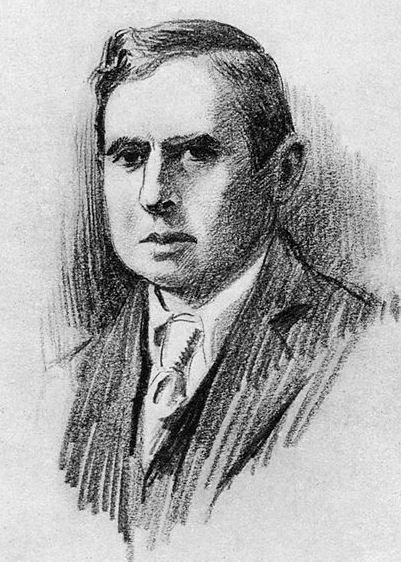
An illustration depicting Theodore Dreiser.
How did Dreiser’s upbringing influence his writing?
Growing up in poverty with a strict father, Dreiser’s experiences informed his depictions of struggle, ambition, and social inequality in his novels.
What real-life crime inspired An American Tragedy?
Dreiser based the novel on the 1906 murder of Grace Brown by Chester Gillette, reflecting the dark side of the American dream.
How did censorship impact Dreiser’s career?
Many of his works, especially Sister Carrie, faced criticism for their frank depictions of sexuality and moral ambiguity, leading to bans and controversy.
What was his political stance?
A committed socialist, Dreiser defended labor rights, wrote political essays, and joined the Communist Party USA in 1945.
How did critics and fellow writers view Dreiser?
While some, like H.L. Mencken, praised him as a literary giant, others criticized his writing style as unrefined and overly detailed.
Theodore Dreiser influenced later writers with his unflinching realism, and his works remain pivotal in discussions of American naturalism and social critique.





