
Hipponax, a 6th-century BCE iambic poet from Ephesus, was renowned for his sharp, satirical poetry that highlighted the vulgar aspects of Ionian life. Image: Hipponax as depicted in Guillaume Rouillé’s Promptuarii Iconum Insigniorum (1553).
Hipponax, a 6th-century BC Greek poet from Ephesus, is remembered for his iambic poetry, marked by biting satire and crude humor. His life is documented only through fragmentary sources, some of which contradict each other. His surviving poetry is also too fragmented to allow reliable autobiographical interpretation, which is always a difficult task when it comes to ancient figures.
Dating Hipponax’s Life
The poet’s lifetime can be reasonably dated to the second half of the 6th century BC. The Marmor Parium, an ancient Greek chronological inscription, places him around 541/40 BC, a date supported by Pliny the Elder, who mentions Hipponax in connection with the renowned sculptors Bupalus and Athenis. These sculptors were active around the 60th Olympiad (540–537 BC). Archeological evidence also supports this timeframe, as inscriptions related to these sculptors have been found on a statue pedestal in Delos, dated to 550–530 BC.
Physical Appearance and Life
Ancient sources like Athenaeus describe Hipponax as small, thin, and surprisingly strong.
The Suda, a Byzantine encyclopedia, claims that he was expelled from Ephesus by the tyrants Athenagoras and Comas, after which he settled in Clazomenae. According to the Suda, Hipponax’s feud with the sculptors Bupalus and Athenis began when they created insulting likenesses of him, possibly due to his physical deformities.
A scholiast on Horace’s Epodes provides two versions of this story: in one, Bupalus refused to let Hipponax marry his daughter due to his ugliness, and in the other, the sculptors made fun of Hipponax’s appearance, provoking the poet to retaliate so harshly in verse that Bupalus hanged himself.
The above echoes a similar story about Archilochus, an earlier iambic poet, who allegedly drove Lycambes and his daughters to suicide after a rejected marriage proposal.
Poetic Themes and Style
Hipponax’s poetry offers glimpses into a rough, everyday world filled with personal feuds, romantic misadventures, and poverty.
However, it is suggested that despite depicting low-life characters, Hipponax might have belonged to a higher social class, using his poetry as a form of early “trolling.”
His poetry often contains sexual and scatological themes, sometimes directed toward specific individuals, such as his notorious attacks on Bupalus. For instance, one fragment portrays Bupalus’s mother, Arete, performing sexual acts with the poet, using language that is crude and offensive.
A combative character, Hipponax depicted himself as physically confrontational, though his fights took place close to home rather than on the battlefield, as seen in his fragment where he brags about his ability to hit Bupalus. He also criticized others, such as a painter named Mimnes, giving advice on how to paint properly, all while abusing him with insults.

Hipponax famously targeted sculptors Bupalus and Athenis with his malicious wit. Ancient sources claim he was physically deformed, which may have influenced the biting nature of his poetic style. Image: Bupalus and Athenis as portrayed in Promptuarii Iconum Insigniorum.
Iambic Tradition and Choliambic Meter
Hipponax wrote in the iambic tradition, which in earlier poets like Archilochus was linked to ritualized abuse and obscenity in religious cults.
However, by Hipponax’s time, iambic poetry was primarily for entertainment, and his work was characterized by scornful abuse, bitterness, and sexual vulgarity.
Unlike Archilochus, Hipponax frequently mentioned himself by name, making him a more self-conscious figure in his poetry. His world was unheroic and sordid, focusing on the everyday and the vulgar rather than grand heroic themes.
Hipponax is credited with inventing a unique meter called the scazon or “limping iambic,” where the last foot of an iambic line is replaced by a spondee or trochee, giving it a halting rhythm. This form suited the abusive and mocking nature of his poems.
Demetrius of Phalerum, an ancient scholar, explained that Hipponax deliberately made his meter irregular to enhance the aggressive tone of his poetry, as pleasing rhythms would have been more appropriate for praise.
Surviving Works and Influence
Despite the interest of Alexandrian scholars in his work, only fragments of Hipponax’s poetry survive today. Most of these are in scazon meter, but some are in other forms like trochaic tetrameter and dactyls. He is also credited with pioneering literary parody. One of his surviving fragments, written in mock-heroic hexameter, imitates Homer’s Odyssey to mock a glutton named Eurymedontiades.
Hipponax’s use of language was highly localized, containing a large number of Lydian and Anatolian loanwords, which set him apart from other poets of his time. He even used the Lydian word for “king” when addressing Zeus in one of his fragments. His themes were often crude, combining eating, defecating, and fornicating, sometimes in outrageous scenes like one fragment involving a sexual encounter in a filthy public latrine.
Interpretations and Mystery
Hipponax’s poetry leaves modern readers with many questions. The fragments are difficult to interpret without the original context, leading to debates about whether his poetry was autobiographical, fictional, or part of a larger ritualized performance of abuse.
His feud with Bupalus and Athenis, for example, appears to involve real people, but the extent to which his verses reflect real events is unclear. Regardless, his surviving work is a vivid reminder of the diversity of ancient Greek literature.
Some fragments attributed to Hipponax, such as certain epodes, are disputed by modern scholars, who argue that they might belong to Archilochus due to stylistic similarities. Yet, one particularly beautiful fragment, often attributed to Hipponax, expresses a tender wish for a beautiful and gentle maiden, a striking contrast to his usual vulgarity.
Legacy
Hipponax had a significant influence on later poets, particularly Alexandrian writers like Callimachus and Herodas, who sought new literary styles and themes. His reputation as a sharp-tongued social critic endured, with later poets like Theocritus composing epigrams about him. Hipponax was also admired by ancient literary critics for his inventive meters and parodies, and his influence can be seen in the work of comic dramatists like Aristophanes.
Despite his influence, Hipponax’s work fell out of favor in the Byzantine era. Christian writers, including Julian the Apostate, condemned his obscene and abusive verses, and his dialect made his work difficult to incorporate into the educational system, which favored the Attic Greek of classical Athens.
Today, only fragments of his poetry survive, many of which were preserved by lexicographers and grammarians interested in rare words.
Did you know…?
Hipponax uses animal imagery to depict women negatively, likening them to pigs (filthy), foxes (cunning), and dogs (loud and hard to control). These comparisons dehumanize women and reinforce misogynistic views.
Though Hipponax offers a positive image with the bee, symbolizing a faithful wife, he undercuts it by implying such women are rare and even dangerous. Ultimately, Hipponax portrays women as a burden imposed by Zeus, viewing them as the greatest source of suffering for men.

Hipponax views women as a burden from Zeus, calling them the “greatest pain.” Despite his misogyny, he admits men must accept them, no matter how insufferable they seem. Image: Rembrandt’s painting The Abduction of Europa (1632).
Conclusion
Hipponax’s poetry, while fragmentary, provides a fascinating glimpse into the world of ancient Greek satire. His biting humor, inventive meters, and use of vulgar language made him a distinctive voice in the iambic tradition. Though much of his work is lost, the surviving fragments continue to captivate scholars and readers, offering insight into the culture and humor of archaic Greece.
Questions and Answers on the Life and Works of Hipponax
What is Hipponax known for in ancient Greek literature?
Hipponax is renowned for his aggressive and vulgar poetry, which often contained personal invective and social critique. His work offers a glimpse into the less refined aspects of ancient Greek life and society.
What political and social context influenced Hipponax’s life?
Hipponax lived during a time of political upheaval in the Greek world, marked by the ambitions of local tyrants and the expanding influence of Persian and Greek powers. Ephesus, where he was born, was a major cultural hub under both Greek and Eastern influences.
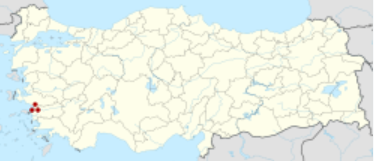
Hipponax was an ancient Greek poet born in Ephesus, a city on the western coast of Asia Minor, during the second half of the 6th century BC. Image: Ephesus in today’s Turkey
Why is there limited and contradictory information about Hipponax’s life?
The details of Hipponax’s life are scant and often contradictory because much of what is known comes from later ancient scholars and commentators, who relied on anecdotes or interpretations of his poetry rather than reliable historical sources.
What physical traits is Hipponax reputed to have had?
According to sources like the Suda and Athenaeus, Hipponax was described as small, thin, and possibly physically deformed. His physical appearance may have influenced the tone of his poetry, which is often bitter and aggressive.
What is the story of Hipponax’s feud with the sculptors Bupalus and Athenis?
According to legend, the sculptors Bupalus and Athenis created an insulting likeness of Hipponax, mocking his physical appearance. In retaliation, Hipponax composed such vicious poetry against them that Bupalus is said to have hanged himself. This story is likely apocryphal but reflects the combative nature of Hipponax’s poetry.
How does Hipponax’s poetry differ from that of Homer and Hesiod?
While Homer and Hesiod wrote about gods, heroes, and grand themes, Hipponax focused on personal vendettas, vulgar insults, and the grotesque realities of human existence. His poetry was not meant to inspire but rather to provoke laughter and shock.
What are some common themes found in Hipponax’s poetry?
Common themes in Hipponax’s poetry include personal enmity, poverty, sexuality, and social critique. He often used these themes to mock the wealthy and powerful while depicting the grotesque and vulgar aspects of life.
How did Hipponax depict poverty in his poetry?
Hipponax often used poverty as a source of humor. Rather than depicting poverty tragically, he portrayed his characters as desperate and unscrupulous, engaging in theft and deception to survive. His portrayal of poverty is exaggerated for comedic effect.
How does Hipponax address sexuality in his works?
Hipponax’s poetry frequently includes explicit references to sexual acts, often involving unconventional or taboo scenarios. His verses explore themes of sexuality in a crude and provocative manner, using these topics to mock societal norms and challenge taboos.
What social critiques are found in Hipponax’s poetry?
Hipponax used his poetry to criticize the hypocrisy and corruption of the wealthy and powerful. Through his biting humor and invective, he exposed the moral failings of the elite, making his work a form of social commentary.
What does Hipponax’s work reveal about ancient Greek views on women?
Hipponax’s work embodies ancient Greece’s gender biases, portraying women as inferior and existing only for men’s use. His extreme misogyny reinforces cultural beliefs and perpetuates gender inequality and negative stereotypes.

In ancient Greece, women were often viewed with contempt, valued just above property. Hipponax pushed this misogyny to new extremes, setting a harsh standard for derogatory portrayals of women. Image: “The Abduction of Helen” by Gavin Hamilton (1784)
What was Hipponax’s influence on later Greek and Roman literature?
Hipponax’s use of the choliamb meter and his mastery of invective had a lasting impact on later poets. Hellenistic poets like Callimachus and Herodas were influenced by his innovative style, and Roman satirists like Horace and Juvenal adopted elements of the iambic tradition in their own works.
How did the Roman poet Horace view Hipponax?
Horace admired Hipponax, along with Archilochus, for his biting humor and sharp invective. Horace referenced their work in his Epodes, acknowledging the influence of their satirical style.
How was Hipponax viewed in later periods, such as during the reign of Julian the Apostate?
Hipponax’s vulgar and obscene language was condemned by some, including the Roman emperor Julian the Apostate. Julian warned his priests to avoid reading Hipponax and other poets who engaged in offensive or inappropriate content.
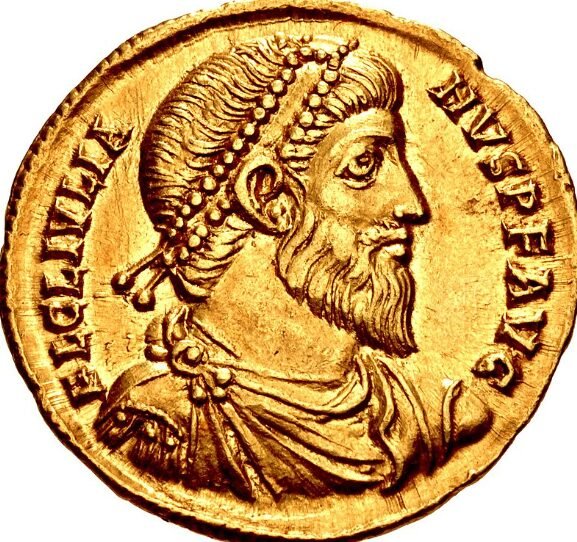
Julian (331–363), also known as Julian the Apostate, was a Roman emperor and philosopher who rejected Christianity, promoting Neoplatonic Hellenism, earning his controversial title in Christian tradition. Image: Emperor Julian in a solidus minted at Antioch.





