Labyrinth Meaning & Origin Story Explained
The term labyrinth originates from the Greek word “labyrinthos”, which portrays a maze-like construction with a sole pathway throughout. The underlying difference between a labyrinth and a maze is that...

The term labyrinth originates from the Greek word “labyrinthos”, which portrays a maze-like construction with a sole pathway throughout. The underlying difference between a labyrinth and a maze is that...

Minotaur is a bizarre creature in Greek myths. It bears a bull’s head and a bull’s tail, with its body being that of a man. The Minotaur’s dwelling place was...

Venerated all over ancient Greece for so many things, Apollo was a beardless, athletically built and morally upright god of the sun and light. In addition to his numerous attributes,...

With regards to the affairs of love, sex and beauty, the ancient Greeks took to revering the Olympian goddess Aphrodite. The most famous origin story of Aphrodite states that she...

In Greek mythology, the sun and light god Apollo was unquestionably the most famous and loved god among the second generation of Olympian gods. Due to his immense physical, aesthetic,...

Apollo, also known by the Roman name Phoebus, was the Greek god of multifaceted things such as the sun; music; knowledge; light; order and justice; poetry; medicine; oracles and divination;...

Known for his impulsiveness and unrelenting thirst for blood, Ares, the Greek god of war, was feared by men and Greek deities. Among all the major Greek gods and goddesses...

Hermes was an ancient Greek god popularly associated with trade, theft, athletics (sports), commuters, roads, invention, deception, and heraldry. Hermes’ parents were the supreme god Zeus and Maia (daughter of...
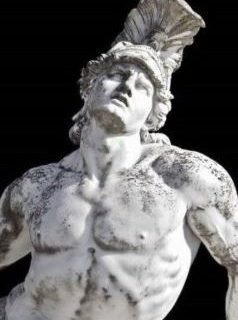
Achilles was a hero of Greek mythology depicted in an Iliad by Homer. Achilles is also the main character in this war epic. The greatest feat attributed to him was...

For centuries, ancient Greece chalked up several developments in not just social and political philosophy but in science and technology. The Greeks maintained an open-minded approach to investigating the world...

Aristotle was an ancient Greek philosopher, writer and biologist. He was born in the year 384 BCE in the Northern Greek city of Stagirus (or Stagira). His parents were aristocrats...

The classical Greek philosopher Aristotle (384-322 BC) made substantial and long-lasting contributions to literally every area of world knowledge, particularly Western Philosophy. Aristotle was described by many as “the Master”...

Many historians have long maintained that Plato’s Academy holds the reputation of being the world’s first university-like institution. It did not resemble your typical or modern-day university in the sense...

Socrates was one of the greatest Greek philosophers by a wide margin. He was born in 469 BCE at a place called Deme Alpoece, Athens. For the entirety of his...

The Greek philosopher Plato was born in either 428 or 427 BCE in ancient Athens. Plato was a devout student of Socrates (c. 470-399 BCE). By taking a philosophical approach...





