What was the dispute between Athena and Poseidon?

In Greek mythology, the dispute between Athena and Poseidon over the patronage of Athens is a famous story illustrating their rivalry and the significance of their gifts. Image: The Dispute of Minerva and Neptune by French painter René-Antoine Houasse
In Greek mythology, Athena, the goddess of wisdom, and Poseidon, the god of the seas, often stood as revered and powerful figures in the divine pantheon. Although both were crucial in the Greek religious landscape, a particular myth recounts a dramatic contest between these two Olympians over the patronage of a significant city. This dispute was not just a rivalry between deities but underscored deeper themes of cultural identity, divine intervention, and the values a society holds dear.
Setting the Stage

In a founding myth reported by Pseudo-Apollodorus, Athena and Poseidon competed for the patronage of Athens, each offering a gift. Image: Poseidon and Athena battle for control of Athens by Benvenuto Tisi (1512).
The city in question was no ordinary place but what would later become one of the most influential city-states in ancient Greece: Athens. Yet, at the time of the dispute, this place lacked a name and a divine patron, a god or goddess who would look after its inhabitants and ensure its prosperity.

Acropolis of Athens
The Gifts of Poseidon

In an attempt to win the patronage of Athens, Poseidon struck the ground, creating a saltwater spring, symbolizing access to trade and water. Despite Athens’s later maritime power, the water was undrinkable.
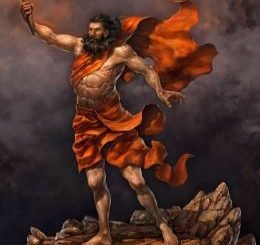
Eager to claim the city as his own, Poseidon struck his mighty trident into the ground. This action created a spring, symbolizing his dominion over waters. However, the water from this spring was salty, like the vast oceans he ruled. Along with the spring, Poseidon also gifted the city with the first horse, showcasing the brute strength and speed that these animals could bring, potentially transforming the way of life for the city’s inhabitants through transportation, warfare, and agriculture.

Poseidon – Olympian god and the god of the sea, storms, oceans and horses. Image: Poseidon holding a trident. Corinthian plaque, 550-525 BC. From Penteskouphia.
Athena’s Offering

Image: Pallas Athenas (1657) by Dutch Golden Age painter Rembrandt, which recalls her attributes as the goddess of warfare.
In response, Athena, with a calm demeanor, planted an olive tree. This tree was not just an ordinary plant but represented numerous blessings. The olive tree provided food in the form of olives, oil for cooking and lighting, and wood for various uses. Furthermore, the olive branch would come to symbolize peace and reconciliation in various cultures, subtly reflecting Athena’s wisdom and the values she promoted.

Athena offered the olive tree, which provided not only food but also oil and wood. The olive tree was seen as a symbol of prosperity and sustenance. Image: Mattei Athena at Louvre. Roman copy from the 1st century BC/AD after the Greek original Piraeus Athena of the 4th century BC
Judgment and the City’s Destiny

King Cecrops, recognizing the practical benefits of the olive tree, chose Athena’s gift. Thus, Athena was declared the patron goddess of Athens. Her gift was deemed more useful and essential for the city’s development and daily life. Image: Poseidon (right) and Athena (identified with inscriptions). Black-figure vaise painting by Amasis Painter, 540 BC. BnF Museum (Cabinet des médailles), Paris
The gods of Mount Olympus were called upon to judge which offering was superior and, therefore, which deity would become the patron. After much deliberation, the gods chose Athena’s gift as the more valuable for the city’s long-term growth and prosperity. It was believed that while Poseidon’s gifts were potent and valuable, Athena’s olive tree was a sustainable resource, providing both practical uses and symbolic value that aligned with the ideals of civilization, growth, and peace.
Thus, the city was named Athens in honor of Athena. This decision didn’t sit well with Poseidon, and his anger manifested in various myths, including causing flooding and other hardships for the Athenians. However, over time, as myths evolved, both gods played protective roles for the city in various capacities.
Aftermath
Enraged by his loss, Poseidon attempted to retaliate. According to the myth, he sent his son Halirrhothius to cut down Athena’s sacred olive tree. However, Halirrhothius accidentally killed himself with his own axe while trying to destroy the tree. This incident was said to be the origin of the term “moria” (fate or doom) in reference to the tree.
The resulting conflict between Poseidon and Athena was settled on the Areopagus, a hill in Athens named after the god Ares, who was later adjudicated in favor of the goddess Athena.
Deeper Significance
This mythological contest is rich in symbolism and reveals insights into the values and priorities of ancient Athenians. By choosing Athena’s olive tree over Poseidon’s spring and horse, the Athenians emphasized the importance of wisdom, peace, and sustainable growth over sheer strength and immediate power.
Furthermore, the myth underscores the idea that the foundations of a great city or civilization are rooted not just in material or tactical advantage but in the ideals it upholds. The olive tree, with its multifaceted benefits, represented a holistic approach to growth, blending economic prosperity with societal values.
Lastly, the tale also serves as a reminder of the delicate balance in relationships between gods and mortals in Greek mythology. While the gods often intervened in human affairs, they did so driven by their desires, emotions, and rivalries. The dispute between Athena and Poseidon was a celestial conflict, but its repercussions rippled through the mortal realm, molding the destiny of a city and its inhabitants.
Did you know…?

Athena and Poseidon, Faliscan red-figure volute-krater, by Nazzano Painter, 360 BC. Louvre, Paris.
In ancient Roman poet Virgil’s version, Poseidon gave the first horse, while Athena offered the first domesticated olive tree. King Cecrops chose Athena’s gift, making her the patron goddess. The olive tree symbolized economic prosperity, providing wood, oil, and food. Some scholars have viewed these myths as reflecting religious conflicts between matriarchal and patriarchal societies.