Geras, the Greek god of old age, represents both the physical decline and the wisdom or virtue associated with aging in ancient Greek mythology. His origin, roles, and cultural significance reflect the dual nature of aging as a force of both inevitability and honor.
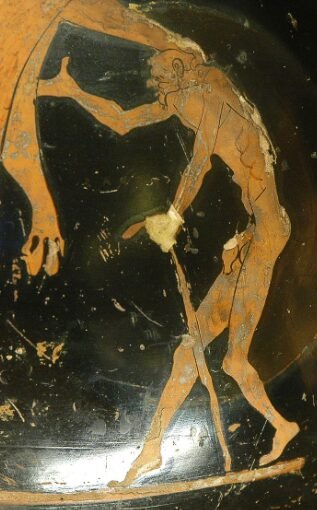
In Greek mythology, Geras (Γῆρας) was the god of old age, symbolizing the inevitable decline of life. Image: Geras, detail of an Attic red-figure pelike, c. 480–470 BC, Louvre
Origin of Geras
Geras is a primordial deity, born parthenogenetically from Nyx (Night), a foundational figure in Greek cosmology who gave birth to many abstract forces such as Thanatos (Death) and Moros (Doom).
Some accounts, notably those of Hyginus and Cicero, add Erebus, Nyx’s consort, as Geras’s father. This dual attribution reflects the fluidity of mythological genealogies and emphasizes his connection to the darker, inevitable forces of existence.
Geras’s origins root him in the cosmos’s fundamental fabric, symbolizing the inescapable progression toward old age and mortality.
Depictions in Art and Myth
In ancient Greek art, Geras is frequently portrayed as a tiny, shriveled old man with baldness and wrinkles, embodying the physical decline associated with aging. Vase paintings depict him begging for mercy while fighting Heracles, although the myth behind this imagery has been lost. The association with Heracles, a hero renowned for his strength and youthful vigor, likely underscores the contrast between youth and old age, a recurring theme in Greek thought.
Another narrative tied indirectly to Geras is the myth of Tithonus, a mortal prince granted immortality without eternal youth. Over time, Tithonus aged endlessly, shrinking into a feeble form until his divine lover, Eos, transformed him into a cicada. While Geras is not directly named in this story, the themes of aging, decline, and the burden of immortality reflect his symbolic domain.
Depicted as a tiny, shriveled old man, Geras contrasted with Hebe, the goddess of youth.
Philostratus, a later writer, records that altars dedicated to Geras and Thanatos existed in Gadeira, indicating a ritual acknowledgment of these interconnected forces. This highlights how Geras was not merely a mythological figure but also held a place in cultural and religious practices.
Role in Greek Culture
In Greek literature and society, Geras had a nuanced role, embodying the respect and honor accorded to elders alongside the unavoidable physical decline.
Geras was viewed as both a virtue and a burden. The concept of gēras (γῆρας) in Greek thought extended beyond mere old age; it denoted the authority, influence, and legacy achieved through a lifetime of excellence (arete) and fame (kleos).
In Homer’s Odyssey, kings like Odysseus, who ruled through communal assent rather than strict heredity, valued the gēras they accumulated—fame and achievements passed to their descendants to sustain their influence.
The word gēras also carried symbolic weight in societal hierarchy and individual legacy. A king or warrior’s accumulated gēras reflected their contributions to the community, earned through strength, wisdom, or victories. Thus, Geras, as a personification, embodied the balance between decay and the respect garnered through a lifetime of virtuous action.
Linguistic and Symbolic Significance
The Greek word gēras translates to “old age,” but its meanings are multifaceted. It also refers to authority and influence, particularly as earned through fame or merit.
This dual meaning underscores the ancient Greek perception of aging as both a physical decline and a reward for achievement.
Etymologically, gēras forms the root of modern terms like “geriatric” and “progeria,” linking the ancient concept to contemporary understandings of aging and age-related conditions.
Geras’s Roman counterpart was Senectus. Geras often appeared in vase art alongside Heracles, though the specific myth behind these depictions has been lost to history.
Additionally, in some literature, gēras refers to “dead skin” or a “slough of a snake,” symbolizing renewal and change. This interpretation reflects a deeper philosophical view of aging—not as an endpoint but as a transformation that carries intrinsic value, akin to the shedding of old layers for renewal.
Geras’s Philosophical Significance
Geras embodies the Greek idea of dualities: decline and virtue, mortality and legacy, physical decay and intellectual or moral growth. His representation in mythology and art suggests that the Greeks did not view old age solely as a source of sorrow.
Instead, it was intertwined with the virtues of experience, wisdom, and the respect due to those who had lived exemplary lives. This perspective reflects broader Greek ideals about balance and the cyclical nature of life, where decline in one aspect is offset by growth or honor in another.
Cultural Influence
Geras’s influence extended beyond mythology into cultural practices. The reverence for elders in Greek society aligns with his symbolic role as a deity of old age.
While age brought physical decline, it also conferred authority and respect, aligning with the Greek ethos that valued arete (excellence) and kleos (fame) achieved over a lifetime. This duality may have encouraged younger generations to strive for greatness, knowing that their achievements would secure their legacy and influence in old age.
Geras in Comparative Mythology
Though unique in his specific attributes, Geras shares thematic similarities with figures in other mythologies. His Roman counterpart, Senectus, similarly personifies old age. Like Geras, Senectus reflects the inevitability of aging and its associated virtues, though Roman attitudes often emphasized discipline and duty over the Greek focus on fame and excellence.
The mythological theme of aging without eternal youth, as seen in Tithonus’s story, appears in various cultures, often as a cautionary tale about the unintended consequences of immortality. These narratives collectively highlight the universal human preoccupation with aging, decline, and the search for meaning within the finite bounds of life.
Decline of Geras’s Relevance
As Greek culture transitioned and merged with Roman and later Christian influences, Geras’s role as a deity diminished. The rise of monotheistic and salvation-focused religions shifted attention away from personified abstractions like Geras, focusing instead on eternal life and redemption. However, the legacy of Geras endures in linguistic, philosophical, and cultural contexts, reminding us of the ancient Greek perspectives on aging and its complex interplay of decline and honor.
Conclusion
Geras, the god of old age, encapsulates the multifaceted nature of aging in Greek mythology and culture. His origins as a child of Nyx connect him to the inevitability of cosmic forces, while his roles in art and literature reflect the respect and challenges associated with aging. As both a marker of decline and a symbol of earned virtue, Geras embodies the Greek understanding of life’s dualities. Through his influence on language, philosophy, and societal values, Geras remains a testament to the timeless complexity of aging as both an individual and communal experience.
Frequently Asked Questions
What is Geras’s origin according to Greek myths?
Geras is born parthenogenetically from Nyx (Night), though Hyginus and Cicero also name Erebus, Nyx’s consort, as his father.
How is Geras depicted in art and mythology?
Geras is represented as a shriveled, bald old man. In vase art, he is often shown fighting Heracles, though the myth behind these depictions is lost.
What role does Geras play in the myth of Tithonus?
Tithonus, granted immortality but not eternal youth, continued aging and shrinking until Eos transformed him into a cicada, illustrating the relentless effects of old age.
What significance did Geras have in ancient Greek culture?
Geras symbolized the virtues of aging, where accumulated gēras conferred authority, influence, and power derived from recognition and success, as reflected in Homer’s Odyssey.
What is the relationship between Geras and altars in Gadeira?
According to Philostratus, altars to Geras and Thanatos (Death) were established in Gadeira, reflecting their cultural and spiritual significance.
What linguistic meanings are associated with the Greek word gēras?
The word gēras means “old age” but also conveys notions of influence, authority, and legacy, derived from achievements. It is the root of modern terms like “geriatric” and “progeria.”
How does Geras reflect ancient Greek attitudes toward aging?
Geras embodies the dual nature of aging, seen as both a marker of physical decline and a source of honor through accumulated achievements and legacy.





