
Portrait of Henry IV by Flemish painter Frans Pourbus (1610)
Henry IV was the first monarch of the Bourbon dynasty and known for restoring peace after the French Wars of Religion through policies like the Edict of Nantes, which granted religious liberties to Protestants.
Early Life and Background
Henry IV, born on December 13, 1553, in Pau, was the first monarch of France from the House of Bourbon, a cadet branch of the Capetian dynasty. His parents were Jeanne III of Navarre and Antoine de Bourbon. Baptized as a Catholic, Henry was raised in the Protestant faith under the Calvinist influence of his mother, which shaped his early religious and political identity. His early years were spent in Béarn, where he mingled with locals, earning him the nickname “Miller of Barbaste.” This upbringing fostered his down-to-earth nature, a trait that resonated with his later epithet, “Good King Henry.”
Henry’s religious upbringing was a source of contention between his parents, reflecting broader divisions in France during the Reformation. His father sought a Catholic education for him, while his mother emphasized Calvinist principles. This duality would foreshadow his later role as a mediator between religious factions in France.
Role in the French Wars of Religion
The French Wars of Religion (1562–1598) were a defining period for Henry IV. As a Huguenot, he became a prominent Protestant leader, fighting against the Catholic forces during the Third War of Religion. Under the mentorship of Gaspard II de Coligny, he gained military experience in battles such as Jarnac and Moncontour. However, Henry’s role in the wars reached a turning point after his marriage to Margaret of Valois in 1572.
The wedding, intended to unite Catholics and Protestants, was marred by the St. Bartholomew’s Day Massacre. Thousands of Protestants were killed, and Henry narrowly escaped death by converting to Catholicism temporarily. This traumatic event highlighted the deep divisions within France and foreshadowed Henry’s future challenges as a ruler.
King of Navarre and Heir to the French Throne
Henry became King of Navarre in 1572 after the death of his mother. His marriage to Margaret of Valois remained childless and politically fraught, reflecting the broader instability of the period. In 1584, Henry became the heir presumptive to the French throne following the death of Francis, Duke of Anjou. This development intensified the conflict, as many Catholics refused to accept a Protestant monarch.
The ensuing War of the Three Henrys (1587–1589) saw Henry of Navarre pitted against King Henry III of France and Henry I, Duke of Guise. This complex struggle, marked by shifting alliances and religious tensions, culminated in the assassination of Henry III in 1589. With the king’s death, Henry of Navarre became King Henry IV of France, though his path to full acceptance was far from smooth.
Early Reign and Religious Conversion
Henry IV’s accession to the throne was met with resistance from the Catholic League, backed by Spain. Many French Catholics refused to recognize him, plunging the kingdom into further conflict. Despite military victories at Arques and Ivry, Henry faced a prolonged struggle to secure Paris and establish his authority.
Recognizing the need for compromise, Henry famously converted to Catholicism in 1593, allegedly stating, “Paris is well worth a mass.” This pragmatic decision alienated some Protestant allies but won the allegiance of most Catholics, allowing him to be crowned in 1594. His conversion exemplified his politique approach, prioritizing the unity and stability of France over ideological purity.
The Edict of Nantes and Religious Tolerance
Henry IV’s most significant achievement in domestic policy was the Edict of Nantes in 1598. This landmark decree granted religious liberties to Protestants, including the right to worship in specific areas and hold public office. While not entirely satisfying hardliners on either side, the edict effectively ended the French Wars of Religion and established a framework for coexistence.
The edict demonstrated Henry’s commitment to reconciliation and his vision of a unified France. However, resistance from the Parlement of Paris and periodic outbreaks of violence highlighted the ongoing challenges of religious pluralism.
Economic and Administrative Reforms
As king, Henry IV prioritized the economic recovery of France after decades of war. With the assistance of his finance minister, Maximilien de Béthune, Duke of Sully, he implemented reforms to regularize state finances, reduce corruption, and promote agricultural development. Initiatives such as draining swamps, constructing infrastructure, and encouraging trade stimulated economic growth.
Henry IV revitalized Paris with projects like the Pont Neuf and Place Royale, enhancing the city’s infrastructure and aesthetics.
Henry also sought to enhance France’s self-sufficiency by supporting domestic industries. He established royal factories for luxury goods like silk and crystal and promoted agricultural innovation through works like Olivier de Serres’ The Theatre of Agriculture. These measures improved living standards and strengthened the monarchy’s authority.
Foreign Policy and European Alliances
Henry IV’s foreign policy was marked by pragmatism and strategic alliances. The Peace of Vervins in 1598 ended hostilities with Spain, allowing France to focus on internal stability. Henry also supported Protestant states such as the Dutch Republic and German principalities, countering Catholic powers like Spain and the Holy Roman Empire.
His interventions in the War of the Jülich Succession and support for Protestant claimants reflected his broader goal of curbing Habsburg influence. Henry’s diplomacy strengthened France’s position in Europe and laid the groundwork for future expansion under his successors.
Colonial Ventures and Global Ambitions
Henry IV recognized the potential of overseas colonization to enhance France’s wealth and influence. He sponsored expeditions to North America, leading to the establishment of New France in modern-day Canada. Explorers like Samuel de Champlain and Pierre Dugua, Sieur de Monts, expanded French territorial claims and fostered trade with Indigenous peoples.
In Asia, Henry encouraged trade with the East Indies and Japan, laying the foundation for future French involvement in global commerce. These ventures reflected his forward-thinking vision and contributed to France’s emergence as a colonial power.
Personal Life and Legacy
Henry IV’s personal life was as dynamic as his reign. His relationships with mistresses like Gabrielle d’Estrées and his eventual marriage to Marie de’ Medici were sources of both scandal and political maneuvering. His marriage to Marie produced six children, including Louis XIII, ensuring the continuity of the Bourbon dynasty.
Despite his accomplishments, Henry faced persistent threats to his life. He survived multiple assassination attempts before being killed by Catholic zealot François Ravaillac in 1610. His death marked the end of a transformative era for France but left a lasting legacy of reconciliation and reform.
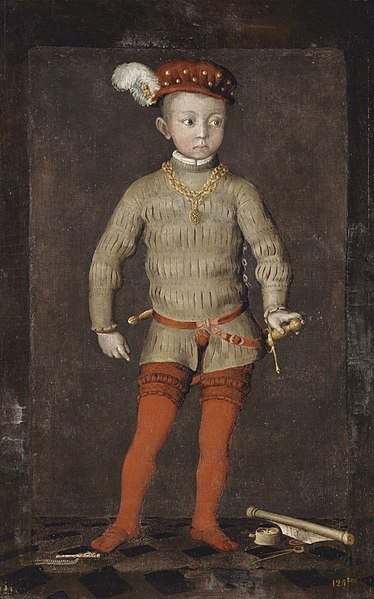
A portrait of a child presumed to be Henry’s
Architectural and Cultural Contributions
Henry IV left an indelible mark on France’s cultural and architectural landscape. He commissioned projects like the Pont Neuf, the Place Royale (now Place des Vosges), and the extension of the Louvre. These developments symbolized the unity and grandeur of his reign.
Henry also promoted the arts and education, establishing institutions like the Collège Royal Henri-le-Grand. His support for cultural initiatives enriched French society and reinforced his image as a benevolent ruler.
Challenges and Controversies
Despite his successes, Henry IV’s reign was not without challenges. Resistance from noble factions and dissatisfaction among hardline Catholics and Huguenots occasionally disrupted his rule. His pragmatic approach to religion, while effective, left some questioning his sincerity.
Henry IV of France’s life and reign were marked by resilience, pragmatism, and vision.
Henry’s economic policies, though largely successful, faced criticism for favoring certain regions and social classes. The financial burden of his reforms also strained the treasury, contributing to tensions that would resurface under his successors.
Assessment and Historical Significance
Henry IV is remembered as one of France’s greatest monarchs. His ability to navigate the complexities of religious conflict, implement transformative reforms, and strengthen France’s position in Europe earned him widespread admiration. His pragmatic leadership style and commitment to the common good set a standard for future rulers.
The Edict of Nantes, in particular, stands as a testament to his vision of a tolerant and united France. Though later revoked by Louis XIV, it remains a landmark in the history of religious freedom. Henry’s reign laid the foundations for the Bourbon dynasty’s dominance and France’s rise as a European power.

Frequently Asked Questions about Henry IV of France
How did Henry IV rise to power?
Henry inherited the throne of Navarre in 1572 and became King of France in 1589 after the death of Henry III. His succession was contested due to his Protestant faith, leading to conflict with the Catholic League.
What was the significance of the Edict of Nantes (1598)?
It ended the French Wars of Religion by granting limited religious freedoms to Protestants, ensuring religious coexistence and stability in France.
Why did Henry IV convert to Catholicism?
To secure his rule and end opposition from the Catholic League, he converted in 1593, famously justifying it by saying, “Paris is well worth a mass.”
What were Henry IV’s contributions to the French economy?
He improved state finances, promoted agriculture, built infrastructure, and encouraged domestic manufacturing to reduce reliance on imports.
What was Henry IV’s foreign policy approach?
He sought alliances with Protestant states like the Dutch Republic, negotiated peace with Spain (Peace of Vervins, 1598), and supported colonial expeditions to North America.
How did Henry IV survive the St. Bartholomew’s Day Massacre?
He escaped death by temporarily converting to Catholicism and later rejoined the Protestant cause.
How did Henry IV die?
He was assassinated in Paris in 1610 by François Ravaillac, a Catholic fanatic who opposed his policies.
What were the long-term effects of Henry IV’s reign?
He stabilized France, established Bourbon rule, and laid the groundwork for French prominence in Europe under his successors.





