The Battle of Kadesh and the resulting first known peace treaty between two major powers are significant historical events that shaped the ancient Near East.
Taking place in 1274 BCE, the battle was a large-scale conflict between the Egyptian Empire, under Pharaoh Ramesses II, and the Hittite Empire, led by King Muwatalli II. It took place near the city of Kadesh, located in modern-day Syria, and is one of the earliest battles in recorded history for which detailed records exist.
This confrontation is remarkable not only for its military scale but also for the diplomacy that followed.

Egyptian–Hittite peace treaty. The Hittite version (above, at the Istanbul Archaeology Museums) and Egyptian (below, at the Precinct of Amun-Re in Karnak)
Egyptian-Hittite Rivalry
The Egyptian and Hittite empires were two of the most powerful states in the ancient world during the 13th century BCE. Egypt dominated the southern regions, including Nubia, and held significant influence in Canaan (modern Israel/Palestine).
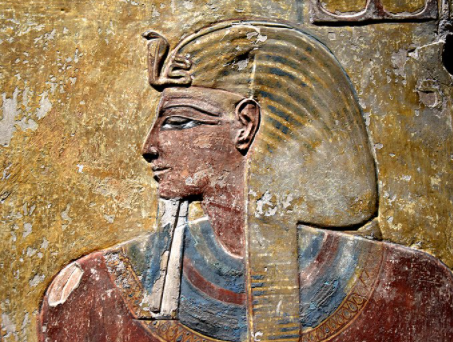
Seti I, the father of Ramesses II, was a 19th Dynasty pharaoh. He is most known for capturing the city of Kadesh. Image: Seti I of the 19th Dynasty
The Hittites, based in Anatolia (modern Turkey), were expanding their influence into northern Syria. The city of Kadesh, located near the Orontes River, was of strategic importance because it sat at the crossroads of trade routes and was close to the border between Hittite and Egyptian-controlled territory.
The Egyptians had lost Kadesh to the Hittites years earlier, and Ramesses II, known for his military prowess, was eager to recapture it. The battle that unfolded there was an effort to reassert Egypt’s dominance in the region and check Hittite expansion.

The colossal statues of Ramesses II at temple Abu Simbel
The Battle

The Battle of Kadesh was a stalemate and far from a splendid victory like the way Ramses II portrayed it. Image: Depiction of Ramesses II fighting against his enemies
Preparation and Strategies
Ramesses II led his army, divided into four divisions named after Egyptian gods—Amun, Ra, Ptah, and Seth. His strategy was to march northward swiftly and surprise the Hittites. However, the Egyptians had underestimated the strength and readiness of the Hittite forces. The Hittites, under King Muwatalli II, had amassed a large force that included 37,000 infantry and 3,500 chariots.
Both sides used intelligence and espionage to prepare for the battle, but the Egyptians were misled by Hittite spies who reported that the Hittite army was far away. This false information caused Ramesses to march hastily and split his forces, with the divisions moving in staggered columns.
The Ambush and Ramesses’ Heroics
The battle began disastrously for the Egyptians when the Hittites launched a surprise attack on Ramesses’ Ra division, which was moving toward Kadesh. The Hittite chariots, faster and more maneuverable, overwhelmed the Egyptian forces, pushing them back and creating chaos. Ramesses, who was with the Amun division ahead of the Ra division, found himself isolated and vulnerable.
Despite the odds, Ramesses is said to have rallied his forces and personally led a counterattack. Egyptian accounts, particularly from the Poem of Pentaur and various temple inscriptions, emphasize his bravery and divine assistance from the god Amun. These inscriptions portray Ramesses as a heroic leader who, through sheer force of will, turned the tide of the battle. However, these Egyptian sources are known to be propagandistic, so the actual events may have been less dramatic.

Ramesses II at the Battle of Kadesh.
Stalemate and Aftermath
After the initial shock, reinforcements from the Egyptian Ptah division arrived, and the situation stabilized. The Hittites, though initially successful, were unable to press their advantage and withdrew. Neither side achieved a decisive victory, as the Egyptians failed to recapture Kadesh, and the Hittites could not destroy the Egyptian army.
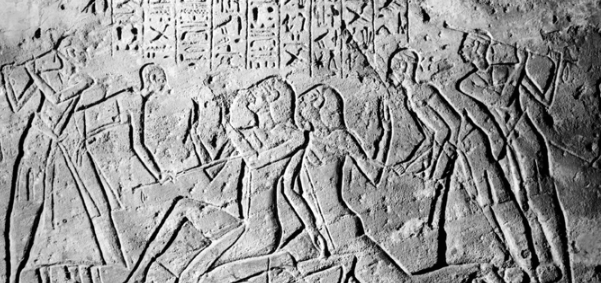
The Kadesh inscriptions
The battle ended in a stalemate, with both sides claiming victory. Ramesses returned to Egypt and had monuments and inscriptions made that glorified his role in the battle, depicting it as a great Egyptian triumph. However, the Hittites retained control of Kadesh and continued to be a formidable power in the region.
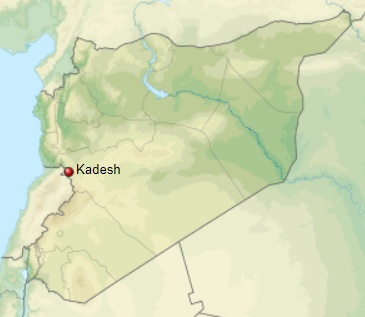
The Battle of Kadesh took place in the 13th century BC, specifically around 1274 BC, during the late Bronze Age. It was a significant military encounter between the Egyptian Pharaoh Ramesses II and the Hittite King Muwatalli II in the region of Kadesh, located in present-day Syria. Image: Kadesh, location within modern-day Syria
The First Recorded Peace Treaty

The Treaty of Kadesh set a precedent for future diplomatic negotiations in the ancient Near East. It highlighted the potential for resolving conflicts through diplomacy rather than continued warfare, influencing later peace treaties and agreements. Image: Color reproduction of the relief depicting Ramesses II storming the Hittite fortress of Dapur
Prolonged Conflict and Diplomacy
The aftermath of the battle saw continued skirmishes between Egypt and the Hittites, but neither side gained a clear advantage. Over time, both empires grew weary of the conflict. The Hittites were dealing with pressure from northern tribes, particularly the growing threat of the Assyrians, while Egypt faced internal strife and needed to stabilize its borders. Eventually, the two powers recognized that continued warfare was unsustainable.
Around 1259 BCE, some 15 years after the Battle of Kadesh, Ramesses II and the Hittite King Hattusili III (Muwatalli II’s brother and successor) concluded the world’s first recorded peace treaty. This treaty was monumental not only for its role in ending hostilities but also for its recognition of mutual interests and future cooperation.

Hattušiliš III was renowned as one of the prominent rulers of the Hittite Empire, lived during the 13th century BC. Image: Rock relief of Hattusili III, the king of the Hittite Empire
The Terms of the Treaty
The peace treaty, which exists in both Egyptian and Hittite versions, is a comprehensive agreement that addresses a wide range of political, military, and diplomatic concerns. It is written in Akkadian, the diplomatic language of the time, and copies of it have been found both in Egypt and in the Hittite capital, Hattusa.
Key terms of the treaty include:
- Mutual non-aggression: Both sides agreed to cease hostilities and respect each other’s territories. The treaty established a formal border between the Egyptian and Hittite empires, securing Kadesh under Hittite control but ensuring that the Egyptians would not attempt to retake it by force.
- Military alliance: The treaty included a defensive pact in which both empires pledged to aid each other if either was attacked by a third party. This was crucial at a time when both empires faced external threats, particularly from the Assyrians, who were emerging as a new power in the region.
- Return of fugitives: A clause stipulated that any fugitives fleeing from one empire to the other would be returned to their original country. This provision helped to solidify relations by preventing either side from harboring potential rebels or dissidents from the other.
- Recognition of sovereignty: The treaty recognized both rulers as equals and legitimate sovereigns. This was significant in a world where many treaties and agreements between powers were often hierarchical, with one side acknowledging the supremacy of the other.
Significance of the Treaty
The Kadesh peace treaty is not only important as a historical document but also as a precedent for diplomatic relations between nations. It represents one of the earliest known examples of formalized diplomacy and the use of written agreements to resolve international disputes. The treaty emphasizes peaceful coexistence, mutual respect, and the practical benefits of cooperation over conflict.
The fact that the treaty survived in both Egyptian and Hittite forms, with some variations, indicates that both parties had a vested interest in preserving the agreement. The Egyptian version of the treaty was inscribed on the walls of the Karnak Temple, one of the most important religious and political sites in ancient Egypt, underscoring its significance.
Legacy of the Battle and Treaty

Ramesses II’s Egypt (green) bordering on the Hittite Empire (red) at the height of its power in c. 1279 BC
Ramesses II’s Legacy
Ramesses II, known as Ramesses the Great, used the Battle of Kadesh and the peace treaty to bolster his reputation as a powerful and capable ruler. Despite the mixed outcome of the battle, his portrayal of it as a personal victory helped cement his legacy as one of Egypt’s greatest pharaohs. His reign was marked by massive building projects, including the temples at Abu Simbel and the Ramesseum, which served to glorify his achievements.
Ramesses ruled for 66 years, and his long reign allowed him to maintain stability in Egypt. The peace treaty with the Hittites ensured that Egypt could focus on internal development and consolidation rather than external wars. His diplomatic achievements were as important as his military ones, demonstrating a shrewd understanding of the political realities of his time.

A relief of Ramses II from Memphis showing him capturing enemies – a Nubian, a Libyan and a Syrian, circa 1250 BC. Cairo Museum
The Hittites and the Assyrians
For the Hittites, the treaty provided much-needed security in the south, allowing them to focus on threats from the north and east. However, the rise of the Assyrian Empire would eventually spell the end for the Hittite state. By the end of the 12th century BCE, the Hittite Empire had collapsed, and its territories were absorbed by the Assyrians and other emerging powers.
Despite the Hittite Empire’s fall, the peace treaty with Egypt stands as a testament to the diplomatic acumen of Hattusili III and his recognition of the need for peace with a powerful neighbor. The treaty represents one of the final acts of Hittite diplomacy before their decline.
Impact on Future Diplomacy
The peace treaty between Egypt and the Hittites set a precedent for future international relations. While treaties and alliances between states were not unheard of in the ancient world, the Kadesh treaty is the earliest surviving example of a detailed and legally binding agreement between two great powers.
The principles enshrined in the treaty—mutual respect, non-aggression, and cooperation—remain central to diplomacy today. The fact that this treaty was written down and carefully preserved shows the importance both sides placed on the rule of law in international relations, an idea that has continued to evolve through history.
The battle and the peace treaty are also valuable for historians because they provide insight into the political dynamics of the Late Bronze Age. The interplay of military power, diplomacy, and strategic alliances among ancient empires is a recurring theme in world history, and the events surrounding Kadesh are a prime example of how these forces shaped the ancient world.
Conclusion
The Battle of Kadesh and the first recorded peace treaty between Egypt and the Hittites are milestones in ancient history. The battle, while indecisive, was a massive military engagement that showcased the strategic ambitions and military capabilities of two of the ancient world’s most powerful empires. More importantly, the peace treaty that followed demonstrated the ability of these rival states to resolve their differences through diplomacy rather than continued warfare.
This treaty remains one of the earliest and most significant examples of international diplomacy, setting a standard for future agreements between nations. The events of Kadesh, along with the subsequent treaty, illustrate the complexity of ancient politics and the importance of both military and diplomatic strategies in maintaining empires. Through these events, Ramesses II and Hattusili III shaped the political landscape of their time and left a lasting legacy for future generations.

Ihsan Sabri Caglayangil, the Minister for Foreign Affairs of Turkey, presented a replica of the Treaty of Kadesh to the Secretary-General, U Thant, in 1970. The replica was placed on a wall on the second floor of the Conference building, in the delegates’ corridor outside the north entrance to the Security Council Chamber.
Frequently asked questions about the Battle of Kadesh & the First Peace Treaty

Image: An illustration depicting Ramses II during the Battle of Kadesh.
Who was Ramesses II and how long did he rule Egypt?
Ramesses II, also known as Ramesses the Great, ruled Egypt for 67 years from 1279-1213 BCE. His reign is remembered for its prosperity and the many monumental constructions that still stand today.
What is Ramesses II most famous for in terms of his military accomplishments?
Ramesses II is most famous for his account of the Battle of Kadesh in 1274 BCE, which he portrayed as a great military victory, though the actual outcome was more of a stalemate.
What is Ramesses II’s most significant legacy, despite his military achievements?
Despite his military accomplishments, Ramesses II’s most significant legacy is the signing of the first known peace treaty, the Treaty of Kadesh, in 1258 BCE between Egypt and the Hittites.
What earlier agreement existed before the Treaty of Kadesh, and why isn’t it considered the first true peace treaty?
The Treaty of Mesilim, an earlier agreement between the Mesopotamian cities of Umma and Lagash (circa 2550 BCE), is not considered a true peace treaty because it primarily dealt with boundary setting and was seen as an agreement between gods rather than rulers.

Location of the Battle of Kadesh in the 13th century BC
What was the main reason Ramesses II marched to Kadesh in his fifth year as pharaoh?
Ramesses II marched to Kadesh in response to the growing threat of the Hittite Empire, which had expanded into Syrian territory and fortified Kadesh, threatening Egyptian influence in the region.
How did the Hittite Empire become a threat to Egypt under Ramesses II?
The Hittite Empire had been steadily growing in power since the 2nd millennium BCE and had been making incursions into Egyptian-controlled territory. By the time Ramesses II came to power, the Hittites were a formidable force, and securing Kadesh became essential for Egypt.
What mistake did Ramesses II make during the Battle of Kadesh?
Ramesses II was misled by two spies, who falsely claimed that the Hittite army was far from Kadesh. In reality, the Hittites had already fortified the city and were ready to ambush the Egyptian forces, leaving Ramesses II isolated from the rest of his army.

Egyptian–Hittite peace treaty
How did Ramesses II describe his situation during the Battle of Kadesh?
In his Poem of Pentaur, Ramesses II described feeling abandoned by his soldiers, claiming to have stood alone on the battlefield and called upon the god Amun for help, which led him to turn the tide of the battle.
What was the outcome of the Battle of Kadesh?
The Battle of Kadesh ended in a stalemate. Ramesses II was unable to capture the city, but both sides claimed victory. The Egyptians portrayed Ramesses II as a hero, while the Hittites saw their defense as successful.
When was the first peace treaty signed, and who were the parties involved?
The first peace treaty was signed in 1258 BCE between Ramesses II of Egypt and Hattusili III, the king of the Hittites. It established peace and included mutual non-aggression terms between the two nations.

What were the terms of the Treaty of Kadesh?
The Treaty of Kadesh included terms of mutual non-aggression, stipulating that neither Egypt nor the Hittites would invade the other’s territory. It also included provisions for mutual assistance if either was attacked by a third party.
How did the peace treaty affect relations between Egypt and the Hittites?
The peace treaty led to a period of cooperation between Egypt and the Hittites. The Hittites shared their metalworking expertise with Egypt, while the Egyptians helped the Hittites improve their agricultural practices.
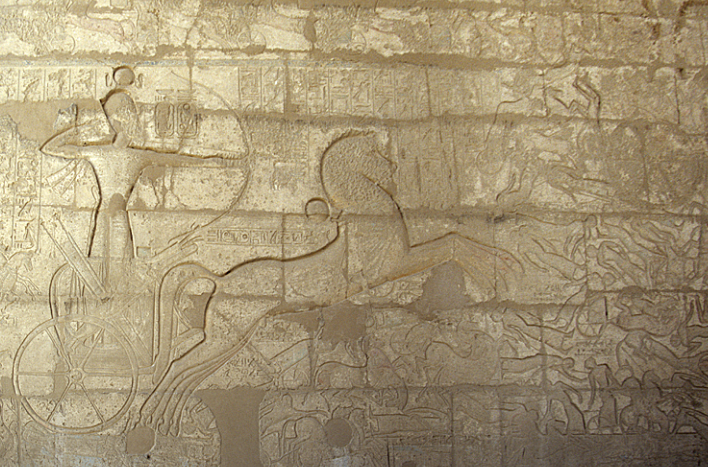
Use of chariots during the Battle of Kadesh – 13th century BC
What happened to the Hittite Empire after the treaty was signed?
The Hittite Empire eventually fell around 1200 BCE due to invasions by the Sea Peoples and other external pressures. However, the peaceful relationship with Egypt lasted for several decades before their decline.
Why is the Treaty of Kadesh considered a significant milestone in diplomacy?
The Treaty of Kadesh is considered a significant milestone because it marked the first known instance of formal international diplomacy between two great powers. It ended years of conflict and promoted peaceful cooperation, setting a precedent for future diplomatic relations.
How does the legacy of Ramesses II and the Treaty of Kadesh influence modern views of diplomacy?
The legacy of Ramesses II and the Treaty of Kadesh illustrates the importance of diplomacy and peaceful coexistence between rival powers. It serves as an early example of resolving conflict through negotiation and mutual respect, which continues to be relevant in modern international relations.

Egyptian and Hittite Empires, around the time of the Battle of Kadesh





