Summary
Mehet-Weret is a central figure in ancient Egyptian mythology, embodying the sky and symbolizing the “Great Flood.” Her origin story as a creator goddess who births the sun underscores her vital role in sustaining life and maintaining cosmic order.
Her powers extend to controlling celestial phenomena, ensuring agricultural fertility through the Nile flood, and facilitating the afterlife journey of souls. The worship of Mehet-Weret was integral to Egyptian religious practices, reflected in temples, art, rituals, and festivals. Through her interconnected roles with other goddesses and her depiction in significant artifacts, Mehet-Weret remains a testament to the rich and intricate belief systems of ancient Egypt.
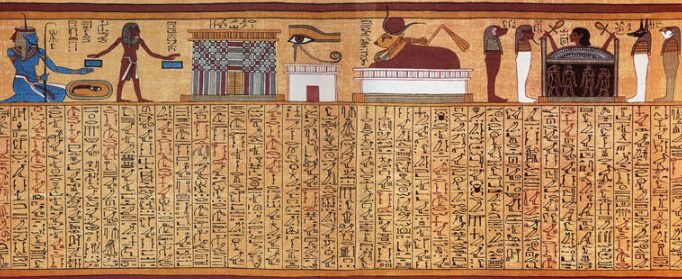
Spell 17 in Papyrus of Ani shows a vignette with Mehet-Weret in center.
Origin Story of Mehet-Weret
Mehet-Weret, also known as Mehturt (Ancient Egyptian: mḥt-wrt), is a prominent deity in ancient Egyptian mythology, embodying the sky and symbolizing the “Great Flood.” Her origins are deeply entwined with the creation myths that form the foundation of Egyptian cosmology.
According to the Pyramid Texts, one of the oldest religious texts in Egypt, Mehet-Weret is revered as a creator goddess who gave birth to the sun at the dawn of time. This act of birthing the sun is not merely a metaphor for the sunrise but signifies the genesis of life, light, and order from chaos, essential for the sustenance of crops and the prosperity of the ancient Egyptians.
In the enigmatic Spell 17 of the Book of the Dead, Mehet-Weret plays a crucial role in the divine birth and renewal processes. This spell intriguingly depicts the sun god Ra being born from her buttocks, highlighting her integral role in the cyclical nature of life and death. This imagery underscores the belief that Mehet-Weret is not only the giver of life but also a guardian of rebirth, ensuring the continuous cycle of the sun’s journey across the sky and its resurrection each day.
Geraldine Pinch, a notable Egyptologist, offers an intriguing perspective by suggesting that Mehet-Weret may represent the Milky Way, aligning her with the celestial waters traversed by the solar barque. This association enhances her role as a bridge between the heavens and the earth, facilitating the journey of Ra, the sun god, through the night sky and the underworld. Thus, Mehet-Weret’s origin story is not just a tale of creation but also a narrative of cosmic balance and continuity.
Powers of Mehet-Weret
Mehet-Weret’s divine powers are multifaceted, reflecting her significant role in both creation and the maintenance of cosmic order. As a sky goddess, she wields control over celestial phenomena, most notably the daily rising and setting of the sun. Her ability to give birth to the sun each morning signifies her power to bring light and life to the world, essential for the growth of crops along the fertile Nile River. This daily act of creation underscores her role as a sustainer of life, ensuring that the natural cycles necessary for agriculture and sustenance are maintained.
In addition to her creative powers, Mehet-Weret is closely associated with the annual Nile River flood. This inundation was crucial for the fertility of the land, depositing nutrient-rich silt that made agriculture possible in the otherwise arid landscape of Egypt. By causing the annual flood, Mehet-Weret ensures the prosperity and survival of her worshippers.
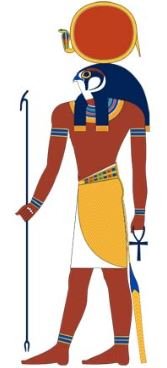
Mehet-Weret is also linked to the concept of rebirth and renewal. In Spell 17 of the Book of the Dead, she is credited with the resurrection of Ra each morning, symbolizing the cycle of death and rebirth. Image: Ra- the god of the sun
Mehet-Weret’s role as a protector of Ra further emphasizes her importance in maintaining the balance between life and death, ensuring the continuous renewal of the sun and, by extension, the world itself.
Artistically, Mehet-Weret is depicted with symbols that reinforce her divine powers. The sun disk nestled between her horns signifies her close association with Ra and her control over solar phenomena. Additionally, her portrayal as a cow, a universal symbol of fertility and nurturing, underscores her role in sustaining life. The ritual items she is often adorned with, such as the flail, denote her divine status and authority over creation and the natural world.
Mehet-Weret’s power extends to the afterlife, where she assists souls in navigating their journey to the eternal realm.
Geraldine Pinch’s interpretation of Mehet-Weret as the Milky Way further expands her celestial powers, suggesting that she governs the cosmic waters through which the solar barque travels. This interpretation positions her as a celestial navigator, guiding Ra through the heavens and the underworld, thereby maintaining the cosmic order and ensuring the sun’s safe passage each day.
Worship of Mehet-Weret
The worship of Mehet-Weret was integral to ancient Egyptian religion, reflecting her essential role in creation, sustenance, and the afterlife. Her veneration was deeply embedded in the daily lives of the Egyptians, who depended on her for the rising sun, the annual Nile flood, and the fertility of their crops. As a creator goddess, she was honored in rituals and offerings aimed at ensuring the continuation of these life-sustaining cycles.
Temples and shrines dedicated to Mehet-Weret were places where priests and worshippers conducted ceremonies to honor her and seek her blessings. These rituals often involved prayers and offerings to secure her favor for abundant harvests and protection against natural disasters.
Mehet-Weret’s association with the “Great Flood” made her a central figure in agricultural rites, where the inundation of the Nile was celebrated as a divine gift necessary for the prosperity of the land.
How was Mehet-Weret depicted by the ancient Egyptians?
Artistic representations of Mehet-Weret in temples and tombs played a significant role in her worship. She was depicted in various forms, such as a cow-headed woman, a seated cow, or a cow nurturing a child, often with the sun disk between her horns. These images were not merely decorative but served as focal points for worship and meditation, reinforcing her divine presence and influence.
Notable artifacts include her appearance on a golden bed in Tutankhamun‘s tomb, adorned with star-patterned cows labeled as Isis-Mehet, and on the sarcophagus of Khonsu, son of Sennedjem. These representations highlighted her divine status and her role in the celestial and earthly realms.
Relations with other gods
Mehet-Weret was also closely linked with other prominent goddesses like Neith, Hathor, and Isis, collectively referred to as the “Eye of Ra.” This collective worship emphasized the interconnectedness of these deities and their combined power in protection, creation, and sustenance. At times, Mehet-Weret served as an epithet for these goddesses, further intertwining their divine identities and roles within the pantheon.
Role in funerary practices and festivals
In funerary practices, Mehet-Weret’s significance extended to the afterlife. The Book of the Dead, particularly Spell 17, featured her prominently, crediting her with the birth and resurrection of Ra. This association made her a crucial figure in funerary rites, where she was invoked to assist souls in their journey to the afterlife. Offerings and prayers were made to her to ensure safe passage and rebirth, reflecting the belief that she played a vital role in the transition from life to eternity.
Festivals and public ceremonies also celebrated Mehet-Weret, especially those linked to agricultural cycles and the flooding of the Nile. These events reinforced communal bonds and the shared dependence on her divine powers for survival and prosperity. Music, dance, and processions often accompanied these festivals, creating a vibrant atmosphere of devotion and gratitude towards the goddess.
Priestly classes dedicated to Mehet-Weret held significant influence, managing temple activities, conducting rituals, and overseeing the maintenance of sacred sites. These priests acted as intermediaries between the deity and the people, ensuring that her worship was properly conducted and that her blessings were received by the community. Education and training of priests included the study of her myths, rituals, and iconography, ensuring the continuity of her worship across generations.
Conclusion
The worship of Mehet-Weret was a multifaceted practice that encompassed daily rituals, agricultural rites, funerary ceremonies, and public festivals. Her veneration was essential for maintaining the natural and cosmic order, securing prosperity, and ensuring a favorable journey to the afterlife for the ancient Egyptians. Through art, literature, and communal practices, Mehet-Weret remained a central figure in the spiritual and cultural life of ancient Egypt, embodying the eternal cycles of creation, sustenance, and rebirth.
Frequently Asked Questions

Illustration of Mehet-Weret inspired by a painting from Irynefer’s tomb, Deir el-Medina TT290.
Who is Mehet-Weret in ancient Egyptian religion?
Mehet-Weret, also known as Mehturt (Ancient Egyptian: mḥt-wrt), is a sky deity symbolizing the “Great Flood.” She plays a crucial role in creation myths and the daily life cycle, particularly in the birth and rebirth of the sun.
What is the significance of Mehet-Weret in the Pyramid Texts?
In the Pyramid Texts, Mehet-Weret is revered as a creator goddess who gives birth to the sun at the dawn of time. This act signifies the genesis of life and light, essential for crop sustenance and the prosperity of her worshippers.
How is Mehet-Weret depicted in ancient Egyptian art?
Mehet-Weret is portrayed as a majestic cow, a cow-headed woman, a seated cow, or a cow carrying a child. A distinctive sun disk is nestled between her horns, highlighting her association with the sun god Ra. She often appears adorned with ritual items, such as a flail, signifying her divine status.
What is Mehet-Weret’s relationship with other Egyptian goddesses?
Mehet-Weret is closely associated with goddesses like Neith, Hathor, and Isis. These deities share similar attributes and are collectively referred to as the “Eye of Ra.” Sometimes, Mehet-Weret serves as an epithet for these goddesses, intertwining their divine identities.
What roles does Mehet-Weret play in creation and daily life?
Mehet-Weret is responsible for raising the sun into the sky each day, producing light essential for crop growth. She also causes the annual Nile River flood, which fertilizes the land. As the goddess of creation, her daily act of birthing the sun sustains life for her devotees.
What are some notable representations of Mehet-Weret in ancient artifacts?
Mehet-Weret appears on a golden bed in Tutankhamun’s tomb, adorned with star-patterned cows labeled as Isis-Mehet. She is also featured twice on the sarcophagus of Khonsu, son of Sennedjem, depicted as a regal seated cow with the sun between her horns and surrounded by ritual items.
What is Mehet-Weret’s role in the afterlife according to the Book of the Dead?
In Spell 17 of the Book of the Dead, Mehet-Weret is credited with the birth and protection of Ra. She is believed to resurrect the sun each morning, symbolizing death and rebirth. Additionally, she assists souls in navigating the afterlife, reflecting her role in creation and renewal.





