
Brazil’s history is defined by influential figures shaping its political, social, and cultural development.
Brazil’s history is shaped by numerous influential figures who played crucial roles in its political, economic, social, and cultural development. These individuals have left lasting impacts, whether through leadership, activism, innovation, or artistic contributions. Below, World History Edu presents some of the most transformative individuals in Brazilian history.
Pedro I: The Founder of Independent Brazil
Dom Pedro I was instrumental in Brazil’s independence from Portugal in 1822. Born in Lisbon in 1798, he was the son of King João VI of Portugal. When the Portuguese royal family fled to Brazil in 1808 during the Napoleonic Wars, Pedro was raised in Rio de Janeiro, absorbing the aspirations of the Brazilian people for greater autonomy.
In 1821, when his father returned to Portugal, Pedro was left as regent of Brazil. However, tensions grew between Brazil and the Portuguese Crown, which sought to reassert colonial control. In response, Pedro declared Brazil’s independence on September 7, 1822, in the famous event known as the Grito do Ipiranga (“Cry of Ipiranga”). He was crowned Emperor of Brazil as Dom Pedro I and established a constitutional monarchy.
Pedro’s leadership was crucial in preventing Brazil from fracturing into smaller nations, as had happened in Spanish America. However, his rule was marked by internal conflicts, and he abdicated in 1831, leaving the throne to his five-year-old son, Pedro II. Despite his short reign, his role in securing Brazil’s sovereignty makes him one of the most pivotal figures in its history.
Why did the Portuguese royal court transfer to Brazil in 1807?
Pedro II: The Statesman Emperor
Unlike his father, Dom Pedro II ruled Brazil for nearly 50 years (1831–1889), overseeing a period of stability, modernization, and economic growth. He was a well-educated and forward-thinking leader, earning a reputation as a benevolent monarch. Under his reign, Brazil expanded its railway networks, improved telegraph communication, and developed a strong coffee-based economy.
Pedro II was also known for his commitment to abolitionism and social progress. He supported education and encouraged scientific advancements. His leadership helped keep Brazil together during turbulent times, such as the Paraguayan War (1864–1870), which secured Brazil’s dominance in South America.
However, despite his popularity, he was overthrown in a military coup in 1889, leading to the establishment of the Brazilian Republic. His departure marked the end of monarchy in Brazil, but his reign remains one of the country’s most progressive periods.

Pedro II
Princess Isabel: The Abolitionist Royal
While Pedro II laid the groundwork for abolition, his daughter, Princess Isabel, played a direct role in ending slavery in Brazil. By the late 19th century, Brazil was the last country in the Western Hemisphere to still practice slavery. Social and political pressure mounted for its abolition.
As regent during her father’s absences, Princess Isabel signed the Golden Law (Lei Áurea) on May 13, 1888, which abolished slavery in Brazil without compensation to slave owners. This act was one of the most significant humanitarian achievements in Brazilian history.
Though widely celebrated today, the immediate effects of abolition led to backlash from the landowning elite, contributing to the monarchy’s downfall the following year. Still, Isabel remains a key figure in Brazil’s social progress, remembered as the “Redemptress” of enslaved people.
Getúlio Vargas: The Father of Modern Brazil
Getúlio Vargas is one of the most influential and controversial figures in Brazilian history. He served as president from 1930 to 1945 and again from 1951 to 1954, leading Brazil through a period of industrialization, labor reforms, and centralization of power.
Vargas came to power after the Revolution of 1930, ending the “Old Republic” dominated by coffee oligarchs. His Estado Novo (New State) dictatorship (1937–1945) imposed authoritarian control but also introduced significant economic and labor reforms, including the Consolidation of Labor Laws (CLT), which still protects Brazilian workers today.
His second presidency (1951–1954) was marked by economic nationalism, particularly in the creation of Petrobras, Brazil’s state-controlled oil company. Under pressure from political opposition, Vargas took his own life in 1954, leaving behind a legacy of economic transformation and social progress.
Zumbi dos Palmares – The Resistance Leader
Zumbi dos Palmares was a symbol of resistance against slavery and colonial oppression in Brazil. As the leader of Quilombo dos Palmares, a community of escaped enslaved Africans, he fought against Portuguese forces in the late 17th century. Zumbi’s defiance represented the struggle for freedom and the fight against racial injustice.
He was eventually captured and executed in 1695, but his legacy remains a powerful symbol of Afro-Brazilian identity and resistance. His efforts are commemorated annually on November 20th, Brazil’s Black Consciousness Day.
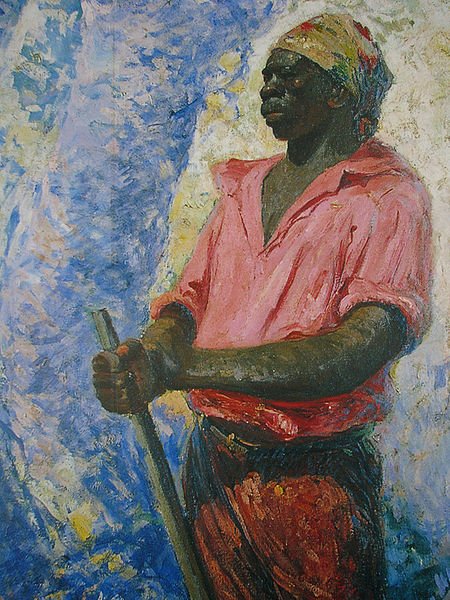
Zumbi dos Palmares
Tiradentes – The Revolutionary Martyr
Joaquim José da Silva Xavier, known as Tiradentes, was a leader of the Inconfidência Mineira, an 18th-century movement advocating for Brazil’s independence from Portugal.
Inspired by Enlightenment ideals and the American Revolution, Tiradentes and his co-conspirators sought to establish a republic in Brazil. However, the Portuguese authorities suppressed the movement, and Tiradentes was executed in 1792.
His martyrdom made him a national hero, and his legacy is honored every April 21st as a national holiday in Brazil.
Juscelino Kubitschek: The Architect of Brasília
Juscelino Kubitschek (1956–1961) is best known for his ambitious campaign slogan, “50 years of progress in 5,” which encapsulated his rapid modernization policies. His greatest achievement was the construction of Brasília, Brazil’s futuristic capital, designed by architect Oscar Niemeyer and urban planner Lúcio Costa.
Kubitschek’s presidency saw significant investments in infrastructure, highways, and industrialization, attracting foreign investment. His “developmentalist” vision helped modernize Brazil but also increased inflation and external debt.
Brasília, inaugurated in 1960, symbolized Brazil’s ambition and remains a defining aspect of his legacy. Despite political turmoil after his presidency, Kubitschek is remembered as one of Brazil’s greatest modernizers.
João Goulart: The Leader Overthrown by a Coup
João Goulart, also known as Jango, was Brazil’s president from 1961 until his overthrow in 1964 by a military coup. He advocated for social reforms, including land redistribution and workers’ rights, which made him a polarizing figure.
His policies were viewed as too leftist by conservative factions and the military, which, backed by the U.S., staged a coup, leading to a 21-year military dictatorship. Though his presidency was short-lived, Goulart’s progressive agenda influenced future social movements in Brazil.

João Goulart
Pelé: The Global Sports Icon
Edson Arantes do Nascimento, better known as Pelé, is arguably Brazil’s most famous athlete and one of the greatest footballers of all time. His career spanned from the late 1950s to the 1970s, during which he won three FIFA World Cups (1958, 1962, 1970)—a record that remains unbroken.
Pelé’s success not only elevated Brazilian football to global prominence but also served as a symbol of national pride. His influence extended beyond sports, as he became a UNESCO ambassador and worked on social causes promoting education and equality.
His legacy in Brazilian culture is unmatched, making him not just a sports legend but a global icon of resilience and excellence.
Oscar Niemeyer: The Visionary Architect
Oscar Niemeyer was a pioneer of modernist architecture, leaving an indelible mark on Brazil’s urban landscape. His most famous works include Brasília’s National Congress, Palácio do Planalto, and Cathedral of Brasília, characterized by bold curves and futuristic designs.
Niemeyer was a strong advocate for socialist ideals, which influenced his work and political views. His architectural style was celebrated worldwide, earning him the Pritzker Prize in 1988. His contributions reshaped Brazil’s architectural identity, merging innovation with national expression.
Chico Mendes: The Environmental Martyr
Chico Mendes was a rubber tapper, union leader, and environmental activist who fought to protect the Amazon rainforest and the rights of its indigenous communities.
During the 1980s, Mendes led efforts to resist deforestation caused by ranching and illegal logging. His activism made him a target, and he was assassinated in 1988 by landowners opposed to his environmental work.
His death drew international attention to the Amazon’s destruction, inspiring future environmental policies and conservation movements in Brazil and beyond.
Luiz Inácio Lula da Silva: The Champion of the Working Class
Luiz Inácio Lula da Silva rose from extreme poverty to become one of Brazil’s most influential politicians. A former metalworker and union leader, he founded the Workers’ Party (PT) and served as president from 2003 to 2011.
His administration focused on social programs like Bolsa Família, which lifted millions out of poverty and expanded Brazil’s global influence. Though later embroiled in corruption scandals, Lula’s impact on economic inclusion and labor rights remains profound. He returned to the presidency in 2023, reinforcing his long-standing influence.

Luiz Inácio Lula da Silva
FAQs about Brazil
What is Brazil’s official name?
Brazil’s official name is the Federative Republic of Brazil.
What is Brazil’s population and size ranking globally?
As of 2024, Brazil’s population was over 202 million. The South American nation is also the world’s fifth-largest country by area and one of the most populous.
What is the capital of Brazil?
The capital of Brazil is Brasília.
Which city is the most populous in Brazil?
São Paulo is the most populous city in Brazil, followed by Rio de Janeiro.
What language is spoken in Brazil?
Portuguese is the official language of Brazil, making it the only Portuguese-speaking country in the Americas.
What are Brazil’s geographical boundaries?
Brazil borders all South American countries except Ecuador and Chile and has a coastline along the Atlantic Ocean.
What are Brazil’s major natural features?
Brazil contains the Amazon Rainforest, the largest river system in the world, and diverse landscapes including savannas, wetlands, and mountains.
Who colonized Brazil?
Portugal colonized Brazil in 1500 after the arrival of Portuguese explorer Pedro Álvares Cabral.
When did Brazil gain independence?
Brazil declared independence from Portugal on September 7, 1822.
What type of government does Brazil have?
Brazil is a democratic federal republic with a presidential system.
What is Brazil’s economic status?
Brazil has one of the world’s largest economies and is a major exporter of agricultural products, minerals, and manufactured goods.
What are Brazil’s main exports?
Brazil exports soy, iron ore, beef, coffee, sugar, and aircraft, among other goods.
What is Brazil’s role in international organizations?
Brazil is a founding member of the United Nations, BRICS, Mercosur, and the G20.
What is Brazil’s biodiversity significance?
Brazil is the most biodiverse country, home to the Amazon Rainforest and 70% of all known animal and plant species.
What is Brazil’s most famous sport?
Football (soccer) is the most popular sport, and Brazil has won five FIFA World Cups.
What is Brazil’s most famous festival?
The Rio Carnival is the largest and most famous festival in Brazil, featuring samba parades and street celebrations.
What is Brazil’s national dish?
Feijoada, a stew made with black beans and pork, is considered Brazil’s national dish.
What is the dominant religion in Brazil?
Roman Catholicism is the dominant religion, though Protestantism has grown significantly.
What are Brazil’s major tourist attractions?
The Amazon Rainforest, Iguazu Falls, Rio de Janeiro’s beaches, and historical cities like Salvador attract millions of tourists.





