Nat King Cole: Life, Major Works, & Accomplishments
Early Life and Musical Influences
Nathaniel Adams Coles, known professionally as Nat King Cole, was born on March 17, 1919, in Montgomery, Alabama. His musical journey began at an early age, influenced by his mother, Perlina Coles, who was a church organist. When Cole was four, his family moved to Chicago, Illinois, where his father, Edward Coles, became a Baptist minister. Growing up in the Bronzeville neighborhood, Cole was surrounded by the vibrant jazz and gospel scenes of the city, which profoundly shaped his musical development.
Cole’s formal music education began at the age of 12 when he took piano lessons, immersing himself in classical music from Bach to Rachmaninoff while also absorbing jazz influences from legends like Louis Armstrong, Earl Hines, and Jimmie Noone. His early exposure to various genres allowed him to develop a unique style that seamlessly blended jazz, pop, and gospel elements.
Rise to Fame with the King Cole Trio
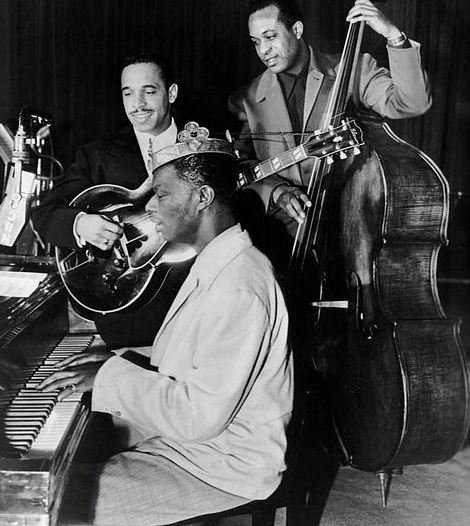
Cole dropped out of high school at 15 to pursue a career in music, initially working as a jazz pianist. Alongside his brother Eddie, he formed a sextet called Eddie Cole’s Swingsters, which recorded two singles for Decca Records in 1936. Cole’s breakthrough came in the late 1930s when he formed the King Cole Trio with guitarist Oscar Moore and bassist Wesley Prince. The trio became a pioneering jazz ensemble, setting the standard for small jazz groups with their distinctive sound.
In 1940, the trio’s recording of “Sweet Lorraine” became their first major hit. This success led to a contract with Capitol Records in 1943, where Cole would remain for the rest of his career. The trio’s song “Straighten Up and Fly Right” (1944) was a groundbreaking hit, showcasing Cole’s smooth vocal style and storytelling prowess.
Transition to a Solo Career and Mainstream Success
By the late 1940s, Cole transitioned from a jazz pianist to a mainstream pop vocalist. His silky voice and impeccable phrasing resonated with audiences worldwide. Hits like “Nature Boy” (1948), “Mona Lisa” (1950), “Too Young” (1951), and “Unforgettable” (1952) solidified his place as one of the era’s leading crooners. Despite facing initial resistance due to his race, Cole’s popularity soared, and his recordings sold millions.
Throughout the 1950s, Cole collaborated with esteemed arrangers like Nelson Riddle and Gordon Jenkins, producing timeless classics such as “Smile,” “Pretend,” and “A Blossom Fell.” His appeal extended beyond the U.S., as evidenced by his Spanish-language albums, including Cole Español (1958) and A Mis Amigos (1959).
Breaking Barriers: The Nat King Cole Show
In 1956, Cole made television history by becoming the first Black American to host a nationally broadcast TV show, The Nat King Cole Show on NBC. The show featured performances by prominent artists like Ella Fitzgerald and Peggy Lee. However, due to a lack of national sponsorship, the show ended in 1957. Reflecting on the challenges he faced, Cole famously remarked, “Madison Avenue is afraid of the dark.”
Challenges and Contributions to Civil Rights
Despite his commercial success, Cole faced relentless racial discrimination. In 1948, he moved to the all-white Hancock Park neighborhood in Los Angeles, where he and his family endured harassment, including a burning cross on their lawn. In 1956, while performing in Birmingham, Alabama, he was attacked on stage by white supremacists.
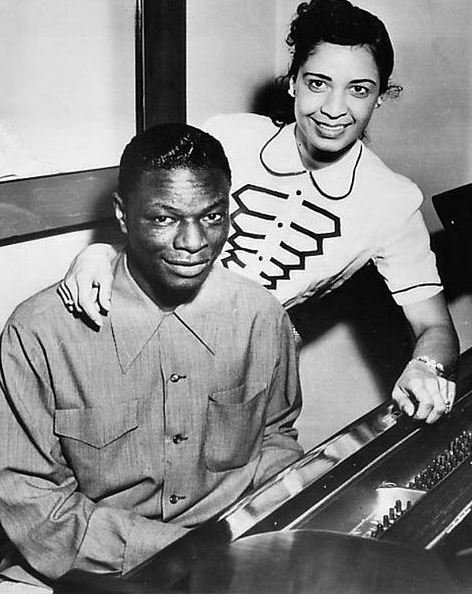
A 1951 photo of Cole and his wife, Maria.
While not a major activist, Nat King Cole supported civil rights financially, joined the NAACP, and participated in the 1963 March on Washington.
Although not a frontline activist, Cole supported the Civil Rights Movement in various ways. He participated in the 1963 March on Washington and regularly performed at civil rights fundraisers. His experiences with racism ultimately influenced his involvement in the fight for racial equality.
Later Years and Final Works
By the early 1960s, Cole continued to record successful albums, including Wild Is Love (1960) and Ramblin’ Rose (1962). His song “Those Lazy-Hazy-Crazy Days of Summer” (1963) became one of his last major hits. In December 1964, he recorded L-O-V-E, his final studio album, just weeks before being diagnosed with lung cancer.
On February 15, 1965, Cole passed away at the age of 45. His death marked the end of an era, but his legacy lived on through his music and influence.
Posthumous Recognition and Legacy
Cole’s contributions to music have been widely recognized. He received numerous posthumous honors, including the Grammy Lifetime Achievement Award (1990) and inductions into the Rock and Roll Hall of Fame (2000) and the National Rhythm & Blues Hall of Fame (2020). His daughter, Natalie Cole, paid tribute to him with her 1991 album Unforgettable… with Love, which featured a virtual duet of “Unforgettable.”
Nat King Cole’s music remains timeless, his voice forever etched in history as one of the most beloved and influential in American music.
Timeline
Here’s a concise timeline of Nat King Cole’s life and career:
- 1919 – Born Nathaniel Adams Coles in Montgomery, Alabama, on March 17.
- 1923 – Family moves to Chicago, where his father becomes a Baptist minister.
- 1930s – Learns piano from his mother and later receives formal training.
- 1936 – Records with his brother Eddie’s band, Eddie Cole’s Swingsters.
- 1937 – Marries Nadine Robinson and moves to Los Angeles.
- 1939 – Forms the King Cole Trio with Oscar Moore and Wesley Prince.
- 1940 – Gains recognition with the hit “Sweet Lorraine.”
- 1943 – Signs with Capitol Records, establishing a successful recording career.
- 1946 – Releases “The Christmas Song,” a future holiday classic.
- 1950s – Transitions to pop music; stars in The Nat King Cole Show (1956–57), the first network TV show hosted by a Black American.
- 1960s – Continues recording and supporting the Civil Rights Movement.
- 1964 – Diagnosed with lung cancer.
- 1965 – Dies on February 15 at age 45.
- 1990–2020 – Posthumous honors include the Grammy Lifetime Achievement Award and inductions into the Rock & Roll Hall of Fame and National Rhythm & Blues Hall of Fame.
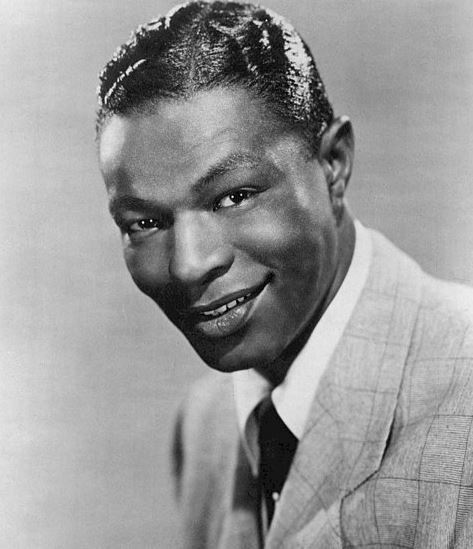
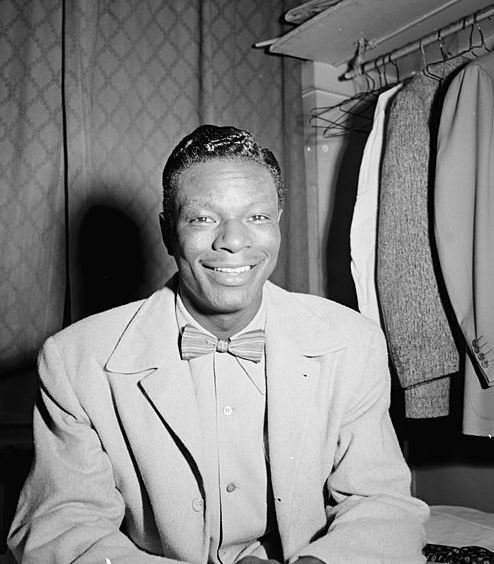
A 1959 photo of Nat King Cole.