Ptolemy V Epiphanes
Ptolemy V Epiphanes, whose full title is “Ptolemy the Manifest, the Beneficent,” was a king of Ptolemaic Egypt. He ruled from 204 BC until his death in 180 BC. He is remembered for his tumultuous reign, marked by both internal upheavals and external threats. His life, reign, and accomplishments are central to understanding the decline of the Ptolemaic Kingdom, as his rule marked a turning point in Egypt’s history during the Hellenistic period.

Ptolemy V Epiphanes Eucharistus was the ruler of Ptolemaic Egypt from 204 BC until his death in 180 BC. His name means “Ptolemy the Manifest, the Beneficent.” Image: Coinage of Ptolemy V. The obverse features the king adorned with a diadem, while the reverse depicts Zeus’ eagle with Heracles’ club positioned to the left.
Early Life and Ascension to the Throne
Ptolemy V was born on October 9, 210 BC, as the son of Ptolemy IV Philopator and Queen Arsinoe III. His early years were overshadowed by the instability of the Ptolemaic court.
At the age of five, Ptolemy V inherited the throne following the sudden deaths of both his parents under suspicious circumstances. His father, Ptolemy IV, and his mother, Arsinoe III, had been in power during a period of internal conflict and external military challenges. The sudden loss of both parents created a dangerous power vacuum at the heart of the kingdom.
Because Ptolemy V was so young when he became king, he did not initially wield any real power. Instead, the kingdom was ruled by regents and court officials. Agathocles, a powerful courtier, became regent and guardian of the young king. However, Agathocles was widely disliked for his greed and mismanagement.
In 202 BC, a revolution toppled Agathocles, and he was killed. Unfortunately for Egypt, the series of regents that followed proved equally incompetent, leaving the country vulnerable both internally and externally.
External Threats: The Fifth Syrian War
During the regency of Ptolemy V, the kingdom faced significant external threats. Most notably, the Seleucid Empire under Antiochus III and the Antigonid king Philip V of Macedon saw an opportunity to attack Egypt, which was weakened by internal struggles. These two rulers launched the Fifth Syrian War (202–196 BC), hoping to take advantage of the power vacuum in Egypt.
The conflict began with the Seleucid invasion of Coele-Syria, a region that had long been contested between the Ptolemies and the Seleucids. The Seleucid forces, led by Antiochus III, quickly overwhelmed the Egyptian defenses and succeeded in capturing much of Ptolemaic territory in the Levant and Asia Minor. The loss of these territories, as well as the kingdom’s declining influence in the Aegean Sea, was a serious blow to Egypt’s prestige and power.
The war culminated in the famous Battle of Raphia in 217 BC, which took place near modern-day Gaza. Although Ptolemaic forces won the battle under the command of Ptolemy IV (Ptolemy V’s father), the effects of the conflict were still felt during Ptolemy V’s reign. The kingdom lost much of its influence in the eastern Mediterranean, and its ability to project power beyond Egypt’s borders was greatly diminished.

Image: Golden coin of Ptolemy V
Internal Struggles: Revolts in Egypt
While Egypt struggled to maintain its territories abroad, it was also facing significant internal challenges. In 206 BC, shortly after Ptolemy V took the throne, a widespread revolt erupted in Egypt. The rebellion was led by two self-proclaimed pharaohs, Horwennefer and Ankhwennefer, who took advantage of the political instability in Alexandria to establish independent control over large parts of the country.
The revolt began in Upper Egypt, where the native population had long harbored resentment against the Greek Ptolemaic rulers. Horwennefer managed to seize control of much of Upper Egypt and declared himself pharaoh. He was succeeded by Ankhwennefer, who continued to challenge Ptolemaic rule for nearly two decades. This internal rebellion further weakened Egypt, as the kingdom lost control of many territories within its own borders.
Despite the significant challenges posed by the revolts, Ptolemy V eventually managed to reassert control over much of Egypt. By 186 BC, Ptolemaic forces had successfully reconquered Upper Egypt and brought the region back under central authority. This was one of the few domestic successes of Ptolemy V’s reign.
Coming of Age and the Rosetta Stone
Ptolemy V officially came of age in 196 BC, taking on full responsibilities as king at the age of 14. To mark the occasion, a grand ceremony was held in Memphis, where Ptolemy V was crowned pharaoh. This event is famously commemorated by the Rosetta Stone, one of the most important historical artifacts from ancient Egypt.
The Rosetta Stone, written in three languages (Greek, Demotic, and Hieroglyphic), is a decree issued by Egyptian priests to honor Ptolemy V on the occasion of his coronation. The text of the Rosetta Stone praises Ptolemy V for his piety and his efforts to restore peace and order in Egypt. However, the stone’s true significance lies in its role in the modern understanding of Egyptian hieroglyphs. In the 19th century, scholars used the Greek inscription on the Rosetta Stone to decipher the ancient hieroglyphic script, unlocking the secrets of ancient Egyptian writing for the first time.
Marriage to Cleopatra I and Diplomatic Relations
As part of his strategy to stabilize Egypt’s position, Ptolemy V sought to secure alliances through marriage. In 194/193 BC, Ptolemy married Cleopatra I, the daughter of Antiochus III, the Seleucid king. This marriage was intended to cement peace between the two kingdoms, which had been at war for years. Cleopatra I became an influential queen and was the mother of the future Ptolemy VI.
However, the marriage had wider geopolitical consequences. Rome, which had entered into hostilities with Antiochus III on behalf of Ptolemy V, was angered by the peace agreement between Egypt and the Seleucid Empire. After defeating Antiochus III, the Romans refused to return the former Ptolemaic territories in Asia Minor to Egypt, instead distributing them to their allies, Pergamum and Rhodes. As a result, Egypt’s territorial losses became permanent, and its influence in the eastern Mediterranean continued to decline.
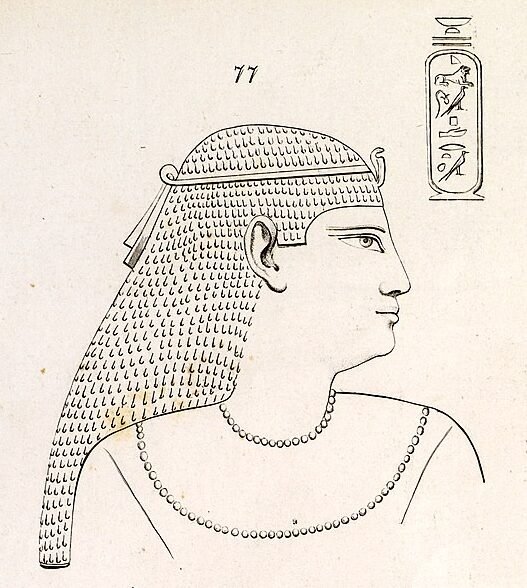
Image: An art work inspired by a relief portraying Cleopatra I.
Decline of Ptolemaic Power and Roman Relations
Despite the marriage alliance with the Seleucids, Egypt’s position in the Mediterranean world continued to weaken during Ptolemy V’s reign. The loss of territories in the Levant and Asia Minor marked a significant decline in Egypt’s influence, and the kingdom became increasingly isolated on the international stage.
Rome’s growing power in the region further marginalized Egypt. Although the Romans had initially supported Ptolemy V against Antiochus III, they soon began to see Egypt as a declining power. This decline would eventually lead to increased Roman intervention in Egyptian affairs in the centuries to come, culminating in the Roman conquest of Egypt in 30 BC.
Domestic Accomplishments and Religious Policy
While Ptolemy V’s reign was marked by external losses, he did make some notable domestic achievements. One of the key features of his reign was the increasing prominence of the Egyptian priestly elite in the political life of the kingdom. Ptolemy V worked to secure the loyalty of the powerful Egyptian priesthood by granting them significant privileges and ensuring their cooperation in the administration of the country.
This shift in power towards the priestly elite was part of a broader trend in the Ptolemaic period, as the Greek rulers of Egypt increasingly relied on the native Egyptian population to maintain control. The priests played a crucial role in supporting the monarchy and were often rewarded with lands and tax exemptions in exchange for their loyalty.
Ptolemy V also sought to promote his legitimacy as pharaoh by emphasizing his religious role. His coronation in Memphis was a key moment in this effort, as it linked him to the traditional religious practices of Egypt. The Rosetta Stone itself is evidence of his attempts to present himself as a pious and benevolent ruler who cared for the well-being of both his Egyptian and Greek subjects.
Final Years and Death
In the last years of his reign, Ptolemy V began planning for renewed military campaigns against the Seleucid Empire. He hoped to reclaim some of the territories that had been lost earlier in his reign. However, these plans were cut short by his sudden death in 180 BC. Ancient sources suggest that Ptolemy V was poisoned by his own courtiers, who were concerned about the financial and military burdens that another war would place on the kingdom.
Ptolemy V was succeeded by his young son, Ptolemy VI Philometor, who inherited a kingdom that was still weakened by internal divisions and external threats. Ptolemy VI would face many of the same challenges as his father, including further interventions by Rome and continued pressure from the Seleucids.
Legacy of Ptolemy V Epiphanes
Ptolemy V’s reign is often seen as the beginning of the decline of the Ptolemaic Kingdom. Although he managed to reconquer parts of Upper Egypt and maintain some degree of stability, his failure to reverse Egypt’s losses abroad and his inability to strengthen the kingdom’s internal structures contributed to its gradual weakening.
One of the most enduring legacies of Ptolemy V is the Rosetta Stone, which has become an iconic symbol of ancient Egypt. The stone’s importance in modern archaeology and linguistics cannot be overstated, as it provided the key to deciphering Egyptian hieroglyphs, allowing scholars to unlock the rich history of one of the world’s most fascinating ancient civilizations.
Ptolemy V’s reign also highlighted the growing influence of court officials and the Egyptian priestly elite in the political life of the Ptolemaic Kingdom. These groups played an increasingly central role in the administration of the state, a pattern that would continue in the later Ptolemaic period.
In conclusion, Ptolemy V Epiphanes was a king whose reign was defined by both external crises and internal challenges. His legacy is a complex one, as he presided over a period of decline for the Ptolemaic Kingdom while also achieving some notable successes in domestic governance. His untimely death left Egypt in a precarious position, and the challenges he faced would continue to haunt his successors.
Frequently Asked Questions

When did Ptolemy V inherit the throne, and at what age?
Ptolemy V inherited the throne in 204 BC at the age of five, following the suspicious deaths of his parents, Ptolemy IV and Arsinoe III.
What challenges did Ptolemy V face during his reign?
Ptolemy V faced political instability, as the kingdom was governed by incompetent regents following a revolution that ousted his original regent, Agathocles. He also faced external threats, including the Fifth Syrian War, and an internal revolt led by Horwennefer and Ankhwennefer.
What was the Fifth Syrian War, and what impact did it have on Egypt?
The Fifth Syrian War (202–196 BC) was a conflict between Ptolemaic Egypt and the Seleucid Empire. Ptolemy V lost all territories in Asia Minor, the Levant, and much of Egypt’s influence in the Aegean Sea.
How did internal revolts affect Ptolemy V’s reign?
A widespread revolt in Upper and Lower Egypt (206–185 BC) led by Horwennefer and Ankhwennefer significantly weakened the Ptolemaic kingdom, with much of Upper Egypt falling out of the central government’s control.
When did Ptolemy V officially come of age, and what significant event marked this?
Ptolemy V came of age in 196 BC and was crowned pharaoh in a grand ceremony in Memphis, an event commemorated by the creation of the famous Rosetta Stone.
Who did Ptolemy V marry, and why was this significant?
Ptolemy V married Cleopatra I, the daughter of Seleucid king Antiochus III, in 194/193 BC. This marriage helped stabilize relations with the Seleucid Empire but outraged Rome, as the Romans had intervened in the conflict between Ptolemy and Antiochus on Ptolemy’s behalf.
How did Rome react to Ptolemy V’s marriage to Cleopatra I?
Rome was frustrated by the peace agreement between Ptolemy V and Antiochus III. After defeating Antiochus III, the Romans redistributed former Ptolemaic territories in Asia Minor to Pergamum and Rhodes instead of returning them to Egypt.
Did Ptolemy V experience any domestic victories during his reign?
By 186 BC, Ptolemy V’s forces managed to reconquer Upper Egypt, which had been lost during the internal revolts, bringing much of the country back under his control.
What led to Ptolemy V’s death, and how did it impact Egypt?
Ptolemy V died under suspicious circumstances in 180 BC, possibly poisoned by courtiers who feared the financial burden of another war. His death marked the continuation of the kingdom’s decline.





