Semele, a figure in Greek mythology, is primarily known for her tragic love affair with Zeus (Jupiter in Roman mythology) and her role as the mother of Dionysus, the god of wine, fertility, and theater. Her story, while shorter than many other myths, is rich in themes of mortal ambition, divine interaction, and the perilous nature of human desire. This tale not only highlights the complexities of relationships between gods and mortals but also sets the stage for the birth of one of the most significant deities in the Greek pantheon.
The Characters
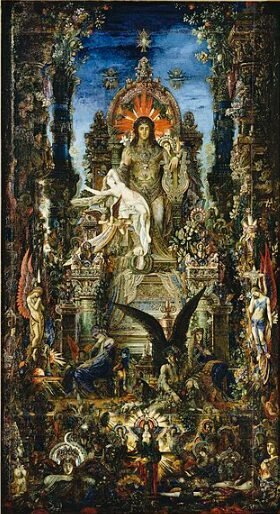
Jupiter and Semele (1894-95) by French artist Gustave Moreau
Semele: Semele was a mortal princess, the daughter of Cadmus, the founder and king of Thebes, and Harmonia, the daughter of Ares and Aphrodite. Her lineage itself is a blend of mortal and divine, which foreshadows her own interaction with the gods.
Zeus: The king of the gods, Zeus is known for his numerous love affairs with both goddesses and mortal women. His relationship with Semele is one of the most famous due to its tragic outcome and the birth of Dionysus.
Hera: The queen of the gods and wife of Zeus, Hera is notorious for her jealousy and vengeance against Zeus’s lovers and their offspring. Her role in Semele’s story is pivotal, as she orchestrates the events leading to Semele’s demise.
Dionysus: The god of wine, fertility, and theater, Dionysus is the son of Zeus and Semele. His birth is unusual and dramatic, involving both his mortal and divine heritage.
The Myth
Zeus and Semele: Semele caught the eye of Zeus, who fell deeply in love with her. He visited her in secret, disguising his true identity, as he often did with mortal women. Their love affair blossomed, and Semele became pregnant with Zeus’s child.
Hera’s Jealousy: Hera, always vigilant and aware of Zeus’s infidelities, soon discovered his affair with Semele. Consumed with jealousy, she devised a plan to bring about Semele’s downfall. Hera disguised herself as an old woman, Beroe, Semele’s trusted nurse, and approached Semele to sow seeds of doubt about the true nature of her lover.
The Fatal Request: Under Hera’s influence, Semele began to question whether her lover was indeed the mighty Zeus. Hera, in her disguise, suggested that Semele ask Zeus to reveal himself in his full divine glory as proof of his identity. Intrigued and manipulated, Semele decided to make this dangerous request.
Zeus’s Reluctant Compliance: When Semele asked Zeus to show himself in his true form, he was initially reluctant. He had promised to grant her any wish, but he knew that revealing his divine form to a mortal would be catastrophic. However, bound by his promise, he eventually agreed.
The Tragic End: Zeus revealed himself in all his divine splendor, surrounded by thunder and lightning. The sight was too overwhelming for Semele, a mere mortal, and she was instantly incinerated by the divine fire. However, Zeus managed to save their unborn child by sewing the fetus into his own thigh, where it continued to gestate until its birth.
Birth of Dionysus: In due course, Dionysus was born from Zeus’s thigh, making him a god with a unique birth. This unusual birth symbolized his dual heritage, being both mortal and divine. Dionysus was later taken to be raised by nymphs and hidden from Hera’s wrath.
Themes and Symbolism
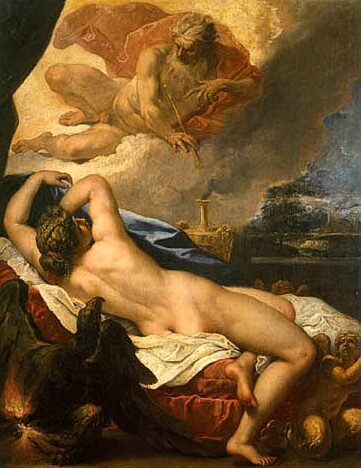
Jove and Semele (1695) by Italian painter Sebastiano Ricci. Galleria degli Uffizi. Florence
Mortal Desire and Divine Consequences: The story of Semele underscores the dangers of mortal ambition and desire when it involves the divine. Semele’s desire to see Zeus in his true form represents a yearning to transcend mortal limitations and experience the divine directly. This desire, however, leads to her destruction, highlighting the insurmountable gap between gods and mortals.
Jealousy and Vengeance: Hera’s jealousy and subsequent actions are central to the narrative. Her manipulation of Semele showcases the destructive power of jealousy and the lengths to which the gods would go to protect their status and relationships. Hera’s vengeance against Semele reflects her ongoing struggle with Zeus’s infidelity and her relentless efforts to punish those involved.
The Duality of Dionysus: Dionysus’s birth from both a mortal woman and a god signifies the blending of mortal and divine elements. This duality is reflected in his later role as a god who bridges the gap between the human and divine realms, bringing ecstasy, madness, and a release from the ordinary constraints of life through his association with wine and theater.
Transformation and Rebirth: The myth also embodies themes of transformation and rebirth. Semele’s tragic end and the miraculous birth of Dionysus illustrate the cyclical nature of life, death, and rebirth. Dionysus’s own mythology is filled with motifs of death and resurrection, mirroring the agricultural cycles and the regenerative power of nature.

The myth of Semele in Greek mythology is a poignant and multifaceted tale that delves into themes of mortal ambition, divine interaction, and the tragic consequences of human desire. Semele’s story, though tragic, sets the stage for the birth of Dionysus, a god who embodies transformation, ecstasy, and the blending of mortal and divine elements. Image: Dionysus extending a drinking cup (kantharos) (late 6th century BC)
Psychological Interpretations
From a psychological perspective, the story of Semele can be seen as an exploration of human desires and the inherent dangers of seeking to transcend one’s limitations. The myth reflects the inner conflicts and consequences that arise from unchecked ambition and the pursuit of the unattainable.
The Fatal Flaw: Semele’s fatal flaw is her desire to fully experience the divine, driven by curiosity and doubt. This mirrors the human tendency to seek knowledge and experiences beyond one’s capacity, often leading to perilous outcomes. In this sense, Semele’s story is a cautionary tale about the limits of human aspiration.
Divine Love and Human Frailty: The relationship between Zeus and Semele highlights the tension between divine love and human frailty. While Zeus’s love is genuine, it is ultimately incompatible with Semele’s mortal nature. This dichotomy reflects the broader theme of the unbridgeable gap between the divine and human realms.
The Role of Hera: Hera’s manipulation of Semele can be interpreted as an embodiment of the destructive forces of envy and revenge. Her actions underscore the psychological impact of jealousy and the lengths to which individuals will go to protect their perceived power and status.
Cultural Impact
The myth of Semele has had a lasting impact on Western culture, inspiring various works of art, literature, and music. Its themes of divine interaction, mortal ambition, and the tragic consequences of desire continue to resonate in different contexts.
Art: Artists have long been fascinated by the dramatic elements of Semele’s story. Paintings and sculptures often depict the moment of her immolation or the birth of Dionysus, capturing the intense emotions and divine power at play.
Literature: The narrative has been retold and reinterpreted in various literary works. It serves as a rich source of inspiration for exploring themes of love, power, and the human condition. In modern literature, the story is often used to delve into psychological and existential questions.
Music and Opera: Semele’s myth has also found expression in music and opera. One of the most notable adaptations is George Frideric Handel’s opera “Semele,” which dramatizes the story with powerful arias and orchestral arrangements. The opera highlights the emotional and dramatic intensity of Semele’s plight and the divine forces at work.
Psychological Analysis: In psychology, particularly within the framework of Jungian analysis, the myth of Semele is used to explore the archetypes of the mother, the anima (feminine aspect within the male psyche), and the transformative journey of the individual. The story’s themes of desire, transformation, and the interaction between mortal and divine elements provide a rich tapestry for psychological exploration.
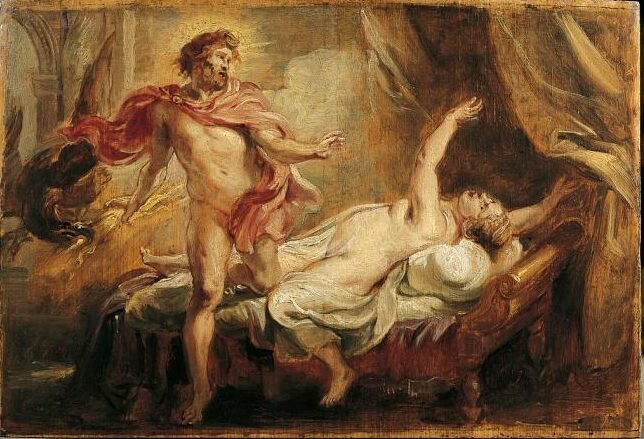
Through Semele’s narrative, we gain insights into the complex relationships between gods and mortals, the destructive power of jealousy, and the perils of seeking to transcend human limitations. The psychological dimensions of the myth offer a rich exploration of human desires and the inherent dangers of pursuing the unattainable. Image: Rubens. Jupiter and Semele (Ovid, Metamorphoses, III, 259-309). Royal Museums of Fine Arts of Belgium





