Elizabeth of Russia
Elizabeth Petrovna, born on December 29, 1709 (O.S. December 18), ascended as Empress of Russia in 1741, reigning until her death in 1762. Her rule is often celebrated as a...
Below, World History Edu presents some frequently asked questions about Catherine the Great, the Russian empress who reigned from 1762 – 1796:
Catherine the Great was the Empress of Russia from 1762 to 1796, making her the country’s longest-ruling female leader. She was known for her role in modernizing and expanding the Russian Empire during the 18th century.
She was born in Stettin, Prussia (now Szczecin, Poland) in 1729.
No, she was born as Sophia Augusta Fredericka and was of German descent. She adopted the name Catherine upon her conversion to Russian Orthodoxy.
She ascended to the throne following a coup that deposed her husband, Peter III. She was proclaimed Empress soon after, while Peter III was killed under mysterious circumstances.
Catherine saw herself as an enlightened despot and was a patron of the arts and education. She corresponded with several Enlightenment thinkers, although her actual policies sometimes contradicted Enlightenment ideals.
Catherine expanded the Russian Empire through wars and diplomacy, overhauled the legal code, patronized the arts and literature, and attempted to modernize various aspects of Russian society and government.
The most notable revolt during her reign was Pugachev’s Rebellion. Although it was a significant challenge, she eventually crushed the rebellion.
Yes, she had several children. Her son, Paul I, succeeded her as the Emperor of Russia.
Catherine died in 1796 at the age of 67. The exact cause of her death is unknown, though it’s generally believed she died of a stroke.
Catherine the Great is remembered as one of Russia’s most influential rulers. Her reign, often termed the “Golden Age of the Russian Empire,” left a lasting impact on Russian culture, territorial boundaries, and international stature.
Yes, throughout her life, Catherine had several relationships and took multiple lovers, some of whom played significant roles in the politics of the time.
A persistent myth suggests Catherine died while attempting to engage in a sexual act with a horse. This is false and likely stems from attempts to tarnish her reputation after her death.

Elizabeth Petrovna, born on December 29, 1709 (O.S. December 18), ascended as Empress of Russia in 1741, reigning until her death in 1762. Her rule is often celebrated as a...

Ivan VI Antonovich of Russia, born on August 23, 1740, in Saint Petersburg, experienced one of the most tragic and peculiar fates in European royal history. Proclaimed Emperor of Russia...

The Winter Palace in Saint Petersburg stands as one of Russia’s most iconic structures, both for its architectural grandeur and its role in shaping Russian and world history. Initially the...

The last words of history’s greatest leaders offer glimpses into their final moments and provide insights into their thoughts, beliefs, and legacies. From profound reflections to poignant farewells, these parting...

In the ideal world, wedding night is seen as the best night possible for the newly married couple. Unfortunately, this is not often the case, especially for royal couples. There...
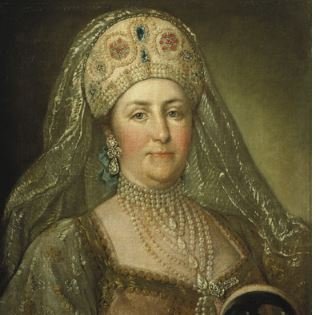
The following are 5 major accomplishments by Catherine the Great, Empress of Russia: Reformed the Legal System of Russia Upon becoming empress of Russia, Catherine’s goal was to bring back...

Here are 15 very interesting facts about Catherine the Great, the longest-reigning empress of Russia: Growing up, Catherine had a military chaplain as her teacher. It is also known that...

Catherine the Great, also known as Catherine II, was an 18th-century Prussian-born princess that went on to become empress of Russia from 1762 to 1796. She took the throne after leading...





