Christmas Songs: History and Origin Story
How bland and grey would our Christmases have been, had there not been Christmas carols or songs? In most places of the world today, the playing of Christmas carols on...
The Christmas tree, a globally recognized symbol of the holiday season, has a rich history that spans millennia, intertwining pagan rituals, religious significance, and modern commercialism.
Long before the advent of Christianity, ancient civilizations, such as the Egyptians, Romans, and Celts, held celebrations during the winter solstice. They used evergreen boughs to adorn their homes, symbolizing eternal life amidst the darkest days of winter. The Romans, during their Saturnalia festival, used fir trees decorated with bits of metal during their winter solstice celebrations as a symbol of the continued growth of crops.
By the Middle Ages, the use of evergreens was closely associated with Christianity. The “Paradise Tree,” an evergreen, was used in medieval German plays representing the Garden of Eden. Apples were hung on it, symbolizing the forbidden fruit.
By the 16th century, devout Christians in Germany had adopted the practice of bringing these trees into their homes to decorate, a tradition often attributed to Martin Luther, the Protestant reformer. Though not verified, a popular story suggests Luther was inspired by the stars shining through the evergreen trees and replicated the scene for his family by placing candles on a tree.
The Christmas tree tradition was introduced to Britain in the late 18th century by King George III’s German wife, Queen Charlotte.
However, it gained widespread popularity during the Victorian era, largely credited to Prince Albert, Queen Victoria’s German consort. An 1848 engraving of the royal family surrounding a decorated tree at Windsor Castle cemented its popularity among the British populace.
In the U.S., the Christmas tree had mixed receptions initially due to the country’s Puritanical roots which saw such celebrations as pagan. However, by the 19th century, the influx of German and Irish immigrants popularized the tradition. The 1820s saw the first retail Christmas tree lots, and by the 1890s, Christmas ornaments were arriving from Germany, making tree decorating more elaborate.
Early Christmas trees were adorned with edible treats like apples, nuts, and dates. By the 18th century, candles were used, representing Christ as the light of the world. The late 19th and 20th centuries saw an explosion in commercial ornaments, ranging from glass beads to intricate baubles. The invention of electricity transformed tree lighting, with the first electrically lit Christmas tree making its debut in 1882, thanks to Edward H. Johnson, a colleague of Thomas Edison.
While the Christmas tree has Christian connotations, representing eternal life through Christ, its modern appeal transcends religious boundaries. It has become a universal symbol of festive celebration during the holiday season. Today’s trees, whether real or artificial, are adorned with a plethora of decorations, reflecting personal tastes, cultural heritage, and even themes.
The debate between real vs. artificial trees concerning environmental impact remains ongoing. While real trees are biodegradable and often sourced from sustainable farms, artificial trees can be reused for years, reducing annual waste. Trends also lean towards eco-friendly decorations and LED lights to minimize the carbon footprint.
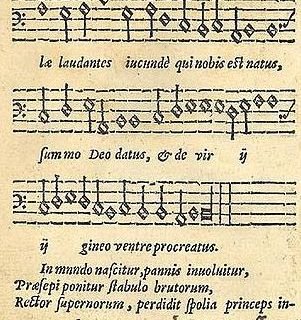
How bland and grey would our Christmases have been, had there not been Christmas carols or songs? In most places of the world today, the playing of Christmas carols on...





