The history of South Korea is a narrative of resilience, transformation, and rapid modernization. This timeline focuses on the major events that have shaped South Korea from its initial establishment in the aftermath of World War II to the thriving nation it is today.
1945:
- August: World War II concludes with the surrender of Japan, ending 35 years of Japanese colonial rule over Korea.
- September: Korea is divided along the 38th parallel. The Soviet Union occupies the North, while the U.S. occupies the South.
1948:
- August 15: The Republic of Korea (South Korea) is officially established with Syngman Rhee as its first president. Three weeks later, the Democratic People’s Republic of Korea (North Korea) is proclaimed in the North.
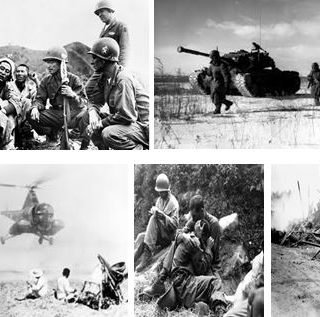
1950-1953: The Korean War:
- June 25, 1950: North Korean troops cross the 38th parallel, initiating the Korean War.
- September 15: UN forces, led by the U.S., make a successful landing at Incheon.
- July 27, 1953: An armistice is signed, but a peace treaty is never formalized, leaving the two Koreas technically still at war.
1960s:
- 1960: The April Revolution forces President Syngman Rhee to resign due to accusations of election tampering and corruption.
- 1961: General Park Chung-hee stages a military coup and establishes a military junta.
- 1963: Park is elected as the president after transitioning the nation back to civilian rule.
- 1965: Diplomatic ties are established with Japan, sparking protests given the bitter memories of Japanese colonization.
1970s:
- 1972: Park institutes the Yushin Constitution, which increases his power and allows him indefinite rule.
- 1979: Park is assassinated by Kim Jae-gyu, the director of the Korean Central Intelligence Agency.
1980s:
- 1980: The Gwangju Uprising occurs as a protest against martial law. The uprising is brutally suppressed, resulting in numerous deaths.
- 1981: Chun Doo-hwan, after staging another coup, becomes the president.
- 1987: Amid mounting pressure for democratization, the June Democracy Movement forces the government to agree to constitutional reforms and hold direct elections. Roh Tae-woo, a former general, is elected president.
1990s:
- 1992: Kim Young-sam becomes the first civilian president in over three decades.
- 1997: The Asian Financial Crisis severely impacts South Korea’s economy, resulting in a $58 billion bailout from the International Monetary Fund.
- 1998: Kim Dae-jung is elected president, introducing the “Sunshine Policy” to foster better relations with North Korea.
2000s:
- 2000: The first Inter-Korean summit takes place between Kim Dae-jung and North Korean leader Kim Jong-il.
- 2002: South Korea and Japan co-host the FIFA World Cup, bringing unprecedented global attention to the region.
- 2007: The second Inter-Korean summit is held between President Roh Moo-hyun and Kim Jong-il.
- 2008: Conservative Lee Myung-bak becomes the president, adopting a tougher stance on North Korea.
2010s:
- 2014: The Sewol ferry tragedy occurs, leading to the deaths of over 300 passengers, most of them school students. The incident sparks nationwide grief and anger.
- 2016: Massive protests break out against President Park Geun-hye over allegations of corruption.
- 2017: Park Geun-hye is impeached and removed from office. Moon Jae-in is elected president, promising reform and a return to engaging with North Korea.
- 2018: Two Inter-Korean summits take place, resulting in the Panmunjom Declaration, which commits to peace and denuclearization on the Korean Peninsula.
2020s:
- 2020: South Korea faces the global COVID-19 pandemic but is commended for its effective handling and rapid response through testing, tracing, and treatment.
Conclusion
From the ashes of war and division, South Korea has risen to be an economic powerhouse and a beacon of democracy in East Asia. Through trials and tribulations, it has navigated the complexities of geopolitics, especially with its northern neighbor, while simultaneously achieving significant technological and cultural prominence on the global stage.
Through this timeline, it becomes evident that South Korea’s journey is one of perseverance, adaptation, and forward momentum. The country has faced military coups, democratization movements, economic crises, and geopolitical challenges. Yet, with each challenge, South Korea has adapted and continued its trajectory towards growth and global integration.
Today, South Korea stands as a testament to what can be achieved when a nation commits to innovation, education, and the well-being of its people. From leading industries in technology, automotive, and entertainment to fostering diplomatic ties around the world, South Korea continues to play an essential role in shaping the future of the Asia-Pacific region and beyond.