Fólkvangr in Norse Mythology
Fólkvangr is a field ruled by the goddess Freyja, where half of those who die in battle go after death, while the other half go to Odin’s Valhalla. Summary Fólkvangr,...

Fólkvangr is a field ruled by the goddess Freyja, where half of those who die in battle go after death, while the other half go to Odin’s Valhalla. Summary Fólkvangr,...

A psychopomp is a mythical being, creature, spirit, or deity in many religions whose responsibility is to escort newly deceased souls to the afterlife. Their role is not to judge...
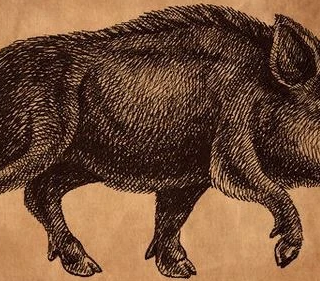
In Norse mythology, it was believed that Valhalla, the grand and magnificent hall located in Asgard (i.e. the realm of the Aesir gods), was where fallen warriors feast and dined....
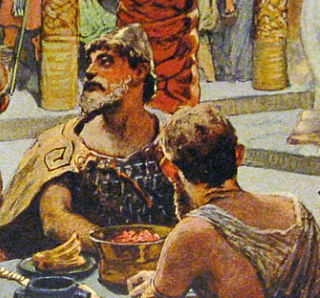
Andhrímnir is a figure from Norse mythology who is known as the chef or cook of the gods. In Norse mythology, the gods had a grand hall called “Valhalla,” where...

In chapter 20 of the Prose Edda, a collection of Old Norse myths and legends written by 13th-century Icelandic poet Snorri Sturluson, the character Third explains to Gangleri (who is...

In chapter 38 of the Prose Edda poem Gylfaginning, a character called High states that regardless of the numbers of einherjar that come to Valhalla, Odin (i.e. the chief of...

In Norse mythology, the Einherjar (Old Norse: einherjar, singular: einherji) are a special group of fallen warriors who reside in Valhalla, the great hall of the chief Norse god Odin....
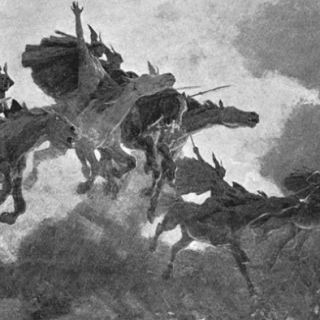
The Valkyries are powerful and awe-inspiring figures in Norse mythology. They are often portrayed as fierce and beautiful warrior women, flying above the battlefield on winged horses. When a great...

The Valkyries, mythical figures in Norse mythology, are renowned for their role as warrior maidens and choosers of the slain. These female beings serve Odin, the chief god, by selecting...

Norse mythology is full of stories describing spectacular structures and regions throughout the Nine Realms. Of all those regions, none compares to the sheer elegance and greatness of Valhalla –...





