The Battle of Kadesh was fought around 1274 BCE. The battle was a monumental conflict between the Egyptian Empire, led by Pharaoh Ramses II (also known as Ramesses the Great), and the Hittite Empire, under King Muwatalli II.
This battle occurred near the city of Kadesh, located in modern-day Syria, along the Orontes River. It is considered one of the earliest and most well-documented battles in ancient history, primarily due to the extensive accounts inscribed by Ramses II, which include the famous Poem of Pentaur.
These inscriptions provide insights into the battle and reflect the Egyptian king’s desire to be remembered as a heroic figure.

Location of the Battle of Kadesh in the 13th century BC
The Political Landscape Leading to the Battle
During the 13th century BCE, both the Egyptian and Hittite empires were vying for control over territories in the Near East. The region, particularly Syria, was of strategic importance due to its resources and critical position on trade routes.

The colossal statues of Ramesses II at temple Abu Simbel
The city of Kadesh had changed hands multiple times and was previously under Egyptian control before being taken by the Hittites. The rivalry between the two powers escalated, and Ramses II sought to reclaim the city and assert Egyptian dominance in the region.

Orontes River in Hama, Syria
Ramses II, early in his reign, launched several military campaigns aimed at expanding Egypt’s influence. One of his primary goals was to restore Egypt’s control over Kadesh, a city that had not only symbolic importance but also strategic significance for controlling the trade routes between Egypt, Mesopotamia, and Anatolia. King Muwatalli II of the Hittites, aware of Ramses’ ambitions, prepared his forces to defend the city and confront the Egyptian army.

New Kingdom – Egyptian and Hittite Empires, around the time of the Battle of Kadesh
The Prelude to the Battle
Ramses II, determined to take Kadesh, amassed a vast army. His forces were divided into four divisions, each named after one of the major Egyptian gods: Amun, Ra, Ptah, and Seth. Confident in his military strength and eager to achieve a swift victory, Ramses led his army northwards towards Kadesh.
The Egyptian army’s movement was marked by overconfidence, as they were misled by false intelligence provided by two captured Hittite spies. These spies claimed that the Hittite forces were far from Kadesh when, in fact, King Muwatalli had positioned his army in hiding, waiting for the opportune moment to strike.
This misinformation led Ramses to believe that the Hittites were not prepared for battle. He marched ahead with the Amun division, while the other three divisions lagged behind, still en route to the battlefield. This overconfidence and lack of coordination would prove costly, leaving Ramses isolated and vulnerable.
The Battle of Kadesh

The original relief depicting the Battle of Kadesh – from the Ramesseum
The Battle of Kadesh can be broken down into several critical phases:
Initial Egyptian Movement
As Ramses led the Amun division toward Kadesh, his army was spread thin, with the other divisions trailing far behind. Ramses’ decision to push forward before ensuring his army was fully united placed him in a precarious position. The Egyptian forces were still scattered when they arrived near Kadesh, and the Ra division, the second group of troops, was still far behind.
Hittite Ambush
King Muwatalli, hidden with his forces behind Kadesh, saw an opportunity to strike. The Hittites launched a surprise attack with their chariots, focusing on the unprepared Ra division. The Hittite chariotry, which was faster and more agile than the Egyptian counterparts, overwhelmed the Ra division, causing chaos and scattering the Egyptian troops.
Ramses’ Counterattack
According to Egyptian records, particularly the Poem of Pentaur, Ramses II, upon realizing the Hittite ambush, displayed extraordinary leadership and courage. He is said to have single-handedly rallied his troops and mounted a counterattack. Despite being heavily outnumbered and isolated from the rest of his army, Ramses fought valiantly, personally leading the charge against the Hittite forces.
According to Egyptian records, particularly the Poem of Pentaur, Ramses II, upon realizing the Hittite ambush, displayed extraordinary leadership and courage.
The Poem of Pentaur emphasizes Ramses’ divine favor in this moment. It portrays him as a near-godlike figure, invoking the help of the god Amun, who is said to have answered his prayers and aided him in battle. Ramses’ counterattack, aided by reinforcements from the Ptah division, managed to hold off the Hittites, preventing total defeat.

Amun was a major ancient Egyptian deity, part of the Hermopolitan Ogdoad, first attested in the Old Kingdom alongside his wife, Amunet. Image: Depiction of Amun in New Kingdom.
Stalemate and Aftermath
Despite Ramses’ valor, the battle ended in a stalemate. Both sides suffered significant losses, and neither Egypt nor the Hittites emerged with a clear victory. Ramses, realizing he could not capture Kadesh, withdrew his forces, and the city remained under Hittite control.
Although Ramses did not achieve a decisive victory at Kadesh, the battle was later immortalized in Egyptian history as a heroic achievement for the pharaoh, largely due to the Poem of Pentaur and other inscriptions commissioned by Ramses.
The Poem of Pentaur
The Poem of Pentaur is a detailed account of the Battle of Kadesh, composed by scribes in Ramses II’s court. The poem, named after the scribe Pentaur (or Pentaure), who is believed to have written the text, was inscribed on temple walls and monuments across Egypt. Some of the most notable locations where the poem appears include the temples at Karnak, Luxor, and Abu Simbel.
Content and Themes of the Poem

A relief of Ramses II from Memphis showing him capturing enemies – a Nubian, a Libyan and a Syrian, circa 1250 BC. Cairo Museum
The Poem of Pentaur glorifies Ramses II’s actions during the Battle of Kadesh, portraying him as a fearless leader who, despite overwhelming odds, fought valiantly and achieved a personal victory. The poem is an excellent example of how ancient rulers used propaganda to shape their legacy and maintain their power.
Key themes of the Poem of Pentaur include:
- Heroism and Leadership: The poem emphasizes Ramses’ role as a heroic figure, personally leading his troops into battle and fighting on the front lines. Despite the chaos and danger, Ramses is depicted as remaining calm and decisive, rallying his troops and turning the tide of battle through sheer willpower and leadership.
- Divine Favor: A central theme in the poem is Ramses’ relationship with the gods, particularly Amun. In the poem, Ramses is described as invoking Amun’s aid during the battle, and the god responds by granting him strength and courage. The divine intervention narrative reinforces Ramses’ status as a ruler chosen by the gods, with his victory seen as not just a military achievement but a divinely ordained outcome.
- Exaggeration and Propaganda: Modern historians recognize that the Poem of Pentaur exaggerates Ramses’ role in the battle. The Egyptian account does not provide a balanced view of the battle, omitting details such as the heavy losses suffered by the Egyptians and the fact that Ramses failed to capture Kadesh. Instead, the poem serves as propaganda, aimed at glorifying Ramses and securing his legacy as one of Egypt’s greatest pharaohs.
The Poem of Pentaur presents a one-sided narrative designed to reinforce the pharaoh’s authority and elevate his status as a great military leader.
The Poem of Pentaur was a crucial part of Ramses’ strategy to control the narrative surrounding the Battle of Kadesh. By inscribing his version of events on temple walls and monuments throughout Egypt, Ramses ensured that future generations would remember him as a heroic figure, even though the battle itself did not result in a clear Egyptian victory.

The Younger Memnon (c. 1250 BC), a statue of Ramesses II from the Ramesseum, British Museum.
The Historical Impact of the Battle
Despite the lack of a decisive outcome, the Battle of Kadesh had significant long-term consequences for both the Egyptian and Hittite empires.
The First Known Peace Treaty

The Hittite version of Peace Treaty (above, at the Istanbul Archaeology Museums) and Egyptian (below, at the Precinct of Amun-Re in Karnak)
In the years following the Battle of Kadesh, tensions between Egypt and the Hittites continued. However, neither side had the resources or will to continue fighting indefinitely. Around 16 years after the battle, Ramses II and Hattusili III, the new Hittite king (Muwatalli’s successor), signed what is widely considered the world’s first known peace treaty, often referred to as the Eternal Treaty.

Hattušiliš III was a renowned as one of the prominent rulers of the Hittite Empire, lived during the 13th century BC. Image: Rock relief of Hattusili III, the king of the Hittite Empire
This treaty marked the beginning of a period of peaceful coexistence between the two empires. The treaty was inscribed in both Egyptian hieroglyphs and Hittite cuneiform and established terms of mutual defense and cooperation. It is a remarkable document in world history, demonstrating early examples of diplomatic negotiation and conflict resolution.
Chariot Warfare and Military Tactics

One of the carvings showing Egyptian pharaoh Ramesses II at the Battle of Kadesh.
The Battle of Kadesh is a prime example of chariot warfare, which was a dominant military technology in the ancient Near East. Both the Egyptians and Hittites deployed large numbers of chariots, highlighting the importance of mobility and speed in ancient battles. The Hittite chariots were particularly effective due to their lighter design, which allowed for faster and more agile maneuvers.
The battle also underscores the importance of intelligence and logistics in warfare. Ramses’ reliance on false intelligence from the captured Hittite spies nearly led to disaster for the Egyptian army. The Hittite strategy of ambush and deception was a significant factor in the early success of their forces during the battle.
Propaganda and Historical Record
The detailed accounts of the Battle of Kadesh, particularly the Poem of Pentaur, offer valuable insights into how ancient rulers used propaganda to shape their public image. Ramses II’s inscriptions were not just records of events but were carefully crafted to present him as a victorious and divinely favored king.
These inscriptions have also played a key role in the study of ancient Egypt and its military history. The extensive documentation of the battle, including both the Poem of Pentaur and other reliefs and inscriptions, provides historians with a rare glimpse into the military tactics, leadership strategies, and political dynamics of the time.
Legacy of Ramses II and the Battle of Kadesh
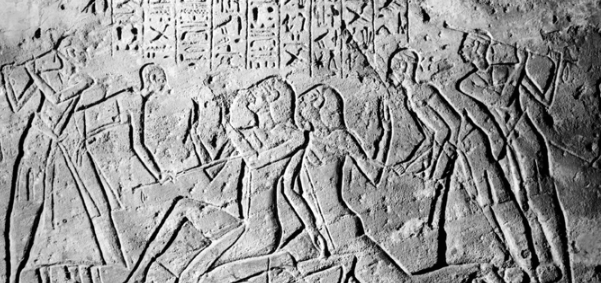
The Kadesh inscriptions
Ramses II, often regarded as one of Egypt’s greatest pharaohs, ruled for 66 years and left a lasting legacy in both military and cultural achievements. The Battle of Kadesh, although not a clear military victory, became a defining moment in his reign. The Egyptian account of the battle, immortalized in the Poem of Pentaur, ensured that Ramses would be remembered as a heroic and capable leader, even if the reality of the battle was more complex.
In the centuries following Ramses’ reign, the Battle of Kadesh continued to be remembered as a significant event in the history of Egypt and the ancient Near East. It stands as a testament to the importance of military power, diplomacy, and propaganda in shaping the legacy of ancient rulers.
Which empires and kingdoms did Ancient Egypt have conflict with?
Did you know…?
Early scholars, notably American archaeologist James Henry Breasted, accepted Ramesses II’s account of the Battle of Kadesh as fact. In 1903, Breasted interpreted the Poem of Pentaur as a literal and historical truth, reinforcing the idea of an Egyptian victory. However, the discovery of the Hittite version of the battle later challenged this interpretation, suggesting a more complex and contested outcome.
Conclusion
The Battle of Kadesh and the Poem of Pentaur represent one of the most significant episodes in ancient military history. The battle itself, fought between two of the ancient world’s greatest powers, ended in a stalemate but had far-reaching consequences. The eventual peace treaty between Egypt and the Hittites marked the beginning of a new era of diplomacy, while Ramses II’s inscriptions ensured that his version of events would be remembered for millennia.
The Poem of Pentaur, in particular, highlights the power of propaganda in shaping historical narratives. By presenting Ramses as a heroic figure blessed by the gods, the poem reinforced his status as a great ruler and cemented his place in Egyptian history. Despite the exaggerations in the Egyptian account, the Battle of Kadesh remains a pivotal moment in the history of the ancient Near East.
Frequently Asked Question about the Battle of Kadesh

Image: An illustration depicting Ramses II during the Battle of Kadesh.
What is the Poem of Pentaur, and what does it commemorate?
The Poem of Pentaur is an official Egyptian record celebrating the military campaign of Ramesses II against the Hittite King Muwatalli II at the Battle of Kadesh in 1274 BCE. It highlights Ramesses II’s courage and his personal valor in the battle. Along with another record known as the Bulletin, the poem was inscribed on the walls of important temples across Egypt, including those at Abydos, Luxor, Karnak, Abu Simbel, and the Ramesseum.

During the 11th Dynasty (c. 21st century BC), Amun became the patron deity of Thebes, replacing Montu. Image: Depiction of the Egyptian god Amun in a relief at Karnak (15th century BC)
How does the Egyptian version of the Battle of Kadesh differ from the Hittite account?
The Egyptian version, as described in the Poem of Pentaur, portrays Ramesses II as victorious, emphasizing his bravery and divine favor.
On the other hand, the Hittite version of the battle, discovered later through tablets from their capital, Hattusa, claims victory for King Muwatalli II. This difference has led historians to debate the outcome, with many modern scholars concluding that the battle likely ended in a draw.

Younger Memnon, digitally placed atop its base still in Ramesseum
Colossal Statue of Ramses II in the first peristyle court at Luxor
Why do some historians believe the Hittites had the upper hand after the battle?
One reason historians support the Hittite claim to victory is that the Hittites continued to occupy Kadesh after the battle, disrupting Egyptian trade routes. Despite Ramesses II’s efforts, he was unable to capture the city or expel the Hittites, indicating that his primary objective was not achieved. This persistence supports the idea that the Egyptians failed to secure a full victory.
What factors support the Egyptian claim of a partial victory at Kadesh?
The fact that Ramesses II managed to survive the battle, rally his forces, and return to Egypt with his army largely intact lends credibility to the Egyptian claim of a partial victory. Both sides suffered heavy casualties, but Ramesses’ ability to regroup and avoid a complete defeat supports his narrative of heroism.

The Battle of Kadesh was a stalemate and far from a splendid victory like the way Ramses II portrayed it. Image: Depiction of Ramesses II fighting against his enemies, from a rock-cut relief at Abu Simbel
What was the significance of the world’s first known peace treaty, and who were its signatories?
The world’s first known peace treaty was signed in 1258 BCE between Ramesses II of Egypt and Hattusili III, the Hittite king who succeeded Muwatalli II. This treaty was important because it marked the end of the conflict and established diplomatic relations between the two empires. It allowed for trade, communication, and cooperation, which benefited both sides more than continued warfare.

What were some of the key terms of the peace treaty between Egypt and the Hittites?
The treaty included provisions for respecting each other’s borders and refraining from further hostilities. It also facilitated economic and cultural exchanges; for instance, the Hittites shared their expertise in ironwork, while the Egyptians shared their agricultural knowledge. Another important stipulation was the return of royal fugitives who sought refuge after failed coups or rebellions, reducing the threat of internal instability in both kingdoms.

Egyptian–Hittite peace treaty
How does the Poem of Pentaur portray the Hittites and Muwatalli II?
In the Poem of Pentaur, the Hittites are depicted as the enemies of Egypt, and Muwatalli II is referred to as “the wretched one.” The poem focuses on Ramesses II’s heroism, courage, and ability to overcome overwhelming odds with the help of the gods, particularly Amun. It glorifies Ramesses as the ideal warrior-king, while the Hittites are shown in a negative light.
What role did divine intervention play in the Poem of Pentaur?
The Poem of Pentaur emphasizes divine intervention in Ramesses II’s success. The Egyptian gods, especially Amun, are depicted as aiding Ramesses during the battle. This divine favor underscores Ramesses’ status as a leader chosen by the gods, enhancing his image as an unbeatable and favored king.
How do modern historians view the outcome of the Battle of Kadesh?
Modern historians generally agree that the Battle of Kadesh ended in a stalemate, with neither Egypt nor the Hittites emerging as clear victors. While both sides claimed victory, the overall outcome was inconclusive, leading to the eventual signing of the peace treaty that marked a key diplomatic achievement between the two powers.

Ihsan Sabri Caglayangil, the Minister for Foreign Affairs of Turkey, presented a replica of the Treaty of Kadesh to the Secretary-General, U Thant, in 1970. The replica was placed on a wall on the second floor of the Conference building, in the delegates’ corridor outside the north entrance to the Security Council Chamber.





