The Statute of Rhuddlan, also known as the Statutes of Wales (Latin: Statuta Valliae), was a significant legal ordinance issued by King Edward I of England on March 3, 1284. This statute marked a crucial turning point in the history of Wales, as it formalized English control over the territory following Edward I’s conquest of the Principality of Wales.
The statute laid the foundation for the English governance system in Wales, incorporating Welsh territories into the English legal and administrative framework.
The Statute of Rhuddlan is pivotal in understanding how Wales transitioned from an independent principality to a territory under English control, ultimately leading to its complete annexation centuries later.
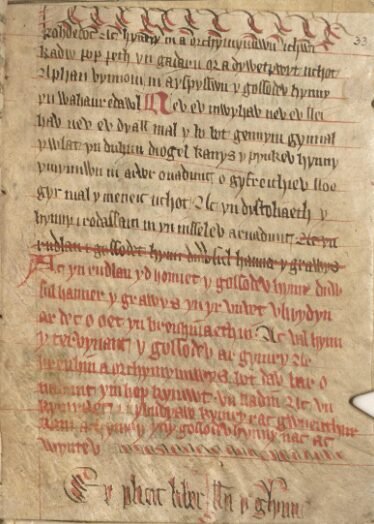
The Statute of Rhuddlan (1284), issued by Edward I of England, established the constitutional framework for governing Wales after its conquest. Image: Page from Peniarth MS 41, a 15th-century manuscript of the Statute of Rhuddlan in Welsh
Historical Background
In the 13th century, Wales was a collection of independent kingdoms and principalities, with the Prince of Gwynedd being one of the most powerful rulers in the region. Llywelyn ap Gruffudd, Prince of Gwynedd, had been recognized by the English Crown as the Prince of Wales in 1267 under the Treaty of Montgomery, which acknowledged him as the ruler of a unified Principality of Wales. However, his power was still subordinate to the English king, who acted as his feudal overlord.
The relationship between Llywelyn and the English Crown deteriorated over time, particularly with King Edward I. When Llywelyn refused to pay homage to Edward I, tensions escalated into open conflict.

Sculpture of Llywelyn ap Gruffudd by British sculptor Henry Alfred Pegram, Cardiff City Hall
In 1282, Llywelyn was killed in battle during an ambush, and his brother and successor, Dafydd ap Gruffudd, was captured and executed the following year. With the death of the last native ruler of an independent Wales, Edward I conquered the territory and brought it firmly under English control. The Statute of Rhuddlan, issued two years later, solidified this conquest by introducing a new legal and administrative system that integrated Wales into the governance structure of England.

The Statute of Rhuddlan followed the defeat and death of the last Welsh prince, Llywelyn ap Gruffudd, in 1282, marking the end of native Welsh rule. Image: Death of Llywelyn ap Gruffudd
Issuance of the Statute
The Statute of Rhuddlan was not an act passed by Parliament but rather a royal ordinance, issued solely by Edward I after careful deliberation. It takes its name from Rhuddlan Castle in Denbighshire, North Wales, where it was first promulgated on March 19, 1284. Rhuddlan Castle was one of several fortresses built by Edward I as part of his “iron ring” of castles designed to assert and maintain English control over Wales. These castles were strategically located to ensure the subjugation of the Welsh population and to act as bases for English authority in the region.
The Statute of Rhuddlan was designed to bring stability to the newly conquered territories by establishing a legal and administrative framework that aligned with English governance. It also marked the end of Welsh independence and the beginning of centuries of English dominance over the region. The statute applied specifically to North Wales, or what was known as the Principality of Gwynedd, but its provisions eventually influenced governance throughout the rest of Wales.
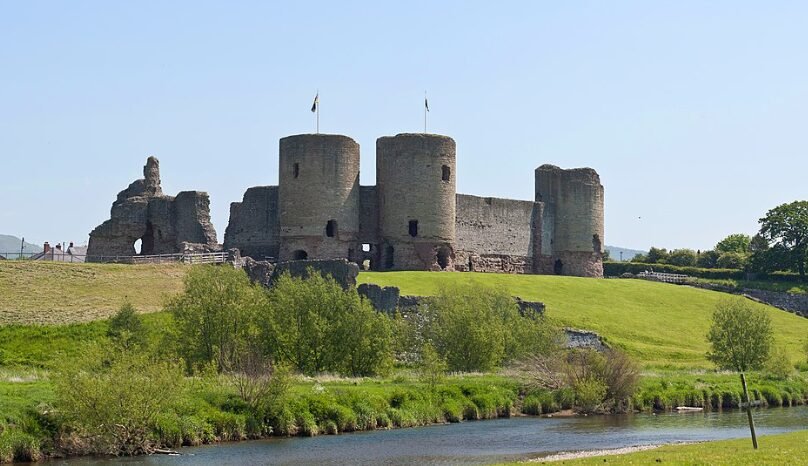
The Statute of Rhuddlan was a royal ordinance issued by Edward I on March 3, 1284. Image: Rhuddlan Castle is located in Rhuddlan, Denbighshire, Wales
Key Provisions of the Statute of Rhuddlan
The Statute of Rhuddlan introduced a number of significant changes to the governance of Wales, many of which were modeled on English systems of law and administration. Below are the major provisions of the statute:
- Creation of Shires: One of the most important features of the Statute of Rhuddlan was the creation of new administrative divisions called shires, modeled on the English county system. The statute divided the Principality of Gwynedd into the counties of Anglesey, Merionethshire, Caernarfonshire, and Flintshire. These shires were essentially provinces of the English Crown and were governed in a similar manner to counties in England. Flintshire was unique in that it was administered with the Palatinate of Cheshire by the Justiciar of Chester.
- Introduction of English Common Law: The statute introduced English common law to Wales, replacing many aspects of Welsh legal traditions. Crimes such as murder, robbery, and larceny were to be prosecuted under English law, and cases were overseen by the Justiciar of North Wales, who held courts at Caernarfon. While English law was imposed, some Welsh legal practices were allowed to continue. For example, the Welsh tradition of settling disputes by arbitration remained in place, and partible inheritance, a key feature of Welsh land law, was retained.
- Legal Rights of Women and Inheritance Laws: Under the Statute of Rhuddlan, some Welsh customs were preserved but modified according to English legal principles. Welsh practices of partible inheritance, where property was divided among all male heirs, continued. However, the statute introduced English principles regarding inheritance rights for women. For instance, daughters could inherit their father’s lands in the absence of sons, and widows were entitled to a third of their husband’s lands, known as dower rights. Bastards were explicitly excluded from inheriting under these laws.
- Establishment of Royal Officials: The statute established a hierarchical system of royal officials to oversee governance in Wales. Each shire had sheriffs, coroners, and bailiffs who were responsible for collecting taxes, administering justice, and maintaining law and order. These officials were accountable to the Chamberlain of North Wales, who in turn reported to the Exchequer in Westminster. This system mirrored the governance structure in England and allowed for greater control over local administration in Wales.
- Welsh Marcher Lordships: The Statute of Rhuddlan did not affect the governance of the Marcher Lordships in South Wales, which had long been under English control. These territories were ruled by powerful English lords who operated with a high degree of autonomy from the English Crown. The marcher lords continued to hold sway over vast areas of land from Pembrokeshire to the Welsh borders, and the statute did little to alter the status quo in these regions.
Aftermath and Long-Term Effects

Edward I, commonly known as Edward Longshanks, reigned between the period of 1272 and 1307. Image: Portrait in Westminster Abbey likely depicting Edward I
The Statute of Rhuddlan represented a decisive step in Edward I’s efforts to consolidate his conquest of Wales and integrate it into the Kingdom of England. Although the statute introduced English law and administration to North Wales, it did not immediately result in the complete annexation of Wales. Instead, Wales remained a semi-autonomous principality with its own customs and laws, albeit under English control.
However, the statute laid the groundwork for the eventual full incorporation of Wales into the English legal and political system. In 1535 and 1542, under King Henry VIII, the Laws in Wales Acts (also known as the Acts of Union) were passed, which formally annexed Wales to the Kingdom of England. These acts abolished the distinction between English and Welsh law, creating a single legal system that applied throughout both countries. The shires established by the Statute of Rhuddlan became regular counties of England, and Welsh law was fully replaced by English law.
The Statute of Rhuddlan remained in force for several centuries, although its relevance diminished after the Acts of Union. It was formally repealed in 1887 by the Statute Law Revision Act, but by then, its impact on Welsh governance had already been cemented in history.
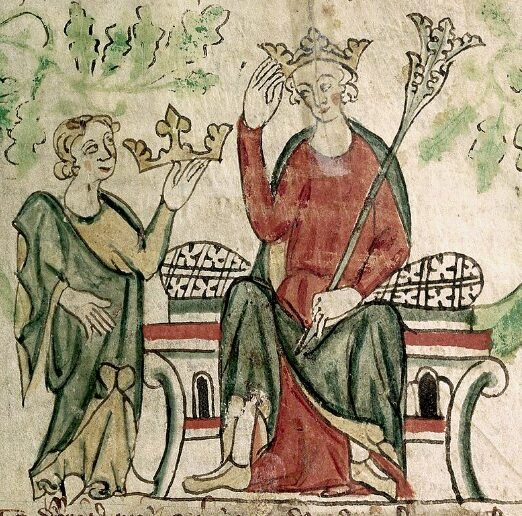
In 1301, Edward I invested his eldest son, Edward II, as Prince of Wales, a tradition followed by all English monarchs’ eldest sons, except Edward III. Image: A contemporary illustration depicts Edward II receiving the English crown.
Legacy of the Statute of Rhuddlan
The legacy of the Statute of Rhuddlan is twofold. On the one hand, it represents the end of Welsh independence and the imposition of English control over the region. The statute was part of Edward I’s broader campaign to dominate Wales, symbolized by his construction of imposing castles, such as Caernarfon, Conwy, and Beaumaris, which served as physical manifestations of English power.
On the other hand, the Statute of Rhuddlan also laid the foundation for a more centralized and structured form of governance in Wales. By introducing the shire system, the statute created an administrative framework that would endure for centuries. The establishment of English law and governance in Wales helped to bring a degree of stability to the region, even as it eroded Welsh autonomy.
The castle where the statute was issued, Rhuddlan Castle, remains a significant historical site. It stands as a symbol of the English conquest of Wales and serves as a reminder of the turbulent history between England and Wales.
Today, Rhuddlan Castle and other Edwardian fortresses are important cultural landmarks, attracting visitors who seek to understand the historical relationship between the two nations.
Conclusion
The Statute of Rhuddlan was a critical moment in the history of Wales, as it formalized English control over the territory following Edward I’s conquest. Through the introduction of English common law, the establishment of shires, and the creation of a system of royal officials, the statute fundamentally changed the governance of Wales. While some aspects of Welsh law were retained, the Statute of Rhuddlan represented the beginning of Wales’s gradual integration into the Kingdom of England.
The statute’s long-term significance can be seen in its influence on Welsh governance for centuries after its enactment, ultimately leading to the full union of Wales with England under Henry VIII. Although it was eventually repealed, the Statute of Rhuddlan remains a key chapter in the history of Wales, symbolizing the complex and often contentious relationship between England and Wales.
Questions and Answers

The Statute of Rhuddlan in 1284 introduced English common law and the shire system while allowing some Welsh legal practices to continue. The Principality of Wales was incorporated into the Kingdom of England by the statute. It basically formalized English governance over Wales by dividing the principality into shires and introducing English common law.
Why did the English Crown interpret Llywelyn’s rebellion as treason?
Llywelyn ap Gruffudd, the Prince of Gwynedd, was recognized by the English Crown as the Prince of Wales in 1267.
The English Crown interpreted Llywelyn’s rebellion as treason because he held his lands under the English king as his feudal overlord, and his rebellion was seen as an act against this authority.
What happened to Llywelyn ap Gruffudd’s lands after his death in 1282?
After Llywelyn’s death in 1282, his lands were taken by Edward I, and the Principality of Wales was brought under English control.
What were the marcher lordships established by Edward I after the conquest of Wales?
Edward I established four new marcher lordships in northeast Wales: Chirk, Bromfield and Yale, Ruthin, and Denbigh, along with Cantref Bychan in South Wales.
What role did Gruffydd ap Gwenwynwyn play in the post-conquest administration?
Gruffydd ap Gwenwynwyn, who had supported Edward I, retained his lands and status as a marcher lord after the conquest of Wales.
How did the Statute of Rhuddlan change Welsh governance?
The Statute of Rhuddlan introduced English common law and a system of administration, replacing Welsh laws and customs, while still retaining some Welsh traditions like arbitration and partible inheritance.
What counties were created by the Statute of Rhuddlan?
The Statute of Rhuddlan created the counties of Anglesey, Merionethshire, Caernarfonshire, and Flintshire from the remnants of the Kingdom of Gwynedd.
What aspects of Welsh legal practice were retained under the Statute of Rhuddlan?
Welsh customs such as arbitration for dispute resolution and partible inheritance were retained under the Statute of Rhuddlan, although they were modified to align with English practices.
When and by what acts was the Statute of Rhuddlan superseded?
The Statute of Rhuddlan was superseded by the Laws in Wales Acts of 1535 and 1542, which fully integrated Wales into the English legal and political framework.
What is the historical significance of Rhuddlan Castle today?
Rhuddlan Castle, where the Statute of Rhuddlan was promulgated, still stands today as a historical site, preserving the legacy of Edward I’s conquest and the statute’s impact on Welsh governance.





