Uganda’s Struggle for Independence
Uganda’s struggle for independence was shaped by a combination of internal political dynamics, the influence of colonial rule, and the broader context of African decolonization in the mid-20th century.
Uganda, like many African nations, was subjected to European colonial rule, particularly under the British Empire, from the late 19th century. The movement toward independence was driven by political, social, and economic factors that involved local political parties, religious groups, ethnic divisions, and labor movements.
Uganda officially gained its independence from Britain on October 9, 1962, but the journey leading up to that moment was marked by complex struggles for power, national identity, and governance.
Pre-Colonial Uganda and the Arrival of the British
Before colonial rule, the area now known as Uganda was home to several well-established kingdoms and chiefdoms, such as Buganda, Bunyoro, Toro, Ankole, and smaller societies in the north like the Acholi and Lango. The Buganda Kingdom was particularly powerful, with a centralized monarchy and a strong political and economic structure. These kingdoms had distinct systems of governance, trade, and social organization.
European interest in Uganda began in the mid-19th century with the arrival of explorers such as John Hanning Speke and Sir Samuel Baker, followed by Christian missionaries. The British soon recognized the strategic and economic importance of Uganda, particularly in terms of its fertile lands and potential for agriculture. By the end of the 19th century, Uganda became a protectorate of the British Empire in 1894, following the signing of various treaties with local rulers, including the influential Buganda Agreement of 1900, which solidified British control over the region.
Colonial Rule and the Rise of Nationalism
Under British colonial rule, Uganda was governed as a protectorate, meaning that the British maintained overall control while allowing some autonomy to traditional leaders, particularly in the south, where the Buganda Kingdom was favored. This policy of indirect rule empowered the local monarchies, especially the Kabaka (king) of Buganda, at the expense of other ethnic groups, which sowed seeds of ethnic tension that would later play a significant role in Uganda’s post-independence struggles.
Colonial economic policies transformed Uganda into an export economy based on cash crops like cotton, coffee, and tea. While this brought economic development, it also created disparities between regions, with Buganda and southern Uganda benefiting more from agricultural prosperity than the northern and eastern regions.
As in other African colonies, the social and economic pressures of colonialism sparked the rise of nationalism. Ugandan elites, particularly those educated in mission schools, began to push for political reforms and greater autonomy. Political consciousness grew during the 1920s and 1930s, but it was after World War II, when returning soldiers and laborers began to demand better conditions, that the nationalist movement gained real momentum.
Formation of Political Parties
In the post-war period, political organizations and parties began to emerge. One of the earliest and most influential was the Uganda National Congress (UNC), founded in 1952 by Ignatius Kangave Musazi. The UNC aimed to unite Ugandans across ethnic lines and advocate for self-governance. The party was influenced by the broader pan-African movement, which sought to unite African nations in their struggles for independence from colonial rule.
The UNC, however, faced challenges in uniting Uganda’s diverse ethnic groups. In particular, Buganda, the largest and most powerful kingdom, had its own aspirations for autonomy and was resistant to aligning with nationalist movements that sought to unify Uganda under a single government. The Kabaka of Buganda, Mutesa II, sought to maintain Buganda’s special status within Uganda, which led to tensions between Buganda and the rest of the country.
Other political parties emerged, representing different regions, ethnic groups, and interests. The Democratic Party (DP) was founded in 1954 by Benedicto Kiwanuka. The DP was a largely Catholic party and represented a segment of the population that felt marginalized by the predominantly Protestant Buganda elite. Meanwhile, the Uganda People’s Congress (UPC) was founded in 1960 by Milton Obote, a northern politician who sought to challenge Buganda’s dominance and unite Uganda’s various ethnic groups under a more centralized government.
Ethnic and Religious Divisions
Uganda’s ethnic diversity and religious divisions made the path to independence particularly complex. The Baganda, who were predominantly Protestant, had been favored by the British, while other ethnic groups, such as the Acholi, Langi, and Iteso, had not received the same level of political or economic support. These divisions were exacerbated by religious differences, with Catholics, Protestants, and Muslims each aligning with different political factions.
The Buganda Kingdom, which had been granted significant autonomy under British rule, was reluctant to join a unified Ugandan state. Buganda leaders feared that independence would diminish their power and status. In 1953, tensions between Buganda and the British colonial administration escalated when the Kabaka, Mutesa II, was exiled after refusing to support plans for greater integration of Buganda into the Ugandan protectorate. His exile sparked widespread protests and solidified Buganda’s resistance to a centralized Ugandan state.
Despite these divisions, the push for independence continued to grow, with political parties and nationalist leaders gaining more influence in the late 1950s. In 1958, the British government introduced a new constitution that allowed for greater African representation in the Legislative Council. This marked a turning point in Uganda’s struggle for independence, as it gave African politicians a platform to push for self-governance.
Uganda’s Road to Independence
As Uganda moved closer to independence, political negotiations intensified. The most contentious issue was the relationship between Buganda and the rest of Uganda. Buganda demanded federal status, with the Kabaka retaining significant authority within the kingdom. Other regions, particularly in the north and east, opposed Buganda’s demands, fearing that a federal system would entrench Buganda’s dominance.
In the lead-up to independence, elections were held in 1961, with the Democratic Party (DP), led by Benedicto Kiwanuka, emerging as the winner. Kiwanuka became Uganda’s first chief minister, but his government faced significant opposition from Buganda and the Uganda People’s Congress (UPC), led by Milton Obote.
In the 1962 elections, the UPC formed an alliance with the Kabaka Yekka (KY) party, a Buganda-based political group that sought to protect the interests of the kingdom. The UPC-KY alliance won the majority of seats in the newly formed Ugandan Parliament, and Milton Obote became Uganda’s first prime minister. This alliance between Obote and the Buganda monarchy was critical in securing Uganda’s independence from Britain on October 9, 1962.
Post-Independence Challenges
Uganda’s independence was marked by optimism, but it quickly became apparent that the country faced significant challenges. The political alliance between the UPC and Kabaka Yekka was fragile, and tensions between Buganda and the central government persisted. Obote’s government sought to reduce Buganda’s autonomy and integrate the kingdom more fully into the Ugandan state, leading to conflicts with the Buganda monarchy.
Ethnic and regional divisions also continued to plague the country. Obote’s government, which was dominated by northern ethnic groups, faced opposition from other regions, particularly in Buganda and the eastern part of the country. These divisions would eventually lead to political instability and conflict in the years following independence.
In 1966, the fragile relationship between Obote and the Kabaka collapsed when Obote accused the Buganda kingdom of plotting against his government. Obote responded by suspending the constitution, declaring himself executive president, and sending the military, led by Idi Amin, to attack the Kabaka’s palace. The Kabaka fled into exile, and Obote established a more centralized government, effectively ending Buganda’s autonomy.
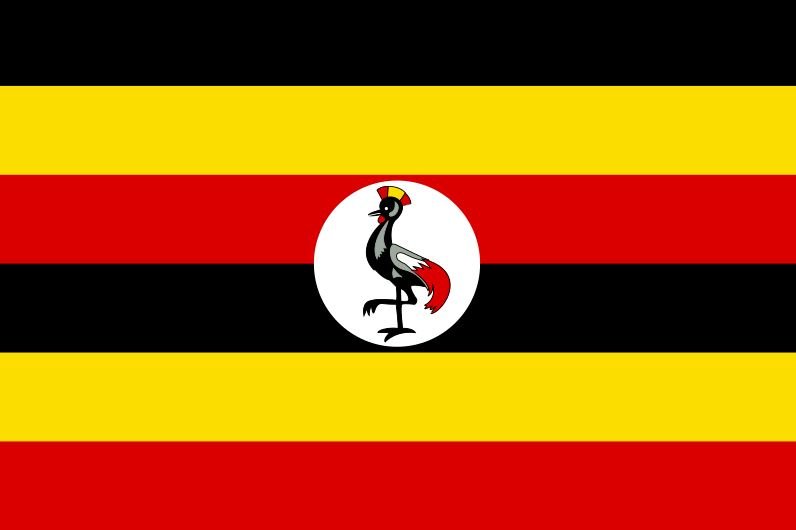
Uganda’s Flag
The Legacy of the Independence Struggle
Uganda’s struggle for independence was deeply shaped by its colonial history, particularly the divisions that emerged under British rule. Ethnic, religious, and regional divisions, which were exacerbated by colonial policies, continued to affect the country long after independence. The conflicts between Buganda and the rest of Uganda, as well as the rivalry between political factions, would have a lasting impact on the country’s political landscape.
The early years of independence were marked by optimism and a desire to build a united Ugandan state, but the challenges of governing a diverse and divided country quickly became apparent. The political instability that followed independence set the stage for future conflicts, including Idi Amin’s brutal dictatorship in the 1970s and the subsequent struggles for democracy and stability in Uganda.
Despite these challenges, Uganda’s independence struggle is a testament to the resilience and determination of its people. The leaders of the independence movement, including Milton Obote, Benedicto Kiwanuka, and others, played a crucial role in shaping the country’s political future. Their efforts to unite Uganda’s diverse population and achieve self-governance laid the foundation for the country’s future development, even as Uganda continued to face significant political and social challenges.
Conclusion
Uganda’s struggle for independence was a complex and multifaceted process that involved the interplay of ethnic, religious, and political forces.
The country’s path to independence was shaped by its colonial history, particularly the legacy of British indirect rule and the divisions it created among Uganda’s various ethnic groups and regions.
The rise of political parties, nationalist movements, and labor organizations in the post-war period reflected the growing demand for self-governance and the desire
Questions and Answers about Uganda
Where is Uganda located?
Uganda is a landlocked country in East Africa. It is bordered by Kenya to the east, South Sudan to the north, the Democratic Republic of the Congo to the west, Rwanda to the southwest, and Tanzania to the south. A portion of Lake Victoria, shared with Kenya and Tanzania, is located in southern Uganda.
What is Uganda’s population and its largest city?
As of 2024, Uganda has a population of over 49 million people. Its capital and largest city is Kampala, home to about 8.5 million people.
What is the origin of the name “Uganda”?
The name “Uganda” originates from the Buganda Kingdom, a prominent kingdom in the southern region of the country, which includes Kampala. The language of Buganda, Luganda, is widely spoken.
What were the early inhabitants of Uganda before Bantu and Nilotic-speaking groups arrived?
Before the arrival of Bantu and Nilotic-speaking peoples around 3,000 years ago, the area now known as Uganda was inhabited by various ethnic groups. The new arrivals eventually established influential states, including the Empire of Kitara.
How did foreign influence begin in Uganda?
Foreign influence in Uganda began with the arrival of Arab traders in the 1830s, followed by British explorers in the late 19th century. In 1894, the British established the Protectorate of Uganda, consolidating the various kingdoms and chiefdoms under colonial control.

Uganda gained independence from Britain on October 9, 1962. Milton Obote became the country’s first prime minister. Image: Milton Obote.
What was the significance of the 1966 Mengo Crisis?
The 1966 Mengo Crisis was a political and military conflict between Obote’s government and the Buganda Kingdom. It resulted in the weakening of the Buganda monarchy’s power and was a major event in post-independence Uganda.
Who was Idi Amin, and what characterized his regime?
Idi Amin was a military leader who seized power in Uganda through a coup in 1971, overthrowing Milton Obote. His regime, which lasted until 1979, was marked by mass killings, economic mismanagement, and widespread human rights abuses, leaving Uganda economically devastated and diplomatically isolated.
How did Yoweri Museveni come to power, and what impact did he have on Uganda?
Yoweri Museveni came to power in 1986 after his National Resistance Movement (NRM) won a six-year guerrilla war. His rule initially brought stability and economic growth to Uganda. However, his long tenure has been criticized for increasing authoritarianism, suppression of political opposition, and the abolition of presidential term limits in 2005.
Concerns under Museveni’s leadership include allegations of electoral fraud, human rights abuses, and the suppression of political opposition. His long time in power has raised questions about Uganda’s democratic future.
What regional conflicts has Uganda faced?
Uganda has been involved in several regional conflicts, including the Congo Wars in the 1990s and early 2000s. The country has also dealt with the insurgency of the Lord’s Resistance Army (LRA), a rebel group known for its brutal tactics, including the use of child soldiers.
What are Uganda’s key natural resources, and how do they contribute to the economy?
Uganda is rich in natural resources, including fertile agricultural land and untapped oil reserves. While agriculture has historically been the backbone of the economy, the service sector now plays a dominant role. Tourism, based on Uganda’s biodiversity and national parks, is also a vital economic sector.

What are the main environmental attractions that draw tourists to Uganda?
Uganda’s rich biodiversity, including Lake Victoria, volcanic hills, and wildlife reserves, attracts tourists. Popular species include gorillas, chimpanzees, and a variety of other animals found in the Great Lakes region.





