The Victoria and Albert Museum (V&A) in London stands as a testament to the enduring legacy of art, design, and cultural heritage. As the world’s largest museum of applied arts, decorative arts, and design, the V&A’s rich history, intricate construction, and expansive collections make it a cornerstone of global cultural institutions.

The Victoria and Albert Museum (V&A) in London, founded in 1852 and named after Queen Victoria and Prince Albert, is the world’s largest museum of applied and decorative arts and design, boasting over 2.8 million objects. Image: Main Entrance of the V&A Museum
In the article below, World History Edu delves into the museum’s origins, architectural evolution, and the diverse array of collections that it proudly houses.
Origins and Foundation
The genesis of the V&A can be traced back to the Great Exhibition of 1851, a groundbreaking event held in Hyde Park, London, under the patronage of Prince Albert and Queen Victoria. The exhibition showcased industrial advancements and artistic achievements from around the world, highlighting the symbiotic relationship between art and industry. The overwhelming success of this event underscored the public’s appetite for a dedicated space where such works could be preserved, studied, and appreciated year-round.
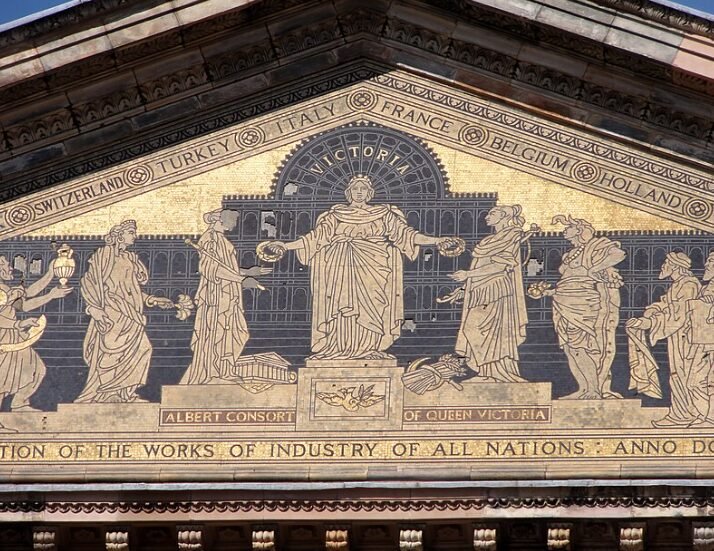
Frieze detail from internal courtyard showing Queen Victoria in front of the 1851 Great Exhibition
Henry Cole, a key figure in the planning and execution of the Great Exhibition, was appointed as the museum’s first director. His vision was to create a repository that would not only display applied arts and sciences but also serve as an educational resource to inspire innovation and creativity. Initially named the Museum of Manufactures, the V&A was conceived as a bridge between art and industry, aiming to elevate the status of applied arts and demonstrate their intrinsic value to society.
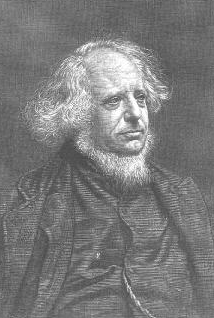
Henry Cole – first director of the Victoria and Albert Museum
Early Locations and Development
The museum’s inaugural public opening took place in May 1852 at Marlborough House, a temporary venue that provided a fitting backdrop for its nascent collections. However, the museum’s rapid expansion necessitated a move within the same year to Somerset House, a grand neoclassical building that offered more space and better facilities for housing both art and scientific exhibits. This relocation allowed the V&A to significantly broaden its collections, incorporating numerous items from the Great Exhibition that had been acquired to form the foundation of the museum’s holdings.
Located in the Royal Borough of Kensington and Chelsea within “Albertopolis,” the Victoria and Albert Museum shares the area with notable institutions like the Natural History Museum and the Royal Albert Hall.
By February 1854, plans were underway to establish a permanent home for the museum in South Kensington, an area that would later become synonymous with cultural and educational institutions. During this transitional phase, the museum was renamed the South Kensington Museum, reflecting its new geographical and cultural context. The German architect Gottfried Semper was initially commissioned to design the new building, but his proposal was ultimately rejected due to budgetary constraints imposed by the Board of Trade.
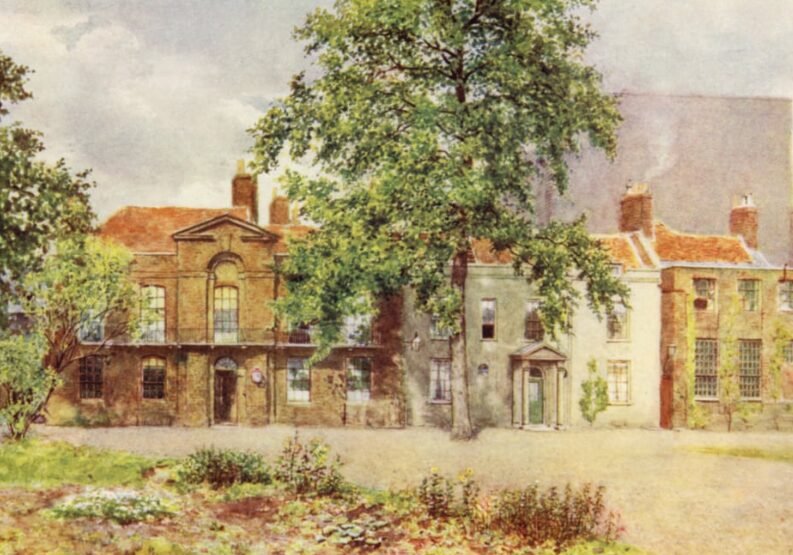
Old Houses on Site of Victoria and Albert Museum, 1899 by British artist Philip Norman
Construction and Architectural Evolution
The decision to repurpose Brompton Park House for the museum marked a significant milestone in its architectural history. In 1857, Brompton Park House was expanded to accommodate the growing collection, and this expansion included the introduction of refreshment rooms—the first of their kind in any museum worldwide. These rooms were not merely functional spaces but also represented an innovative approach to enhancing the visitor experience, providing a place for both researchers and guests to relax and socialize.
The official inauguration of the museum by Queen Victoria on June 20, 1857, solidified its status as a national institution. The following year, the introduction of gas lighting revolutionized museum operations by enabling late-night openings. This advancement made the museum more accessible to the working class, allowing individuals who worked during the day to visit and engage with the collections in the evenings.
Henry Cole’s strategic emphasis on combining applied arts with scientific exhibits positioned the V&A as a unique institution dedicated to both aesthetic appreciation and practical utility.
George Wallis, appointed as the first Keeper of the Fine Art Collection, played a pivotal role in shaping the museum’s educational mission. His advocacy for broad art education led to the integration of the School of Design into the museum in 1857. This institution, which later evolved into the Royal College of Art, underscored the V&A’s commitment to fostering artistic talent and promoting design education.
From the 1860s to the 1880s, the museum’s scientific collections were gradually relocated to separate galleries west of Exhibition Road, culminating in the establishment of the Science Museum in 1893. This separation highlighted the distinct focuses of art and science within the broader mission of the museum, allowing each discipline to develop independently while maintaining their interconnectedness.
Why was Queen Victoria known as the “Grandmother of Europe”?
Renaming and Further Expansion
The turn of the century marked a significant transformation for the museum. On May 17, 1899, during a ceremonial event attended by Queen Victoria, the museum was officially renamed the Victoria and Albert Museum. Queen Victoria’s address emphasized the museum’s role as a monument of generosity and a source of cultural refinement and progress, reinforcing its importance as a national cultural institution.
In 1909, the museum expanded further with the official opening of the Aston Webb building by King Edward VII and Queen Alexandra. This new structure provided additional space and facilities, allowing the V&A to enhance its collections and exhibitions. The early 20th century also saw the commencement of construction on the Science Museum in 1914, finalizing the separation of art and scientific collections and solidifying the distinct identities of these two major institutions.
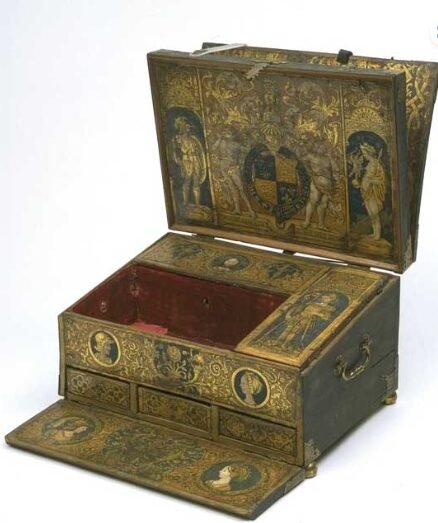
Henry VIII of England’s writing box
World War II and Post-War Recovery
The outbreak of World War II in 1939 presented unprecedented challenges for the V&A. To safeguard its invaluable collections from potential bombing, the museum undertook extensive measures to relocate most of its items to secure locations. Artifacts were moved to a quarry in Wiltshire, Montacute House in Somerset, and a tunnel near Aldwych tube station. Larger objects remained in the museum but were fortified with sandbags and protective barriers to prevent damage.
During the war, parts of the museum were repurposed for practical uses. Some galleries were transformed into schools for children evacuated from Gibraltar, while others served as canteens for military personnel and repair squads. These adaptations ensured that the museum remained functional and supportive of the war effort, even as it protected its collections from the ravages of conflict.
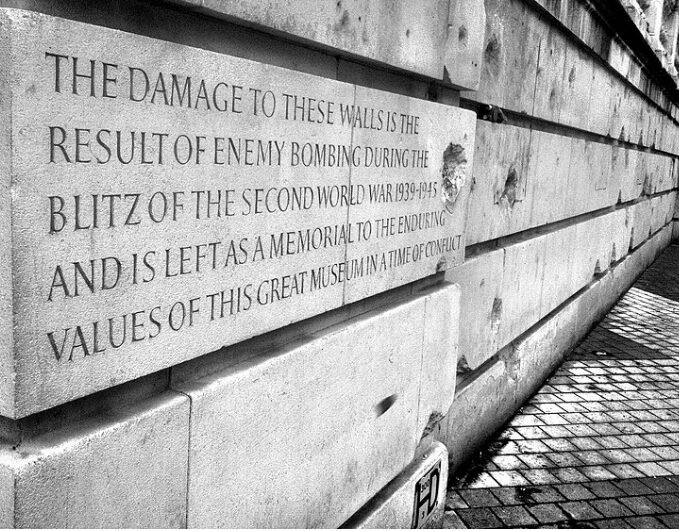
Bomb damage on the exhibition road facade of the museum
Following the war, the V&A swiftly resumed normal operations, with most collections returning by 1948. The successful “Britain Can Make It” exhibition in 1946, organized by the Council of Industrial Design, drew nearly 1.5 million visitors and demonstrated the enduring public interest in the museum’s offerings. This exhibition, which showcased British industrial design, inspired the planning of the 1951 Festival of Britain, further cementing the V&A’s role in promoting design and innovation.
Modernization and Renovation Efforts
In the latter part of the 20th century, under the leadership of Sir Roy Strong, the V&A embarked on a mission to modernize and expand its appeal. In 1973, the museum made history by hosting the first rock concert in Britain, featuring the progressive folk-rock band Gryphon. This event aimed to attract younger audiences and demonstrated the museum’s willingness to embrace contemporary cultural trends, thereby broadening its demographic reach.
Sponsored by the Department for Digital, Culture, Media and Sport, the V&A offers free entry to the public.
Elizabeth Esteve-Coll succeeded Strong and oversaw significant restructuring within the museum’s curatorial departments. Her tenure focused on increasing accessibility and engaging the public more effectively. One of her initiatives included a marketing campaign that emphasized the museum’s café over its collections, a move that received mixed reactions from both staff and visitors. Despite the controversy, Esteve-Coll’s efforts highlighted the ongoing evolution of the museum’s public engagement strategies.
In 2001, the V&A launched a major £150 million renovation project known as “FuturePlan.” This ambitious initiative aimed to redesign galleries and public spaces to enhance the display of exhibits, improve visitor access, and align the museum with contemporary standards. A central component of this plan was the Exhibition Road Quarter, designed by Amanda Levete’s AL_A. The project included a new entrance on Exhibition Road, the creation of a porcelain-tiled courtyard inaugurated as the Sackler Courtyard (later renamed the Exhibition Road Courtyard), and the development of the Sainsbury Gallery, an expansive underground space. The Exhibition Road Quarter added 6,400 square meters of space, representing the museum’s largest expansion in over a century, and officially opened on June 29, 2017.
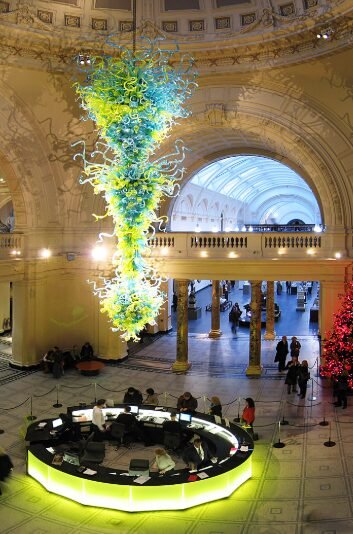
Since 2001, the museum has undergone a £150m renovation, including the opening of new European galleries in 2015 and expanding with branches like V&A Dundee, enhancing its global presence. Image: The 11-metre high, blown glass chandelier by Dale Chihuly in the rotunda at the V&A’s main entrance
Global Expansion and Contemporary Developments
In 2018, the V&A expanded its global footprint with the opening of V&A Dundee, the first museum outside London under the V&A brand. Situated on Dundee’s waterfront, this museum focuses on Scottish design, furniture, textiles, fashion, architecture, engineering, and digital design. Built at a cost of £80.11 million, V&A Dundee operates independently from the main London museum but shares its commitment to design and cultural heritage, extending the V&A’s influence beyond its original location.
Additionally, the V&A operates the Young V&A in Bethnal Green, which reopened on July 1, 2023. This branch continues the museum’s outreach efforts to engage younger audiences through interactive exhibits and educational programs.
The museum previously managed Apsley House and the Theatre Museum in Covent Garden, although the latter has since closed, with its collections now displayed within the South Kensington building. These expansions reflect the V&A’s dedication to accessibility and education, ensuring that diverse audiences can experience and engage with its collections.
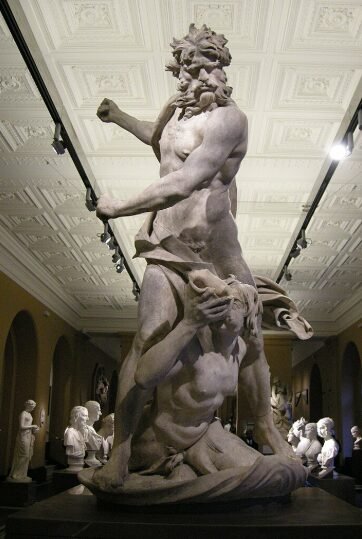
Bernini—Neptune and Triton
Recognition and Patronage
In March 2018, the Duchess of Cambridge was appointed as the first royal patron of the V&A, underscoring the museum’s prestigious status and its significant role in contemporary culture. Royal patronage highlights the V&A’s importance as a national institution and its ongoing mission to promote art, design, and cultural education. This endorsement further solidifies the museum’s reputation as a leading cultural hub, attracting visitors and scholars from around the globe.
Collections Overview
The V&A’s collections are renowned for their breadth and depth, spanning 5,000 years of art from various cultures and regions. The museum houses over 2.8 million objects, making it one of the largest and most comprehensive museums in the world.
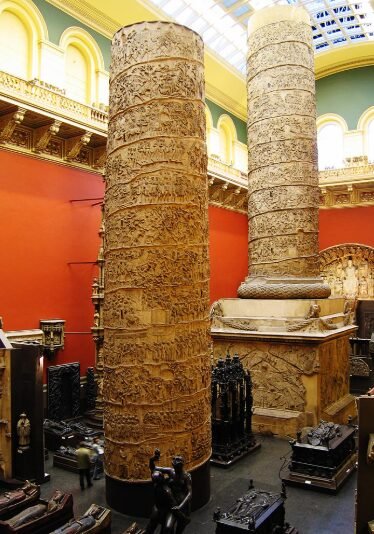
Cast Court—Plaster copy of Trajan’s Column
The collections are meticulously curated and organized across 145 galleries, covering applied arts, decorative arts, and design. Key categories include ceramics, glass, textiles, costumes, silver, ironwork, jewelry, furniture, medieval objects, sculpture, prints and printmaking, drawings, and photographs.

Bodhisattva Maitreya, Gandhara, Pakistan, Kusana Dynasty, 2nd-4th century AD
Applied and Decorative Arts

Tintoretto—Self-Portrait as a Young Man, c. 1548
The V&A’s applied arts collections highlight the intersection of functionality and aesthetic beauty. These collections showcase the evolution of design across different periods and cultures, illustrating how practical objects can also serve as artistic expressions.
Ceramics and glass collections are particularly notable, featuring intricate designs and innovative techniques from around the world. The textiles collection includes an extensive array of fabrics, patterns, and garments, demonstrating the rich diversity of textile arts and their cultural significance.
Fashion and Jewelry
The fashion collection at the V&A is one of the most comprehensive in the world, encompassing garments from the 17th century to contemporary designs. This collection not only highlights the aesthetic evolution of fashion but also reflects societal changes and cultural influences. The jewelry collection complements the fashion exhibits, featuring exquisite pieces that showcase craftsmanship and design innovation across different eras and regions.

Wine cup of Shah Jahan at the Victoria and Albert Museum
Sculpture and Fine Arts
The V&A boasts the world’s largest collection of post-classical sculpture, with Italian Renaissance sculptures being the largest collection outside Italy. This impressive array includes works by renowned artists, illustrating the development of sculpture as a form of artistic expression. The museum’s fine arts collection also encompasses significant pieces of painting, drawing, and photography, offering a comprehensive view of artistic trends and movements.

Giambologna—Samson Slaying a Philistine, c. 1562
Asian and Islamic Art
The departments of Asia and Islamic art are among the V&A’s most esteemed collections. The Asian art collection includes works from South Asia, China, Japan, Korea, and the Islamic world, with particular strengths in ceramics and metalwork. The Islamic collection is one of the largest in the Western world, featuring intricate designs and a wide range of objects that reflect the rich artistic traditions of Islamic cultures.
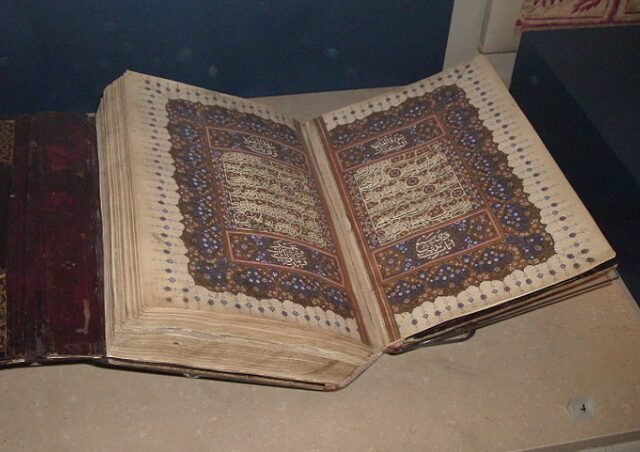
BLW Qur’an
Design and Innovation
Design is a core focus of the V&A, with collections that celebrate innovation and craftsmanship. The museum’s design exhibits highlight the evolution of industrial and product design, showcasing objects that have shaped everyday life and technological advancements. From furniture and lighting to contemporary digital designs, the V&A illustrates the dynamic relationship between design and societal progress.
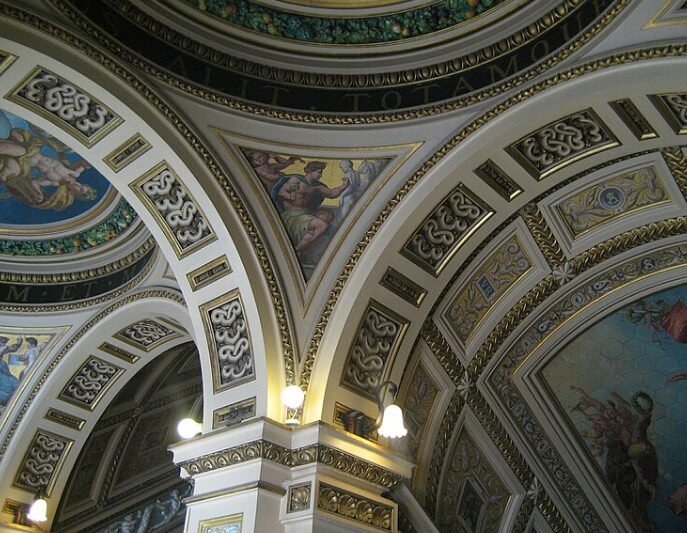
The Ceramic Staircase, designed by Frank Moody
Conclusion
The Victoria and Albert Museum has undergone remarkable transformations since its inception in the mid-19th century. From its humble beginnings as the Museum of Manufactures to its current status as a world-leading institution for applied arts, decorative arts, and design, the V&A has continually evolved to meet the changing needs and interests of its diverse audiences.
Its rich history, coupled with its architectural evolution and expansive collections, makes the V&A a vital cultural hub that celebrates and preserves human creativity and ingenuity.
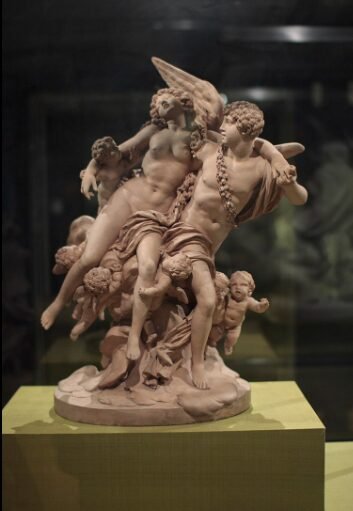
Claude Michel (Clodion)—Cupid and Psyche, in Terracotta
Frequently Asked Questions
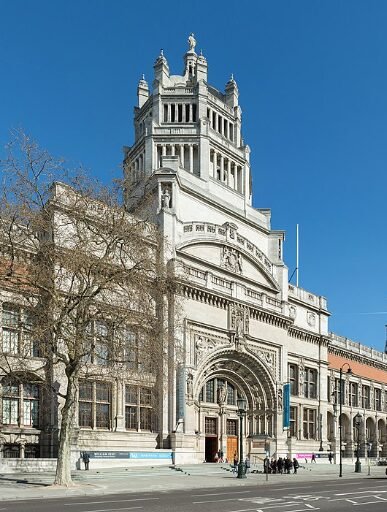
Covering 12.5 acres and featuring 145 galleries, the V&A extensive collection spans 5,000 years of art from Europe, North America, Asia, and North Africa, with exceptional holdings in ceramics, textiles, sculpture, and Asian art. Image: Main entrance to the museum
What event led to the founding of the Victoria and Albert Museum (V&A)?
The Victoria and Albert Museum (V&A) was founded following the success of the Great Exhibition of 1851, a landmark event that showcased industrial and artistic achievements from around the world.
Who was the first director of the V&A, and what was the museum initially called?
Henry Cole was the first director of the V&A, and the museum was initially named the Museum of Manufactures.
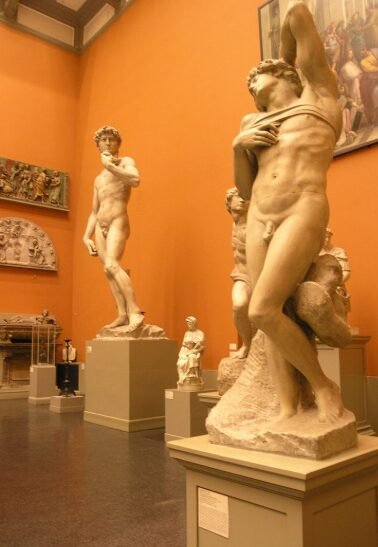
Plaster Cast of David and The Slave, by Michelangelo
When and where did the V&A first open to the public?
The V&A first opened to the public in May 1852 at Marlborough House.
To which location was the V&A’s collection moved in September 1852, and what was the focus of its exhibits at that time?
In September 1852, the V&A’s collection was moved to Somerset House, where it continued to expand its holdings in both applied art and scientific exhibits.
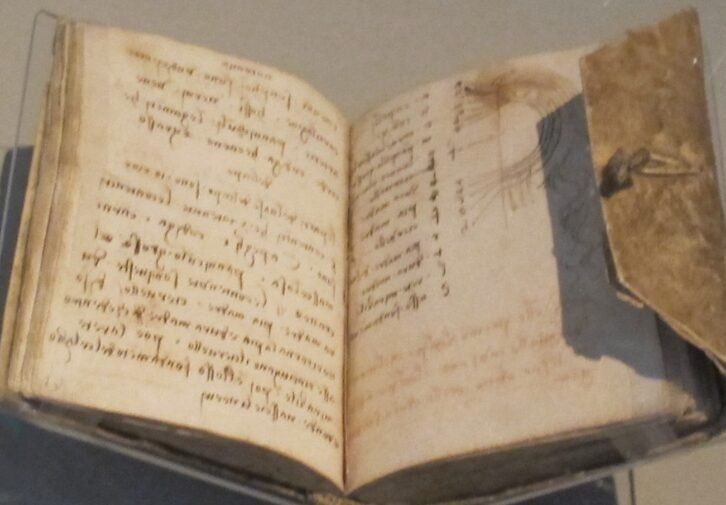
Leonardo da Vinci, Codex Forster III, 1490–1505 (Room 64)
What significant change occurred to the museum in February 1854, and who was the architect initially commissioned for the new design?
In February 1854, plans were made to relocate the museum to its present site in South Kensington, and the museum was renamed the South Kensington Museum. German architect Gottfried Semper was initially commissioned by Henry Cole to design the new building, but his proposal was rejected as too expensive.
What innovation did the V&A introduce in 1857, and why was it significant?
In 1857, the V&A introduced refreshment rooms, marking the first instance of the museum providing catering services. This innovation enhanced the museum experience by catering to both researchers and visitors.
When was the V&A officially inaugurated by Queen Victoria, and what technological advancement did the museum adopt the following year?
Queen Victoria officially inaugurated the V&A on June 20, 1857. In 1858, the museum adopted gas lighting, enabling it to offer late-night openings and making it more accessible to the working class.
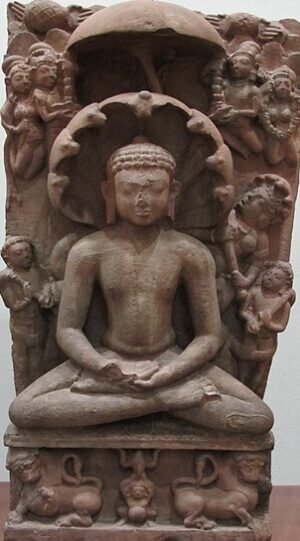
Depiction of Lord Parshvanatha, India, 7th Century
Who was George Wallis, and what significant contribution did he make to the V&A?
George Wallis was the first Keeper of the Fine Art Collection at the V&A. He passionately promoted wide art education through the museum’s collections, leading to the integration of the School of Design into the museum in 1857, which eventually evolved into the Royal College of Art.
What major renaming occurred on May 17, 1899, and who attended the ceremony?
On May 17, 1899, the museum was officially renamed the Victoria and Albert Museum during a ceremony attended by Queen Victoria. Queen Victoria highlighted the museum’s role as a monument of generosity and a source of cultural refinement and progress.
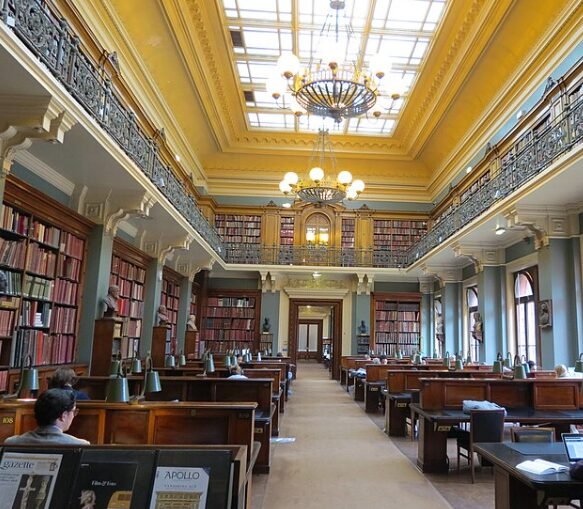
The Art Library at the Victoria and Albert Museum





