12 Most Famous Solar Deities in World History
Solar deities have been central figures in numerous cultures, embodying the life-giving power of the Sun, symbolizing creation, authority, and the eternal cycle of day and night. These gods and goddesses not only represent the physical Sun but also hold profound spiritual and cultural significance. Here are twelve of the most renowned solar deities from around the world.
Ra (Egyptian Mythology)
Ra is one of ancient Egypt’s most important deities, revered as the Sun god and the supreme creator. Depicted with a falcon head crowned with a solar disk, Ra traveled across the sky in his solar barque by day and journeyed through the underworld by night, symbolizing the Sun’s daily cycle. He was believed to sustain life, embodying creation, warmth, and growth. Temples dedicated to Ra, such as the famous sun temple at Heliopolis, were centers of worship and cosmic order, reflecting his role in maintaining Ma’at (balance and harmony) in the universe.

Image: In one of his numerous forms, Ra is depicted with a falcon’s head, crowned by a sun-disk encircled by the Uraeus.
Helios and Apollo (Greek Mythology)
In Greek mythology, Helios and Apollo both represent the Sun but embody different aspects. Helios is the personification of the Sun itself, driving his golden chariot across the sky each day, symbolizing the Sun’s physical journey and its light. Apollo, originally the god of music, prophecy, and healing, was later associated with the Sun, representing its symbolic attributes such as enlightenment, knowledge, and artistic inspiration. While Helios focuses on the Sun’s daily movement, Apollo embodies its influence on culture and human endeavors.

Wall relief of Helios (right) and statue of Apollo (left).
Amaterasu (Japanese Mythology)
Amaterasu is the Sun goddess in Japanese mythology and one of the principal deities of Shinto belief. She is celebrated as the ruler of the heavens and the ancestress of the Japanese imperial family. The famous myth of Amaterasu hiding in a cave, plunging the world into darkness, and being lured out by the other gods highlights her essential role in bringing light and life. Amaterasu symbolizes order, purity, and the divine right of the emperor, playing a crucial role in Japanese culture and spiritual practices.
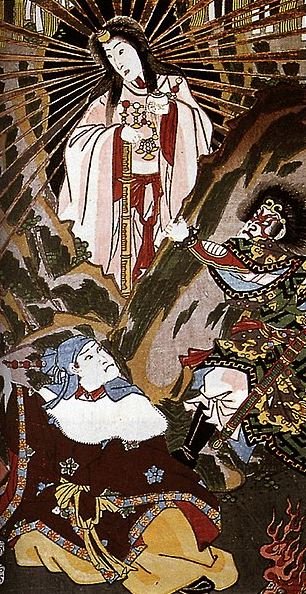
Image: A painting by Japanese artist Kunisada, depicting Amaterasu (top) stepping out of Ama-no-Iwato, the cave where she had once withdrawn.
Inti (Inca Mythology)
Inti is the Sun god and the patron deity of the Inca Empire, deeply revered as the ancestor of the Incas. Represented as a golden figure with rays emanating from his head, Inti was central to Inca cosmology and agriculture, ensuring the fertility of the land and the success of crops. Festivals such as Inti Raymi celebrated his importance, reinforcing social cohesion and the connection between the people and their environment. Inti’s worship underscored the Inca’s reliance on the Sun for sustenance and prosperity.

Image: Inti displayed in an exhibition at the Bode-Museum in Berlin, Germany.
Surya (Hindu Mythology)
In Hinduism, Surya is the Sun god, depicted riding a chariot harnessed by seven horses, representing the seven colors of light or the seven days of the week. Surya is a symbol of health, vitality, and enlightenment, providing life-sustaining energy and dispelling darkness. Worship of Surya includes rituals like the Surya Namaskar (Sun Salutation) in yoga, reflecting his integral role in spiritual and physical well-being. Surya is also associated with truth and righteousness, guiding devotees towards moral living.

Image: Sculpture work depicting Surya.
Huitzilopochtli (Aztec Mythology)
Huitzilopochtli is a prominent deity in Aztec mythology, serving as the god of the Sun and war. As a central figure in Aztec cosmology, he was believed to lead the Sun’s journey across the sky, requiring regular sacrifices to ensure his continued movement and prevent the world from falling into darkness. Temples dedicated to Huitzilopochtli, such as the Templo Mayor in Tenochtitlan, were sites of elaborate rituals and human sacrifices, reflecting his vital role in maintaining cosmic balance and Aztec society’s martial ethos.
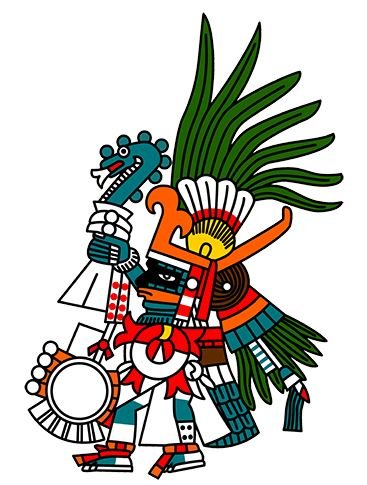
Image: Huitzilopochtli
Sol (Roman Mythology)
Sol, also known as Sol Invictus (“Unconquered Sun”), was the Roman Sun god. Adopted from earlier syncretic traditions, Sol became a central figure in Roman religion, symbolizing the Sun’s strength and eternal nature. The cult of Sol Invictus gained prominence during the later Roman Empire, particularly under Emperor Aurelian, who established it as an official state religion. Sol was depicted driving a chariot across the sky, embodying the Sun’s unending power and the stability of the empire.

Image: A relief depicting Sol.
Sól/Sunna (Norse Mythology)
In Norse mythology, Sól (also known as Sunna) is the Sun goddess who drives the chariot of the Sun across the sky, pursued by a relentless wolf, Sköll, who seeks to devour her. This myth symbolizes the Sun’s daily struggle to escape the forces of darkness and the inevitability of its eventual demise during Ragnarök (the end of the world). Sól represents not only the Sun’s light and warmth but also the fragile balance between light and darkness in the Norse cosmology.
Mithra (Persian Mythology)
Mithra is a significant deity in ancient Persian mythology, associated with the Sun, covenants, and cosmic order. As a solar deity, Mithra was revered for his role in maintaining truth, justice, and the moral order of the universe. In Zoroastrianism, Mithra became a yazata (divine being) embodying loyalty and the sacred agreements between humans and the divine. Mithra’s influence extended into the Roman Empire through the cult of Mithraism, highlighting his enduring legacy as a symbol of light and righteousness.

Image: A Sasanian relief of Mithra from the late 4th century.
Anyanwu (Igbo Mythology)
Anyanwu is the Sun god in Igbo mythology, believed to reside within the Sun itself. As a celestial being, Anyanwu symbolizes light, knowledge, and divine guidance, playing a crucial role in the spiritual and daily lives of the Igbo people. Worship of Anyanwu involves rituals and offerings that honor the Sun’s life-sustaining power and its role in ensuring the prosperity and well-being of the community. Anyanwu embodies the interconnectedness of the natural world and the divine, reinforcing communal bonds and cultural identity.

Nzambi Mpungu (Bakongo Mythology)
Nzambi Mpungu is the supreme deity in Bakongo mythology, revered as the god of the Sun and the creator of the universe. Originating from the Bakongo people of Central Africa, Nzambi Mpungu embodies the Sun’s life-giving force, overseeing creation, sustenance, and the natural order. This deity symbolizes the interconnectedness of all life and the divine origin of existence. Through rituals and oral traditions, the Bakongo honor Nzambi Mpungu, reinforcing communal bonds and reverence for nature’s rhythms, highlighting the Sun’s essential role in their cosmology.

Image: Nzambi Mpungu
Tama-nui-te-rā (Māori Mythology)
Tama-nui-te-rā is the personification of the Sun in Māori mythology, playing a vital role in the cosmology and daily life of the Māori people of New Zealand. Tama-nui-te-rā is often depicted as a male deity who navigates the sky, bringing light and warmth essential for life and growth. His journey across the sky is intertwined with Māori creation stories, navigation, and agricultural practices. Tama-nui-te-rā embodies the Sun’s sustaining power, guiding the people through the cycles of day and night and marking the passage of time.
READ MORE: Creation Myths from Around the World
Conclusion
Solar deities across various cultures embody the universal reverence for the Sun as a source of life, authority, and cosmic order. From Ra in ancient Egypt to Amaterasu in Japan and Inti in the Inca Empire, these gods and goddesses reflect the Sun’s profound influence on human existence, agriculture, governance, and spirituality. Understanding these solar deities offers insight into how different civilizations perceive and honor the celestial forces that illuminate and sustain the world.
Questions and Answers
Who is Nzambi Mpungu in Bakongo mythology?
Nzambi Mpungu is the supreme deity in Bakongo mythology, revered as the god of the Sun and the creator of the universe. He embodies the life-giving force of the Sun, overseeing creation, sustenance, and the natural order, symbolizing the interconnectedness of all life.
What role does Nyambe play in Bantu mythology?
In Bantu mythology, Nyambe serves as the god of the Sun and creation. He represents themes of life and renewal, playing a central role in the cosmology by overseeing the creation and maintenance of the world.
How does Mawu embody duality in Dahomey mythology?
Mawu is a goddess associated with both the Sun and the Moon in Dahomey mythology. She embodies duality by balancing light and darkness, creation and fertility, reflecting the Dahomey’s understanding of cosmic harmony and the cyclical nature of life.
Who is Magec in Berber/Amazigh mythology and what does she represent?
Magec is the goddess of the Sun and light in Berber/Amazigh mythology, worshipped on the island of Tenerife. She represents clarity, illumination, and the essential role of the Sun in sustaining life and guiding travelers.
Who are the three main Sun deities from Egyptian mythology?
- Ra: The primary Sun god who traverses the sky in his solar barque, symbolizing creation, life, and authority.
- Khepri: The god of the rising Sun, embodying creation and rebirth.
- Atum: Represents the setting Sun and the cyclical nature of time, known as the “finisher of the world.”
Who is Inti in Inca mythology and what is his significance?
Inti (also known as Apu Inti) is the Sun god and patron deity of the Inca Empire. He symbolizes authority, fertility, and prosperity, playing a crucial role in Inca society and agricultural practices.
What is the significance of Amaterasu in Japanese mythology?
Amaterasu is the Sun goddess in Japanese mythology and a central figure in Shinto belief. She symbolizes light, order, and the divine lineage of the imperial family, playing a key role in creation stories and the maintenance of cosmic harmony.
How do Helios and Apollo differ in Greek mythology regarding their association with the Sun?
Helios is the personification of the Sun, driving his chariot across the sky each day. Apollo, originally the god of music, prophecy, and healing, was later associated with the Sun, representing light, music, and prophecy. While Helios embodies the physical Sun, Apollo represents its symbolic aspects.
READ MORE: Major Events in Greek Mythology
Who is Tama-nui-te-rā in Māori mythology and what does he represent?
Tama-nui-te-rā is the personification of the Sun in Māori mythology. He is central to Māori cosmology and daily life, embodying the Sun’s role in creation, navigation, and the sustaining of life.
What role does Mithra play in Persian mythology related to the Sun?
In Persian mythology, Mithra is associated with the Sun and represents covenants, truth, and the cosmic order. He embodies light and justice, playing a significant role in maintaining the balance and integrity of the universe.





