Sir Edmund Hillary
Sir Edmund Percival Hillary (20 July 1919 – 11 January 2008) was a renowned New Zealand mountaineer, explorer, and philanthropist. Best known for being the first to summit Mount Everest with Tenzing Norgay in 1953, he dedicated his life to adventure and humanitarian efforts, notably aiding the Sherpa people of Nepal through the Himalayan Trust. Hillary’s legacy is marked by his extraordinary achievements and enduring impact.
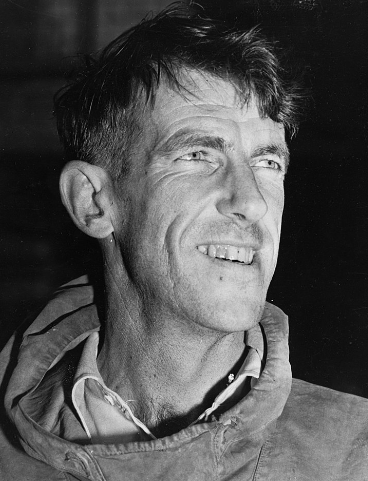
Sir Edmund Hillary’s life was a testament to the power of determination, resilience, and compassion. From his early days as a mountaineer in New Zealand to his historic ascent of Everest and his tireless work to improve the lives of the Sherpa people, Hillary exemplified the qualities of a true hero. Image: Edward Hillary in 1953
Early Life
Sir Edmund Percival Hillary was born on July 20, 1919, in Auckland, New Zealand, to Percival Augustus and Gertrude Hillary. His father served in the military with the 15th (North Auckland) Regiment at Gallipoli during World War I. From an early age, Hillary displayed a keen interest in adventure and exploration, which was nurtured during his time at Auckland Grammar School and Auckland University College. It was during his secondary school years that Hillary developed an interest in mountaineering, which would become a defining aspect of his life.

Edmund Hillary was the son of Percival Augustus and Gertrude Hillary and was born in 1919 in New Zealand. Image: Hillary’s mother Gertrude Clark, 1909
Early Climbing Career
Hillary’s first major climb was in 1939 when he reached the summit of Mount Ollivier, near Aoraki / Mount Cook in the Southern Alps. This achievement marked the beginning of his lifelong passion for climbing. His early climbing experiences were primarily in New Zealand, where he honed his skills and developed a reputation as a determined and capable climber.
During World War II, Hillary served as a navigator in the Royal New Zealand Air Force. His service was marked by bravery and resilience, but he was also wounded in an accident. This period of his life, while challenging, did not diminish his enthusiasm for climbing and exploration.
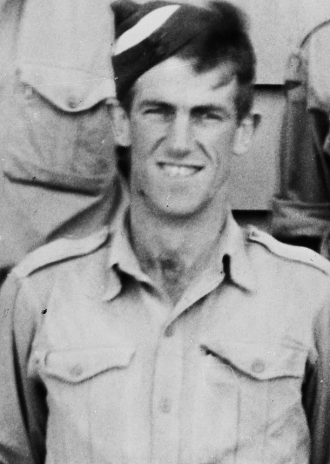
During World War II Edmund Hillary served as a navigator in the Royal New Zealand Air Force. Image: Hillary in Royal New Zealand Air Force uniform at Delta Camp, near Blenheim, New Zealand, during World War II
The Road to Everest
Before the historic Everest expedition, Hillary participated in the British reconnaissance expedition to the mountain in 1951. This expedition was crucial in mapping and understanding the southern approach to Everest. In 1952, he also took part in an unsuccessful attempt to climb Cho Oyu, the sixth-highest mountain in the world. These experiences were invaluable in preparing Hillary for the ultimate challenge: the summit of Mount Everest.
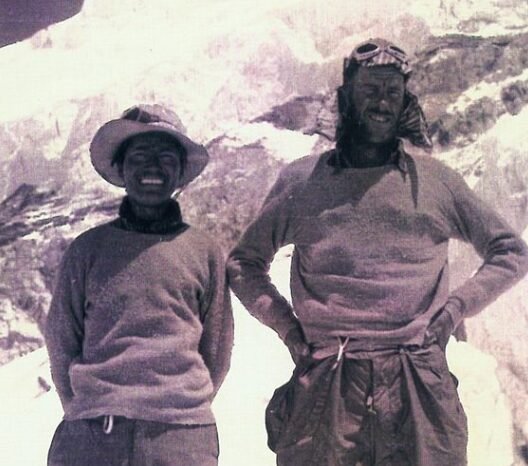
Sir Edmund Hillary and fellow mountaineer Tenzing Norgay were the first to climb to the summit of Mount Everest in 1953. Image: Sir Edmund Hillary and fellow mountaineer Tenzing Norgay.
Conquering Everest
On May 29, 1953, Sir Edmund Hillary and Tenzing Norgay, a Sherpa mountaineer, made history by becoming the first climbers confirmed to reach the summit of Mount Everest. They were part of the ninth British expedition to Everest, led by John Hunt. This monumental achievement was the result of meticulous planning, teamwork, and extraordinary physical and mental endurance.
The journey to the summit was fraught with peril and required navigating the treacherous Khumbu Icefall, the Western Cwm, and the Lhotse Face. The final camp was set at the South Col, a sharp-edged pass between Everest and Lhotse. On the day of the summit attempt, Hillary and Norgay faced extreme cold, high winds, and the ever-present threat of avalanches. Despite these challenges, they persevered and reached the summit, where they spent about 15 minutes taking photographs and burying a small cross and some sweets as a token of their accomplishment.
Their successful ascent was announced to the world on June 2, 1953, coinciding with the coronation of Queen Elizabeth II. This achievement brought Hillary international fame and recognition, and he was knighted by the Queen, becoming Sir Edmund Hillary.
Post-Everest Achievements
After his historic climb of Everest, Hillary continued to pursue other ambitious goals. In 1958, as part of the Commonwealth Trans-Antarctic Expedition, he reached the South Pole overland, becoming one of the few people to have stood on both poles and the summit of Everest. This expedition, led by Sir Vivian Fuchs, aimed to complete the first overland crossing of Antarctica, and Hillary’s team reached the pole using modified tractors and sleds.
In 1985, Hillary added another remarkable achievement to his list by reaching the North Pole, making him the first person to have reached both poles and the summit of Everest. This accomplishment cemented his status as one of the greatest explorers of the 20th century.
Philanthropy and the Himalayan Trust
Starting in 1960, Hillary dedicated himself to helping the Sherpa people of Nepal through the Himalayan Trust, an organization he founded. His efforts were motivated by the gratitude he felt towards the Sherpa community, who had been instrumental in the success of the Everest expedition. The Himalayan Trust focused on improving the quality of life for the Sherpas by constructing schools, hospitals, bridges, and airstrips.
One of the Trust’s most notable achievements was the construction of the Kunde Hospital in the Khumbu region, which provided much-needed medical care to the local population. Hillary’s commitment to the welfare of the Sherpa people extended beyond infrastructure projects; he also worked to preserve their culture and environment. His efforts in this area were widely recognized and appreciated, both in Nepal and internationally.
Political and Diplomatic Roles
In addition to his climbing and philanthropic activities, Hillary also served in various political and diplomatic roles. From 1985 to 1988, he was New Zealand’s High Commissioner to India and Bangladesh and concurrently served as Ambassador to Nepal. In these roles, Hillary worked to strengthen New Zealand’s ties with these countries and promote international cooperation.
Honors and Recognition
Throughout his life, Hillary received numerous honors and awards in recognition of his contributions to mountaineering, exploration, and philanthropy. Some of the most notable include:
- Knight Commander of the Order of the British Empire (KBE): Bestowed upon him in 1953 for his successful ascent of Everest.
- Order of the Garter: In 1995, Hillary was appointed to this prestigious order, which is one of the highest honors that can be conferred by the British monarchy.
- Polar Medal: Awarded in 1958 for his participation in the Commonwealth Trans-Antarctic Expedition.
- Queen Elizabeth II Coronation Medal: Received in 1953.
- Time Magazine’s 100 Most Influential People of the 20th Century: Named one of the century’s most influential people in recognition of his achievements in exploration and philanthropy.
Personal Life
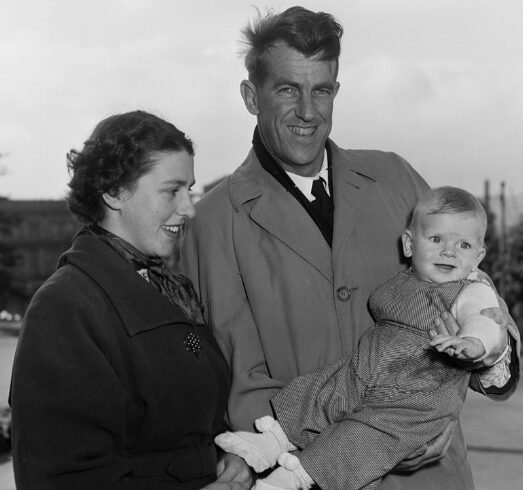
Image: Sir Edmund Hillary, with first wife, Louise, and son, Peter, 1955
Hillary’s personal life was marked by both triumph and tragedy. He married Louise Mary Rose in 1953, shortly after his return from Everest. The couple had three children: Peter, Sarah, and Belinda. Tragically, Louise and Belinda were killed in a plane crash in 1975. This loss deeply affected Hillary, but he found solace in his work with the Himalayan Trust and his continued exploration.
In 1989, Hillary married June Mulgrew, the widow of his close friend Peter Mulgrew. Their companionship provided Hillary with much-needed support and stability in his later years.
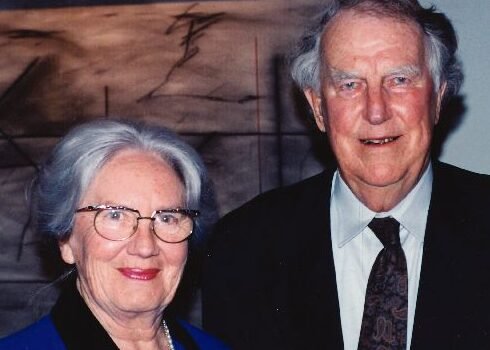
Edward Hillary lost his wife, Louise Mary Rose to a plane crash in 1975. She had three children but one died together with her mother in the plane crash. Fourteen years later, he married the widow of one of his closest friends Peter Mulgrew in 1989. Image: Hillary, with second wife, June Mulgrew, 1998
Legacy and Death
Sir Edmund Hillary’s legacy extends far beyond his mountaineering achievements. He is remembered not only for his historic ascent of Everest but also for his unwavering commitment to humanitarian causes and his efforts to improve the lives of the Sherpa people. His contributions to exploration, philanthropy, and international relations have left an indelible mark on the world.
Hillary passed away on January 11, 2008, at the age of 88, due to heart failure. His death was a significant loss to New Zealand and the global community. He was honored with a state funeral in New Zealand, attended by dignitaries, friends, and admirers from around the world. His legacy continues to inspire new generations of climbers, explorers, and philanthropists.

Sir Edmund Hillary’s accomplishments in mountaineering and exploration are legendary, but it is his humanitarian legacy that truly sets him apart. Sir Edmund Hillary’s life story is one of extraordinary achievements and enduring impact, making him a beloved and respected figure worldwide. Image: Portrait Sir Edmund Hillary, Australia, July 1953
Did you know…?
- On 26 May, British mountaineers Tom Bourdillon and Charles Evans attempted to summit Everest but turned back due to Evans’s oxygen system failure. They reached the South Summit, just 300 feet (91 meters) below the peak. Hunt then instructed Hillary and Tenzing to make their attempt on the summit.
- Two Antarctic features are named after Sir Edmund Hillary. They are the Hillary Coast and the Hillary Canyon.
Questions and Answers about Sir Edmund Hillary

Sir Edmund Hillary develop his interest in climbing mountains during his days in secondary school. Image: Statue of Hillary gazing towards Aoraki / Mount Cook, one of his favorite peaks.
What was Sir Edmund Hillary’s first official climb?
Mount Ollivier in 1939.
Who accompanied Sir Edmund Hillary to the summit of Mount Everest?
Tenzing Norgay.
When did Sir Edmund Hillary and Tenzing Norgay reach the summit of Mount Everest?
On 29 May 1953.
Hillary and Norgay were part of the ninth British expedition to Everest when they summited Everest. The expedition was led by John Hunt.
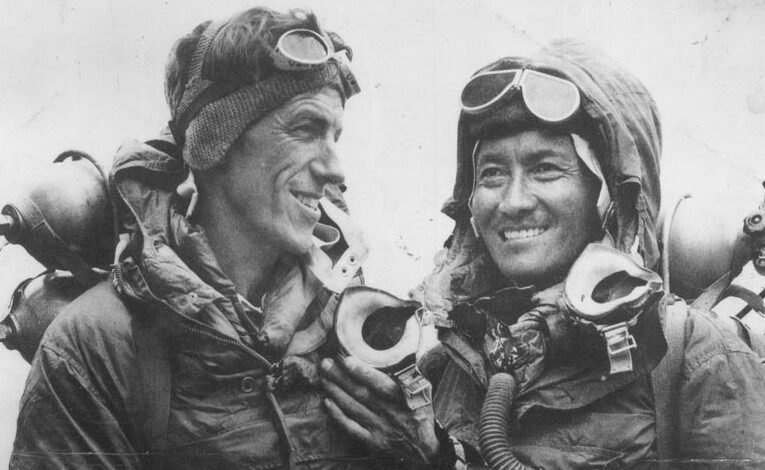
Edmund Hillary founded the Himalayan Trust in 1960. The mission of the organization was to assist the Sherpa people of Nepal by constructing schools and hospitals. Image: Hillary and Tenzing on return from the summit of Everest
Who were Sir Edmund Hillary’s parents?
Percival Augustus and Gertrude Hillary.
Which regiment did Sir Edmund Hillary’s father serve with during his military career?
The 15th (North Auckland) Regiment at Gallipoli.
Where did Sir Edmund Hillary receive his education?
Auckland Grammar School and Auckland University College.
Which New Zealand banknote features Sir Edmund Hillary’s face?
The 5 dollar currency note.
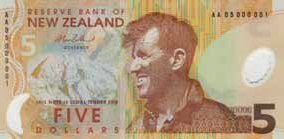
Image: Sir Edmund Hillary on the New Zealand five-dollar note
What was the cause of Sir Edmund Hillary’s death?
Heart failure.

In 1958, Sir Edmund Hillary reached the South Pole overland as part of the Commonwealth Trans-Antarctic Expedition. This made him the first person to reach both the North and South Poles and summit Everest. Image: In the cockpit of the Commonwealth Trans-Antarctic Expedition’s DHC-2, 1956





