Successor States to the Ghana Empire: History & Major Facts
The decline of the Ghana Empire in the late 11th to early 12th centuries, primarily due to its conquest by the Almoravids and internal factors, led to a power vacuum in the West African region. This transitional period witnessed the rise and fall of various states, each aspiring to claim the legacy of Ghana.

The decline of the Ghana Empire in the late 11th to early 12th centuries was primarily due to its conquest by the Almoravids and internal factors.
While several kingdoms surfaced during this time, the primary successor states that stood out in terms of power, influence, and territorial control were the Sosso Empire, the Mali Empire, and the Songhai Empire. These empires not only succeeded Ghana in terms of geographic dominance but also in their cultural, economic, and political influences on the region.
The Sosso Empire
Following the decline of the Ghana Empire, the Sosso people, who were initially part of Ghana’s dominion, seized the opportunity to consolidate power. The Sosso Empire emerged prominently in the late 12th century under the leadership of King Sumanguru Kante. This period marked a significant shift as the Sosso, capitalizing on the weakening remnants of the Ghana Empire, established their dominance.
King Sumanguru Kante is a central figure in the history of the Sosso Empire, though much of his life is shrouded in legend. He is often depicted as a powerful and somewhat tyrannical leader who managed to unify various factions under his rule. The Sosso Empire was based in the city of Koumbi Saleh, which was formerly the capital of the Ghana Empire, symbolizing a direct succession and continuation of Ghana’s legacy.

The Sosso Empire, under Sumanguru, managed to control significant portions of the trans-Saharan trade routes. Their military conquests extended across modern-day Mali, establishing them as a regional power. Image: Territories of the successor states to the Ghana Empire
Key Achievements
Under Sumanguru’s rule, the Sosso Empire achieved considerable control over significant portions of the trans-Saharan trade routes, which were vital for commerce and wealth accumulation in the region. These trade routes facilitated the exchange of gold, salt, and other valuable commodities between West Africa and North Africa, contributing to the Sosso Empire’s economic prosperity.
The Sosso Empire also expanded its territorial reach through military conquests, extending its influence across modern-day Mali. This expansion not only increased their control over trade but also brought various ethnic groups and territories under Sosso rule, establishing them as a formidable regional power.
Decline and Legacy
Despite its achievements, the Sosso Empire’s dominance was relatively brief. Its decline began with the rise of Sundiata Keita, a young Mandinka prince whose clash with King Sumanguru is immortalized in the epic of Sundiata. This epic, part of the oral tradition of the region, recounts the dramatic confrontation between Sumanguru and Sundiata, culminating in Sumanguru’s defeat at the Battle of Kirina around 1235.
Sundiata’s victory marked the end of the Sosso Empire and the beginning of the Mali Empire. Although the Sosso Empire was short-lived, its role in the transitional period post-Ghana was pivotal. It set the stage for the emergence of the Mali Empire, which would go on to become one of the most influential empires in West African history.
Did you know…?
The Sosso Empire is also known as Soso, Susu, or Kaniaga.
The Mali Empire

Size of the Mali Empire
The Mali Empire was founded by Sundiata Keita after his victory over the Sosso Empire. Sundiata’s triumph at the Battle of Kirina not only established him as a powerful leader but also laid the foundation for the Mali Empire, which would flourish from around 1235 to 1600. Sundiata’s leadership was instrumental in consolidating various Mandinka chiefdoms into a unified state, promoting agriculture, trade, and effective governance structures that ensured the empire’s prosperity.
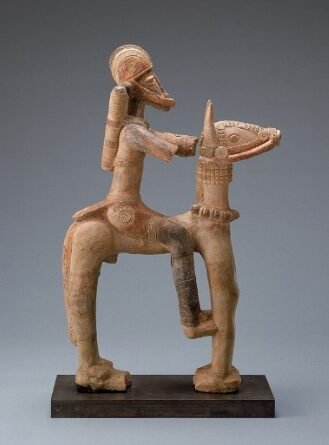
Founded by Sundiata Keita after his victory against the Sosso, the Mali Empire (c. 1235 to 1600) soon expanded its territories, becoming one of West Africa’s most influential empires. Image: Mali terracotta horseman figure from the 13th to 15th centuries
Key Achievements of the Mali Empire
The Mali Empire controlled and expanded the trans-Saharan trade routes, particularly in gold, salt, and ivory. These trade routes were crucial for the empire’s economic prosperity, allowing Mali to become one of the wealthiest states in the world at the time. The introduction of new farming techniques led to food surpluses, which in turn fueled urbanization and trade. Cities like Timbuktu and Gao became thriving centers of commerce and learning.
Under rulers like Mansa Musa, the Mali Empire experienced a golden age. Mansa Musa’s pilgrimage to Mecca in 1324 is legendary, with tales of his caravan’s vast wealth impacting global gold markets. His pilgrimage not only showcased Mali’s immense wealth but also established diplomatic and economic ties with other Islamic states. Mansa Musa’s reign is also noted for the promotion of education and scholarship, particularly in Timbuktu, which became a renowned center of learning, attracting scholars from various parts of the Muslim world.
The Mali Empire left an indelible mark on West African architecture. The construction of mosques, madrasas, and palaces during this period was significant, with the Djinguereber Mosque and Sankore Mosque in Timbuktu standing as a testament to this era. These architectural achievements reflect the empire’s wealth, cultural integration, and the influence of Islamic architecture.
The later years of the Mali Empire saw internal strife and external pressures weakening its grip. Succession disputes and the rise of powerful provincial leaders contributed to the empire’s fragmentation. As Mali’s influence waned, another power in its eastern provinces, the Songhai, began to rise. By the late 14th century, the Songhai Empire had overshadowed Mali, becoming the dominant force in the region.
Despite its decline, the Mali Empire left a lasting legacy. Its contributions to trade, education, and culture had a profound impact on West Africa. The administrative and economic systems developed during Mali’s golden age influenced subsequent states, including the Songhai Empire.

The Mali Empire, under the leadership of Sundiata Keita and subsequent rulers like Mansa Musa, achieved remarkable prosperity through trade, cultural flourishing, and architectural achievements. Image: The Great Mosque of Djenné, Mali. The Great Mosque of Djenné in Mali, built in the Sudano-Sahelian style, is a large adobe structure. The current building dates from 1907, with the original mosque constructed in the 13th century. A UNESCO World Heritage Site since 1988, it is a prominent African landmark.
The Songhai Empire
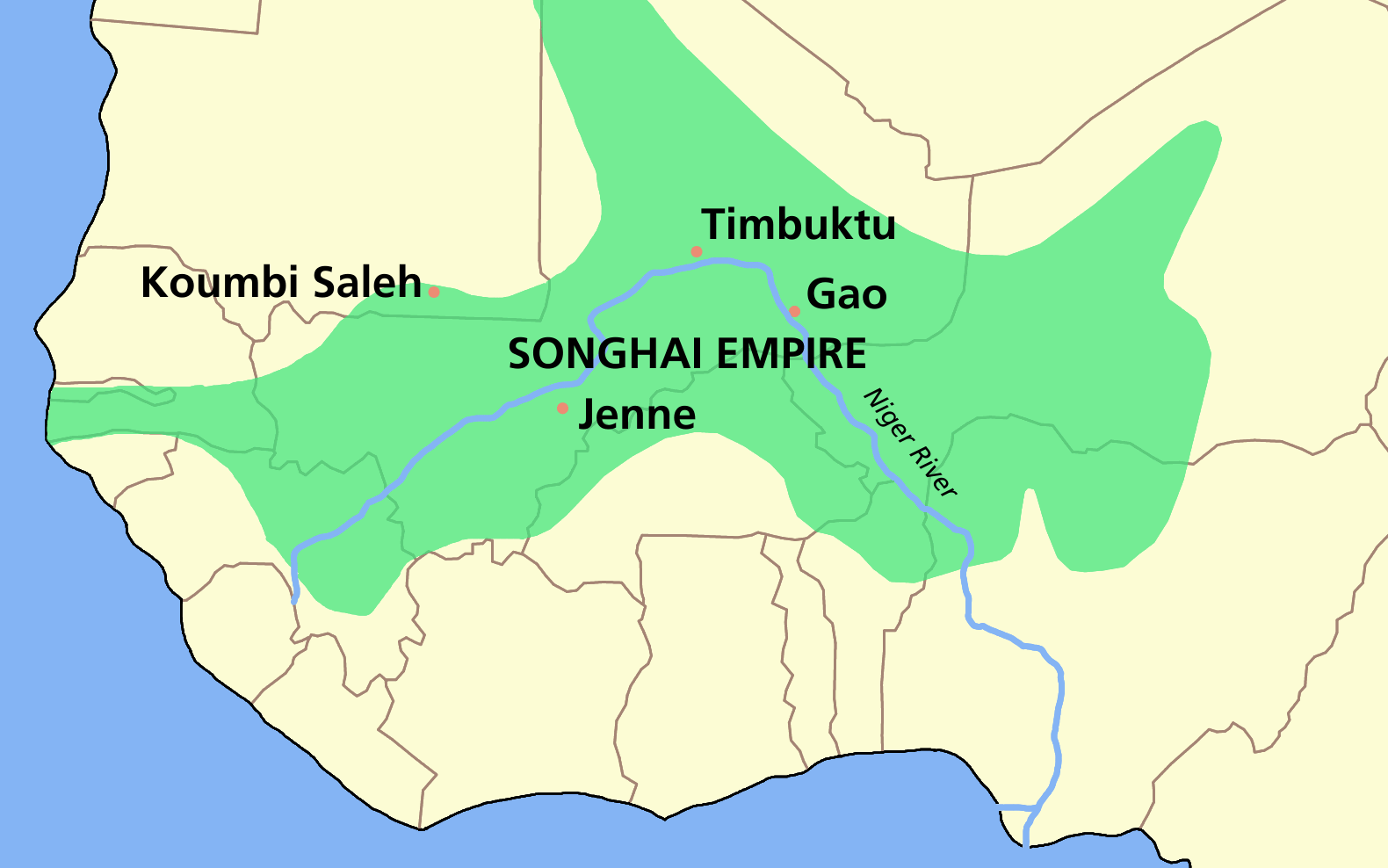
Territorial extent of the Songhai Empire, circa 1500.
The Songhai people, initially part of the Mali Empire, began asserting their independence in the 14th century. The strategic location of their capital, Gao, along the Niger River, facilitated trade and communication, contributing to their rise. Under leaders like Sunni Ali and Askia Muhammad, the Songhai Empire expanded rapidly, becoming one of the largest empires in African history.
Key Achievements
The Songhai Empire, at its peak, controlled vast territories from modern-day Mali to parts of Nigeria. Sunni Ali, who ruled from 1464 to 1492, played a crucial role in the empire’s expansion. He conducted numerous military campaigns, capturing key cities such as Timbuktu and Djenné. These conquests not only expanded the empire’s territory but also secured control over important trade routes and commercial centers.
One of the most notable leaders of the Songhai Empire was Askia Muhammad, who came to power in 1493. Askia Muhammad introduced several administrative reforms that enhanced the efficiency and stability of the empire. He established a centralized bureaucracy, appointed governors for different provinces, and standardized trade measures. His reign also saw the promotion of Islam, with a focus on education and learning. Askia Muhammad’s efforts to integrate Islamic principles into governance strengthened the cultural cohesion of the empire.
Despite its vast size, the Songhai Empire managed to maintain a degree of cultural cohesion by integrating various ethnic groups under its rule. The empire promoted trade, education, and the spread of Islam, which helped unify its diverse population. Timbuktu and Gao continued to be centers of learning and culture, attracting scholars and traders from across the Muslim world.
Decline and Legacy
The decline of the Songhai Empire began in the late 16th century. The invasion by a Moroccan army equipped with firearms marked a significant turning point. The Battle of Tondibi in 1591, where the Songhai forces were defeated, led to the empire’s fragmentation and eventual collapse. The Moroccan invasion disrupted the administrative and economic structures of the empire, causing internal conflicts and weakening its control over vast territories.
Despite its fall, the Songhai Empire left a lasting legacy. The administrative, economic, and cultural structures established during its peak continued to influence the region. The empire’s emphasis on education and scholarship, particularly in Timbuktu, had a profound impact on West African intellectual and cultural life.

The Songhai Empire’s end came at the hands of a Moroccan army equipped with firearms in the late 16th century. This invasion led to the Battle of Tondibi in 1591, marking the beginning of the empire’s decline and eventual fragmentation. Though the empire fell, the cultural, economic, and administrative structures set by the Songhai left a lasting legacy in the region.
10 Mightiest African Empires of All Time and their Achievements
Questions and Answers
The successor states to the Ghana Empire—the Sosso Empire, the Mali Empire, and the Songhai Empire—each played a crucial role in shaping the history of West Africa.
While the Sosso marked the immediate aftermath of Ghana’s decline, the Mali Empire rose to epitomize the zenith of West African medieval empires in terms of cultural and economic achievements. The Songhai Empire, embodying both grandeur and vastness, furthered this legacy, fostering trade, learning, and governance systems that resonate even today.

Here are some questions and answers about the successor states to the Ghana Empire:
What led to the rise of the Sosso Empire?
The Sosso Empire rose to power following the decline of the Ghana Empire. The Sosso people, originally under Ghana’s dominion, capitalized on the weakening empire and began to consolidate power, especially under the leadership of King Sumanguru Kante.
What was the capital of the Sosso Empire?
The capital of the Sosso Empire was Koumbi Saleh, which was previously the capital of the Ghana Empire.
Who was the prominent leader of the Sosso Empire?
King Sumanguru Kante was the prominent leader of the Sosso Empire.
The Sosso Empire, though short-lived, was instrumental in the transitional period following Ghana’s decline, setting the stage for the rise of the Mali Empire.
How did the Sosso Empire end?
The Sosso Empire’s dominance ended with the defeat of King Sumanguru Kante by Sundiata Keita, a young Mandinka prince. This defeat led to the emergence of the Mali Empire.
Who founded the Mali Empire and when?
The Mali Empire was founded by Sundiata Keita around 1235 after his victory against the Sosso.
What were the main economic activities of the Mali Empire?
The Mali Empire controlled and expanded the trans-Saharan trade routes, trading gold, salt, and ivory. They also introduced new farming techniques that led to food surpluses, fueling urbanization and trade.

Sankoré Madrasa, also known as Sankoré Mosque or University of Sankoré, is a medieval mosque and learning center in Timbuktu, Mali. Founded in the 14th century, it flourished under the Mali and Songhai Empires, reaching its peak in the 16th century. Image: Sankoré Mosque
Which Mali ruler’s pilgrimage to Mecca is legendary and why?
Mansa Musa’s pilgrimage to Mecca in 1324 is legendary because of the vast wealth he displayed during his journey, which impacted global gold markets.
What is one of the architectural marvels from the Mali Empire?
One of the architectural marvels from the Mali Empire is the Djinguereber Mosque in Timbuktu. The Djinguereber Mosque, a renowned learning center in Timbuktu, Mali, was built in 1327. Known also as Djingareyber or Djingarey Ber, it is one of three madrassas forming the University of Timbuktu. This historic site was designated a UNESCO World Heritage Site in 1988.
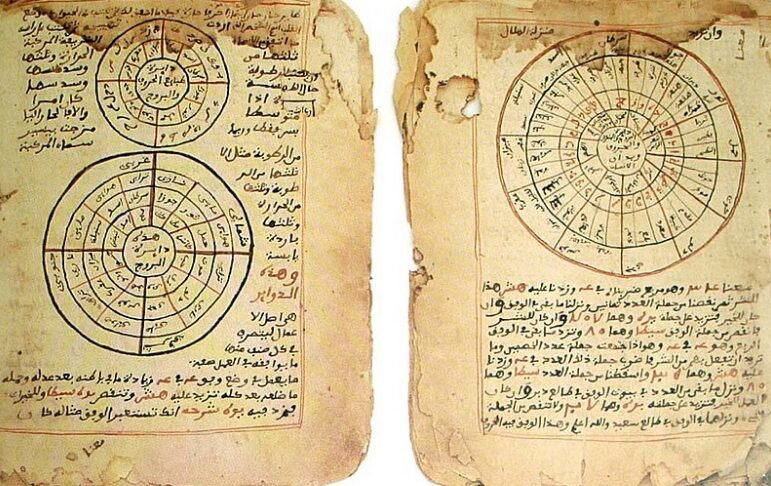
Image: The Timbuktu Manuscripts, with Arabic writings about mathematics and astronomy
What led to the decline of the Mali Empire?
The Mali Empire declined due to internal strife and external pressures. As its influence waned, the Songhai Empire began to rise and eventually overshadowed Mali.
When did the Songhai Empire begin to assert its independence?
The Songhai Empire began to assert its independence in the 14th century while initially being part of the Mali Empire. Historians often state that the Songhai Empire maintained a degree of cultural cohesion by integrating various ethnic groups under its rule despite its vast size.
Who were two notable leaders of the Songhai Empire?
Two notable leaders of the Songhai Empire were Sunni Ali and Askia Muhammad.
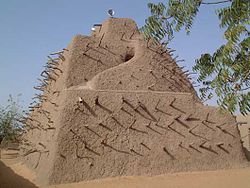
The Songhai Empire, building on the legacy of Mali, became one of the largest empires in African history, known for its territorial expansion, administrative reforms, and cultural integration. Image: The Tomb of Askia in Gao.
What was one of the key achievements of Askia Muhammad?
Askia Muhammad introduced several administrative reforms, established standardized trade measures, and promoted learning and Islam.
What led to the decline of the Songhai Empire?
The decline of the Songhai Empire began with the invasion of a Moroccan army equipped with firearms in the late 16th century, leading to the Battle of Tondibi in 1591 and subsequent fragmentation.





