Early Life
Mobutu was born on October 14, 1930, in Lisala, in what was then the Belgian Congo. His father, a cook for a Belgian judge, died when Mobutu was only eight years old. After his father’s death, he was raised by his mother, Marie-Madeleine Yemo, who emphasized the importance of education and discipline. Mobutu was educated in Catholic missionary schools, where he showed promise as a student. However, he was also known for his rebellious nature, which led to several run-ins with school authorities.
In 1949, at the age of 19, Mobutu joined the Force Publique, the colonial army of the Belgian Congo. He rose through the ranks, benefiting from his intelligence and ambition, and eventually reached the rank of sergeant. His time in the Force Publique exposed him to the inner workings of colonial administration and gave him insights into the power structures that governed the Congo.

Mobutu was born Joseph-Désiré Mobutu in Lisala, northwest of the then-Belgian Congo on October 14, 1930. Taller than most of his peers, he dominated sports at the Christian Brothers School. Mobutu was described as a bright student with a great sense of humor and quite rebellious. Image: Colonel Mobutu Sese Seko in 1960
Rise to Power
In the late 1950s, as nationalist movements swept across Africa, Mobutu became increasingly involved in politics. He joined the Mouvement National Congolais (MNC), a political party led by Patrice Lumumba, who would later become the first Prime Minister of the independent Congo. Mobutu quickly became a close confidant of Lumumba, serving as his personal secretary.
When the Congo gained independence from Belgium on June 30, 1960, the country was thrown into chaos. Ethnic tensions, secessionist movements, and Cold War rivalries led to a violent power struggle. Lumumba, who sought to maintain the country’s unity and independence, was caught between various factions, including those supported by the United States and the Soviet Union.
Mobutu, sensing an opportunity, played both sides against each other. On September 14, 1960, with the backing of the CIA and Belgian interests, he led a coup against Lumumba, citing the need to restore order. Lumumba was arrested and eventually handed over to his enemies in Katanga, where he was brutally murdered in January 1961.
After Lumumba’s death, Mobutu continued to consolidate power. In 1965, he staged another coup, this time overthrowing President Joseph Kasa-Vubu. Mobutu declared himself president and established a one-party state, with the MNC as the sole legal party. Over the next few years, he systematically eliminated political rivals, either through co-optation or assassination.
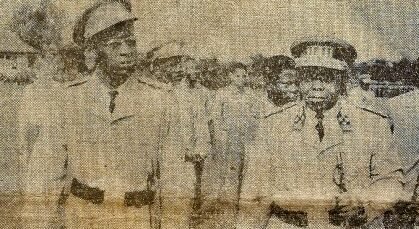
Image: Colonel Joseph-Desiré Mobutu (left) with President Joseph Kasa-Vubu, 1961
The Assassination of Patrice Lumumba
The Cult of Personality and Zairianization
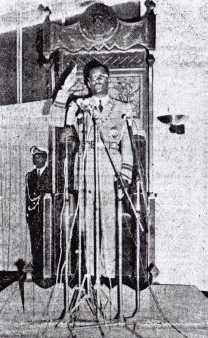
Image: Mobutu sworn in as President of the Democratic Republic of the Congo following the 1970 election.
Once in power, Mobutu sought to legitimize his rule by creating a cult of personality around himself. In 1971, he changed the country’s name from the Democratic Republic of Congo to Zaire and adopted the name Mobutu Sese Seko Kuku Ngbendu Wa Za Banga, which roughly translates to “the all-powerful warrior who, because of his endurance and inflexible will to win, goes from conquest to conquest, leaving fire in his wake.”
Mobutu also launched a campaign known as “Authenticité,” which aimed to rid the country of colonial influences and promote African culture. This policy led to the “Zairianization” of the economy, in which foreign-owned businesses were nationalized and handed over to Mobutu’s cronies. The intent was to foster a sense of national pride and self-sufficiency, but the policy led to widespread corruption, economic mismanagement, and a decline in living standards.

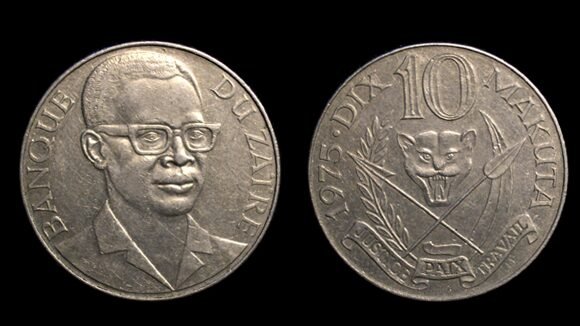
Image: A Congolese cotton shirt embellished with a portrait of Mobutu from the collection of the Tropenmuseum in Amsterdam
Economic Decline and Corruption
Under Mobutu’s rule, Zaire became synonymous with corruption. The dictator used the state as a personal piggy bank, diverting billions of dollars in aid and revenue into his own accounts. Mobutu’s personal wealth was estimated to be between $4 billion and $15 billion, much of it stashed in foreign bank accounts. Meanwhile, Zaire’s infrastructure crumbled, and its people suffered from poverty, lack of basic services, and human rights abuses.
Mobutu’s regime was propped up by Western powers, particularly the United States and France, which viewed him as a bulwark against communism in Africa. Despite his corrupt and oppressive rule, Mobutu received substantial financial and military support from these countries throughout the Cold War.

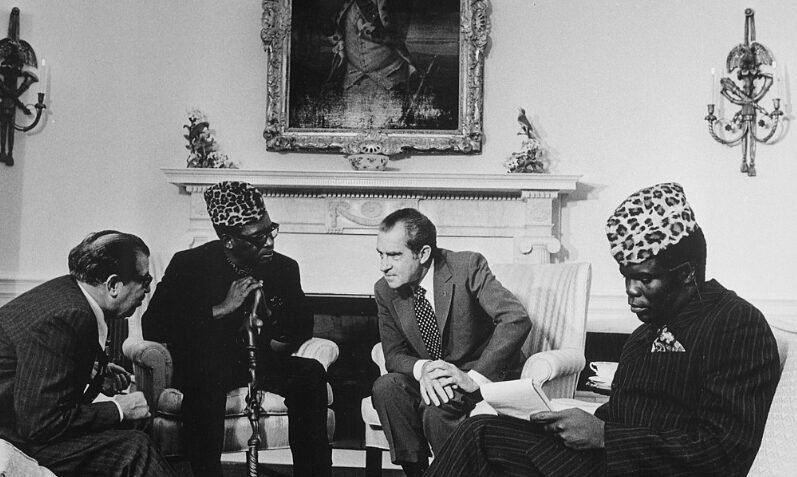
Image: Mobutu Sese Seko with the Dutch Prince Bernhard in 1973
Human Rights Violations and Repression
Mobutu’s reign was marked by widespread human rights violations. He ruled through a combination of fear, patronage, and brutal repression. Political dissent was not tolerated, and opposition leaders were often imprisoned, tortured, or killed. The press was tightly controlled, and freedom of speech was severely restricted.
One of the most notorious aspects of Mobutu’s rule was the use of “state terrorism” to maintain control. The state security apparatus, including the army and secret police, was used to crush any opposition. Political prisoners were routinely subjected to torture, and public executions were used as a means of instilling fear in the population.
Ethnic violence also became a hallmark of Mobutu’s rule. He often manipulated ethnic tensions to weaken potential rivals and maintain his grip on power. This strategy led to several bloody conflicts, particularly in the eastern regions of the country, where ethnic militias and government forces clashed repeatedly.
The Shaba Invasions
One of the most significant challenges to Mobutu’s rule came in the form of the Shaba invasions in the late 1970s. Shaba, a mineral-rich region in southeastern Zaire (now Katanga), was the site of two major invasions by rebels supported by Angola and the Soviet Union. The first invasion occurred in 1977, and the second in 1978.
Both invasions were part of broader regional conflicts and were driven by ethnic and political rivalries. Mobutu’s forces, with the help of Moroccan and French troops, were able to repel the invaders, but the conflicts exposed the weaknesses of his regime and the growing discontent among the population.

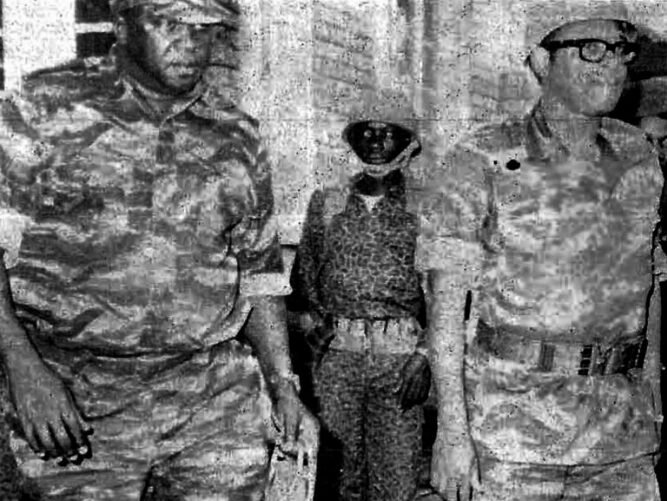
In his early years, Mobutu’s deviant behavior would ultimately land him in big troubling, resulting in him being committed to seven years of service in the colonial army, the Force Publique (FP). He got the needed stability and discipline in the army, and by 1956 he retired and became a full-time journalist. Image: Mobutu Sese Seko in army fatigues, 1978
Decline and Fall
By the 1980s, Mobutu’s grip on power was beginning to weaken. The global decline in copper prices, one of Zaire’s main exports, led to a severe economic crisis. The country was heavily indebted, and Mobutu’s corrupt practices made it difficult to secure international loans. The living standards of ordinary Zairians continued to deteriorate, leading to widespread discontent.
In 1990, as the Cold War came to an end, Mobutu faced increasing pressure to democratize. He responded by announcing a transition to multi-party democracy, but in reality, he continued to manipulate the political system to maintain his hold on power. The opposition was divided and lacked the resources to mount a serious challenge to his rule.
However, Mobutu’s health was deteriorating, and he was diagnosed with prostate cancer in 1994. As his condition worsened, so did the political and economic situation in Zaire. The government became increasingly dysfunctional, and Mobutu’s ability to govern effectively was diminished.
The First Congo War and the Fall of Mobutu
The final blow to Mobutu’s regime came in the form of the First Congo War, which began in 1996. The war was sparked by the Rwandan Genocide and the subsequent refugee crisis in eastern Zaire. Hutu militants, who had fled Rwanda after the genocide, used eastern Zaire as a base to launch attacks on the new Rwandan government.
In response, the Rwandan government, along with Uganda and several other neighboring countries, supported a rebel movement led by Laurent-Désiré Kabila. The rebels, known as the Alliance of Democratic Forces for the Liberation of Congo-Zaire (AFDL), launched a military campaign to overthrow Mobutu.
Mobutu’s forces were no match for the AFDL, and the rebel advance was swift. By May 1997, the rebels had captured the capital, Kinshasa, and Mobutu was forced to flee the country. He sought refuge in Morocco, where he died on September 7, 1997, at the age of 66.
Most Ruthless African Dictators of All Time
Legacy and Impact
Mobutu Sese Seko’s legacy is one of corruption, repression, and economic mismanagement. His rule left Zaire deeply impoverished and politically unstable. The country, renamed the Democratic Republic of Congo after his fall, has struggled to recover from the decades of misrule and the conflicts that followed his departure.
Mobutu’s use of state resources for personal gain set a precedent for kleptocratic governance in Africa, and his regime is often cited as a prime example of the “Big Man” style of leadership that has plagued the continent. Despite his initial promises of stability and development, Mobutu’s legacy is one of a country left in ruins, with a population that suffered immensely under his rule.
The fall of Mobutu also had significant regional implications. The First Congo War, which led to his ousting, was followed by the even more devastating Second Congo War, also known as the Great African War, which involved multiple African nations and resulted in millions of deaths. The conflicts that erupted in the wake of Mobutu’s fall continue to affect the Democratic Republic of Congo and the broader Central African region to this day.
Major Atrocities Committed
Mobutu Sese Seko’s regime was marked by numerous atrocities and human rights abuses, which contributed to his notoriety as one of Africa’s most brutal dictators. These atrocities were driven by his desire to maintain power, eliminate opposition, and enrich himself at the expense of the Congolese people.
1. Repression of Political Opposition
One of the most consistent features of Mobutu’s rule was the ruthless repression of political opposition. From the early days of his regime, Mobutu sought to eliminate any potential threats to his authority. This often involved the imprisonment, torture, and execution of political opponents. The security services, particularly the National Intelligence Agency (ANR) and the presidential guard, were used to monitor, intimidate, and silence dissent.
Notable figures who fell victim to Mobutu’s repression include Pierre Mulele, a Lumumbist revolutionary who led a rebellion in the 1960s. After being lured back to Zaire under the promise of amnesty, Mulele was brutally tortured and executed in 1968. His death served as a warning to others who might consider opposing Mobutu.
2. Public Executions and “Zairianization”
Mobutu used public executions as a means of instilling fear among the population and deterring opposition. These executions were often carried out in stadiums or other public venues, with large crowds forced to witness the killings. The victims were often accused of treason, corruption, or other crimes against the state, but in many cases, the charges were politically motivated.
The “Zairianization” policy, which involved the seizure of foreign-owned businesses and their transfer to Mobutu’s associates, also led to widespread suffering. Many of these businesses were mismanaged, leading to economic decline and increased poverty. The policy enriched a small elite while impoverishing the broader population.
3. Ethnic Violence and Manipulation
Mobutu’s regime was characterized by the manipulation of ethnic tensions to maintain control. The dictator often played different ethnic groups against each other, particularly in the mineral-rich eastern regions of the country. This strategy led to several violent conflicts, including the Shaba invasions of the 1970s.
In the 1990s, as Mobutu’s power began to wane, ethnic violence escalated in the eastern regions of Zaire, particularly in North and South Kivu. The influx of Hutu refugees and militants from Rwanda following the 1994 genocide further destabilized the region, leading to massacres, forced displacements, and other atrocities. Mobutu’s inability or unwillingness to address these issues contributed to the breakdown of order and the eventual outbreak of the First Congo War.
4. Economic Exploitation and Corruption
Mobutu’s regime was notorious for its corruption and economic exploitation. The dictator and his cronies siphoned off billions of dollars from the state, much of it derived from the country’s vast mineral wealth. While Mobutu amassed a personal fortune, the majority of Congolese citizens lived in poverty, with little access to basic services such as healthcare, education, and clean water.
The economic exploitation extended to the country’s workforce, with many Congolese forced to work in dangerous and poorly paid jobs in the mining sector. Child labor, particularly in the mining of coltan and other valuable minerals, was widespread. The profits from these industries were funneled into the pockets of Mobutu and his associates, leaving little for the development of the country.
5. Violence Against Civilians
Throughout Mobutu’s rule, violence against civilians was a common occurrence. The army and security forces were known for their brutality, often targeting civilians in operations aimed at suppressing dissent or maintaining control over restive regions. Massacres, rapes, and other forms of violence were routinely committed by government forces, particularly in the eastern regions of the country.
One of the most egregious examples of state-sponsored violence occurred during the First Congo War. As the AFDL rebels advanced toward Kinshasa, government forces and their allies committed numerous atrocities against civilians, particularly in areas perceived to be sympathetic to the rebels. These atrocities included mass killings, rapes, and the destruction of entire villages.
Did you know…?
- As a soldier, Mobutu wrote pseudonymously for Actualités Africaines, a Belgian colonial magazine. In 1956, he left the army to become a full-time journalist, writing for L’Avenir. By 1958, after covering the World Exposition in Belgium, he received journalism training and became close to Patrice Lumumba, joining his Congolese National Movement (MNC).
- Some historians have stated that Mobutu was recruited by the Belgium government to get close to Lumumba to monitor his activities. He was appointed Secretary of State to the Presidency after Lumumba’s election as prime minister.
- Mobutu fathered 21 children from six women. His son, Nzanga Mobutu Ngbangawe, ran for president in 2006 but lost to Joseph Kabila, the son of the rebel leader Laurent-Désiré Kabila who had overthrown Mobutu.
Conclusion
Mobutu Sese Seko’s life, rise to power, and the major atrocities committed during his reign are a testament to the devastating impact of authoritarian rule and corruption on a nation. Mobutu’s regime was marked by widespread repression, economic exploitation, and violence, which left a lasting scar on the Democratic Republic of Congo.
His legacy serves as a cautionary tale about the dangers of unchecked power and the consequences of prioritizing personal enrichment over the well-being of a nation’s people. The Democratic Republic of Congo continues to grapple with the aftermath of Mobutu’s rule, as it struggles to build a stable and prosperous future in the face of ongoing challenges.