Tohu wa-bohu: Meaning and Significance
Tohu wa-bohu, a term that originates from the Hebrew Bible, has intrigued scholars, theologians, and linguists for centuries. Found in the Book of Genesis, this enigmatic phrase has been the subject of various interpretations and discussions regarding its meaning and significance. In this essay, we will explore the origins of tohu wa-bohu, its linguistic and theological interpretations, and its broader cultural and philosophical implications.
Origins and Biblical Context
The phrase tohu wa-bohu appears in the very first chapter of the Bible, in Genesis 1:2, which in the King James Version reads: “And the earth was without form, and void; and darkness was upon the face of the deep. And the Spirit of God moved upon the face of the waters.” The Hebrew text uses the words “tohu” (תֹ֙הוּ֙) and “bohu” (בֹּ֔הוּ) to describe the state of the earth before God’s creative work began. The phrase is often translated as “formless and void” or “chaos and desolation,” setting the stage for the divine act of creation that follows.
Linguistic Analysis
To fully grasp the meaning of tohu wa-bohu, it’s essential to delve into the linguistic roots of the terms. “Tohu” is a Hebrew word that appears multiple times in the Old Testament. It is often translated as “formless,” “empty,” “confused,” or “chaotic.” For instance, in Deuteronomy 32:10, it is used to describe a “howling waste” or “wilderness.” Similarly, Isaiah 24:10 refers to “tohu” as a city of chaos, and in Job 26:7, it is used to depict the emptiness of space.
“Bohu,” on the other hand, is a much rarer term, appearing only three times in the Old Testament, always in conjunction with “tohu.” Its precise meaning is less clear, but it is generally interpreted to mean “emptiness” or “void.” The pairing of these words, tohu wa-bohu, creates a powerful image of a world that is not just unformed but utterly devoid of structure and substance.
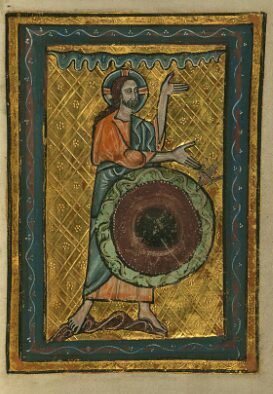
Image: Miniature of the first two Days of Creation (separation of light and darkness; separation of the primordial waters by the firmament), by English manuscript illuminator William de Brailes Ms. W.106 (c. 1250)
Theological Interpretations
The use of tohu wa-bohu in Genesis has profound theological implications. In the context of the creation narrative, it serves to highlight the contrast between the primordial chaos and the ordered cosmos that emerges through God’s creative power. This transition from chaos to order underscores a central theme in the biblical worldview: the sovereignty of God over creation and the imposition of divine order upon a chaotic and formless reality.
In Jewish and Christian theology, tohu wa-bohu has often been associated with the idea of creation ex nihilo, or creation out of nothing. While the text of Genesis does not explicitly state that God created the world from nothing, the depiction of the earth as formless and void suggests a starting point of utter desolation and chaos, from which God brings forth order and life.
Some scholars and theologians have also interpreted tohu wa-bohu as symbolic of spiritual and moral chaos. Just as God brings order to the physical universe, He also seeks to bring order to the human soul and society. This interpretation can be seen in the writings of early church fathers, who often drew parallels between the creation narrative and the process of spiritual transformation.
Cultural and Philosophical Implications
Beyond its theological significance, tohu wa-bohu has found resonance in broader cultural and philosophical contexts. The concept of primordial chaos is not unique to the Hebrew Bible but appears in various ancient Near Eastern creation myths. For example, in the Babylonian creation epic Enuma Elish, the world begins as a chaotic, watery mass before being shaped by the gods. Similar themes can be found in Egyptian and Canaanite mythology, suggesting a common cultural motif of chaos preceding creation.
In modern philosophical discourse, tohu wa-bohu has been used to explore existential and metaphysical questions about the nature of reality and human existence. The idea of an underlying chaos beneath the apparent order of the world raises questions about the stability and permanence of the cosmos. Philosophers such as Martin Heidegger and Jean-Paul Sartre have engaged with themes of existential chaos and nothingness, reflecting on the human condition in a seemingly indifferent and chaotic universe.
Artistic and Literary Reflections
Tohu wa-bohu has also inspired artistic and literary interpretations. The imagery of a formless, chaotic void has been a powerful metaphor for creative processes in art and literature. Writers and artists have used the concept to explore themes of creation, destruction, and the struggle to impose meaning and order on an inherently chaotic world.
In literature, tohu wa-bohu appears in various forms, from descriptions of dystopian worlds to metaphors for inner turmoil and psychological disorder. For instance, in post-apocalyptic fiction, the remnants of human civilization often resemble the primordial chaos depicted by tohu wa-bohu, with characters struggling to rebuild order from the ruins.
In visual arts, the concept has inspired works that depict the tension between chaos and order. Abstract artists, in particular, have explored the idea of formlessness, using chaotic and fluid forms to challenge traditional notions of structure and composition. The interplay between chaos and order in these works reflects the ongoing human endeavor to find meaning and beauty in an unpredictable and often disorderly world.
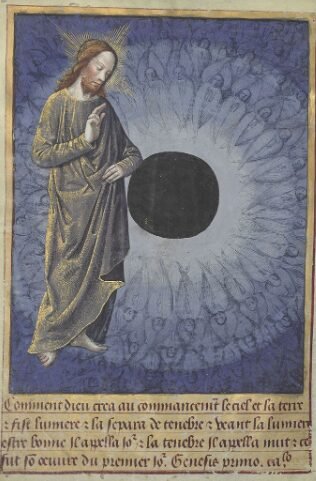
An ancient phrase from the Book of Genesis, Tohu wa-bohu underscores the omnipotence of God, His ability to bring forth order from chaos, and the inherent tension between formlessness and structure. Image: The first day of creation, by French miniature painter Jean Colombe from the Heures de Louis de Laval
Scientific Perspectives
Interestingly, the idea of tohu wa-bohu finds echoes in scientific theories about the origins of the universe. The Big Bang theory, for example, posits that the universe began as a singularity, an infinitely dense and hot point, which then expanded and cooled to form the cosmos as we know it. The early moments of the universe’s existence can be seen as a kind of primordial chaos, from which order and structure gradually emerged.
In the field of cosmology, the study of the universe’s origins and development, the transition from a chaotic, high-energy state to a structured cosmos filled with galaxies, stars, and planets parallels the biblical narrative of creation from tohu wa-bohu. The process of cosmic evolution, governed by physical laws, can be viewed as a natural counterpart to the theological concept of divine creation imposing order on chaos.
Psychological and Personal Insights
On a psychological level, tohu wa-bohu can be understood as a metaphor for personal experiences of chaos and transformation. Many people go through periods in their lives that feel formless and void, marked by confusion, uncertainty, and a lack of direction. These experiences can be likened to the primordial chaos described in Genesis, a state of disarray that precedes the emergence of a new order.
Psychologists and therapists often work with individuals to help them navigate these chaotic periods, facilitating a process of personal growth and transformation. This journey from chaos to order, from tohu wa-bohu to a renewed sense of purpose and meaning, mirrors the creative process depicted in the biblical narrative.
Did you know…?
- In early rabbinical times, “Tohu wa-bohu” sparked debate on creation ex nihilo. Rabbi Akiva, in Genesis Rabbah 1:14, opposed heretical views on primordial matter. In Genesis Rabbah 2:2, it means “bewildered and astonished.” Abraham bar Hiyya saw it as “matter and form,” influencing later Kabbalistic ideas.
- The words “tohu” and “bohu” appear in Isaiah 34:11, translated as “confusion” and “emptiness.” “Tohu” means “wasteness, desert, emptiness, vanity, nothing,” and is often used in Isaiah. “Bohu” occurs only in Genesis 1:2, Isaiah 34:11, and Jeremiah 4:23.
Contemporary Relevance
In contemporary society, tohu wa-bohu can be seen as a reflection of the chaotic and rapidly changing nature of the modern world. Political instability, environmental crises, technological disruptions, and social upheavals contribute to a sense of global chaos. In such times, the concept of tohu wa-bohu serves as a reminder of the potential for order and creativity to emerge from disorder.
Movements for social and environmental justice, efforts to promote mental health and well-being, and initiatives to foster creativity and innovation all represent attempts to bring order and meaning to the chaos of modern life. The enduring relevance of tohu wa-bohu lies in its capacity to inspire hope and resilience, encouraging individuals and communities to engage in the creative work of transformation and renewal.
Questions and Answers on Tohu wa-bohu
In art and literature, it inspires creative explorations of the interplay between chaos and order. In science, it finds parallels in theories about the origins of the universe. And in personal and psychological experiences, it represents the journey from confusion and uncertainty to clarity and purpose.
Ultimately, the significance of tohu wa-bohu lies in its capacity to capture the dynamic and transformative processes that shape our world and our lives. It reminds us that from the depths of chaos, new forms of order and beauty can emerge, and that the creative impulse to bring meaning and structure to the formless void is a fundamental aspect of the human condition.

In theology, tohu wa-bohu underscores the creative power of the divine, transforming formlessness into a structured and purposeful cosmos. In cultural and philosophical contexts, it serves as a metaphor for existential questions about the nature of reality and human existence. Image: Depiction of Genesis 1:2 by Bohemian graphic artist Wenceslaus Hollar.
What is the meaning of the Hebrew phrase “Tohu wa-bohu,” and where does it appear in the Bible?
The phrase “Tohu wa-bohu” is a Hebrew term that appears in the Book of Genesis, specifically in Genesis 1:2. It describes the condition of the earth just before the process of creation began. In English translations, it is often rendered as “without form and void,” “formless and empty,” or similar expressions, indicating a state of emptiness, desolation, and formlessness.
What are the linguistic roots of the terms “Tohu” and “Bohu”?
“Tohu” (תֹ֙הוּ֙) is a Hebrew word that denotes emptiness, vanity, or nothingness and carries a sense of desolation and formlessness. “Bohu” (בֹ֔הוּ) is less commonly found on its own in the Hebrew Bible and typically appears only in conjunction with “Tohu.” When combined, “Tohu wa-bohu” intensifies the sense of emptiness or void imparted by “Tohu.”
How is “Tohu wa-bohu” used in the context of Genesis 1:1-2?
Genesis 1:1-2 states, “In the beginning, God created the heavens and the earth. Now the earth was formless and empty (Tohu wa-bohu), darkness was over the surface of the deep, and the Spirit of God was hovering over the waters.” This passage sets the stage for the acts of creation, presenting an image of a primordial earth that is barren, desolate, and chaotic, awaiting God’s ordering touch.
What theological implications does “Tohu wa-bohu” have?
“Tohu wa-bohu” has several profound theological implications:
- Creation ex nihilo (Latin for “creation out of nothing”): It supports the idea of “creation out of nothing,” emphasizing that God brought the world into being from a state of absolute nothingness. Underpinned by the belief that matter isn’t eternal and was created by a divine act, Creatio ex nihilo contrasts with creation ex materia, where things form from pre-existing matter.
- God as the Bringer of Order: It highlights God’s supreme power to bring order from chaos, a recurring theme throughout the Bible.
- Transient Nature of the Material World: It reminds believers of the temporary nature of the material world and that true permanence lies only in the divine.
What philosophical implications does “Tohu wa-bohu” suggest?
“Tohu wa-bohu” has philosophical bearings, particularly in discussions about:
- Chaos and Order: It epitomizes primordial chaos, providing a starting point for discussions about how order arises from disorder and the inherent tension between these states.
- Existential Nothingness: It resonates with existential ideas of nothingness or the void, suggesting a state of absence or lack before the onset of being or existence.
How has “Tohu wa-bohu” influenced art and literature?
“Tohu wa-bohu” has inspired various artistic and literary works over the centuries. Artists, poets, and writers have used this theme to depict primordial chaos, the divine act of creation, and the transition from desolation to life and order. This phrase has provided rich imagery and metaphors for exploring themes of creation, destruction, and the struggle to impose meaning and order on chaos.
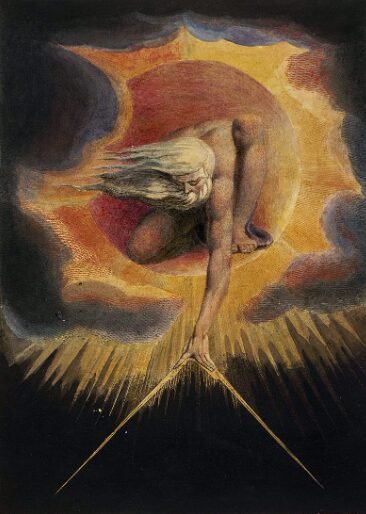
Tohu wa-bohu, a phrase that encapsulates the idea of primordial chaos and emptiness, holds deep meaning and significance across various domains of human thought and experience. Image: The Ancient of Days by English poet and printmaker William Blake (Copy D, 1794)