Who were the Catholic priests that were legally married before becoming pope?
The history of the papacy is filled with fascinating and complex narratives, including those of Catholic priests who were legally married before becoming pope. While the Catholic Church has maintained a rule of clerical celibacy for centuries, there have been exceptions, particularly in the early history of the Church. Understanding these exceptions requires delving into the lives and circumstances of several popes who were married before their election to the papacy.
History of the Catholic Church: How and When Did Catholicism Begin?
Early Church and Clerical Marriage
In the early centuries of the Church, clerical celibacy was not universally enforced, and many priests, bishops, and even popes were married. It was a common practice for clergy to have families, reflecting the customs of the time. The requirement for celibacy was not strictly imposed until much later.
The pivotal change came with the Second Lateran Council in 1139, which universally mandated clerical celibacy in the Western Church. This decree abolished the married priesthood and established celibacy as a prerequisite for ordination. Before this significant shift, marriage among the clergy, including popes, was relatively common and accepted within the Church.
The Second Lateran Council in 1139 mandated celibacy for all clergy in the Latin Church, effectively abolishing the married priesthood and making celibacy a mandatory prerequisite for ordination.
Pope St. Peter (d. 64 AD)
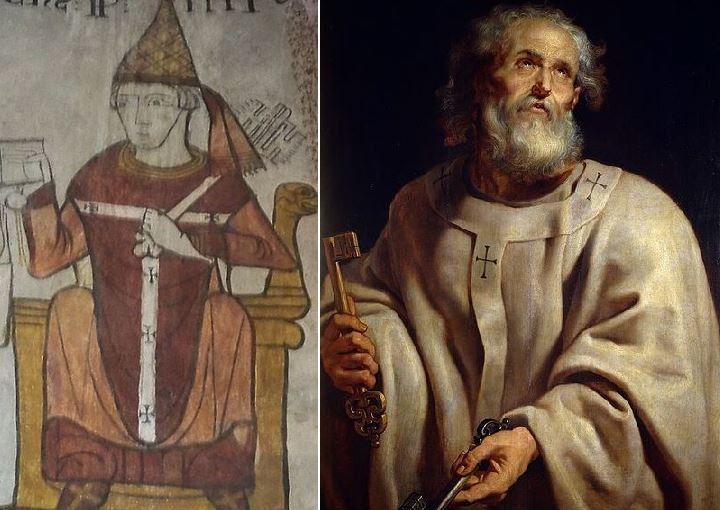
The first pope, St. Peter, is traditionally believed to have been married. The New Testament references Peter’s mother-in-law, implying he had a wife (Matthew 8:14-15). However, there is no detailed record of his wife’s life or whether she was still alive during his papacy.
This absence of information about his wife’s fate does not diminish the significance of Peter’s marital status, which underscores that marriage among early Church leaders was not unusual.
St. Peter’s example reflects the broader practice in the early Church, where many clergy, including apostles, were married, highlighting the evolving nature of clerical celibacy over the centuries.

Hailed as the first pope, St. Peter is traditionally believed to have been married. The New Testament mentions Peter’s mother-in-law, which implies that he had a wife (Matthew 8:14-15). However, there is no detailed record of his wife’s life or whether she was still alive during his papacy. Image: An artwork by Flemish artist Peter Paul Rubens, portraying St. Peter.
Pope St. Felix III (483-492)
Pope Felix III, who served from 483 to 492, was married and had children before his ordination. Notably, his grandson, Pope Gregory I (also known as Pope Saint Gregory I), also ascended to the papacy, illustrating a familial legacy within the Church. Felix III’s marital status did not hinder his rise to becoming a significant religious leader.
During his papacy, Felix III faced the challenge of addressing and combating various heresies that threatened the unity and doctrinal purity of the Church. One of his notable achievements was his handling of the Acacian Schism, a major theological and political dispute between the Eastern and Western Churches. Felix III’s firm stance and diplomatic efforts were instrumental in maintaining the authority and doctrinal integrity of the Roman See.
Felix III’s tenure as pope is remembered for his commitment to strengthening the Church’s doctrinal foundations. He convened synods and councils to address heretical teachings and reinforce orthodox Christian beliefs. His leadership exemplifies how a married man could fulfill the papal role effectively, contributing to the Church’s spiritual and organizational strength. Felix III’s papacy underscores the historical context in which clerical marriage was accepted and did not preclude one from achieving the highest ecclesiastical office.

9 Greatest Catholic Saints of All Time and Their Accomplishments
Pope Hormisdas (514-523)
Pope Hormisdas served as the Bishop of Rome from 514 to 523. He was married before his ordination and was a widower by the time he became pope. His marriage is significant not only because he was pope but because his son, Silverius, also later became pope. Hormisdas is particularly remembered for his successful diplomatic efforts in resolving the Acacian schism, a significant theological dispute between the Eastern and Western Churches.

Pope Adrian II (867-872)
Pope Adrian II, who served from 867 to 872, was married before his ordination. His wife, Stephania, and daughter were alive during his papacy and lived in the Lateran Palace. Adrian’s papacy was marked by political turmoil and efforts to maintain the independence of the papacy from secular influence. His family’s presence in the papal residence was a notable exception to the norm established by this time.

Pope John XVII (1003)
Pope John XVII, born John Sicco, served a very brief papacy in 1003. He was married and had three sons before his ordination. His papacy lasted only a few months, and little is recorded about his time as pope. John XVII’s marital status is one of the few well-documented cases of a married man ascending to the papacy after the Church had begun emphasizing clerical celibacy.
Pope Clement IV (1265-1268)
Pope Clement IV, originally named Gui Foucois, was married and had children before becoming a widower and subsequently taking holy orders. He ascended to the papacy in a period marked by intricate political dynamics, notably navigating the conflicts between the Holy Roman Empire and the Kingdom of Sicily.
His tenure as pope from 1265 to 1268 was characterized by his diplomatic endeavors to manage these tensions effectively. Clement IV’s leadership during these tumultuous times showcased his ability to balance spiritual duties and the political intricacies of medieval Europe, reflecting the challenges faced by the papacy in maintaining church authority amidst regional power struggles.

Pope Clement IV, born Gui Foucois, was another pope who had been married before taking holy orders. He had children and was a widower when he became a priest. Image: A thirteenth-century fresco portraying Clement IV.
Pope Gregory XI (1370-1378)
While there is no concrete evidence that Pope Gregory XI was married, it is worth mentioning that he was rumored to have had a romantic relationship before becoming pope. Gregory XI is best known for his role in ending the Avignon Papacy and returning the papal seat to Rome.

The stories of married popes like St. Peter, St. Felix III, Hormisdas, Adrian II, John XVII, and Clement IV illustrate the diverse paths to the papacy and the ways in which personal and family lives intersected with religious vocations. Image: A drawing depicting Gregory XI on a horse.
FAQs
What factors contributed to the gradual transition from married clergy to a celibate priesthood in the Western Church?
The transition from married clergy to a celibate priesthood was gradual and driven by various theological, social, and practical reasons. Early Church councils addressed the issue of clerical marriage, and by the time of the Second Lateran Council in 1139, the requirement for clerical celibacy was firmly established in the Western Church.
What was the theological justification for celibate priesthood?
The theological justifications for clerical celibacy are rooted in the idea of priests emulating the life of Christ, who was celibate. Celibacy was also seen as a means of dedicating oneself entirely to the service of God and the Church, free from familial obligations and distractions.
What were the practical considerations?
Practically, celibacy was believed to help prevent nepotism and ensure that Church property remained within the Church rather than being inherited by the clergy’s descendants. It also aimed to ensure that clergy could devote themselves fully to their pastoral duties without divided loyalties.
Which pope was notorious for his numerous affairs and children during his reign from 1492 to 1503?
Pope Alexander VI, formerly known as Rodrigo Borgia, was notorious for his numerous affairs and fathering several children during his papacy.
What was the Impact of clerical celibacy in the Catholic Church?
The enforcement of clerical celibacy had significant impacts on the Church and its clergy. It shaped the identity of the priesthood and influenced the Church’s interactions with society. The rule of celibacy has also been a topic of ongoing debate and discussion within the Church.
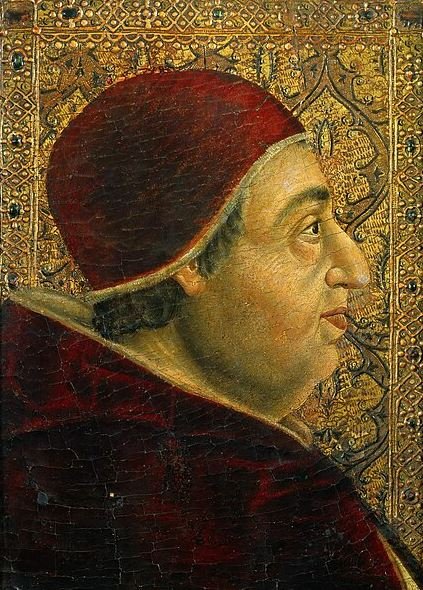
The enforcement of celibacy has significantly influenced the Catholic Church’s clerical structure and its interactions with society, helping to define the spiritual identity of the clergy and emphasizing their commitment to Church duties over familial obligations. Image: A painting of Pope Alexander VI by Spanish painter Pedro Berruguete.
What have the challenges and controversies surrounding clerical celibacy?
Clerical celibacy has faced challenges and controversies throughout history. Some clergy have struggled with the requirement, leading to scandals and calls for reform. The issue has also been a point of contention in ecumenical dialogues, particularly with the Eastern Orthodox Church, which allows married priests.
In modern times, the rule of celibacy continues to be debated within the Catholic Church. Some argue that allowing married priests could address the shortage of clergy and bring diverse perspectives to the priesthood. Others believe that celibacy remains a vital aspect of the Church’s spiritual and pastoral mission.
Are there any exceptions to the rule of clerical celibacy?
There are exceptions to the rule of celibacy within the Catholic Church. Eastern Catholic Churches in communion with Rome allow married priests, and the Latin Church has made provisions for married Anglican priests who convert to Catholicism. These exceptions demonstrate the Church’s ability to adapt and respond to pastoral needs while maintaining its core principles.
READ MORE: History of the Holy See and how it finances its operations





