Prasutagus, a significant figure in ancient British history, was the king of the Iceni, a Celtic tribe located in what is now Norfolk, England, during the 1st century AD.
He is best known as the husband of the legendary Queen Boudicca, whose fierce rebellion against Roman rule remains one of the most well-documented uprisings in ancient Britain.
The Iceni tribe, a powerful group with a distinct cultural identity, came under Roman influence following the conquest of Britain in 43 AD. The Roman invasion, led by Emperor Claudius, marked the beginning of a new era for the British Isles as various tribes either resisted or adapted to the presence of the formidable Roman Empire. Prasutagus, whether through strategic diplomacy or necessity, chose to align with the Romans, thus ensuring that his tribe maintained a degree of autonomy.

Bust of Emperor Claudius, Naples National Archaeological Museum
There are differing views among historians regarding how Prasutagus rose to power. Some believe that he was one of the local kings who surrendered to Claudius during the initial conquest, opting for collaboration over conflict. Another theory posits that he may have become king following the Iceni’s failed rebellion in 47 AD, when the tribe resisted Roman efforts to disarm them. This earlier uprising was harshly suppressed, with Prasutagus likely emerging as a ruler willing to cooperate with Rome to avoid further devastation.
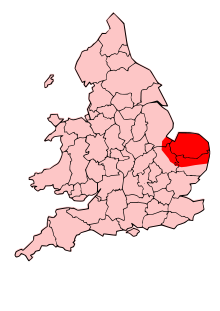
The Iceni were an ancient Iron Age tribe in eastern Britain, mainly in Norfolk, Suffolk, and Cambridgeshire, with Venta Icenorum as their capital.
Prasutagus’s relationship with Rome was defined by a delicate balance of cooperation and subservience. While he ruled as an ally to the empire, his position was inherently vulnerable. The Romans permitted the Iceni to retain nominal independence, but this came at the cost of disarmament and submission to Roman authority. Despite these constraints, Prasutagus managed to lead a prosperous life, as noted by the Roman historian Tacitus, who described him as having enjoyed a long and successful reign.
In an attempt to safeguard his legacy and secure the future of his lineage, Prasutagus made a significant political decision. He named the Roman Emperor Nero as co-heir to his kingdom, alongside his two daughters. This choice, whether driven by strategic foresight or a desire to appease Rome, was intended to protect his family and ensure the continuity of Iceni leadership. However, upon Prasutagus’s death around AD 60 or 61, his will was flagrantly disregarded by the Roman authorities.
Instead of honoring Prasutagus’s arrangements, the Romans took full control of the Iceni territory. The empire’s response was brutal and dismissive, leading to widespread resentment among the Iceni nobility and populace. The Roman seizure of lands, plundering of wealth, and harsh treatment of the Iceni’s elite created deep-seated anger. Tacitus recounts that Boudicca, Prasutagus’s widow, was publicly flogged, and their daughters were subjected to violence. These acts of humiliation and cruelty were clear indicators that the Romans intended to assert absolute dominance, erasing any notion of compromise or shared power.

Statue of Queen Boudicca and her daughters at Westminster in London, England. The statue is by English sculptor Thomas Thornycroft
The financial exploitation that followed further fueled the discontent. Roman financiers called in debts and imposed economic pressure on the Iceni and other tribes, exacerbating tensions. This systematic plundering and disregard for local leadership led to a widespread feeling of betrayal. The culmination of these injustices set the stage for one of the most significant uprisings in Roman Britain: the revolt led by Queen Boudicca.

Queen Boudicca and her daughters – 1855 Bronze statue of Boadicea (Boudica) and her daughters, at Captain’s Walk in Brecon, Powys, Wales; by sculptor John Thomas.
Boudicca’s revolt, which took place in AD 60 or 61, was a direct response to the violation of her husband’s legacy and the mistreatment she and her daughters endured. Under Boudicca’s leadership, the Iceni, joined by neighboring tribes such as the Trinovantes, launched a large-scale insurrection against Roman rule. The rebellion initially met with astonishing success. The insurgents sacked and destroyed several prominent Roman settlements, including Camulodunum (modern-day Colchester), Londinium (London), and Verulamium (St. Albans). These victories sent shockwaves through the Roman administration and highlighted the ferocity and determination of the Britons when provoked.
Despite the early successes, the rebellion ultimately ended in defeat. The Roman military, under the command of Governor Gaius Suetonius Paulinus, regrouped and employed superior tactics to crush the uprising. Boudicca’s forces were decisively defeated, and according to Tacitus, she either died by poison or succumbed to illness, though the exact details remain uncertain. Nevertheless, the revolt left an indelible mark on Roman Britain, serving as a stark reminder of the dangers of underestimating local resistance and the limits of imperial power.
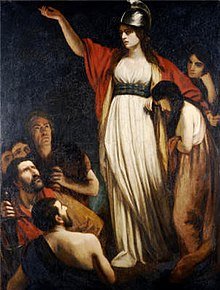
Painting of Boadicea Haranguing The Britons by English historical painter John Opie, R.A. (1761-1807). Oil On Canvas.
Prasutagus’s role in these events, though overshadowed by Boudicca’s dramatic uprising, is essential to understanding the broader context of the rebellion. His attempts at diplomacy, cooperation, and strategic planning were emblematic of a leader seeking to preserve his people’s well-being amid overwhelming external pressure. However, his death revealed the precariousness of alliances with Rome, which prioritized conquest and control over mutual respect.
Archaeological evidence has provided additional insights into Prasutagus’s reign and the Iceni’s political landscape. Coins bearing the inscription “SVB ESVPRASTO ESICO FECIT” have been found in Suffolk, translating to “under Esuprastus, Esico made (this).” Scholars debate whether Esuprastus was Prasutagus’s true name or that of a different ruler. Some propose that “Esuprastus” was a compound title, with “Esu-” referring to the god Esus and signifying “lord” or “honor,” and “Prasto-” representing an abbreviated personal name.
The presence of these coins, along with others from the Corieltauvi tribe bearing similar inscriptions, indicates a degree of shared cultural or political practices among neighboring tribes. The name of an earlier Icenian king, Scavo, has also appeared on coinage, hinting at a tradition of royal lineage and governance. These numismatic findings, inscribed in a Roman style, suggest that while the Iceni retained local identity, they were also influenced by and interacted with the broader Roman world.
The spelling of the tribe’s name on coins—“ECEN” rather than “ECE”—has led some scholars to argue that this change marked the beginning of Prasutagus’s rule. Coins attributed to his predecessor, Antedios, feature the ruler’s name prominently, indicating a shift in emphasis from tribal to individual leadership. This shift may reflect the political climate after the failed rebellion of 47 AD and the establishment of a more cooperative stance with Rome.
The Decline of Roman Britain and the Rise of Anglo-Saxon England
In summary, Prasutagus’s life and reign were defined by his attempts to navigate the complexities of Roman occupation while preserving his tribe’s autonomy. His strategic alliances, efforts to secure his family’s future, and the repercussions following his death illuminate the tenuous relationship between the native British tribes and the Roman Empire. Though his legacy is often eclipsed by the subsequent actions of his wife, Boudicca, Prasutagus’s story is an integral chapter in the history of resistance, diplomacy, and the struggle for sovereignty in ancient Britain.





