Who was Ildefonso Ramos Mexía y Ross?
Ildefonso Ramos Mexía y Ross (August 2, 1769 – June 24, 1854) was a significant military and political figure in early Argentine history. His career spanned a period marked by profound political, social, and military upheaval as the region transitioned from Spanish colonial rule to independent statehood. Ramos Mexía’s work as a public official and leader reflected the complexities and challenges of forming a new nation amidst internal strife and external pressures.
Early Life and Family Background
Ramos Mexía was born in Buenos Aires, then part of the Viceroyalty of the Río de la Plata. He came from a prominent and well-connected family that provided him with strong social and political foundations.
His father, Gregorio Ramos Mexía, was a native of Seville, Spain, and an influential merchant in Buenos Aires, contributing to the family’s wealth and status.
His mother, María Cristina Ross, had a mixed heritage of Scottish and Creole descent, linking Ramos Mexía to both European roots and the developing local identity of the Creole elite in Buenos Aires.
These familial ties were crucial to his early education and social standing. He was well-educated, likely benefiting from the cultural and intellectual exchanges common in high-status families. This upbringing set the stage for his later involvement in public service and military pursuits.
Marriage and Strengthening Political Connections
Ramos Mexía further solidified his influential position through his marriage to María Inés Basavilbaso, a member of another prominent and well-connected family. María Inés was the daughter of José Ramón Basavilbaso and María Lorenza Ferrín. The Basavilbaso family had deep roots in the colonial administration and local elite circles, which expanded Ramos Mexía’s political alliances and helped him navigate the volatile political landscape of early 19th-century Buenos Aires.
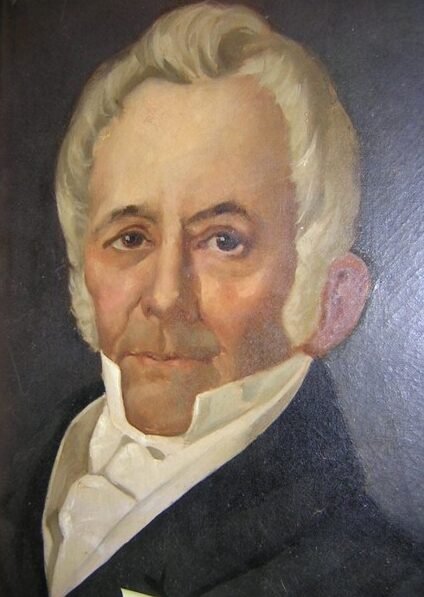
Image: Portrait of Ramos Mexía.
Early Career and Role as Alcalde
Ramos Mexía’s initial political activities were set against the backdrop of growing discontent with Spanish colonial rule. He became involved in public administration and governance, which earned him a role as alcalde (mayor) of Buenos Aires. This position was significant as it placed him in charge of local governance, allowing him to implement policies and maintain public order during a time of political instability and revolutionary fervor.
His tenure as alcalde came during a crucial period when Buenos Aires was transitioning from being a colonial city to the focal point of an emerging independent nation. Ramos Mexía’s leadership during this period laid some of the groundwork for the administrative and political systems that would later characterize independent Argentina.
Political Involvement During Independence Movements
The early 19th century in Buenos Aires was a time of upheaval marked by the May Revolution of 1810 and subsequent movements toward independence. Ramos Mexía’s career intersected with these significant events, and his roles as governor and legislator were pivotal. As governor, he was tasked with addressing not only the internal governance issues of Buenos Aires but also the broader political challenges posed by factions vying for control of the independence movement.
His work as a legislator during this time was especially important, as the newly formed provinces were grappling with how to construct a functioning government while balancing the competing interests of federalists and centralists. Ramos Mexía’s participation in legislative processes helped to shape the discourse around governance, the distribution of power, and the roles of provinces within the nascent Argentine state.
Challenges and Alliances in a Turbulent Period
Ramos Mexía’s career was marked by both cooperation and conflict with other key figures in Argentine politics. One of the most challenging aspects of his career was navigating the alliances and rivalries that defined the early 19th century. The struggle between federalist and centralist factions often forced politicians to make difficult choices and align with different leaders at various points.
His influence was especially notable during times when Buenos Aires played a central role in regional politics. As an experienced military leader, Ramos Mexía contributed to efforts to maintain control over strategic areas and manage conflicts involving neighboring provinces. This period was characterized by continuous shifts in power and the emergence of influential leaders like José de San Martín and Juan Manuel de Rosas.
The Governor of Buenos Aires and Treaty Engagements
Ramos Mexía’s tenure as governor of Buenos Aires saw him directly involved in significant treaties and negotiations. One of his key contributions was participating in discussions that sought to stabilize the region through agreements with various provincial leaders.
These treaties aimed to balance the power dynamics between Buenos Aires and other provinces, recognizing the city’s role as both a powerful political entity and a source of contention for other parts of the country.
Despite his efforts, governing during this period was fraught with difficulties. The regional landscape was marked by distrust and the frequent use of military force to settle disputes. Ramos Mexía’s attempts to navigate these challenges revealed both his commitment to maintaining Buenos Aires’s prominence and the limitations of political power during times of conflict.
Later Political Roles and Diplomatic Missions
After his period as governor, Ramos Mexía continued to play a role in the political and diplomatic affairs of the United Provinces of the Río de la Plata. In the mid-1820s, President Bernardino Rivadavia appointed him as a diplomatic representative to Great Britain, a position that highlighted his expertise and experience in international negotiations.
Ramos Mexía’s mission was aimed at fostering international recognition and securing trade relations, which were vital for the economic and political stability of the fledgling Argentine state. His work in Europe added an international dimension to his career, showcasing his ability to adapt to different political environments and contribute to Argentina’s efforts to be recognized on the global stage.
Final Years and Legacy
In his later years, Ramos Mexía continued to serve Argentina through various diplomatic and advisory roles. His enduring presence in the political sphere demonstrated his resilience and dedication to the nation’s development. He witnessed the continued evolution of Argentina’s political structure and the shifts in power that defined the post-independence era.
Ramos Mexía passed away on June 24, 1854, leaving behind a legacy marked by service, leadership, and participation in some of the most formative events in Argentina’s history.
His contributions as a military leader, alcalde, governor, and legislator were integral to shaping Buenos Aires’s role within the broader Argentine context. His work during periods of both progress and strife reflected the challenges of building a unified nation from a collection of provinces with diverse and often conflicting interests.
Frequently Asked Questions
When and where was Ramos Mexía born?
Ramos Mexía was born on August 2, 1769, in Buenos Aires, which was then part of the Viceroyalty of the Río de la Plata.
What was Ramos Mexía’s family background?
He was born into a distinguished family. His father, Gregorio Ramos Mexía, was from Seville, Spain, and his mother, María Cristina Ross, had a combined Scottish and Creole heritage. This background connected him to both European traditions and the local Creole elite.
How did Ramos Mexía’s marriage influence his career?
Ramos Mexía married María Inés Basavilbaso, a relative from another influential family. This marriage strengthened his social and political connections, allowing him to be more effective in politics and administration during a period of significant transformation.
What roles did Ramos Mexía hold in Buenos Aires?
He served as alcalde (mayor), governor, and legislator, holding various critical positions that highlighted his influence in local governance and legislative matters.
What was significant about Ramos Mexía’s tenure as alcalde?
As alcalde of Buenos Aires, Ramos Mexía played a crucial role in local governance, addressing the needs of the city and maintaining order during times of change. His leadership contributed to the development of administrative structures as Buenos Aires transitioned from colonial rule to independence.
How did Ramos Mexía contribute to Argentina’s legislative development?
He served as a governor and legislator, participating in legislative processes that helped shape the political framework of Argentina during its formative years. His work was particularly significant as the country faced internal conflicts and sought to create a stable government.
What does Ramos Mexía’s career reflect about Argentine society during his time?
His career reflects the complexities of Argentine society during a transformative period marked by the struggle for independence and political reorganization. His leadership in both military and political capacities positioned him as an influential figure in the development of Buenos Aires and the broader Argentine state.