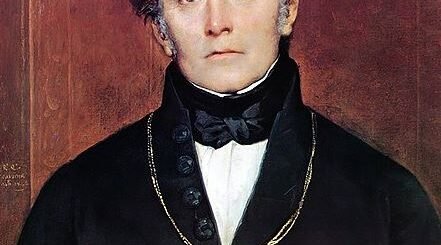
Bernardo O’Higgins Riquelme: Life, Political Career and Accomplishment of the Chilean Independence Leader
Bernardo O’Higgins Riquelme (1778–1842) is revered as one of Chile’s foremost national heroes and a pivotal figure in the Latin American struggle for independence. His life was marked by significant personal challenges, intense political rivalries, and substantial military achievements that collectively shaped the foundation of modern Chile. O’Higgins’ dedication to the cause of independence and his efforts to modernize Chilean society left an enduring legacy that continues to influence the nation’s political and social landscape.
Early Life and Family Background
Born on August 20, 1778, in Chillán, Chile, Bernardo O’Higgins entered the world under complex circumstances. He was the illegitimate son of Ambrosio O’Higgins, the 1st Marquis of Osorno, a Spanish officer originally from County Sligo, Ireland, who rose to prominence within the Spanish colonial administration. Ambrosio eventually became the governor of Chile and later the viceroy of Peru, positions that underscored his significant influence in South America. However, despite his high-ranking status, Ambrosio never formally acknowledged Bernardo. This lack of recognition meant that Bernardo spent his early years with his mother’s family in central-southern Chile, distancing him from his father’s elite circles.
Bernardo’s mother, Isabel Riquelme, was a respected local woman, the daughter of Don Simón Riquelme y Goycolea, a member of the Chillán Cabildo, or town council. Her prominence in the community provided Bernardo with a stable upbringing and a foundation in both agricultural practices and social standing. At the age of 15, Bernardo was sent to Lima by his father, marking the beginning of a distant and primarily financial relationship between them. Although Ambrosio supported Bernardo’s education financially, the two never met in person. Following Ambrosio’s death in 1801, Bernardo adopted his biological father’s surname and inherited the Hacienda Las Canteras near Los Ángeles, Chile, further solidifying his status as a gentleman farmer.
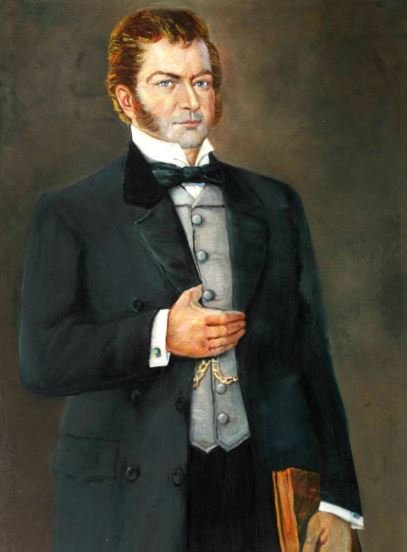
Image: A portrait of Bernardo at the National Congress Library of Chile.
Education and Early Influences
At seventeen, Bernardo O’Higgins was sent to London to complete his studies, a move that played a crucial role in shaping his political ideology. In London, O’Higgins immersed himself in history and the arts, areas that broadened his intellectual horizons and exposed him to Enlightenment ideas. This period was instrumental in developing his nationalist pride and commitment to independence. It was in London that he met Francisco de Miranda, a Venezuelan idealist and advocate for Latin American independence, and joined a Masonic Lodge dedicated to achieving the liberation of Latin America. These interactions with revolutionary thinkers and exposure to Enlightenment philosophies significantly influenced O’Higgins’ later endeavors in Chile.
O’Higgins’ education in Europe not only provided him with intellectual stimulation but also fostered connections with key figures in the independence movements across the continent. His time in London allowed him to adopt a more informed and strategic approach to his future political and military roles in Chile.
Return to Chile and Early Political Involvement
Bernardo O’Higgins returned to Chile in 1802, after his father’s death, and began life as a gentleman farmer, managing his inherited Hacienda Las Canteras. His return marked the beginning of his active involvement in Chilean politics. In 1806, he was appointed to the cabildo as the representative of Laja, marking his first formal entry into political life. The political climate in Chile at the time was volatile, with growing dissatisfaction among the creole elite and the general populace due to economic hardships and political exclusion. These tensions set the stage for the burgeoning independence movement.
The invasion of Spain by Napoleon Bonaparte in 1808 and the subsequent imposition of his brother, Joseph Bonaparte, as the Spanish monarch, acted as a catalyst for independence movements across Latin America. In Chile, this led to the formation of an autonomous government aimed at ruling in the name of the imprisoned King Ferdinand VII. On September 18, 1810, the Government Junta of Chile was established, now celebrated annually as Chile’s Independence Day. Bernardo O’Higgins emerged as a key figure in this movement, advocating for the creation of a national congress and representing the Laja district in the first National Congress of Chile in 1811.
Military Career and Rivalries
O’Higgins’ military career was a testament to his strategic brilliance and resilience. His initial forays into the military were influenced by Juan Mackenna, an immigrant of Irish descent who provided valuable military insights, particularly in cavalry tactics. Under Mackenna’s mentorship, O’Higgins honed his military skills, preparing him for the challenges ahead.
In 1812, amidst escalating tensions between royalist and pro-independence factions, O’Higgins was mobilized to lead Chadian forces against the Spanish-backed royalists. His early military endeavors, including the Battle of Linares and the Siege of Chillán, showcased his courage and strategic thinking. Although the Siege of Chillán was unsuccessful, O’Higgins’ determination and tactical acumen earned him a reputation as a formidable military leader.
The rivalry between O’Higgins and José Miguel Carrera, another prominent Chilean independence leader, intensified following the Battle of El Roble in October 1814. O’Higgins’ decisive actions during the battle, where he reportedly commanded his troops with passionate fervor, resulted in his promotion to colonel and the appointment of Juan Mackenna as commandant-general. This maneuver led to Carrera’s capture and imprisonment, deepening the political schism within the Chilean independence movement and highlighting the internal conflicts that often plagued revolutionary leadership.
Exile and Return
After a series of military engagements and political maneuvers, Bernardo O’Higgins found himself increasingly at odds with Carrera and other conservative elements within Chile. In 1814, following the failed Battle of Rancagua, O’Higgins and his forces were forced to retreat, leading to his exile in Argentina. During his time in exile, O’Higgins forged a crucial alliance with General José de San Martín, an Argentine leader who played a significant role in the liberation of several South American countries from Spanish rule.
Together, O’Higgins and San Martín orchestrated a successful campaign to liberate Chile from royalist control. The Battle of Chacabuco in February 1817 was a decisive victory that paved the way for the defeat of the royalist forces. This triumph solidified O’Higgins’ status as a national hero and enabled him to assume leadership of an independent Chile. The collaboration between O’Higgins and San Martín exemplified the broader coordination among Latin American leaders striving for independence from Spanish colonial rule.
Supreme Director of Chile
On February 12, 1818, Chile was officially declared an independent republic. Bernardo O’Higgins was appointed Supreme Director on February 16, 1817, a role that granted him dictatorial powers to oversee the nascent state’s governance and military affairs. His tenure as Supreme Director was marked by significant reforms aimed at modernizing Chile and consolidating its independence.
O’Higgins established critical institutions that laid the groundwork for a structured and functional society. He founded markets, courts, colleges, libraries, hospitals, and cemeteries, fostering economic growth and improving public services. Recognizing the importance of a strong military, he initiated military reforms, founding the Chilean Military Academy in 1817 to professionalize the officer corps. Additionally, he established the modern Chilean Navy under the command of Lord Thomas Cochrane, a Scottish naval officer, thereby strengthening Chile’s defense capabilities and ensuring its sovereignty.
Under O’Higgins’ leadership, Chile made significant strides in infrastructure development and public health, contributing to the overall stability and modernization of the country. His efforts in these areas were crucial in transforming Chile into a more organized and progressive nation.
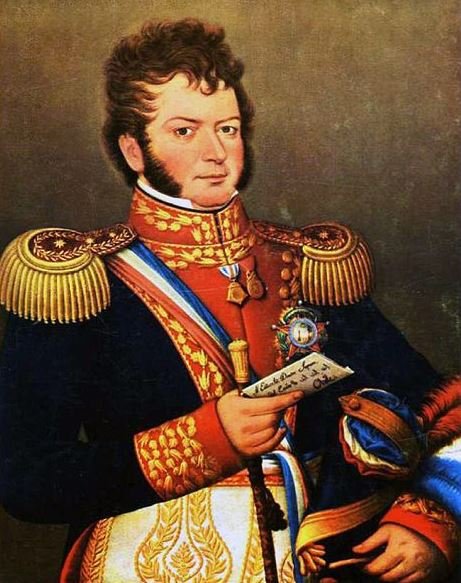
Image: Portrait of Bernardo O’Higgins by Peruvian painter José Gil de Castro.
Vision for Latin American Independence
Bernardo O’Higgins harbored ambitions that extended beyond Chilean independence. Inspired by the broader independence movements across Latin America, he envisioned a unified and liberated Latin America. Collaborating with José de San Martín, O’Higgins supported expeditions to liberate Peru, furthering the cause of independence throughout the continent.
O’Higgins even entertained plans to expand Chilean influence by proposing the conquest of strategic regions such as Guayaquil, the Galapagos Islands, and the Philippines. These ambitious plans reflected his desire to extend the principles of independence and republicanism beyond Chile, aiming for a continent-wide liberation from Spanish colonial rule. However, these plans never materialized due to his eventual political downfall and exile.
Contributions to Military and Infrastructure
One of Bernardo O’Higgins’ most significant contributions was his emphasis on building a strong and professional military. Recognizing the importance of a capable defense force for the newly independent nation, O’Higgins founded the Chilean Military Academy in 1817. This institution aimed to professionalize the officer corps, ensuring that the Chilean military was well-trained and organized. Additionally, he established the modern Chilean Navy under the command of Lord Thomas Cochrane, a Scottish naval officer whose expertise was invaluable in securing Chile’s maritime interests.
O’Higgins also focused on infrastructure development, understanding that economic stability was crucial for national sovereignty. He initiated improvements in agriculture, enhancing productivity and supporting the economic backbone of the country. The establishment of markets, courts, colleges, libraries, hospitals, and cemeteries under his administration provided essential services and fostered societal growth. These institutions were foundational in transforming Chile into a more organized and progressive nation, capable of sustaining its independence and fostering internal development.
Vision for a Unified Latin America
Bernardo O’Higgins’ vision extended beyond Chilean borders. Inspired by the broader independence movements across Latin America, he aspired for a unified and liberated continent free from Spanish colonial rule. Collaborating closely with General José de San Martín, O’Higgins supported expeditions to liberate Peru, contributing to the broader efforts to end Spanish dominance in South America.
O’Higgins even contemplated expanding Chilean influence by proposing the conquest of strategic regions such as Guayaquil, the Galapagos Islands, and the Philippines. These ambitious plans reflected his desire to promote republicanism and independence beyond Chile, aiming for a continent-wide liberation movement. However, these plans were never realized due to his political downfall and subsequent exile, limiting his ability to influence further independence efforts directly.
Political Challenges and Downfall
Bernardo O’Higgins’ tenure as Supreme Director was marked by significant achievements, but it was also fraught with political challenges. His progressive reforms, while essential for modernizing Chile, alienated influential landowners and the Catholic Church, who saw their traditional privileges threatened. The economic difficulties faced by the government, compounded by natural disasters such as the 1822 earthquake in central Chile, strained the nation’s resources and undermined public confidence in his leadership.
The introduction of a new constitution in 1822, perceived by many as an attempt to consolidate power, led to accusations of authoritarianism. This move further alienated his supporters and intensified opposition from conservative factions. The rivalry with José Miguel Carrera, despite Carrera’s diminished role, continued to destabilize O’Higgins’ administration. In January 1823, these combined pressures culminated in a conservative coup led by Ramón Freire, a former ally who had become disillusioned with O’Higgins’ leadership style and policies.
The coup highlighted the fragility of the Chilean political system and the deep-seated divisions within the country. O’Higgins was deposed, and his leadership was effectively ended, forcing him into exile and marking the end of his direct influence on Chilean politics.
Exile and Final Years
After his deposition, Bernardo O’Higgins was exiled, initially intended for Ireland but ultimately settling in Peru. In Peru, he was encouraged by Simón Bolívar to join the nationalist efforts there. Although Bolívar did not assign him a military command, O’Higgins was appointed a general of Gran Colombia and served as a special court-martial judge for Chilean volunteers. His time in Peru was marked by continued political engagement, though his influence was limited by the rise of new political leaders such as Agustín Gamarra.
O’Higgins endorsed the Peru-Bolivian Confederation under Andrés de Santa Cruz and offered to mediate in conflicts, demonstrating his ongoing commitment to the cause of independence and regional stability. However, his influence waned as political dynamics shifted in Peru and other parts of Latin America. Despite attempts to return to Chile, O’Higgins remained in exile until his death on October 24, 1842, in Lima, Peru. He was accompanied by his illegitimate son, Pedro Demetrio O’Higgins, his mother, and his half-sister, Rosa Rodríguez Riquelme, during his final years.
Legacy
Bernardo O’Higgins’ legacy is deeply embedded in Chilean national identity and the broader narrative of Latin American independence. As a founding father of Chile, his contributions to the country’s independence, military organization, and institutional development are celebrated and remembered as foundational elements of the nation’s history.
O’Higgins is honored for his leadership during critical battles, his role in establishing key institutions, and his vision for a unified and independent Latin America. His efforts in modernizing Chile’s military and infrastructure laid the groundwork for the country’s future development and defense capabilities. The Chilean Military Academy and the modern Chilean Navy, established under his leadership, remain integral parts of Chile’s military infrastructure.
However, O’Higgins’ legacy is also marked by the political rivalries and conflicts that characterized his leadership, particularly his feud with José Miguel Carrera. These internal disputes reflect the broader challenges faced by early independence movements in establishing stable and unified governance structures. Despite these conflicts, O’Higgins’ dedication to the cause of independence and his strategic military acumen are celebrated as essential to Chile’s successful liberation from Spanish rule.
O’Higgins’ commitment to progressive reforms and his vision for a democratic and modern Chile have left an enduring impact on the country’s political and social landscape. His life serves as an example of the complexities of leadership during revolutionary times, balancing the need for reform and modernization with the pragmatic challenges of nation-building. The principles of liberty, national unity, and progressive governance that O’Higgins championed continue to inspire Chileans and shape the nation’s identity.
In conclusion, Bernardo O’Higgins Riquelme remains a towering figure in Chilean and Latin American history. His leadership, strategic insight, and unwavering commitment to independence and modernization were instrumental in shaping the course of Chile’s development as an independent nation. Despite facing significant personal and political challenges, O’Higgins’ legacy as a founding father and a visionary leader endures, embodying the spirit of Chilean resilience and determination.
Frequently Asked Questions
Who was Bernardo O’Higgins and why is he significant in Chilean history?
Bernardo O’Higgins Riquelme (1778–1842) is one of Chile’s most influential figures, celebrated as a key leader in the struggle for Chilean independence from Spanish colonial rule. As the second Supreme Director of Chile and regarded as one of the nation’s founding fathers, O’Higgins played a pivotal role in shaping Chile’s political and social landscape during its formative years as an independent state.
What is Bernardo O’Higgins’ family background?
Bernardo O’Higgins was born on August 20, 1778, in Chillán, Chile. He was the illegitimate son of Ambrosio O’Higgins, the 1st Marquis of Osorno, a Spanish officer from County Sligo, Ireland, who became governor of Chile and later viceroy of Peru. His mother was Isabel Riquelme, a prominent local woman and daughter of Don Simón Riquelme y Goycolea, a member of the Chillán Cabildo (town council).
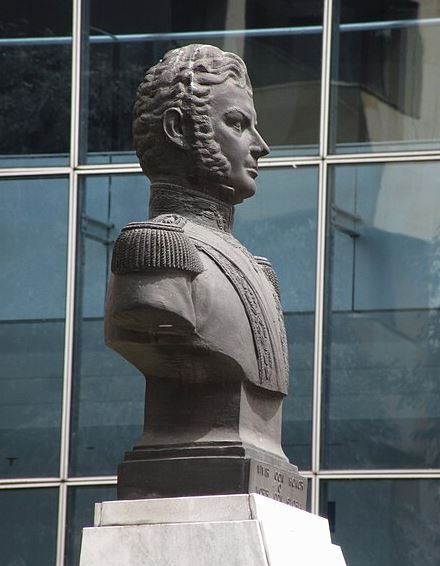
Image: Bust of Bernardo at Bogotá, Colombia.
How did Bernardo O’Higgins’ early life influence his later achievements?
Bernardo spent his early years with his mother’s family in central-southern Chile and later with the Albano family, his father’s commercial partners, in Talca. At age 15, he was sent to Lima by his father, beginning a distant relationship. His upbringing in agricultural and socially prominent families provided him with a strong foundation in both agriculture and social standing, which later supported his leadership roles.
Where did Bernardo O’Higgins receive his education, and how did it shape his political ideology?
At seventeen, Bernardo O’Higgins was sent to London to complete his studies, where he immersed himself in history and the arts. This period was crucial in shaping his political ideology, as he became influenced by American ideas of independence and developed a strong sense of nationalist pride. In London, he met Francisco de Miranda, a Venezuelan idealist advocating for Latin American independence, and joined a Masonic Lodge dedicated to achieving the liberation of Latin America. His exposure to Enlightenment ideals and revolutionary thoughts significantly influenced his commitment to independence and his vision for a free and democratic Chile.
What role did Bernardo O’Higgins play in the early stages of Chilean independence?
Upon returning to Chile in 1802, O’Higgins began his political career by being appointed to the cabildo as the representative of Laja in 1806. The political landscape was volatile, with growing dissatisfaction among the creole elite and the general populace. Following Napoleon’s invasion of Spain in 1808 and the imposition of Joseph Bonaparte as the Spanish monarch, independence movements surged across Latin America. In Chile, the elite formed an autonomous government to rule in the name of the imprisoned King Ferdinand VII, establishing the Government Junta of Chile on September 18, 1810. O’Higgins emerged as a key figure, advocating for a national congress and representing the Laja district in the first National Congress of Chile in 1811.
Describe Bernardo O’Higgins’ military career and his rivalry with José Miguel Carrera.
O’Higgins’ military career was marked by strategic brilliance and intense personal rivalries, particularly with José Miguel Carrera, another prominent Chilean independence leader. Initially holding a minor military position, his tactical skills became evident under the mentorship of Juan Mackenna, who provided insights into cavalry tactics. In 1812, amidst escalating tensions, O’Higgins led Chadian forces against Spanish-backed royalists, participating in significant battles like the Battle of Linares and the Siege of Chillán. His reputation as a formidable leader grew despite setbacks.
The rivalry with Carrera intensified after the Battle of El Roble in October 1814, where O’Higgins’ decisive actions earned him promotion to colonel and the appointment of Juan Mackenna as commandant-general. This maneuver led to Carrera’s capture and imprisonment, deepening the political schism within the Chilean independence movement and highlighting the internal conflicts that often plagued revolutionary leadership.
What events led to Bernardo O’Higgins’ exile, and how did he return to influence Chilean independence?
Following a series of military engagements and political maneuvers, O’Higgins found himself increasingly at odds with Carrera and other conservative elements within Chile. In 1814, after the failed Battle of Rancagua, O’Higgins and his forces were forced to retreat, leading to his exile in Argentina. During his time in exile, he forged a crucial alliance with General José de San Martín, an Argentine leader instrumental in the liberation of several South American countries. Together, they orchestrated a successful campaign to liberate Chile, culminating in the decisive Battle of Chacabuco in February 1817. This victory solidified O’Higgins’ status as a national hero and enabled him to assume leadership of an independent Chile.
What were Bernardo O’Higgins’ major achievements as Supreme Director of Chile?
As Supreme Director of Chile, appointed on February 16, 1817, O’Higgins wielded dictatorial powers to oversee the governance and military affairs of the nascent state. His major achievements include:
- Establishing Critical Institutions: He founded markets, courts, colleges, libraries, hospitals, and cemeteries, laying the groundwork for a structured and functional society.
- Military Reforms: O’Higgins established the Chilean Military Academy in 1817 to professionalize the officer corps and founded the modern Chilean Navy under Lord Cochrane, a Scottish naval officer. These reforms strengthened Chile’s defense capabilities and ensured its sovereignty.
- Economic and Social Reforms: He implemented various reforms aimed at modernizing Chile, improving agriculture, and enhancing public infrastructure.
- Vision for Latin American Independence: O’Higgins supported broader independence movements, collaborating with San Martín to liberate Peru and envisioning a unified and liberated Latin America.
What challenges did Bernardo O’Higgins face during his tenure as Supreme Director?
Despite his successes, O’Higgins faced significant internal challenges, including:
- Political Opposition: His progressive and radical reforms, such as the establishment of democracy and the abolition of noble titles, alienated powerful landowners and the Catholic Church.
- Economic Difficulties: The government faced financial instability, exacerbated by economic hardships and natural disasters like a devastating earthquake in central Chile.
- Political Rivalries: O’Higgins’ ongoing feud with José Miguel Carrera and other conservative factions undermined his support base.
- Authoritarian Accusations: In 1822, O’Higgins introduced a new constitution perceived by many as an attempt to consolidate his power further, leading to accusations of authoritarianism.
- Loss of Support: The combined pressures from the aristocracy, church, businesspeople, and economic struggles weakened his administration’s stability, culminating in a conservative coup in January 1823 led by Ramón Freire.
How did Bernardo O’Higgins’ leadership come to an end, and what were the circumstances of his exile?
Bernardo O’Higgins’ leadership ended in January 1823 when a conservative coup led by Ramón Freire, a former ally who had grown disillusioned with O’Higgins, resulted in his deposition. The coup highlighted the fragility of the Chilean political system and the deep-seated divisions within the country. Facing increasing opposition and accusations of authoritarianism, O’Higgins was forced into exile. Initially destined for Ireland, he ended up in Peru, where he was encouraged by Simón Bolívar to join nationalist efforts. However, Bolívar did not grant him a command, and O’Higgins was instead appointed a general of Gran Colombia and served as a special court-martial judge for Chilean volunteers.
What were Bernardo O’Higgins’ activities and roles during his exile in Peru?
During his exile in Peru, Bernardo O’Higgins remained politically active and supportive of independence movements across Latin America. He was appointed a general of Gran Colombia and served as a special court-martial judge for Chilean volunteers. O’Higgins endorsed the Peru-Bolivian Confederation under Andrés de Santa Cruz and offered to mediate in conflicts, though his influence waned with the rise of Agustín Gamarra in Peru. Despite attempts to return to Chile, O’Higgins remained in exile until his death in Lima on October 24, 1842, accompanied by his illegitimate son, Pedro Demetrio O’Higgins, his mother, and his half-sister, Rosa Rodríguez Riquelme.
What is the legacy of Bernardo O’Higgins in Chile and Latin America?
Bernardo O’Higgins is remembered as a foundational figure in Chilean independence and nation-building. His leadership during critical battles, role in establishing key institutions, and vision for a liberated Latin America cement his status as a national hero. O’Higgins’ contributions laid the groundwork for modern Chilean governance, military organization, and societal structure. However, his legacy is also marked by political rivalries and conflicts, particularly his feud with José Miguel Carrera, reflecting the broader challenges of establishing stable and unified governance structures in newly independent states. O’Higgins’ commitment to independence, strategic military acumen, and efforts to modernize Chile have left an enduring impact on the country’s history, inspiring future generations with his dedication to liberty, national unity, and progressive governance.
How did Bernardo O’Higgins contribute to the professionalization of Chile’s military forces?
Bernardo O’Higgins significantly contributed to the professionalization of Chile’s military forces by founding the Chilean Military Academy in 1817, which aimed to train and professionalize the officer corps. Additionally, he established the modern Chilean Navy under the command of Lord Cochrane, a Scottish naval officer. These initiatives were crucial in strengthening Chile’s defense capabilities, ensuring a well-trained and organized military structure capable of maintaining the country’s sovereignty and security.
What were Bernardo O’Higgins’ plans for expanding Chilean influence beyond South America, and why did they not materialize?
Bernardo O’Higgins envisioned expanding Chilean influence by proposing the conquest of strategic regions such as Guayaquil, the Galapagos Islands, and the Philippines. He tasked Lord Thomas Cochrane with these ambitious plans in a letter dated November 12, 1821. However, these plans never materialized due to O’Higgins’ political downfall and subsequent exile. Additionally, similar plans in the mid-19th century to assist the Philippine Revolution and the Philippine-American War also did not come to fruition.
What were the key factors that led to Bernardo O’Higgins’ loss of support and eventual ousting from power?
Several key factors led to Bernardo O’Higgins’ loss of support and eventual ousting:
- Radical Reforms: His progressive reforms, including the establishment of democracy and abolition of noble titles, alienated powerful landowners and the Catholic Church.
- Economic Hardships: The government faced financial instability, compounded by economic difficulties and a devastating earthquake.
- Political Rivalries: O’Higgins’ ongoing feud with José Miguel Carrera and opposition from other conservative factions weakened his support base.
- Authoritarian Perceptions: The introduction of a new constitution in 1822 was seen as an attempt to consolidate power, leading to accusations of authoritarianism.
- Conservative Coup: The culmination of these pressures resulted in a conservative coup led by Ramón Freire in January 1823, which deposed O’Higgins and forced him into exile.
How did Bernardo O’Higgins’ relationship with other Latin American independence leaders influence his efforts for regional liberation?
Bernardo O’Higgins’ relationship with other Latin American independence leaders, particularly General José de San Martín, was instrumental in his efforts for regional liberation. Their alliance was crucial in orchestrating the successful campaign to liberate Chile, culminating in the Battle of Chacabuco in February 1817. O’Higgins also supported San Martín’s expeditions to liberate Peru and envisioned a unified and liberated Latin America. His collaboration with San Martín and interactions with other leaders like Simón Bolívar demonstrated his commitment to broader independence movements across the continent, although his plans for further expansion beyond South America did not materialize.
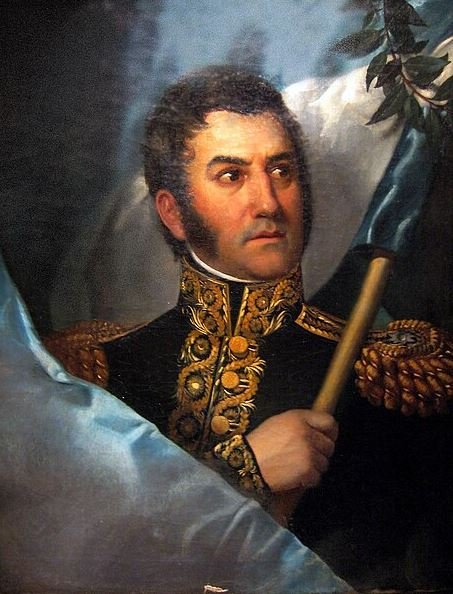
Image: San Martín
What were Bernardo O’Higgins’ contributions to Chilean society and infrastructure during his leadership?
During his tenure as Supreme Director, Bernardo O’Higgins made significant contributions to Chilean society and infrastructure, including:
- Establishing Institutions: Founded markets, courts, colleges, libraries, hospitals, and cemeteries, creating a structured and functional society.
- Educational Reforms: Established the Chilean Military Academy to professionalize the officer corps.
- Healthcare and Public Services: Improved public health and social services through the establishment of hospitals and other essential facilities.
- Infrastructure Development: Initiated improvements in agriculture and public infrastructure, enhancing the nation’s economic and social foundations.
What circumstances surrounded Bernardo O’Higgins’ death, and where did it occur?
After being deposed and exiled from Chile, Bernardo O’Higgins spent his final years in Peru. He continued to support independence movements and engaged in political activities until his death. O’Higgins succumbed to cardiac problems and was too weak to travel back to Chile when he was permitted to return by the National Congress of Chile in 1842. He died on October 24, 1842, in Lima, Peru, while still in exile.
How did Bernardo O’Higgins’ policies and leadership style impact the stability of early independent Chile?
Bernardo O’Higgins’ policies and leadership style had a mixed impact on the stability of early independent Chile. His progressive reforms and efforts to modernize the country laid the groundwork for a structured society and strong military. However, his authoritarian approach, radical reforms, and centralization of power alienated influential groups such as landowners, the Catholic Church, and businesspeople. These actions, combined with economic difficulties and political rivalries, undermined his support base and contributed to political instability, ultimately leading to his ousting through a conservative coup.