Life and Major Works of Andrés Bello
Andrés Bello’s life and career were defined by an unwavering commitment to intellectual growth, social reform, and cultural development.
His contributions to law, education, literature, and diplomacy laid the groundwork for modern Chile and influenced Spanish American society as a whole.
From drafting the Chilean Civil Code to founding the University of Chile, Bello’s achievements reflected his dedication to creating a strong, unified, and progressive society.
His writings and philosophical teachings reinforced the importance of education, civic responsibility, and linguistic unity, leaving a legacy that continues to inspire generations.
Early Life and Background
Andrés Bello was born on November 29, 1781, in Caracas, Venezuela, during a period marked by colonial tensions and emerging Enlightenment ideas. His early life was characterized by intellectual curiosity and academic prowess. Bello’s education began at the Convent of Las Mercedes and later continued at the Royal and Pontifical University of Caracas, where he displayed an exceptional aptitude for languages, literature, and classical studies. This academic foundation laid the groundwork for his later achievements as a humanist and intellectual leader.
During his youth, Bello had a brief but significant role as a mentor to Simón Bolívar, the future liberator of South America. Their paths diverged as Bolívar became increasingly involved in military campaigns, while Bello pursued a more scholarly and diplomatic route. Nonetheless, this early relationship with Bolívar hinted at Bello’s lifelong engagement with the political and intellectual movements that would shape Latin American independence.
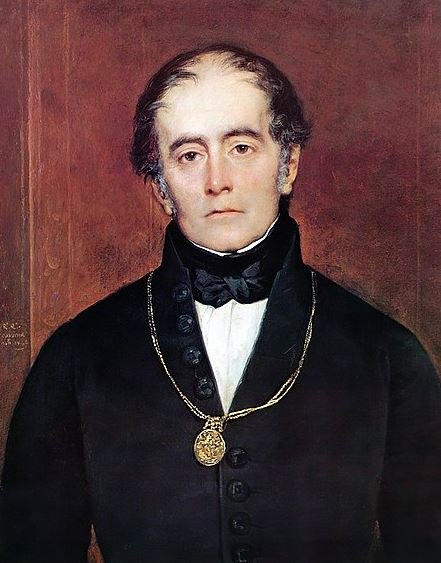
Image: A portrait of Andrés Bello by French painter Raymond Monvoisin.
Diplomatic Mission and Time in London (1810–1829)
In 1810, following political upheaval in Venezuela and the establishment of a new independent government, Bello was chosen to join a diplomatic mission to London alongside Bolívar and Luis López Méndez. The mission aimed to secure support and recognition for the nascent republics of Spanish America. This period marked the beginning of a nearly two-decade stay in London, where Bello immersed himself in European intellectual life.
During his time in London, Bello engaged in various scholarly pursuits, mastering multiple languages and studying law, literature, and philosophy. He interacted with leading thinkers and was influenced by Enlightenment ideas, which emphasized reason, liberty, and the pursuit of knowledge. These concepts would later permeate his work in Latin America.
Bello’s time in London was also marked by economic hardship, but he used this period productively to deepen his understanding of European thought and expand his expertise. He contributed articles and essays to various publications, including translations and literary critiques, which solidified his reputation as a man of letters. It was here that he began to crystallize his ideas on language, governance, and society, laying the groundwork for future works that would shape Spanish American intellectual life.
Move to Chile and Early Contributions
In 1829, Bello relocated to Chile with his family, where his extensive knowledge and experience were quickly recognized. The Chilean government employed him, and he soon became an influential figure in the country’s intellectual and political circles. His move to Chile marked a new phase in his career, during which he made substantial contributions to legal, educational, and cultural developments.
Bello’s integration into Chilean society was marked by various prominent roles. He served as a senator and a professor and managed local newspapers, using these platforms to influence public opinion and promote his ideas on national development. His focus on education, language, and legal reform underscored his commitment to creating a cohesive and educated society.
Legislative Achievements: The Chilean Civil Code
One of Bello’s most significant achievements was the drafting and promotion of the Chilean Civil Code. Commissioned by the Chilean government, this comprehensive legal document was completed in 1855 and became one of the most advanced codes in the Americas at the time. Drawing inspiration from European legal systems but adapting them to the unique needs of Latin American society, Bello’s Civil Code was designed to provide a clear and structured framework for civil law, covering property rights, contracts, family law, and inheritance.
The Chilean Civil Code reflected Bello’s deep understanding of law and his vision for justice and social order. His meticulous approach ensured that the Code was not merely a copy of foreign models but an innovative and contextually relevant work that balanced tradition with progressive ideas. The Code’s influence extended beyond Chile, serving as a model for other Latin American countries seeking to develop their own legal systems.
Founding of the University of Chile
Recognizing the importance of higher education for national development, Bello played a crucial role in establishing the University of Chile in 1842. This institution was founded to promote academic excellence and prepare future leaders for the challenges of building a modern nation. Bello was appointed the first rector of the university, a position he held for over two decades.
Under Bello’s leadership, the University of Chile became a center for intellectual growth and public service. His vision emphasized a well-rounded education that included the humanities, sciences, and professional disciplines. He believed that nurturing a knowledgeable and skilled populace was essential for a stable and prosperous society. Bello’s work at the university helped shape the development of Chile’s educational system and influenced higher education across Latin America.
National Recognition and Legacy
In recognition of his extensive contributions, the Chilean Congress granted Andrés Bello Chilean nationality in 1832. This honor underscored his significance to Chilean society and acknowledged his role in shaping the country’s intellectual and legal foundations. His achievements in law, education, and literature solidified his reputation as one of Chile’s most important cultural and political figures.
Bello’s legacy is not limited to his legal and educational reforms; it extends to his work as a writer and thinker. His literary and philosophical contributions are considered essential to Spanish American culture, as they addressed themes of identity, governance, and intellectual autonomy. His influence can be seen in the standardization of the Spanish language in Latin America, thanks in part to his philological studies that promoted linguistic unity and clarity.
Literary and Philosophical Contributions
Beyond his legal and educational accomplishments, Andrés Bello was an accomplished writer whose works covered poetry, essays, and scholarly texts. His writing was characterized by depth, elegance, and a commitment to fostering a strong cultural identity. One of his most celebrated works, Gramática de la lengua castellana destinada al uso de los americanos (Grammar of the Spanish Language Intended for the Use of Americans), demonstrated his dedication to enhancing the understanding and standardization of the Spanish language across Latin America.
Bello’s Gramática was more than a linguistic guide; it was a cultural manifesto aimed at reinforcing the importance of language as a tool for unity and national identity. By creating a grammar book specifically designed for Latin Americans, Bello emphasized the need for a shared linguistic foundation that respected regional variations while maintaining cohesion within the broader Spanish-speaking world.
His philosophical writings also showcased his Enlightenment-influenced beliefs in reason, progress, and the moral responsibilities of individuals and governments. Bello argued for the role of education and knowledge in fostering societal development and emphasized the importance of civic virtue as a means of ensuring a just and orderly society.
Diplomatic Contributions
Bello’s time in London and his involvement in various diplomatic efforts were integral to his career. Representing the interests of the newly independent Venezuelan government, Bello worked to secure support and recognition from European powers. His diplomatic work underscored his ability to navigate complex international relations and demonstrated his commitment to advocating for the broader independence movement in Spanish America.
Although Bello’s diplomatic efforts were primarily during his London years, they laid the foundation for his later work in Chile, where he applied his knowledge of international law and politics. His diplomatic experience informed his approach to crafting legal documents and promoting educational and cultural initiatives.
Later Years and Continued Influence
As rector of the University of Chile, Bello continued to contribute to the intellectual and cultural development of the nation well into his later years. His tenure was marked by an ongoing commitment to education, public service, and the mentoring of young scholars. He maintained a strong presence in academic and political discourse, shaping the next generation of Chilean and Latin American thinkers.
Despite facing economic and political challenges, Bello remained a figure of stability and intellect in Chile. His influence extended beyond his immediate achievements, contributing to the development of a cohesive national identity and fostering the growth of civil institutions. His writings, speeches, and legislative work continued to inspire reform and innovation long after his death.
Bello passed away on October 15, 1865, in Santiago, Chile. His death marked the end of a life dedicated to the pursuit of knowledge, justice, and cultural enrichment. However, his ideas and contributions have had a lasting impact on Latin American society and remain relevant to this day.
Conclusion
Andrés Bello’s legacy is multifaceted and far-reaching. As the principal architect of the Chilean Civil Code, he provided a legal framework that served as a model for other nations in Latin America. The Code’s clarity, practicality, and contextual relevance underscored his belief in the importance of an orderly and just society.
His role in founding the University of Chile set a precedent for higher education that prioritized comprehensive learning and the cultivation of future leaders. The university became a pillar of intellectual growth and public service, reflecting Bello’s vision for an informed and capable citizenry.
Bello’s literary and linguistic work contributed significantly to Spanish American cultural identity. By promoting language standardization and emphasizing the role of literature in nation-building, he helped foster a sense of unity and pride among Spanish-speaking communities. His Gramática de la lengua castellana remains a testament to his dedication to language and education.
Moreover, Bello’s philosophical ideas on governance, education, and societal progress influenced contemporary and future thinkers. He championed the Enlightenment values of reason, progress, and moral responsibility, which have continued to resonate with scholars and leaders seeking to balance tradition with innovation.
Frequently Asked Questions
Who was Andrés Bello and why is he significant in Spanish American culture?
Andrés de Jesús María y José Bello López (1781–1865) was a distinguished Venezuelan humanist renowned for his contributions as a diplomat, poet, legislator, philosopher, educator, and philologist. His extensive work has left a lasting imprint on Spanish American culture. Bello’s influence is so profound that he is commemorated on the old 2,000 Venezuelan bolívar and the 20,000 Chilean peso notes, highlighting his significance in both Venezuela and Chile.
What were the early life and educational influences of Andrés Bello?
Born on November 29, 1781, in Caracas, Venezuela, Andrés Bello quickly emerged as an intellectual force. He briefly served as a teacher to Simón Bolívar, the renowned liberator of South America, and actively participated in the movements that led to Venezuelan independence. Bello accompanied prominent figures like Luis López Méndez and Bolívar on their first diplomatic mission to London. From 1810 to 1829, his time in London was marked by significant diplomatic engagements and scholarly pursuits, which broadened his perspectives and expertise.
When and why did Andrés Bello move to Chile, and what roles did he undertake there?
In 1829, Andrés Bello relocated to Chile with his family. Upon his arrival, he was employed by the Chilean government, leveraging his expertise in law and the humanities to make significant contributions in these fields. In Santiago, Bello held influential roles as a senator and professor. Additionally, he oversaw several local newspapers, shaping public opinion and intellectual discourse in Chile.
What was Andrés Bello’s role in the creation of the Chilean Civil Code?
Andrés Bello played a pivotal role in drafting and promoting the Chilean Civil Code. This legal framework was considered one of the most advanced and impactful in the Americas at the time. Bello’s deep understanding of law and his commitment to creating a just society were reflected in the Civil Code, which has had a lasting influence on Chilean law and has served as a model for other Latin American countries.
How did Andrés Bello contribute to the establishment of the University of Chile?
Inspired by his vision for education and societal progress, Andrés Bello was instrumental in the establishment of the University of Chile in 1842. He served as the first rector of this prestigious institution, a position he held for over twenty years. Under his leadership, the university became a cornerstone of higher education in Chile, fostering intellectual growth and producing future leaders.
What recognition did Andrés Bello receive from the Chilean government, and why?
On October 17, 1832, the Chilean Congress granted Andrés Bello Chilean nationality in recognition of his immense contributions. His work advanced Chilean legal and educational systems and enriched Chilean culture and intellectual life. Bello’s efforts in law, education, and literature made him a revered figure in Chile, and this recognition solidified his status as a key contributor to the nation’s development.
In what ways did Andrés Bello influence Chilean society and infrastructure?
Andrés Bello significantly influenced Chilean society and infrastructure through his contributions to law and education. By drafting the Chilean Civil Code, he established a robust legal framework that underpinned the nation’s justice system. As the first rector of the University of Chile, he fostered higher education and intellectual growth. Additionally, his involvement in local newspapers helped shape public opinion and promote educational and societal reforms.
What were Andrés Bello’s literary and philosophical contributions?
Beyond his political and legal accomplishments, Andrés Bello was a prolific writer and thinker. His literary works, characterized by their depth and elegance, have been integral to Spanish American literature. Bello’s philosophical ideas and educational reforms have had a lasting impact on the intellectual foundations of several Latin American countries, promoting Enlightenment ideals and the importance of education and cultural development.
How did Andrés Bello’s time in London influence his later work in Chile?
Andrés Bello’s time in London from 1810 to 1829 was crucial in shaping his intellectual and professional capabilities. During this period, he engaged in significant diplomatic missions and scholarly pursuits, which broadened his perspectives and expertise. The knowledge and experiences he gained in London, particularly in law and the humanities, directly influenced his later work in Chile, enabling him to draft the Chilean Civil Code and contribute effectively to the establishment of the University of Chile.
What legacy did Andrés Bello leave behind in Chile and beyond?
Andrés Bello’s legacy in Chile is profound and multifaceted. He is remembered as a foundational figure in Chilean independence and nation-building, with his contributions to the legal system and education being particularly significant. The Chilean Civil Code remains a cornerstone of Chilean law, and the University of Chile stands as a testament to his vision for higher education. Beyond Chile, Bello’s literary and philosophical works have influenced Spanish American culture and intellectual thought, cementing his place as a key figure in Latin American history.
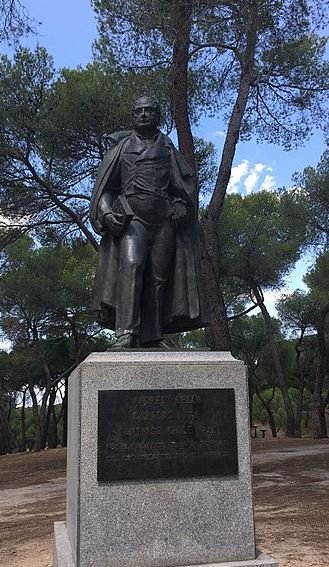
Image: Statue of Andrés Bello in Madrid, Spain.
Why is Andrés Bello featured on the old 2,000 Venezuelan bolívar and the 20,000 Chilean peso notes?
Andrés Bello is featured on the old 2,000 Venezuelan bolívar and the 20,000 Chilean peso notes in recognition of his significant contributions to both Venezuelan and Chilean society. His role as a diplomat, legislator, educator, and intellectual made him a prominent figure in the development of these nations. The inclusion of his image on the currency underscores his enduring legacy and the high esteem in which he is held in both countries.
What roles did Andrés Bello hold in Chile besides being a senator and professor?
In addition to being a senator and professor, Andrés Bello held influential roles in Chilean society by overseeing several local newspapers. This position allowed him to shape public opinion and contribute to intellectual discourse in Chile. His involvement in the media was instrumental in promoting educational and societal reforms, furthering his impact on Chilean culture and politics.
How did Andrés Bello’s work reflect his commitment to creating a just society?
Andrés Bello’s commitment to creating a just society is most evident in his work on the Chilean Civil Code. This legal framework was designed to be advanced and equitable, reflecting his deep understanding of law and his dedication to justice. By drafting and promoting the Civil Code, Bello aimed to establish a fair and organized legal system that would support the development and stability of Chilean society. His broader efforts in education and literature also aimed to foster an informed and enlightened populace, further contributing to societal justice and progress.
What was the impact of Andrés Bello’s role as the first rector of the University of Chile?
As the first rector of the University of Chile, Andrés Bello had a significant impact on the institution’s development and the broader educational landscape of the country. His leadership helped establish the university as a premier center for higher education, fostering intellectual growth and producing future leaders. Bello’s vision and dedication ensured that the University of Chile became a cornerstone of Chilean education, promoting academic excellence and contributing to the nation’s cultural and intellectual advancement.