English Poet and Painter Dante Gabriel Rossetti
Dante Gabriel Rossetti (12 May 1828 – 9 April 1882), born Gabriel Charles Dante Rossetti, was a multifaceted English artist, poet, illustrator, and translator.
A central figure in 19th-century British art and literature, he co-founded the Pre-Raphaelite Brotherhood in 1848 alongside William Holman Hunt and John Everett Millais. This movement, dedicated to rejecting the mechanistic approaches of art that succeeded Raphael, sought inspiration from medieval culture, vivid naturalism, and complex emotional expression.
Rossetti profoundly influenced both his contemporaries and subsequent generations of artists and writers, including William Morris and Edward Burne-Jones, as well as the European Symbolist movement and the Aesthetic movement.
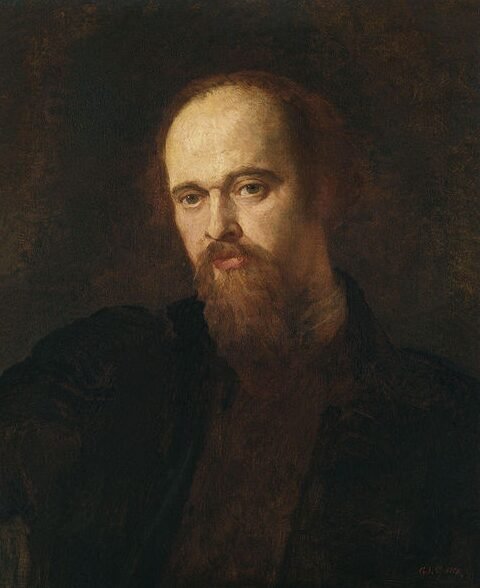
Image: Rossetti by British painter George Frederic Watts
The Artistic and Literary Legacy of Dante Gabriel Rossetti
Rossetti’s creative legacy is marked by the intertwining of visual art and poetry. His paintings and illustrations often conveyed themes of beauty, sensuality, and mysticism, reflecting a revivalist fascination with medieval and Renaissance ideals. At the same time, his poetry, particularly his sonnet sequence The House of Life, is celebrated for its profound exploration of emotion and thought. His dual talents as a poet and painter allowed him to seamlessly integrate image and verse, often creating works where the two art forms complemented and enriched each other.
In his paintings, Rossetti’s style is characterized by lush, vibrant colors, intricate detail, and evocative depictions of his subjects, many of whom were inspired by his personal relationships. Works such as The Girlhood of Mary Virgin (1849) and Astarte Syriaca (1877) exemplify his ability to merge symbolic depth with striking sensuality. He also composed sonnets to accompany many of his paintings, demonstrating his vision of art and poetry as interconnected expressions of creativity.
As a poet, Rossetti’s early work was influenced by Romantic poets such as John Keats and William Blake. His verses often explore themes of love, longing, and mortality, rendered in a rich, lyrical style. His later poetry, particularly The House of Life, delves into the complexities of human relationships and emotional introspection, blending intricate wordplay with vivid imagery.
The Pre-Raphaelite Brotherhood
Rossetti’s establishment of the Pre-Raphaelite Brotherhood marked a transformative moment in British art. Rejecting what they saw as the formulaic approach of academic painting, the group sought to return to the purity and sincerity of art predating Raphael. They emphasized meticulous attention to detail, vibrant color palettes, and themes drawn from literature, mythology, and religion.
Rossetti’s leadership in the Brotherhood helped shape its ethos and aesthetics. He contributed both artistically and philosophically, inspiring others to explore bold new approaches to artistic expression. His works often exemplified the group’s ideals, blending medievalism with a contemporary exploration of beauty and emotional resonance.
The Brotherhood’s influence extended beyond its initial circle, inspiring figures like William Morris and Edward Burne-Jones, who became major contributors to the Arts and Crafts movement and the broader development of British aestheticism.
Rossetti’s Personal Life and Muses
Rossetti’s personal life was deeply interwoven with his creative output, particularly his relationships with the women who served as his models and muses. These relationships, often romantic and complex, significantly shaped both his art and poetry.
- Elizabeth Siddal: Siddal was Rossetti’s most significant early muse and later became his wife. A model, artist, and poet in her own right, she featured in some of Rossetti’s most iconic works, including Beata Beatrix. Their relationship, though passionate, was fraught with challenges, including Siddal’s struggles with ill health and depression. Her untimely death in 1862 had a profound and lasting impact on Rossetti’s art and poetry, imbuing his later works with themes of loss and mourning.
- Fanny Cornforth: A striking departure from Siddal’s ethereal presence, Cornforth was a working-class woman who became Rossetti’s model, muse, and companion. Her voluptuous features and vibrant personality inspired many of his works, exemplifying his ability to capture sensuality and vitality.
- Jane Morris: The wife of William Morris and another of Rossetti’s enduring muses, Jane Morris epitomized the idealized beauty often associated with his later works. Her enigmatic features and dramatic presence appeared in numerous paintings and poems, including Proserpine and Astarte Syriaca. Their relationship, rumored to be romantic, was central to Rossetti’s creative life in his later years.
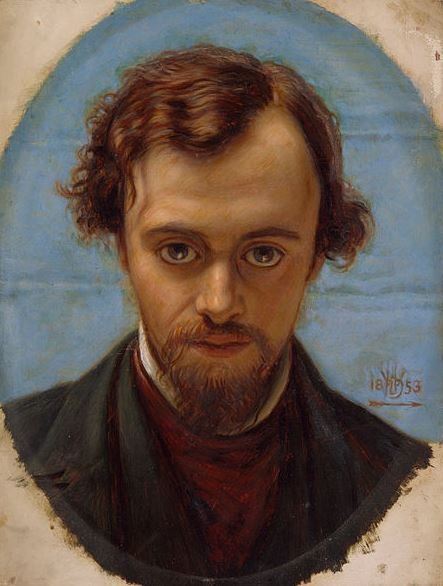
Image: A painting by English painter William Holman Hunt of Rossetti during his early 20s.
Influence and Legacy
Rossetti’s contributions to art and literature extended beyond his immediate circle. His emphasis on the symbolic and sensual aspects of art influenced the European Symbolist movement, which sought to convey emotional truths through metaphor and abstraction. Furthermore, Rossetti’s celebration of beauty and aesthetic experience laid the groundwork for the Aesthetic movement, which championed art for art’s sake.
While his contemporaries sometimes criticized Rossetti’s work for its excessive sensuality or lack of conventional refinement, his innovations in both poetry and visual art paved the way for modern explorations of interdisciplinary creativity. His belief in the unity of artistic forms inspired later artists and writers to experiment with integrating different mediums and perspectives.
Conclusion
Dante Gabriel Rossetti remains a towering figure in 19th-century art and literature, celebrated for his dual mastery of poetry and painting. As a founder of the Pre-Raphaelite Brotherhood, he challenged conventional artistic norms and inspired a generation of creators to pursue a more vivid, emotional, and symbolic approach to their work. His personal life, deeply intertwined with his creative endeavors, added layers of complexity and emotion to his art.
Frequently Asked Questions
What was the Pre-Raphaelite Brotherhood, and what role did Rossetti play in it?
The Pre-Raphaelite Brotherhood was an artistic movement founded in 1848 by Dante Gabriel Rossetti, William Holman Hunt, and John Everett Millais. The group rejected the mechanistic approaches of academic art and aimed to emulate the detail, vibrant color, and spirituality of medieval and early Renaissance art. Rossetti was a central figure in the movement, contributing paintings, poetry, and philosophical ideas that shaped its ethos.
What are some of Rossetti’s most famous works of art?
Rossetti’s notable paintings include:
- The Girlhood of Mary Virgin (1849): One of his earliest works, reflecting his fascination with religious and medieval themes.
- Beata Beatrix (1864–1870): A tribute to his wife, Elizabeth Siddal, imbued with symbolic imagery of love and loss.
- Astarte Syriaca (1877): A striking portrayal of divine femininity inspired by Jane Morris.
- Proserpine (1874): A representation of the goddess of the underworld, also featuring Jane Morris.
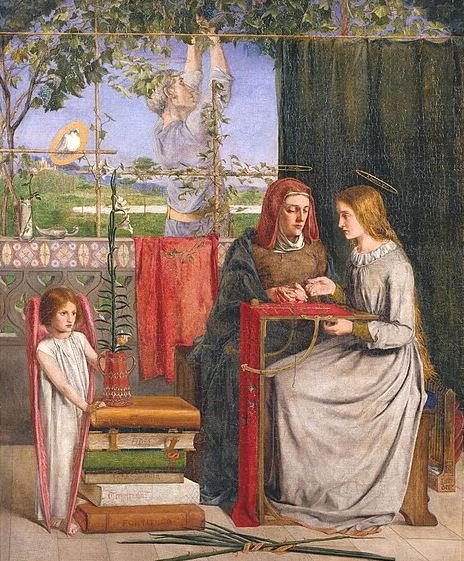
Image: “The Girlhood of Mary Virgin”
How did Rossetti’s poetry complement his paintings?
Rossetti often intertwined his poetry and visual art, creating a unique synergy between the two. He frequently wrote sonnets to accompany his paintings, exploring the same themes through words and imagery. For example, his sonnet sequence The House of Life delves into themes of love and emotion, while individual sonnets often complement works like The Girlhood of Mary Virgin and Beata Beatrix. This duality of expression highlighted his belief in the unity of art and poetry.
Who were the key muses in Rossetti’s life and work?
Rossetti’s muses, who also shaped his personal life, included:
- Elizabeth Siddal: His wife and primary model during his early career. Her tragic death deeply influenced his art and poetry.
- Fanny Cornforth: A model and companion whose sensual features appeared in many of his works.
- Jane Morris: The wife of his friend William Morris, she became an enduring muse and inspiration for works like Proserpine and Astarte Syriaca.
How did Rossetti’s personal life impact his art?
Rossetti’s relationships with his muses were central to his artistic and poetic themes, often exploring love, beauty, loss, and idealized femininity. The death of his wife, Elizabeth Siddal, was particularly devastating and led to darker, more introspective works. His emotional entanglements with Fanny Cornforth and Jane Morris further fueled his exploration of desire, sensuality, and melancholy.
What influence did Rossetti have on other artists and movements?
The English poet inspired contemporaries such as William Morris and Edward Burne-Jones, key figures in the Arts and Crafts movement. His emphasis on symbolism and beauty influenced the European Symbolist movement, which sought to express emotional truths through metaphor and abstraction. Additionally, Rossetti’s focus on aesthetics and the unity of art and poetry paved the way for the Aesthetic movement, which celebrated art for art’s sake.
What is The House of Life, and why is it significant?
The House of Life is a sonnet sequence by Rossetti, exploring themes of love, mortality, and spiritual connection. The sequence is a cornerstone of his poetic work, characterized by its intricate interplay of thought and emotion. It reflects his philosophical and emotional depth, as well as his mastery of the sonnet form, blending personal experiences with universal themes.
How did Rossetti contribute to his sister Christina Rossetti’s work?
Dante Gabriel Rossetti illustrated Goblin Market and other poems by his sister Christina Rossetti. His illustrations complemented her writing, blending his artistic vision with her poetic imagery. This collaboration highlights their mutual influence and the artistic synergy within the Rossetti family.





