Major Excavations at Tel Gezer
Tel Gezer is a significant archaeological site located in central Israel as it has a rich history spanning thousands of years. Excavations at Tel Gezer have revealed evidence of occupation from the Chalcolithic period to the Middle Ages, making it one of the most studied and historically rich sites in the region.
Excavations at Gezer spans over a century and involves contributions from various archaeologists and institutions. These works have revealed layers of history that have shed light on ancient Canaanite, Israelite, and later civilizations.
Early Identification of Tel Gezer
Tel Gezer was first identified in the 19th century during explorations of biblical sites in Palestine. The site had significant importance due to its mention in ancient texts, including the Hebrew Bible and Egyptian inscriptions. It is believed to be the location of the ancient city of Gezer, which appears in biblical narratives such as Joshua 10 and 1 Kings 9:15, where it is mentioned as a city fortified by King Solomon.
The discovery of Tel Gezer can be traced to Charles Clermont-Ganneau, a French scholar and diplomat who worked in Palestine in the late 19th century. In 1871, Clermont-Ganneau identified inscriptions near the site referring to the “boundary of Gezer.” These inscriptions, written in ancient Hebrew, marked the territory of the city and confirmed the identification of the site. His work laid the foundation for later archaeological investigations.

Archaeological ruins of Gezer.
First Excavations – R.A.S. Macalister (1902–1909)
The first large-scale excavation at Tel Gezer began in 1902 and was conducted by Robert Alexander Stewart Macalister, a British archaeologist sponsored by the Palestine Exploration Fund (PEF). Macalister’s excavation marked one of the first modern archaeological endeavors in the Levant, though his methods were rudimentary by today’s standards.
R.A.S. Macalister’s pioneering, albeit flawed, work laid the groundwork for subsequent excavations that applied more sophisticated methodologies.
Macalister excavated the site from 1902 to 1909. His approach involved the use of extensive trenching, which caused significant destruction to the stratigraphy of the site. He relied on techniques that were more concerned with recovering artifacts than understanding the stratified nature of the layers of settlement. Macalister’s interpretation of Tel Gezer’s history was problematic due to these methodological issues, and many of his conclusions were later revised.
Despite these challenges, Macalister’s work provided significant findings:
- He uncovered evidence of a massive Canaanite city from the Middle Bronze Age (2000–1550 BCE), including defensive walls, towers, and gates.
- Macalister also identified “High Place” standing stones—a cultic installation consisting of ten monolithic stones or “Massebot” that were interpreted as a sacred area for ritual worship.
- He discovered significant burial remains, pottery, and evidence of destruction layers.
- The site yielded early references to Gezer as a fortified city.
While Macalister’s work was pioneering, his misinterpretations and lack of attention to stratigraphy meant that later archaeologists had to revisit and reinterpret his findings.
The Period of Dormancy (1910–1960)
After Macalister’s excavation, the site was largely neglected for several decades. Archaeology in Palestine came to a halt due to political and social changes, including World War I, the British Mandate, and the establishment of the State of Israel in 1948. During this period, no significant archaeological activity occurred at Tel Gezer.
However, Gezer remained a site of interest, particularly for biblical archaeologists, due to its prominent role in ancient texts and historical geography. Scholars continued to analyze and critique Macalister’s work, paving the way for future excavations that would address his methodological shortcomings.
Renewed Excavations – Hebrew Union College and William G. Dever (1964–1974)
In 1964, archaeological interest in Tel Gezer was renewed under the direction of William G. Dever, an American archaeologist associated with Hebrew Union College-Jewish Institute of Religion. Dever’s team conducted a series of excavations at Tel Gezer between 1964 and 1974, marking a major shift in excavation methods and interpretations of the site.
Key contributions of Dever’s excavations included:
Dever and his team applied modern archaeological techniques, paying careful attention to stratigraphy and chronology. They established a clearer understanding of the occupation phases at Gezer, identifying layers of settlement and destruction.
One of the most significant discoveries was the Solomonic gate, a six-chambered gate that dated to the 10th century BCE. This gate was identified as part of King Solomon’s construction activities mentioned in the Bible (1 Kings 9:15), along with similar gates at Hazor and Megiddo. The gate provided important evidence for the United Monarchy period.
Dever uncovered extensive remains from the Middle Bronze Age, including city walls, fortifications, and evidence of destruction likely caused by Egyptian campaigns. The excavations also revealed evidence of Iron Age occupation, pointing to the Israelite presence at Gezer during the biblical period.
William G. Dever’s contributions in the 1960s and 1970s clarified the site’s stratigraphy and brought to light monumental structures such as the Solomonic gate.
Also, Dever reexamined Macalister’s “High Place” and provided new insights into its significance as a cultic installation used during the Canaanite period.
Dever’s work at Tel Gezer was groundbreaking. It not only corrected many of Macalister’s errors but also established Gezer as a critical site for understanding Canaanite and Israelite history in the southern Levant.
Salvage Excavations and Additional Surveys (1980s–2000s)
During the 1980s and early 2000s, smaller salvage excavations and surveys were conducted at Tel Gezer in response to construction and agricultural activities that threatened portions of the site. These excavations, often led by Israeli archaeologists, contributed to a broader understanding of the site’s occupational history.
Archaeologists conducted regional surveys around Tel Gezer to map the surrounding landscape and identify smaller settlements, agricultural installations, and burial sites.
Excavations confirmed that Tel Gezer was a major Canaanite city during the Middle Bronze Age, with well-developed fortifications and public structures. Evidence from the Late Bronze Age pointed to Gezer’s role as a vassal city under Egyptian influence.
These smaller-scale excavations complemented the larger campaigns and contributed to a growing body of knowledge about Tel Gezer’s role in the ancient world.
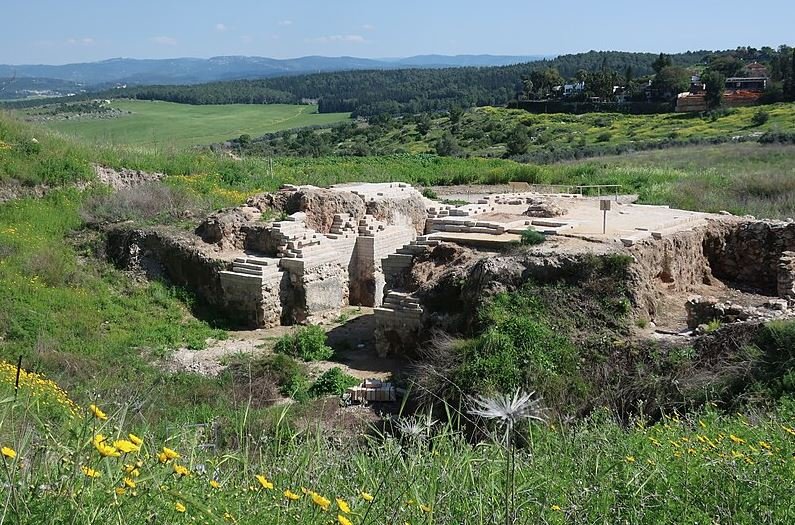
An image of a ruined tower in Tel Gezer.
Recent Excavations – Tel Gezer Excavation Project (2006–Present)
In 2006, a new phase of excavation began at Tel Gezer under the joint direction of Steve Ortiz (Southwestern Baptist Theological Seminary) and Sam Wolff (Israel Antiquities Authority). Known as the Tel Gezer Excavation Project, this endeavor has brought modern technology, methodology, and interdisciplinary research to the site.
Key findings and contributions of the Tel Gezer Excavation Project include:
Excavations revealed additional evidence of massive fortifications from the Middle Bronze Age, including stone walls, towers, and a glacis (a sloped defensive structure). These findings underscored Gezer’s status as a powerful Canaanite city during the second millennium BCE.
The excavations uncovered a significant destruction layer dating to the Late Bronze Age, which may correspond to an Egyptian military campaign, possibly by Pharaoh Thutmose III or Amenhotep II. This destruction aligns with Egyptian inscriptions referring to Gezer as a conquered city.
The six-chambered gate attributed to King Solomon has been reexamined using modern dating techniques. While some scholars continue to associate the gate with the 10th century BCE, others propose a later date, sparking debate over the chronology of the United Monarchy and Solomonic building projects.
Recent excavations have focused on residential areas, providing insights into the daily lives of Gezer’s inhabitants. Artifacts such as pottery, tools, and inscriptions have revealed aspects of trade, agriculture, and cultural practices.
One of the most intriguing discoveries was the ancient water system at Tel Gezer. Similar to systems found at other sites like Hazor and Megiddo, the water system consisted of a large tunnel that provided access to an underground water source. This engineering feat highlights the technological capabilities of the Canaanite inhabitants.
Gezer’s Significance in Biblical and Historical Context
Throughout its history, Tel Gezer has played a prominent role in the biblical and historical record. The city’s strategic location along major trade routes, including the Via Maris, made it a critical site for commerce, military campaigns, and cultural exchange. Gezer is mentioned in various ancient texts, including:
- The Amarna Letters (14th century BCE): These Egyptian diplomatic correspondences refer to Gezer as a Canaanite city subject to Egyptian authority.
- The Merneptah Stele (13th century BCE): Pharaoh Merneptah’s inscriptions mention Gezer as a city conquered during his campaigns in Canaan.
- The Bible: Gezer is prominently mentioned in the Hebrew Bible. It is described as a Canaanite stronghold conquered by Pharaoh and gifted to King Solomon as part of a marriage alliance (1 Kings 9:16). Solomon is said to have fortified Gezer along with other key cities.
Questions and Answers
What is Tel Gezer and where is it located?
Tel Gezer is an archaeological site in central Israel near the Shephelah, approximately 9–10 km southwest of Ramleh.
Why is Tel Gezer significant in the Hebrew Bible?
Gezer is mentioned as one of the “Solomonic” cities fortified by King Solomon, as referenced in 1 Kings 9:15–17.
What is a tell, and how does it relate to Tel Gezer?
A tell is a man-made mound formed by layers of successive human habitation. Tel Gezer consists of these strata, measuring 650 meters long and 200–250 meters wide, with two hills connected by a low area called the “saddle.”
How long was Tel Gezer inhabited?
Tel Gezer was continuously inhabited for over 3,000 years, from the late 4th millennium BCE to the 1st century CE.
When were the first fortifications at Tel Gezer built?
The first fortifications appeared during the Middle Bronze Age (2000–1500 BCE), including stone walls, towers, and a glacis.

The Gezer High Place showing several stone monoliths.
Who discovered Tel Gezer and identified its location?
Charles Clermont-Ganneau, a French scholar, identified Tel Gezer in 1870 and discovered two inscribed boundary stones in 1874, confirming the city’s borders.
Who conducted the first excavations at Tel Gezer?
The first excavations were conducted between 1902 and 1909 by Irish archaeologist R.A.S. Macalister, sponsored by the Palestine Exploration Fund (PEF).
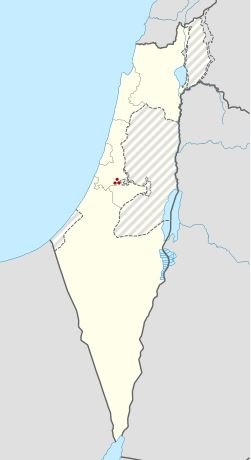
Map showing the exact location of Tel Gezer in Israel.
What significant walls did Macalister uncover?
Macalister identified four walls:
- Middle Wall (Early Bronze Age)
- Inner Wall (Middle Bronze IIC, triple gateway)
- Outer Wall (Late Bronze Age)
- Casemate Wall (Iron Age, associated with Solomon).
What were Macalister’s notable discoveries?
Macalister discovered the High Place (ten standing stones), the Gezer Calendar (10th-century BCE Hebrew inscription), Egyptian imports, and Philistine pottery.
Macalister did not use modern stratigraphic methods, failed to record elevations, and misdated the Iron Age gate to the Maccabean period.
What happened during the 1914 and 1924 excavations?
Baron Rothschild funded excavations led by Raymond-Charles Weill, but the findings were not published until 2004.
What was Alan Rowe’s role in Tel Gezer’s excavations?
In 1934, Alan Rowe led a PEF-sponsored dig, but the effort was abandoned due to impractical excavation areas.
Who led the HUC-Harvard Excavations, and when did they occur?
The Hebrew Union College (HUC) and Harvard Semitic Museum excavated Tel Gezer from 1964 to 1974, led by G. Ernest Wright, William G. Dever, and later Joe D. Seeger.
What were the key discoveries of the HUC-Harvard excavations?
- Middle Bronze Age: The massive Inner Wall and glacis, and a re-dating of the High Place to MB IIC.
- Late Bronze Age: An Outer Wall and an Egyptian palace from the Amarna period, destroyed by Merneptah.
- Iron Age: The six-chambered gate (attributed to Solomon), casemate walls, and evidence of urbanization.
The HUC-Harvard excavations revealed Neo-Babylonian destruction layers dating to the late 7th or early 6th century BCE.
What is the current excavation project at Tel Gezer?
The ongoing Tel Gezer Excavation and Publication Project, launched in 2006 by the Tandy Institute for Archaeology, focuses on Iron Age urbanization and public buildings.
What was the major discovery regarding the Gezer water system?
In 2015, excavators found that the Gezer water system dates to the Middle Bronze Age (c. 2000 BCE), predating similar systems at Megiddo and Hazor.





