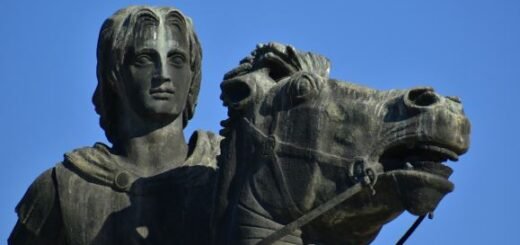
The Battle of Hydaspes in 326 BCE
The Battle of Hydaspes, fought in 326 BCE, stands as one of the most remarkable confrontations in ancient military history. This decisive engagement between Alexander the Great and King Porus of the Paurava Kingdom not only showcased the tactical brilliance of Alexander but also underscored the resilience and valor of his Indian adversary. Set against the backdrop of Alexander’s expansive campaigns, the battle had profound implications for the subsequent course of history in the Indian subcontinent and the broader Hellenistic world.

“Battle of the Hydaspes” by French artist Charles Le Brun.
READ MORE: List of Key Events in the Life of Alexander the Great
Background
Alexander the Great’s Campaigns
By 326 BCE, Alexander the Great had already carved out one of the largest empires in the ancient world, stretching from Greece through Asia Minor, Egypt, Persia, and into the fringes of India. His relentless pursuit of conquest was driven by a combination of personal ambition, the desire to spread Hellenistic culture, and the quest for glory.
Having defeated King Darius III of Persia and subdued numerous other regional powers, Alexander’s ambition led him to push further east into the Indian subcontinent, aiming to explore and control new territories.
READ MORE: Rulers of the Achaemenid Empire: From Cyrus the Great to Artaxerxes V
Porus: King of the Paurava Kingdom
King Porus ruled over the Paurava Kingdom, located in the region that is now part of modern-day Punjab, Pakistan. Porus was renowned for his bravery, tactical acumen, and the formidable army he commanded, which notably included war elephants—a force rarely encountered by Alexander’s troops.
Porus’s reputation as a valiant and skilled warrior made him a significant adversary, and his kingdom’s strategic location along the Hydaspes River (modern-day Jhelum River) posed a critical challenge to Alexander’s advancing forces.
Strategic Importance of the Hydaspes Region
The Hydaspes River was not only a natural barrier but also a vital artery for the region’s agriculture and trade. Controlling this area meant securing a crucial gateway into the Indian subcontinent, facilitating further military and economic ventures. For Alexander, victory at Hydaspes was essential to maintain the momentum of his campaign and to consolidate his holdings in the increasingly resistant eastern territories.
Prelude to the Battle
As Alexander pushed into India, he encountered stiff resistance from local kingdoms wary of foreign domination. Porus emerged as the principal opponent in the region, mobilizing a large and well-equipped army to halt Alexander’s advance. The Paurava Kingdom’s strategic positioning along the Hydaspes River necessitated a decisive confrontation to determine the control of the area.
The battle took place on the eastern bank of the Hydaspes River, characterized by its dense vegetation, marshy areas, and the river itself, which posed significant logistical challenges. The river was swollen by monsoon rains, making crossing it a formidable task. The terrain required careful planning and adaptability from both commanders, influencing the tactical decisions made during the engagement.
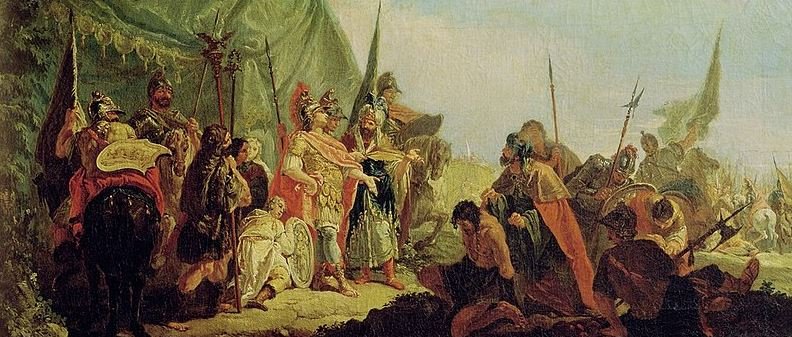
A painting by Italian artist entitled “Alexander the Great and Porus”.
Forces Involved
Alexander’s Army
Alexander commanded a seasoned and versatile force, comprising approximately 40,000 infantry, 5,000 cavalry, and numerous auxiliary units, including specialized archers and engineers. His army was well-drilled, highly disciplined, and experienced in various forms of warfare, having faced diverse opponents across different terrains.
Porus’ Army
Porus fielded a sizeable force estimated at around 30,000 infantry, 3,000 cavalry, and up to 200 war elephants. The elephants, in particular, presented a unique challenge, capable of causing significant disruption and fear among the ranks of conventional troops. Additionally, Porus had strategically positioned his troops to leverage the advantages offered by the terrain and the river.
The Battle
Faced with the daunting task of crossing the swollen Hydaspes River, Alexander employed a combination of engineering prowess and tactical ingenuity. Recognizing the necessity of a swift and unexpected crossing, he orchestrated a diversionary attack to distract Porus while his main forces executed the crossing elsewhere. Utilizing pontoon bridges and constructing makeshift rafts, Alexander ensured a rapid deployment of troops across the river, minimizing the time his forces were exposed to enemy fire and potential counterattacks.
Porus, aware of the strategic importance of the river crossing, fortified his positions along the eastern bank. He deployed his war elephants at key points to disrupt the enemy’s formations and create chaos among the Macedonian ranks. The elephants, trained to charge and trample, were intended to break the cohesion of Alexander’s infantry and cavalry, turning the tide in favor of the Paurava forces.
Phases of the Battle
Initial Engagement
As Alexander’s forces crossed the river under the cover of diversionary attacks, Porus launched a series of assaults using his war elephants and infantry. The initial phase saw intense skirmishes, with Porus’s elephants causing considerable disruption. However, Alexander’s troops, accustomed to facing various threats, maintained their discipline and responded with coordinated countermeasures, including the use of caltrops and flaming projectiles to neutralize the elephants’ effectiveness.
Middle Phase
Realizing that a direct confrontation with the elephants would be costly, Alexander adapted his tactics by employing light infantry and missile troops to target the elephants’ handlers and vulnerable points. Simultaneously, his cavalry units executed flanking maneuvers to encircle and isolate portions of Porus’s forces. The adaptability of Alexander’s strategy began to tilt the balance in his favor, as he systematically dismantled the cohesion of the enemy army.
Decisive Turn
A critical turning point occurred when Alexander personally led a decisive cavalry charge against the center of Porus’s formation. Demonstrating his characteristic boldness, Alexander’s presence invigorated his troops, leading to a concentrated assault that pierced through the Paurava lines. Concurrently, his infantry engaged in close combat, neutralizing the remaining elephants and breaking the morale of Porus’s soldiers.
Conclusion of the Battle
As the battle progressed into the afternoon, the Macedonian forces gained the upper hand, exploiting gaps in the enemy’s defense and systematically overwhelming Porus’s army. The combination of superior tactics, disciplined formations, and effective countermeasures against the elephants culminated in a decisive victory for Alexander.

Porus surrenders to Alexander. Artwork by American painter Alonzo Chappel.
Aftermath
While precise numbers are scarce, historical accounts suggest significant casualties on both sides. Porus’s army suffered heavy losses due to the effective Macedonian assault and the neutralization of their elephants. Alexander’s forces, although victorious, incurred substantial casualties from the fierce resistance and the challenges posed by the battlefield’s geography.
In a display of magnanimity and strategic acumen, Alexander respected the valor and leadership of King Porus. Impressed by his adversary’s courage and integrity, Alexander reinstated Porus as a satrap (governor) of his own kingdom, thereby securing loyalty and stabilizing the region. This act of respect not only exemplified Alexander’s diplomatic skills but also facilitated smoother governance and integration of the newly acquired territories.
Following the battle, Alexander continued his campaign into the Punjab region, establishing cities and fortifications to consolidate his control. The integration of this area into his empire expanded the Hellenistic influence into India, promoting cultural exchanges and the spread of Greek ideas, art, and administration. However, the vast distances and cultural differences eventually contributed to the weariness of his troops, leading to their reluctant return westward.
The Battle of Hydaspes marked the easternmost extent of Alexander’s conquests. Although he intended to push further into the Indian subcontinent, the combined challenges of extended supply lines, unfamiliar terrain, and the steadfast resistance of local kingdoms led to the decision to halt further expansion. The battle thus became a defining moment, highlighting both the zenith of Alexander’s military prowess and the formidable obstacles that prevented the complete subjugation of India.
Significance
The Battle of Hydaspes is often studied for its exemplary demonstration of tactical flexibility and the effective use of combined arms. Alexander’s ability to adapt to unexpected challenges, such as the formidable war elephants, showcased his capacity for innovative problem-solving in the heat of battle. Additionally, the integration of engineering feats, like river crossings under duress, emphasized the importance of logistics and planning in military success.
The victory at Hydaspes facilitated the spread of Hellenistic culture into India, leading to a fusion of Greek and Indian traditions in art, architecture, and governance. Cities founded by Alexander, such as Nicaea (near modern-day Islamabad), became centers of cultural exchange, fostering a blend of Eastern and Western influences. Politically, the incorporation of the Punjab region into the Macedonian Empire extended the reach of Hellenistic administrative practices and diplomatic strategies.
Frequently asked questions
What significant battles had Alexander the Great won prior to the Battle of Hydaspes?
Alexander had defeated King Darius III and the Persians at the battles of Granicus, Issus, and Gaugamela.
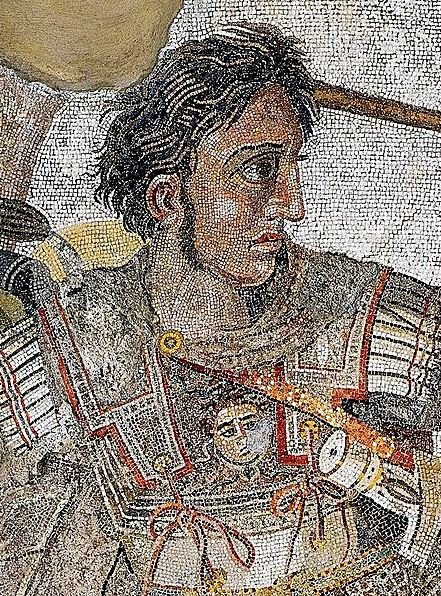
Mosaic of Alexander the Great.
Why did Alexander turn his attention to India despite objections from his troops?
Alexander sought to continue his conquests and expand his empire further eastward, despite the fatigue and objections of his loyal troops who had accompanied him since leaving Macedonia in 334 BCE.
What made the Battle of Hydaspes significant in Alexander’s military career?
The Battle of Hydaspes is often regarded as Alexander’s finest military achievement and his last major victory, showcasing his strategic genius against a formidable opponent, King Porus, and an unfamiliar challenge: war elephants.
Who was King Porus, and what strategy did he employ to defend against Alexander?
King Porus was the ruler of the region around the Hydaspes River. He positioned his forces along the river’s eastern bank, relying on the river’s swollen state during the monsoon season to deter Alexander’s crossing. He also deployed war elephants, infantry, cavalry, and chariots in his defensive strategy.
How did Alexander prepare for the crossing of the Hydaspes River?
Alexander feigned inactivity by marching along the riverbank and creating diversions with campfires and troop movements. He scouted a suitable crossing point 18 miles upstream and crossed during a thunderstorm using boats and rafts. He left Craterus behind in the main camp to distract Porus.
What challenges did Alexander face during the river crossing?
Alexander’s forces landed on a mid-river island instead of the eastern bank, requiring them to wade across the remaining distance. The crossing was conducted during adverse weather, adding to the difficulty.
How did Porus respond to Alexander’s crossing?
Porus sent his son with 3,000 cavalry and 120 chariots to delay Alexander, but this force was defeated. Alexander then advanced toward Porus’s main position.
Porus placed his elephants at the front to disrupt Alexander’s formations, supported by infantry, with cavalry and chariots on the flanks. His strategy relied on the elephants to cause chaos among the Macedonian troops.
How did Alexander counter Porus’s use of war elephants?
Alexander used mounted archers to harass the elephants, targeting their handlers. His Companion cavalry attacked the flanks, while a secondary cavalry force, led by Coenus, struck Porus’s rear, causing the elephants to panic and create chaos among their own troops.
What were the results of the Battle of Hydaspes?
Porus’s army suffered heavy losses, with 12,000 men and 80 elephants killed. Alexander’s casualties were minimal in comparison. Porus was ultimately captured but impressed Alexander with his valor and was reinstated as ruler of his territory.
How did Alexander treat Porus after the battle?
Alexander reinstated Porus as a ruler and granted him additional lands, securing his loyalty and stabilizing the region.
Why did Alexander halt his advance into India after the Battle of Hydaspes?
Alexander’s troops, exhausted from years of campaigning, refused to continue further into India. Reluctantly, Alexander agreed to return westward.
What significant loss did Alexander suffer after the battle?
Alexander’s beloved horse, Bucephalus, died, reportedly due to old age or battle wounds. Alexander founded the city of Bucephala in his horse’s honor.