The Hoxne Hoard is one of the most significant and largest collections of late Roman precious metals ever discovered in Britain. Unearthed in 1992 by a metal detectorist in a field near Hoxne, Suffolk, this remarkable treasure offers unparalleled insights into the wealth, artistry, and societal structure of late Roman Britain.
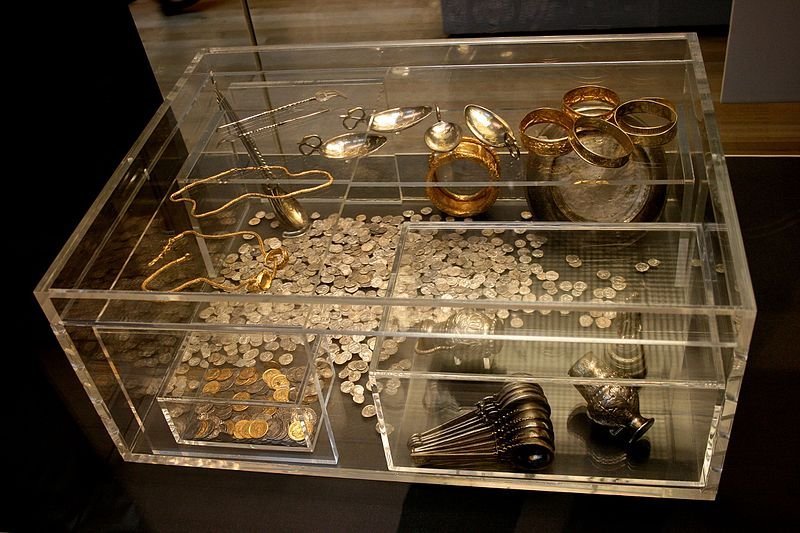
A display case recreating the arrangement of the hoard treasure as it was found during excavation.
Discovery of the Hoard
The Hoxne Hoard was discovered on November 16, 1992, by Eric Lawes, a retired gardener and metal detector enthusiast. While searching for a friend’s lost hammer in a farmer’s field, Lawes stumbled upon several gold coins and jewelry items. Recognizing the importance of his find, he reported it to local authorities rather than excavating further. Professional archaeologists from the Suffolk County Council subsequently conducted a careful excavation, revealing a treasure trove buried in a wooden chest.
The Hoxne Hoard, discovered in Suffolk, England, in 1992, is the largest and most significant cache of late Roman gold and silver ever found in the Roman Empire.
The quick involvement of archaeologists ensured the hoard was meticulously excavated and documented in situ. This approach preserved valuable contextual information about the hoard’s placement and condition, enhancing its historical interpretation.
Contents of the Hoard
The Hoxne Hoard contains over 15,000 items, including coins, jewelry, and tableware, with a combined weight of approximately 27 kilograms (60 pounds). The contents can be broadly categorized into the following:
The discovery of the Hoxne Hoard reshaped our understanding of late Roman Britain and inspired changes to UK treasure laws, emphasizing responsible archaeology.
The hoard includes 14,865 Roman coins, primarily gold (aurei and solidi) and silver (siliquae). These coins span the late 4th and early 5th centuries CE, covering the reigns of emperors such as Honorius, Arcadius, and Constantine III. The chronological distribution of the coins indicates the hoard was likely buried around 408–410 CE, a tumultuous period in Roman Britain as imperial authority waned.
The hoard features exquisite examples of Roman craftsmanship:
- Gold Necklaces: Ornate chains and pendants adorned with intricate filigree work.
- Bracelets: Including solid gold bangles and hinged designs.
- Rings: Some engraved with personal inscriptions or intricate gemstones.
The collection includes a variety of high-quality silver tableware:
- Platters and Trays: Used for serving food during banquets.
- Bowls and Dishes: Decorated with engraved or repoussé designs.
- Spoons and Ladles: Many bearing Christian symbols such as chi-rho monograms, reflecting the growing influence of Christianity in late Roman Britain.
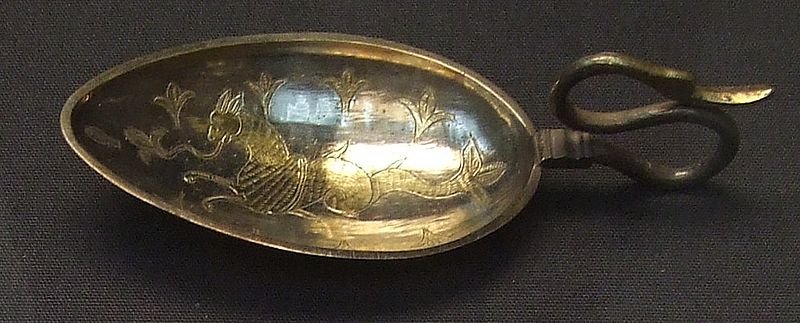
A silver-gilt cignus spoon adorned with a mythical marine creature.
Other Items of the Hoxne Hoard
- Decorative Fittings: Including ornate clasps and mounts likely from furniture or chests.
- Ivory and Bone Fragments: Possibly parts of knife handles or other functional items.
Historical Context and Interpretation
The Hoxne Hoard was buried during a time of great upheaval in Roman Britain. By the early 5th century, the Western Roman Empire was under immense pressure from internal strife and external invasions by Germanic tribes. Britain, isolated from central imperial authority, faced economic decline and increasing instability.
Purpose of the Hoard
The precise reason for the burial remains speculative, but several plausible explanations exist:
The hoard may have been buried by a wealthy individual or family seeking to safeguard their valuables during uncertain times.
Some scholars suggest the hoard could have been an offering to deities, though this is less likely given its secular composition.
The hoard might represent a temporary hiding place with the intention of retrieval, which circumstances ultimately prevented.
Christian Influence
The presence of Christian symbols on some items highlights the religious transformation occurring in late Roman Britain. By the early 5th century, Christianity had gained significant traction among the elite, influencing both personal piety and artistic expression.
Significance of the Hoxne Hoard
The Hoxne Hoard is significant for several reasons:
The hoard provides valuable data on the circulation and use of currency in late Roman Britain. The presence of both older and contemporary coins suggests practices like hoarding and the continued use of older coinage in economic transactions.
The craftsmanship of the jewelry and silverware reflects the high level of artistry in late Roman Britain. Techniques like filigree, niello inlay, and repoussé demonstrate the sophistication of Roman artisans.
The story of the Hoxne Hoard has been featured in documentaries, academic publications, and popular media, showcasing the enduring allure of archaeological discovery.
The sheer wealth represented by the hoard underscores the existence of an affluent elite in late Roman Britain. The items likely belonged to a prominent landowner or official.
The burial of the hoard coincides with the decline of Roman rule and the transition to the early medieval period. It serves as a tangible link between the Roman past and the post-Roman world.
Discovery’s Legacy and Legal Implications
The discovery of the Hoxne Hoard had a profound impact on archaeology and heritage legislation in the UK. It was the first major find processed under the Treasure Act of 1996, which replaced older treasure trove laws. This act requires finders to report potential treasures, ensuring proper documentation and equitable distribution between finders and landowners.
The Hoxne Hoard has inspired widespread interest in Roman history and treasure hunting.
The hoard was valued at £1.75 million in 1993 and acquired by the British Museum, where it remains on display. It has become a centerpiece of the museum’s Roman Britain collection, attracting scholars and visitors from around the world.
Questions and answers about the Roman Hoxne Hoard
How much does the hoard weigh, and what is its estimated value?
The hoard includes approximately 7.7 pounds of gold and 52.4 pounds of silver, with an estimated value in the region of $5 million.
Who discovered the Hoxne Hoard, and how was it excavated?
Eric Lawes, a retired gardener and metal detector enthusiast, discovered the hoard on November 16, 1992, while searching for a lost hammer. He reported his find to authorities, and archaeologists from Suffolk County Council conducted a professional excavation to preserve the context and condition of the artifacts.

What was the hoard stored in, and how was it organized?
The hoard was stored in a decayed wooden chest, which included smaller boxes and fabric containers for organizing the items. This meticulous packing contributed to the excellent preservation of the artifacts.
What happened to the hoard after its discovery?
The hoard was taken to the British Museum for conservation and study. In 1993, a coroner’s inquest declared it a “treasure trove,” awarding a £1.75 million reward to Lawes, who shared it with the landowner. It is now displayed at the British Museum.
What types of coins are included in the Hoxne Hoard?
The hoard contains about 560 gold coins, 15,000 silver coins, and 24 bronze coins. The gold coins, known as solidi, span the reigns of eight Roman emperors, while the silver coins include siliquae and miliarenses. The latest coins date to 407–408 CE.
What jewelry items are part of the hoard?
The hoard includes 29 gold jewelry items: six necklaces, 19 bracelets, three rings, and a rare gold body chain. One bracelet bears the inscription “Utere Felix Domina Juliane” (“Use [this] happily, Lady Juliane”), likely identifying the owner.
What notable silverware is included in the hoard?
The silverware includes 78 spoons, 20 gilded ladles, four pepper pots, bowls, vases, and toilet implements. Many items bear Christian symbols, such as the Chi-Rho monogram or the phrase “Vivas in Deo” (“May you live in God”).
What is the significance of the “Empress” pepper pot?
The “Empress” pepper pot is a silver container depicting a wealthy Roman woman. It showcases the artistry of late Roman metalwork and highlights the value of imported spices like pepper.
When was the Hoxne Hoard buried, and why?
The hoard was likely buried after 407–408 CE, during the collapse of Roman authority in Britain. It may have been hidden for safekeeping during a period of instability or as part of a votive tradition.
What does the absence of large silver tableware suggest?
The absence of large silver tableware, common in Roman villas, suggests the hoard may represent only part of the owner’s wealth.