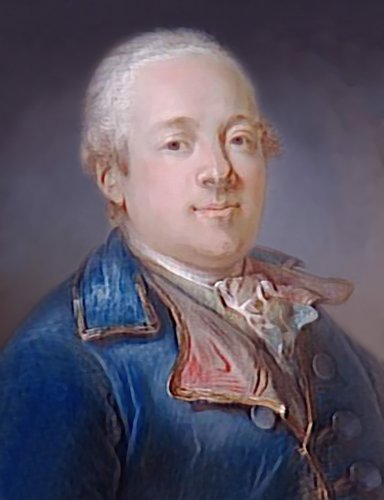
A portrait of Jacques-François de Menou, painted by French artist Joseph Ducreux.
Jacques-François de Menou, later known as Abdallah de Menou following his conversion to Islam, was a prominent French statesman and general during the late 18th and early 19th centuries. His career spanned pivotal moments in European and Middle Eastern history, particularly during the French Revolutionary Wars and Napoleon’s Egyptian Campaign. Born on 3 September 1750 in Boussay, central France, Menou’s military and political roles showcased his adaptability and ambition, even amid the turmoil of the era. He passed away on 13 August 1810 at the Villa Corniani near Mestre, Italy.
Who were the greatest generals of the Revolutionary and Napoleonic Wars?
Early Life and Role in the French Revolution
Menou hailed from an ancient French noble family and began his military career early, rising to the rank of Maréchal de camp (Field Marshal) by 1789. That same year, he was elected by the Second Estate of the bailiwick of Touraine to represent them at the Estates General, a pivotal assembly that marked the beginning of the French Revolution. A liberal nobleman, Menou advocated for progressive reforms and aligned with the National Constituent Assembly. His influence in the assembly grew as he was elected secretary in December 1789 and served as president from 27 March to 12 April 1790, during which he also contributed to the diplomatic committee.
When the National Assembly dissolved in September 1791, Menou resumed military service, commanding forces in Paris and later in the Armée de l’Ouest, where he fought against counter-revolutionary uprisings in the Vendée. His military leadership extended to Paris during the rebellion of 20 May 1795 (1 Prairial, Year III), where he suppressed the insurgent Faubourg Saint-Antoine. Despite being denounced as a traitor and put on trial that same year, Menou was acquitted and continued to serve.
The Egyptian Campaign and Conversion to Islam
In 1798, Menou joined Napoleon’s ambitious Egyptian Campaign as a divisional commander in the Armée d’Orient. Following the assassination of General Jean-Baptiste Kléber in June 1800, Menou assumed leadership of French forces in Egypt. However, his tenure as General-in-Chief faced significant challenges. Unlike his predecessor, Menou lacked widespread support from officers and troops.
During his time in Egypt, Menou married Zubaidah bint Muhammad El Bawwab, the daughter of a wealthy Egyptian family. His conversion to Islam and subsequent adoption of the name Abdallah de Menou were strategic, aiming to foster better relations with the local population. Despite this, his leadership was criticized for failing to inspire the same loyalty and effectiveness as Kléber.
Despite his controversial and mixed legacy, Jacques-François Menou’s career reflects the complexities of serving as both a reformist nobleman during the French Revolution and a general under Napoleon.
Menou’s most notable military engagement in Egypt occurred on 21 March 1801, when he led French forces against British troops landing at La Muiron. The French were decisively defeated, and Menou retreated to Alexandria. Following the Siege of Alexandria, he surrendered to the British on 30 August 1801. As part of the terms of surrender, Menou negotiated the evacuation of French forces but was compelled to relinquish the Rosetta Stone, a significant archaeological discovery reported by Captain Pierre-François Bouchard. The Rosetta Stone later became instrumental in deciphering ancient Egyptian hieroglyphs.
Later Career in the French Empire
After returning to France, Menou transitioned into administrative and political roles under Napoleon’s regime. In May 1802, he was appointed to the Tribunat, one of the governmental bodies established by Napoleon. Soon after, he became the Administrator of the 27th Military Division in Piedmont. His service to the empire earned him several honors:
- Member of the Legion of Honor in 1803.
- Promotion to Grand Officer of the Legion of Honor in 1804.
- The title of Comte de l’Empire in 1808.
Menou’s contributions to the French Empire were most prominent in Italy, particularly during his tenure as Governor of Venice in 1807. For his service, he was named a Knight of the Order of the Iron Crown in December 1807.
Personal Life and Legacy
Menou’s personal life took an unusual turn when he married Zubaidah El Bawwab, with whom he had a son, Jacques Mourad Soliman, born in July 1800 in Rosetta, Egypt. His conversion to Islam and integration into Egyptian society remain unique aspects of his legacy, highlighting his efforts to bridge cultural divides during the French occupation of Egypt.
Menou’s military and administrative achievements earned him recognition even after his death. His name is inscribed on the Arc de Triomphe in Paris, commemorating his role in Napoleon’s campaigns.
Frequently Asked Questions
What position did Menou achieve during Napoleon’s Egyptian Campaign?
He commanded a division of the Armée d’Orient and succeeded Jean-Baptiste Kléber as the general in chief of Egypt after Kléber’s assassination in 1800.
Why did Menou convert to Islam, and what was his new name?
He converted to Islam after marrying Zubaidah bint Muhammad El Bawwab, the daughter of a wealthy Egyptian. His new name was Abdallah.
What led to his defeat in Egypt?
He commanded French forces against the British at La Muiron on 21 March 1801, but they were defeated. Menou eventually surrendered at Alexandria on 30 August 1801.
What was Menou’s involvement with the Rosetta Stone?
After Captain Pierre-François Bouchard discovered the Rosetta Stone, Menou oversaw its recovery. It was later handed over to the British following the French surrender in Egypt.
What were Menou’s contributions under Napoleon’s Empire?
He served in administrative roles, including as Administrator of the 27th Military Division (Piedmont), and was appointed Governor of Venice. He was also honored as a Grand Officer of the Legion of Honor and Knight of the Order of the Iron Crown.
How is Menou commemorated in France?
His name is inscribed on the Arc de Triomphe in Paris, recognizing his contributions as a general.
Did Menou have any children?
Yes, he had a son, Jacques Mourad Soliman, born in 1800 in Rosetta, Egypt, with his Egyptian wife, Zubaidah El Bawwab.





