House of Bourbon
The House of Bourbon originated as a branch of the Capetian dynasty in 1272 when Robert, son of King Louis IX of France, married Beatrix of Bourbon, heiress to the lordship of Bourbon.
Origins and Early History
The House of Bourbon traces its roots back to the Kingdom of France as a cadet branch of the Capetian dynasty, which itself stemmed from Hugh Capet, the first King of the Franks. This illustrious house began its formal history in 1272 when Robert, Count of Clermont, the youngest son of King Louis IX (Saint Louis), married Beatrix of Bourbon, heiress to the lordship of Bourbon. This marriage consolidated the Bourbon name and estate, leading to the creation of one of the most influential royal families in European history.
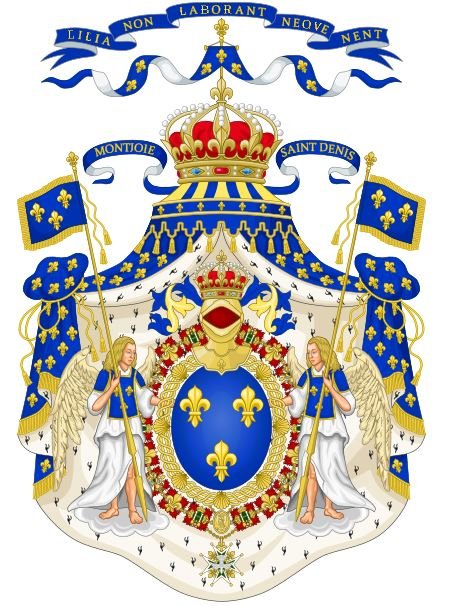
Royal coat of arms used by the Kingdom of France.
Pre-Capetian Bourbon Nobility
Before its integration into the Capetian dynasty, Bourbon was a noble estate ruled by the Sires of Bourbon. This family held sway over the region during the 13th century, establishing their authority as vassals to the King of France. The legacy of this first House of Bourbon ended in 1216 with the death of the last male heir, leading to a new lineage formed through the marriage of Mathilde of Bourbon to Guy II of Dampierre.
Establishment as a Cadet Branch
In 1327, Louis I, the grandson of Robert and Beatrix, was elevated to the title of Duke of Bourbon by Charles IV of France. Over the following centuries, the Bourbon family served as loyal nobles under the Capetian and Valois kings. The lineage flourished until the senior line of the Bourbons ended in 1527 with the death of Charles III, Duke of Bourbon. The family’s junior branch, the Bourbon-Vendôme line, rose to prominence thereafter.
Ascendancy to the Throne of France
The Bourbon-Vendôme Line and Henry IV
The extinction of the House of Valois in 1589 marked a turning point for the Bourbons. Under the Salic law, which dictated that the throne must pass to a male heir, the head of the Bourbon-Vendôme line, Henry of Navarre, became King Henry IV of France. Henry’s accession united France with the northern portion of the Kingdom of Navarre, establishing the Bourbons as rulers of both territories.
Henry IV’s reign (1589–1610) was transformative. Initially a Protestant, he converted to Catholicism in 1593 to gain acceptance among the predominantly Catholic French population. His leadership ended decades of religious conflict through the Edict of Nantes in 1598, which granted religious tolerance to the Huguenots.
Consolidation and Expansion under Louis XIII and Louis XIV
Henry IV’s son, Louis XIII, succeeded him in 1610. Although a weak monarch, Louis XIII’s reign was marked by the influence of Cardinal Richelieu, who centralized power and laid the groundwork for absolute monarchy. This trend culminated in the reign of Louis XIV, the Sun King (1643–1715), who personified the peak of Bourbon absolutism. Louis XIV’s long rule saw France emerge as the dominant power in Europe, with cultural and military achievements that shaped the continent.

Portrait of Louis XIII.
Bourbon Monarchs in Spain and Beyond
The War of the Spanish Succession and Philip V
In 1700, the death of Charles II of Spain, the last Habsburg monarch, led to the War of the Spanish Succession. Philip, Duke of Anjou and grandson of Louis XIV, was named heir to the Spanish throne. This prompted fears of a Franco-Spanish superstate and led to a coalition war involving major European powers.
The Treaty of Utrecht (1713) resolved the conflict by allowing Philip to retain the Spanish throne as Philip V, but he and his descendants renounced any claim to the French crown. This established the Spanish House of Bourbon, which has ruled intermittently since then.
Bourbon Rulers in Italy
Branches of the Spanish Bourbons also ruled in Naples, Sicily, and Parma. Charles III of Spain, for instance, reigned as King of Naples and Sicily before ascending the Spanish throne in 1759. His descendants continued to influence Southern Italy through the Kingdom of the Two Sicilies until its annexation to the Kingdom of Italy in 1861.
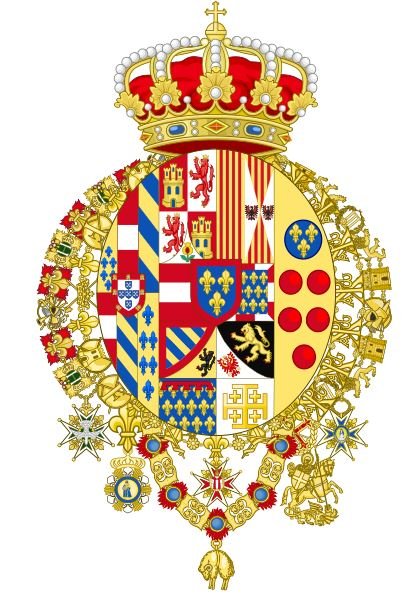
The coat of arms used by the House of Bourbon-Two Sicilies, a cadet branch of the House of Bourbon.
Bourbons in Luxembourg
The Bourbon legacy extended to Luxembourg through the marriage of Grand Duchess Charlotte to Prince Felix of Bourbon-Parma. Their descendants, including the current Grand Duke Henri, represent the Bourbon lineage in modern European monarchies.
Decline and Restoration in France
The French Revolution and Louis XVI
The French Revolution (1789–1799) was a pivotal period for the Bourbon dynasty. Louis XVI’s inability to address France’s economic crisis and the growing revolutionary fervor led to his downfall. The monarchy was abolished in 1792, and Louis XVI was executed in 1793. His son, Louis XVII, died in captivity, marking the temporary end of Bourbon rule in France.

A portrait of Louis XVIII painted by French artist François Gérard in 1814.
Bourbon Restoration
The fall of Napoleon Bonaparte in 1814 paved the way for the Bourbon Restoration. Louis XVIII, brother of Louis XVI, ascended the throne under a constitutional monarchy. His successor, Charles X, sought to restore absolutism, but his reactionary policies led to the July Revolution of 1830. Charles was deposed and replaced by his cousin, Louis-Philippe of the Orléans branch, who ruled during the July Monarchy until 1848.
Bourbon Cadet Branches
The Princes of Condé and Conti
The Princes of Condé and Conti were prominent cadet branches of the Bourbons. Descended from Louis, Prince of Condé, an uncle of Henry IV, these lines played significant roles in French politics and military affairs until their extinction in 1830 and 1814, respectively.
The Orléans Branch
The House of Orléans emerged as a cadet branch with Philippe I, Duke of Orléans, brother of Louis XIV. The Orléans monarchs ruled France during the July Monarchy (1830–1848) and continue to claim the French throne through the Unionist faction of French monarchists.
Global Influence and Legacy
The Bourbon reforms in Spain’s American colonies aimed to modernize administration and increase revenue. These efforts, while effective in centralizing power, contributed to colonial discontent and eventual independence movements in Latin America.
Isabel, Princess Imperial of Brazil, married Gaston, Count of Eu, of the Orléans line. This union connected the Brazilian imperial family to the Bourbon dynasty. Although the Brazilian monarchy was abolished in 1889, the Orléans-Braganza descendants remain prominent in monarchist circles.
Today, the House of Bourbon survives in Spain and Luxembourg. King Felipe VI of Spain and Grand Duke Henri of Luxembourg represent the enduring legacy of a dynasty that has shaped European history for centuries.

Frequently Asked Questions
When did the Bourbons become kings of France?
In 1589, Henry IV, head of the Bourbon-Vendôme branch, became king, succeeding the extinct House of Valois.
Which countries have been ruled by the Bourbons?
France, Spain, Naples, Sicily, Parma, and Luxembourg have been ruled by Bourbon monarchs.
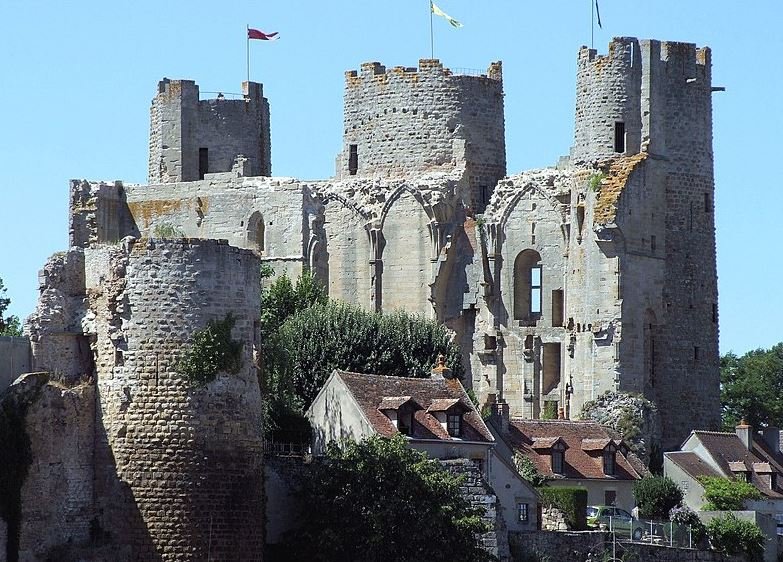
The chateau in Bourbon, France.
What was the significance of the Treaty of Utrecht (1713)?
It established the separation of the French and Spanish thrones, ensuring Philip V of Spain renounced claims to the French crown.
When did the Bourbon monarchy in France end?
It ended with the French Revolution in 1792, briefly restored in 1814 and 1815, and overthrown again in 1830 during the July Revolution.
Who are the current Bourbon monarchs?
The Spanish royal family and the Grand Duke of Luxembourg are members of the House of Bourbon.
What are the main cadet branches of the House of Bourbon?
Key branches include the Bourbon-Vendôme, Bourbon-Orléans, Bourbon-Two Sicilies, Bourbon-Parma, and the Spanish Bourbon-Anjou.
Who was the first Bourbon king of Spain?
Philip V, grandson of Louis XIV, became King of Spain in 1700 after the death of the last Spanish Habsburg king, Charles II.
What was the role of Henry IV in French history?
Henry IV ended the French Wars of Religion, issued the Edict of Nantes (1598) granting religious tolerance, and founded the Bourbon dynasty in France.
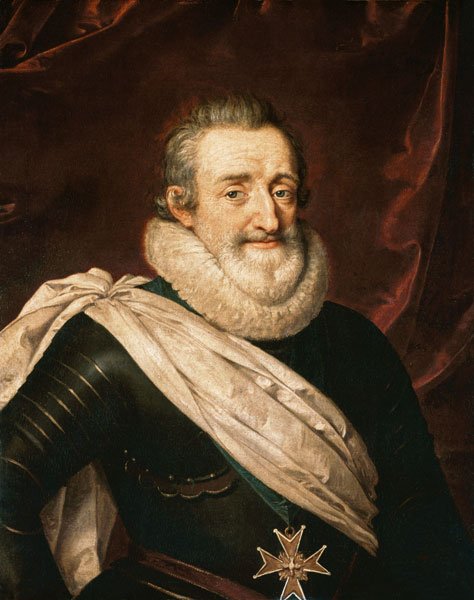
Henry IV
What caused the fall of the Bourbons in France?
The French Revolution (1789) overthrew Louis XVI due to financial crises, political dissatisfaction, and the rise of republicanism. Further attempts at monarchy failed by 1848.
Who is the current head of the Bourbon dynasty?
Louis Alphonse, Duke of Anjou, is considered the senior-most Bourbon by legitimists, while Felipe VI is the reigning Bourbon monarch of Spain.





