George Cabot (c. 1752 – 1823)
George Cabot was a key figure in the early years of the United States, particularly in the formation of its financial system and its foreign policy.
Early Life and Family Background
George Cabot, born in 1751 or 1752 in Salem, Massachusetts, was a prominent figure in American politics, commerce, and public life. He hailed from a family deeply rooted in the seafaring and mercantile traditions of New England. His father, Joseph Cabot, was a ship merchant, while his mother, Elizabeth Higginson, came from a well-established New England family. As the seventh of ten children, George grew up in a bustling household, surrounded by siblings such as John, Joseph Jr., and Samuel Cabot, all of whom would also make their mark in various professional spheres.
The Cabot family traced its roots to the Channel Islands, with Norman-French origins. In 1766, George enrolled at Harvard College, where he began his academic journey. However, tragedy struck the Cabot family in 1769 when his father passed away. Rather than remaining a financial burden on the estate, young George made the decision to leave Harvard and venture out to sea. By the age of 21, Cabot had already risen to the rank of ship captain, gaining invaluable experience in the maritime world. His travels allowed him to become fluent in both French and Spanish, setting the stage for his later interactions with prominent figures in international diplomacy.
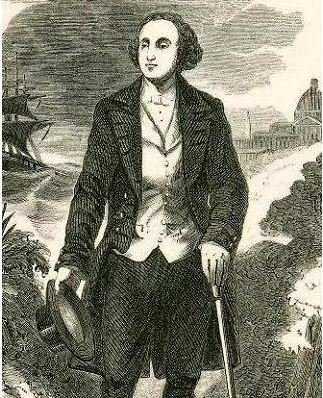
Late 1850s engraving of George Cabot.
Business Ventures and the American Revolution
In 1775, George Cabot entered into a business partnership with his brother-in-law, Joseph Lee, establishing a successful mercantile operation in Beverly, Massachusetts. Their enterprise primarily focused on trading the same goods that Cabot had once transported as a sailor. During the American Revolution, the Cabot family became staunch supporters of the Patriot cause. Their ships were used as privateers, raiding British merchant vessels and disrupting British commerce to support the revolutionaries. This experience in privateering not only enriched the Cabot family but also forged lasting connections to some of the era’s most influential political figures.
Cabot’s early political leanings were shaped by his growing friendship with Alexander Hamilton, a future Secretary of the Treasury, whom he met during his business ventures in New York City. This relationship would prove to be a pivotal moment in Cabot’s political trajectory. As a strong advocate for a robust federal government, Cabot was among the founding members of the Federalist Party, led by Hamilton. His business career, however, was temporarily interrupted by his political duties, notably his election to the U.S. Senate in 1791.
Political Career in Massachusetts
George Cabot’s political career began in 1775 when he joined the Massachusetts Provincial Congress. This early involvement in local politics demonstrated his commitment to the revolutionary cause. In 1777, Cabot was elected to various civic positions, including fire-ward in Beverly and president of the Essex Bridge Company, which was responsible for the construction of a vital bridge connecting Beverly with Salem.
Cabot’s political influence grew as he became increasingly involved in efforts to draft a new Massachusetts Constitution. Though the populist governor, John Hancock, opposed many of Cabot’s conservative proposals, Cabot remained committed to his vision of a more balanced and structured government. His political activism reached a new height in 1788 when he was a delegate to the Massachusetts convention for the ratification of the United States Constitution. Along with fellow Federalists such as Rufus King, Theophilus Parsons, and Fisher Ames, Cabot worked to secure Massachusetts’ support for the new federal framework, which was crucial for the eventual success of the United States Constitution.
Service in the U.S. Senate
In 1791, Cabot was elected to the United States Senate, where he served until 1796. Throughout his tenure, Cabot was a staunch supporter of the policies advanced by Alexander Hamilton, particularly those related to finance and commerce. Cabot’s deep understanding of economic issues made him an essential figure in Hamilton’s economic program. His work on the Committee on Appropriations and as chair of the Committee on Fisheries highlighted his focus on matters of trade and national industry.
Cabot’s tenure in the Senate also saw him become an influential voice in the debate over foreign relations, especially with France. As tensions between the United States and France escalated in the wake of the French Revolution, Cabot emerged as a vocal critic of French policies and a strong proponent of maintaining ties with Britain. His deep distrust of French revolutionary ideals led him to advocate for war with France, believing that any negotiation with France would embolden radical Jacobin forces and jeopardize the stability of the United States.

Alexander Hamilton’s portrait.
The Jay Treaty and Federalist Divisions
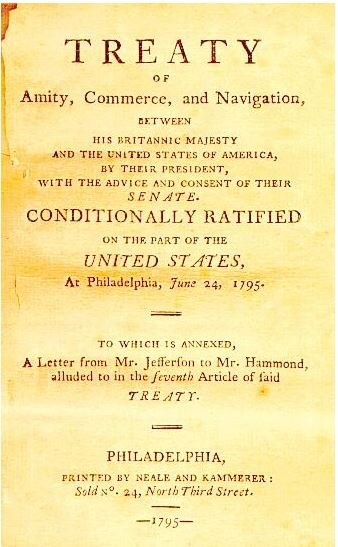
Cabot’s support for the Jay Treaty, a diplomatic agreement between the United States and Great Britain, further cemented his place in the Federalist camp. While the treaty was highly controversial, especially among Jeffersonian Republicans, Cabot defended it as a necessary measure to avoid war with Britain. He believed that rejecting the treaty would lead to a disastrous conflict that could unravel the nascent American republic. However, the treaty exacerbated divisions within the Federalist Party, with some members, including Thomas Jefferson, accusing Cabot and his allies of seeking to create an aristocratic, monarchist government.
Cabot’s position within the Federalist Party became increasingly difficult as internal conflicts intensified, particularly over the role of John Adams, the sitting president. Cabot, though supportive of Adams, grew disillusioned with the administration’s foreign policy, particularly its handling of relations with France. This tension culminated in Cabot’s resignation from the Senate in 1796, following a period of bitter partisanship and political infighting in the capital.
Private Life and Continued Influence
After leaving the Senate, Cabot withdrew from active political life but remained engaged in Federalist causes. He supported John Adams in the presidential election of 1796 and continued to oppose the policies of Vice President Thomas Jefferson, whom he viewed as sympathetic to France. Cabot also expressed strong reservations about the Alien and Sedition Acts, a series of controversial laws passed under Adams’ administration that targeted political opposition, particularly from Jeffersonians.
George Cabot’s staunch Federalism, deep commitment to a strong national government, and enduring friendships with figures like Alexander Hamilton and John Adams left a lasting impact on American politics.
Despite his public opposition to many of Adams’s policies, Cabot’s personal and political friendships remained intact. He played a central role in the formation of Federalist policy, particularly during the Quasi-War with France, and became a prominent voice in calls for military preparedness in the face of rising tensions. Cabot’s commitment to a strong national defense was evident in his support for the creation of the United States Navy, which was bolstered during this period.
The Hartford Convention and the Decline of the Federalist Party
Cabot’s final significant political involvement came in 1814 when he was elected as a delegate to the Hartford Convention, a meeting of New England Federalists dissatisfied with the conduct of the War of 1812. The convention called for constitutional amendments that would protect New England’s interests and curb the power of the federal government. Although Cabot served as the convention’s chair and helped draft its resolutions, he remained relatively silent on the more radical suggestions put forward by other delegates, such as calls for secession.
The Hartford Convention’s proceedings were widely seen as unpatriotic and treasonous, and with the end of the War of 1812 and the signing of the Treaty of Ghent, the Federalist Party effectively collapsed. The convention’s failure to achieve its goals, coupled with the end of the war, marked the end of Cabot’s political career. He withdrew from public life and resumed his personal affairs, living out his remaining years in relative seclusion.
Legacy and Final Years
George Cabot spent his final years in Boston, where he devoted much of his time to his family and personal pursuits. Despite his declining health, including a battle with kidney stones in his later years, Cabot remained a respected figure in New England society. He passed away on April 18, 1823, and was interred in the Granary Burying Ground in Boston before being reburied at Mount Auburn Cemetery in Cambridge.
Cabot’s legacy endured through his family, particularly through his great-grandson, Henry Cabot Lodge, who would later serve as a U.S. senator from Massachusetts. Lodge’s contributions to American politics ensured that Cabot’s name remained tied to the Federalist ideals that he had championed throughout his life. Additionally, Cabot’s efforts to shape the early years of the American republic, particularly his role in the establishment of a strong federal government, cemented his place in the history of the nation.
Timeline of George Cabot
1751/1752: George Cabot is born in Salem, Massachusetts, into a prominent mercantile family.
1766: Enters Harvard College, but leaves two years later after his father’s death.
1775: Forms a business partnership with Joseph Lee in Beverly, Massachusetts, and becomes involved in privateering during the American Revolution.
1777: Serves in local positions, including fire-ward and president of the Essex Bridge Company.
1788: Plays a key role in Massachusetts’ ratification of the U.S. Constitution.
1791: Elected to the U.S. Senate, where he supports Alexander Hamilton’s economic policies.
1796: Resigns from the Senate due to political tensions in Philadelphia.
1814: Chairs the Hartford Convention, calling for constitutional reforms during the War of 1812.
1823: Dies in Boston and is buried at Mount Auburn Cemetery.
1877: A biography of Cabot is published by his great-grandson, Henry Cabot Lodge, preserving his legacy.
Frequently Asked Questions
Though George Cabot’s political career ended in relative obscurity, Cabot’s contributions to the founding of the nation and his influence within the Federalist Party ensure that he remains an important figure in American history.





