The Federalist Party
The Federalist Party was the first political party in the United States, laying the groundwork for future American politics. It emerged in the aftermath of the American Revolution, spearheaded by key figures such as Alexander Hamilton and John Adams. The party’s ideology centered on the belief in a strong, centralized government and the promotion of national interests, including industrialization, modernization, and the creation of financial systems that would stabilize the nation.
The Federalists played a significant role in the early political landscape of the United States, shaping the nation’s fiscal policies and foreign relations. However, by the early 19th century, the party’s influence had waned, giving way to the Democratic-Republicans and fading into obscurity by the 1820s.

Cockade used by the Federalist Party.
READ ALSO: How did Americans come to have two major political parties?
The Roots of Federalism: The Constitution
The term “Federalist” initially referred to those who supported the ratification of the United States Constitution, which replaced the Articles of Confederation. Prominent figures in this early movement included Alexander Hamilton, James Madison, and John Jay, who advocated for a stronger central government. This group believed that the Articles had proven too weak to govern effectively, particularly in managing national defense, commerce, and interstate relations.
Their efforts were met with strong opposition from the Anti-Federalists, who feared the creation of a central government that could potentially become tyrannical. Despite these concerns, the Federalists succeeded in ensuring the ratification of the Constitution, with the promise that a Bill of Rights would be added to safeguard individual liberties. This compromise allowed the United States to establish a stronger framework for governance, one that would eventually lead to the formation of the Federalist Party.

Alexander Hamilton’s portrait.
Formation of the Party
By 1789, the new Constitution had been established, and President George Washington appointed Alexander Hamilton as the first Secretary of the Treasury. Hamilton’s vision for a strong, centralized national government, supported by a sound financial system, resonated with many business elites, merchants, and bankers. Hamilton’s economic program, which included the assumption of state debts, the creation of a national bank, and the establishment of protective tariffs, became the cornerstone of Federalist policy.
These economic policies were designed to stabilize the nation’s finances, encourage industrialization, and ensure that the federal government had sufficient resources to exert its authority. In addition to fiscal issues, the Federalists were also concerned with foreign policy. They favored neutrality in international conflicts, aligning more closely with Great Britain than with revolutionary France, which they viewed as a destabilizing force. This position was controversial, as many Americans sympathized with the French Revolution and saw it as an extension of their own struggle for liberty.

Rise to Power
The Federalist Party quickly established itself as a dominant force in American politics, especially in urban areas and New England. The party’s core support came from merchants, bankers, and professionals, who favored Hamilton’s economic vision. In contrast, the Democratic-Republicans, led by Thomas Jefferson and James Madison, found their base among farmers, rural communities, and those who were wary of a strong central government.
Despite the lack of formal political parties at the time, the divide between the Federalists and their opponents grew increasingly pronounced. The Federalists supported Washington’s policies, while the Democratic-Republicans criticized the national bank, Hamilton’s fiscal policies, and the government’s perceived favoring of aristocratic interests. By the early 1790s, political factions had solidified into the first-party system in U.S. politics.
One of the key strategies employed by the Federalists was the use of the press. Newspapers became a powerful tool for both parties to shape public opinion. Federalist newspapers, supported by patronage from the administration, worked tirelessly to promote Hamiltonian policies and discredit Republican opposition. In turn, Republican papers, often funded by figures like Jefferson and Madison, launched scathing attacks on Federalist policies and leaders. This newspaper war was instrumental in shaping the political discourse of the time and helped galvanize public support for each party.
What triggered the rivalry between John Adams and Thomas Jefferson?
Federalist Policies and Achievements
At the heart of Federalist policy was Hamilton’s economic program, which sought to establish a stable financial foundation for the young republic. Hamilton’s plan included the assumption of state debts incurred during the Revolutionary War, the creation of a national bank, and the imposition of tariffs to protect American industries. These measures were designed to establish the federal government as a credible financial authority and to encourage economic development.
The establishment of the First Bank of the United States in 1791 was perhaps the most controversial and significant achievement of the Federalists. The bank was intended to manage the nation’s finances, provide a stable currency, and promote economic growth. While the bank was opposed by Jefferson and his allies, who believed it was unconstitutional and gave too much power to the federal government, it remained a key component of the Federalist agenda.
The Federalists were the architects of a strong, centralized government and a national economic system, and their influence can be seen in the policies that continue to guide the United States today.
In foreign affairs, the Federalists pursued a policy of neutrality, particularly in the conflict between Britain and revolutionary France. The Federalists were more sympathetic to Great Britain, with whom the United States had strong economic ties, particularly in trade. The Democratic-Republicans, on the other hand, were more sympathetic to France, due to the shared revolutionary ideals. This divergence in foreign policy was most clearly seen in the debate over the Jay Treaty of 1794, which sought to resolve lingering issues between the United States and Britain. The treaty was strongly supported by the Federalists but vehemently opposed by the Democratic-Republicans, who saw it as a betrayal of the United States’ alliance with France.
The Jay Treaty was a critical moment for the Federalists, as it represented their vision of foreign policy and their willingness to compromise with Britain. The treaty resolved several issues, including the evacuation of British troops from American soil, the settlement of pre-Revolutionary War debts, and the establishment of a commission to resolve maritime disputes. While the treaty was ratified by the Senate, it was deeply unpopular with many Americans, particularly those who supported the French Revolution. The controversy surrounding the treaty helped solidify the partisan divide and further entrenched the Federalists and Democratic-Republicans as rival factions.
Decline and Fall of the Federalist Party
The Election of 1800
The Federalists faced significant challenges during the election of 1800, which marked the first peaceful transfer of power between political parties in American history. The election was characterized by intense partisan rhetoric, with the Federalists portraying Thomas Jefferson as a dangerous revolutionary and the Democratic-Republicans accusing the Federalists of betraying the republic.
In the end, Jefferson and his running mate Aaron Burr won the election, and the Federalists were forced to cede power. The outcome was seen as a triumph for the Democratic-Republicans, who gained control of the presidency and both houses of Congress. While the Federalists retained a strong presence in New England, their influence on the national stage was effectively diminished.

Thomas Jefferson
Internal Divisions and the War of 1812
The Federalist Party experienced a brief resurgence during the War of 1812, which was deeply unpopular in New England. Federalist leaders, particularly those in New England, opposed the war, fearing it would disrupt trade and harm the economy. In 1814, delegates from New England gathered at the Hartford Convention to discuss the possibility of secession from the Union, though the proposal was ultimately rejected. The end of the war and the subsequent rise in national pride led to the rapid decline of the Federalist Party, which became increasingly associated with disloyalty and defeatism.
The Collapse of the Party
After the War of 1812, the Federalists were no longer a viable national political force. They fielded their last presidential candidate, Rufus King, in 1816, but his defeat marked the official end of the party’s influence. The Federalists’ demise was attributed to several factors, including their failure to adapt to changing political realities, their opposition to the war, and their inability to maintain a broad base of support outside of New England. By the 1820s, the party had virtually disappeared from the national stage, though some of its policies, particularly those related to banking and trade, would continue to influence American politics.
Legacy of the Federalist Party
Despite its decline, the Federalist Party left a lasting legacy on American politics. Most notably, the Federalists’ vision of a strong federal government and their economic policies laid the foundation for many of the political and financial structures that still exist today. The creation of a national bank, the establishment of a sound financial system, and the promotion of economic development all contributed to the growth of the United States into a global power.
Additionally, the Federalists’ commitment to the rule of law and their defense of the Constitution helped shape the American legal system. The influence of Federalist ideals can still be seen in the decisions of the U.S. Supreme Court, particularly during the tenure of Chief Justice John Marshall, who was a Federalist.
Frequently Asked Questions about the Federalist Party
What key figures led the Federalist Party?
The Federalist Party was led by prominent figures such as Alexander Hamilton, John Adams, and John Jay, who shaped its economic and foreign policies.
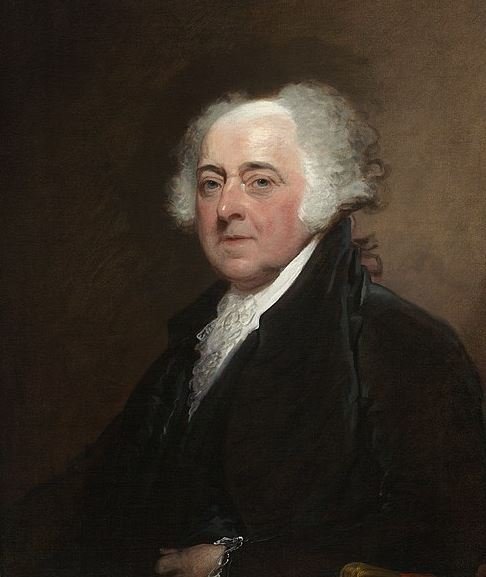
Portrait of John Adams
What were the main policies of the Federalist Party?
The Federalists supported a strong centralized government, a national bank, protective tariffs, and neutrality in foreign conflicts, especially favoring Great Britain over Revolutionary France.
Why did the Federalist Party decline?
The party declined due to opposition to the War of 1812, internal divisions, and the rise of the Democratic-Republican Party, which won the 1800 election and pushed the Federalists into a minority position.

What was the significance of the Jay Treaty to the Federalists?
The Jay Treaty (1794) was a significant Federalist victory, resolving issues with Britain, including the evacuation of British troops and the settlement of debts, and solidifying U.S.-British relations.
How did the Federalists view foreign relations?
The Federalists favored strong relations with Great Britain and opposed involvement in the French Revolutionary and Napoleonic Wars, believing that neutrality would best serve U.S. interests.
What role did newspapers play in Federalist politics?
Newspapers were vital tools for both the Federalists and Democratic-Republicans to spread their political messages, with Federalist newspapers supporting Hamilton’s policies and attacking opponents.
What lasting legacy did the Federalists leave on the U.S.?
The Federalists’ legacy includes the establishment of a strong federal government, a sound financial system, and the creation of the national bank, influencing U.S. policy for years after the party’s collapse.





