Seneca the Elder was a Roman writer and rhetorician born around 54 BC in Corduba, Hispania. He is remembered for preserving the rhetorical culture of early imperial Rome and was the father of the philosopher Seneca the Younger.
Early Life and Background
Lucius Annaeus Seneca the Elder was born around 54 BC in Corduba (modern-day Córdoba, Spain), then a prominent Roman colony in Hispania Baetica. Hailing from a wealthy equestrian family, Seneca was the first prominent member of the gens Annaea whose life is known in detail. His affluence and social standing afforded him a comprehensive education and access to Rome’s elite intellectual and cultural life, which shaped his future contributions to Roman rhetorical tradition.
Despite his provincial origin, Seneca received an education of notable quality, initially in Hispania under local teachers, then in Rome where he was exposed to the rhetorical circles flourishing under the emperors Augustus and Tiberius. His contemporaries included influential figures such as Porcius Latro and Junius Gallio, who, like him, would contribute significantly to Roman rhetorical pedagogy.
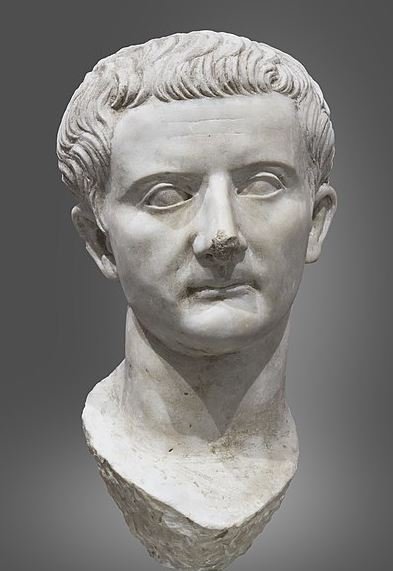
Bust of Tiberius at the Musée Saint-Raymond in Toulouse, France.
Lucius Annaeus Seneca the Elder, also known as Seneca the Rhetorician, was born around 54 BC in Corduba (modern-day Córdoba, Spain), then a prominent Roman colony in Hispania Baetica.
Seneca lived through three critical Roman imperial reigns—Augustus, Tiberius, and Caligula. Although he was a witness to monumental political and social changes, he chose not to enter public service. Instead, he remained a private citizen, dedicating his intellectual energies to recording and analyzing the rhetorical practices of his time.
Family and Identity
Seneca fathered three sons, each of whom achieved individual fame. His eldest, Lucius Junius Gallio Annaeanus, served as Proconsul of Achaia and is remembered for his role in early Christian history. His second son, Lucius Annaeus Seneca the Younger, gained prominence as a Stoic philosopher, dramatist, and tutor to Emperor Nero. The third, Marcus Annaeus Mela, was the father of the renowned epic poet Lucan.
Seneca’s own identity has been the subject of scholarly confusion, especially during the Renaissance when his name and works were conflated with those of his son. The confusion stemmed partly from the Roman practice of naming grandchildren after their grandfathers. Initially, some scholars assigned him the praenomen Marcus. However, by the 20th century, consensus shifted toward Lucius, based on surviving manuscript evidence and the practicality of distinguishing his works from those of his more famous son.
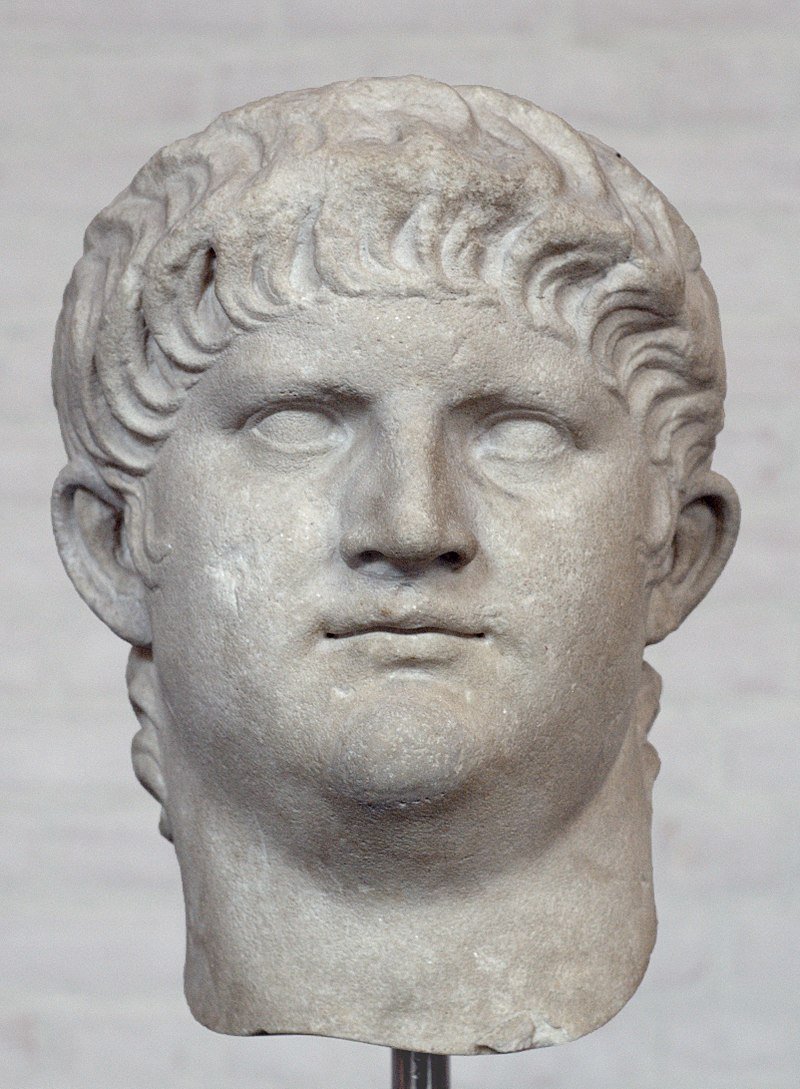
Emperor Nero
Experience of Rhetorical Culture
Seneca grew up during a time when Roman rhetorical schools were central to elite education. Though confined to his native Corduba during the Civil Wars, he studied under a local praeceptor who instructed a substantial number of pupils. Once conditions stabilized in Rome, he moved to the capital, where he immersed himself in rhetorical performances and teaching.
Seneca attended public declamations—training exercises where aspiring orators would practice speeches on fictional themes. These performances were central to Roman education and civic life, and the experience gave him a broad understanding of rhetorical techniques, styles, and individual declaimers. Though Seneca never held an official rhetorical or political post, he became a respected chronicler of the rhetorical scene, capturing the intellectual essence of his time.
He was a firm believer in the educational and civic value of rhetoric, despite recognizing the inherent dangers of a political career. In this, he encouraged his sons in their public pursuits while supporting Mela, who remained in the equestrian order and refrained from political engagement.
Oratorum et Rhetorum Sententiae Divisiones Colores
Seneca’s enduring fame rests primarily on his rhetorical anthology, Oratorum et Rhetorum Sententiae Divisiones Colores. This collection comprised ten books of Controversiae—fictional legal cases—and at least one book of Suasoriae—advisory speeches from historical or mythological characters. His stated aim was to document, from memory, the rhetorical methods he had observed and admired during his youth and adulthood in Rome.
The anthology is neither a record of Seneca’s own speeches nor a faithful transcription of those by other orators. Rather, it is a selective compendium of striking excerpts, critiques, and anecdotes about rhetorical masters of the Augustan and Tiberian periods. Seneca provided pen-portraits of leading declaimers and offered commentary on their rhetorical choices. Through this lens, he preserved not only their words but their personalities and reputations.
Declamation had become a distinct art form by his time, diverging from Ciceronian oratory. It was theatrical, often stylized, and addressed imaginary legal scenarios. This development in rhetoric, Seneca claimed, emerged during his own lifetime. Though this art likely had Hellenistic origins, Seneca focused exclusively on its Roman manifestations. He observed both Latin and Greek rhetoricians working in Rome and admired the intellectual energy they brought to rhetorical exercises.
Notable Declaimers in the Anthology
One of Seneca’s closest associates was Porcius Latro, a classmate from Corduba who became one of the most celebrated orators in Rome. Seneca admired Latro’s “fiery and agitated” style and regarded him as a man of intellect and moral gravity. Latro’s rhetorical brilliance embodied the kind of orator Seneca held in highest esteem.
Junius Gallio, another figure treated in the anthology, was Latro’s rival and a family relative of the Senecas. Other prominent declaimers featured in Seneca’s work include Albucius Silus and Arellius Fuscus. Seneca was critical of Arellius’ florid and elaborate style but acknowledged his school’s prestige. Even when critiquing rhetorical excesses, Seneca demonstrated a balanced appreciation for each declaimer’s strengths and weaknesses.
These men represented a shift in Roman rhetorical culture—from the practical courtroom advocacy of Cicero’s day to a more academic and artistic mode of oratory. Seneca’s work captures this transformation with both nostalgia and critical clarity.
Structure and Content of the Controversiae
The Controversiae books explored some 74 fictitious legal themes. Each book opened with a preface, offering anecdotes and evaluations of famous declaimers. Following the prefaces, Seneca divided each case study into three parts: sententiae (noteworthy expressions or moral stances), divisiones (argument structures), and colores (plausible interpretations used to sway the audience).
Seneca the Elder’s anthology offered a window into the rhetorical strategies that defined the so-called “Silver Age” of Latin literature.
Only five of the ten original books—Books 1, 2, 7, 9, and 10—survive in relatively complete form. The remainder exists through epitomes created for school use centuries later. These abridged versions contributed significantly to medieval Latin instruction and literature, most notably influencing the Gesta Romanorum, a 14th-century collection of moralized anecdotes.
Seneca’s anthology offered a window into the rhetorical strategies that defined the so-called “Silver Age” of Latin literature. His critical framework foreshadowed features seen in his son’s philosophical writings and Lucan’s epic poetry, revealing the intellectual currents running through the Annaean family.
The Suasoriae and Their Unique Character
Unlike the judicial themes of the Controversiae, the Suasoriae focused on deliberative rhetoric. Here, figures such as Alexander the Great or Agamemnon were imagined at moments of decision, asked to choose between starkly different courses of action. Only one book of Suasoriae survives. It includes sententiae and divisiones, but no colores, as the latter were inappropriate for deliberative themes.
These exercises showcased the moral and psychological complexity of rhetorical decision-making. They also allowed Seneca to engage with historical and mythological traditions in a vivid, dramatized format. Though less voluminous than the Controversiae, the Suasoriae exemplified Seneca’s keen sensitivity to human motivation and the power of persuasive argument.
Historical Writing: The Lost Historiae
Seneca the Elder also composed a substantial historical work—now lost—that chronicled Roman events from the Civil Wars onward. According to his son’s De vita patris, this ambitious history was completed late in life and only published posthumously. A surviving fragment preserved by Lactantius in Institutiones Divinae offers a philosophical reflection on the cyclical nature of Roman decline. The passage compares Rome’s reversion to monarchy with the senility of old age, suggesting a profound disenchantment with the direction of imperial politics.
Another brief fragment of the Historiae, cited by Suetonius, recounts the death of Tiberius with vivid detail. These remnants, though few, indicate that Seneca approached history with the same incisive and moralistic tone found in his rhetorical works.
A potential breakthrough in recovering Seneca’s lost history came in 2017 when papyrologist Valeria Piano studied a damaged Herculaneum scroll. Based on internal textual evidence and the name “L. Annaeus Seneca” in the colophon, Piano proposed the scroll may contain a portion of the elder Seneca’s Historiae. The text, though too fragmented to be read continuously, focused on early imperial themes, aligning with the known scope of his historical narrative.
Legacy and Influence
During the Middle Ages, Seneca the Elder’s works were often misattributed to his son. This confusion persisted until Renaissance scholars such as Raphael of Volterra and Justus Lipsius began distinguishing their authorship through careful philological work. Nicolas Lefèvre published an influential edition of the rhetorical texts in 1587, and subsequent critical editions by scholars like Gronovius and Kiessling cemented Seneca’s place in rhetorical history.
Today, Seneca the Elder is recognized as a crucial source for understanding the evolution of Roman rhetorical education and the cultural values of the early Empire. His vivid descriptions, analytical sharpness, and dedication to memory as a medium for preservation provide unique insight into an intellectual tradition that bridged the Republic and the Principate.
Frequently Asked Questions about Seneca the Elder
What is Seneca the Elder best known for?
He is best known for his rhetorical anthology Oratorum et Rhetorum Sententiae Divisiones Colores, which includes the Controversiae and Suasoriae—collections of fictional legal and deliberative speeches with commentary.
How did Seneca contribute to Roman rhetorical culture?
By recording the techniques, themes, and styles of famous declaimers, Seneca preserved the rhetorical practices of his time and provided critical insight into the educational and literary atmosphere of the early Empire.
Did Seneca hold any public office or political role?
No, he remained a private gentleman throughout his life, although he actively supported the public careers of his sons and encouraged rhetorical study as a noble pursuit.
Who were some of the notable rhetoricians mentioned in his works?
Seneca highlighted rhetoricians such as Porcius Latro, Junius Gallio, Albucius Silus, and Arellius Fuscus, offering both praise and critique of their methods and performances.
What was the structure of his rhetorical works?
Each rhetorical exercise in Controversiae was presented in three sections: sententiae (key ideas), divisiones (argument outlines), and colores (interpretations used to justify or condemn actions).
Did Seneca write history as well?
Yes, he authored a lost historical work covering Roman events from the start of the Civil Wars to near the end of his life, known through fragments and references by later authors.
How was his authorship distinguished from his son’s?
Renaissance scholars clarified the confusion between their works by analyzing stylistic and manuscript differences, ultimately affirming the elder Seneca’s distinct contributions to rhetoric and history.





